Posts Tagged With: Herbs

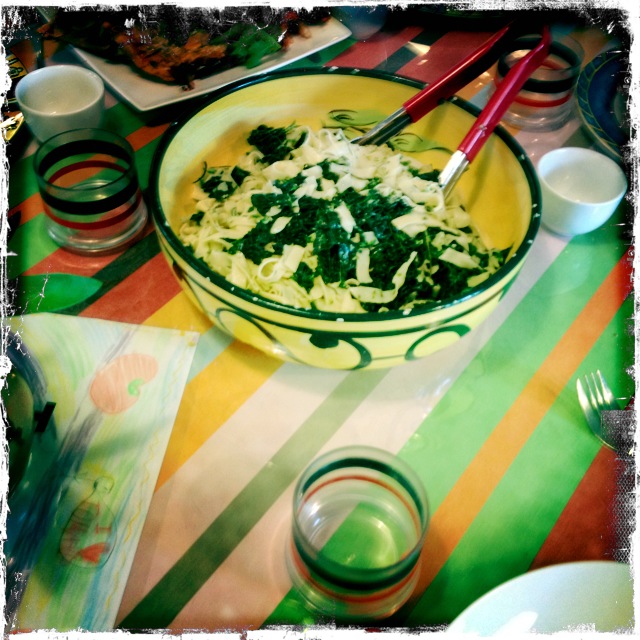
Linguine with cavolo nero and herb sauce

LINGUINE WITH CAVOLO NERO AND HERB SAUCE

Fresh from the garden: cavolo nero, coriander, thyme, marjoram, oregano

Recipe source: Melissa ………………………………………………………………………………………………………………………………………………

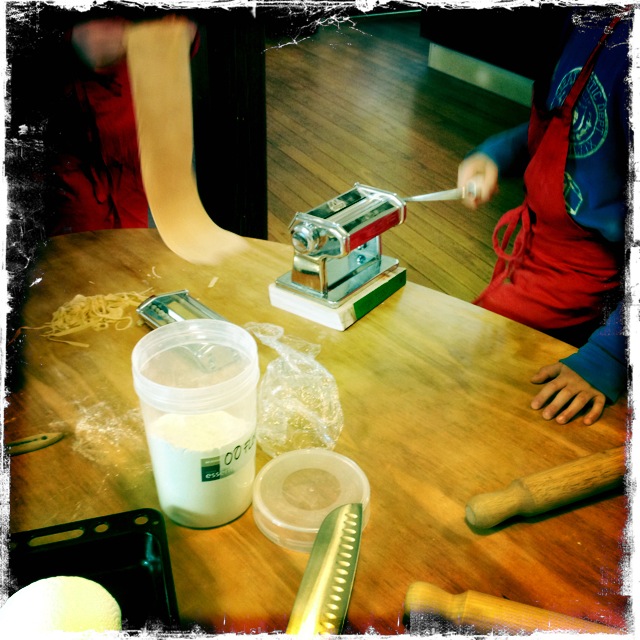
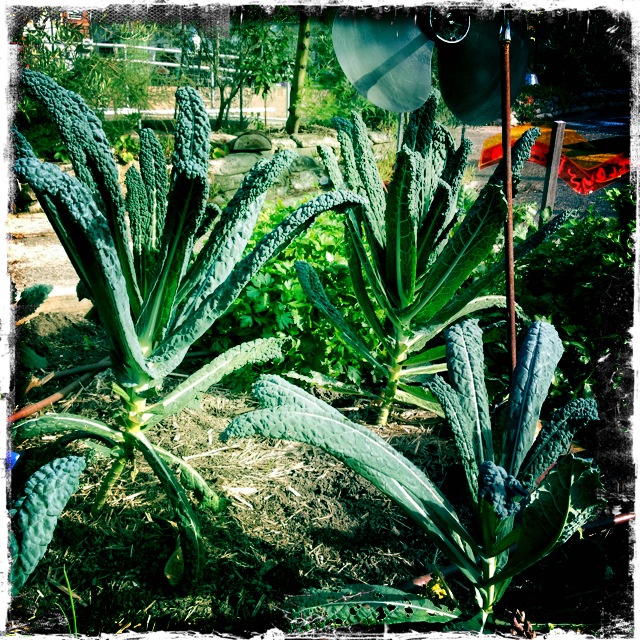
This is a delicious accompaniment to our freshly-rolled pasta! We use the prehistoric-looking cavolo nero (also known as Tuscan kale) but you can also use silverbeet or spinach just as well…

Equipment:

  • Large stockpot with draining insert
  • Chopping board
  • Large & small knife
  • Salad spinner
  • Wooden spoon
  • 2 large bowls
  • Scales
  • Medium saucepan
  • Tongs
  • Serving bowls
Ingredients:

  • 500g linguine
  • 225g unsalted butter
  • 8 garlic cloves
  • A large handful of cavolo nero leaves
  • A small bunch of coriander
  • 4 sprigs of thyme
  • 4 sprigs marjoram
  • 4 sprigs oregano
  • Small bunch parsley
  • Flaked salt & black pepper

What to do:

  • Fill the large stockpot with water and heat on high.
  • Wash the cavolo nero leaves and shake dry. Strip off the leaves, discarding the stems, and cut into ribbons 1cm wide.
  • Wash & spin dry the herbs, then pick the leaves if needed, discarding the woody stems.
  • Finely chop the herbs.
  • Finely chop the garlic.
  • Chop up the butter into cubes and melt the in the saucepan over a medium heat.
  • Stir in the garlic and cook gently for a couple of minutes.
  • Stir in the herbs.
  • When the water in the large stockpot is boiling add the pasta & cooking salt, stir, put the lid back on and when boiling again cook for 2 or 3 minutes until ‘al dente’.
  • Drain the pasta and transfer to back into the stockpot.
  • Add the butter mixture to the stockpot and toss carefully.
  • Season with salt and pepper to taste and serve into bowls.

Notes: What does al dente mean? Why do we pick the leaves from the herbs? What does cavolo nero actually mean?

Categories: Kitchen Garden, Recipe, School Holiday Program | Tags: , , , , , , , , , , , , , , | Leave a comment

Ribollita

Our kitchen garden Tuscan kale

From the garden: parsley, celery, carrots, cavolo nero

Recipe source: adapted from a recipe by Ruth Rogers in The River Café Cookbook

…………………………………………………………………………………………………………………………………………………………………………………………………….

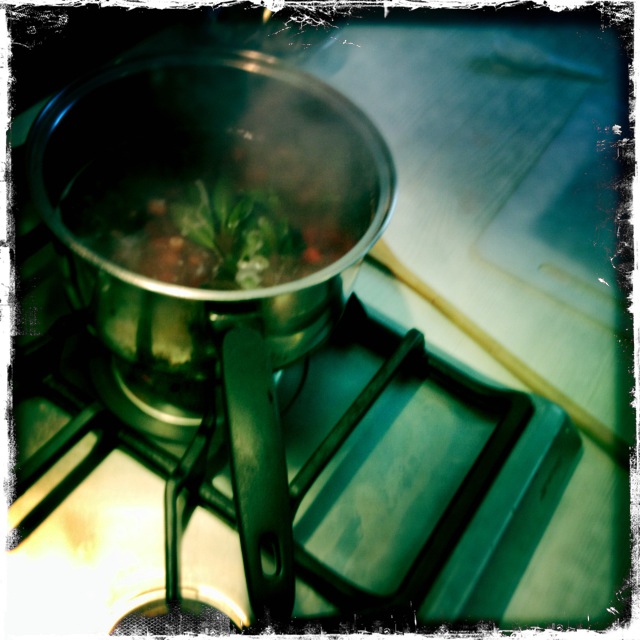
Ribollita is a famous Tuscan soup. Like a lot of European cooking, the soup has peasant origins. It was originally made by reheating (ie. reboiling = ribollita) the leftovers from the previous day. Some sources date it back to the Middle Ages, when the servants gathered up food-soaked bread trenchers from feudal lords’ banquets and boiled them for their own dinners.

Equipment:

  • Colander
  • Medium saucepan
  • Chopping board & small knife
  • Large heavy-based saucepan
  • Salad spinner, colander
  • Potato peeler
  • Garlic press, fork
  • Measures: tablespoon
  • Wooden spoon
  • Serving bowls
  • Ladle
Ingredients:

  • 125g dried cannellini or borlotti beans
  • 1 tablespoon bicarbonate of soda
  • 5 cloves garlic, 2 red onions
  • Small branch sage (about 10 leaves)
  • 4 tablespoon olive oil plus extra for drizzling
  • 1 bunch flat-leaf parsley
  • 1 head celery, 2 carrots
  • 1 tin chopped tomatoes
  • 1kg cavolo nero
  • ½ loaf stale ciabatta bread
  • Flaked salt & black pepper

What to do:

  • The night before, place your dried beans in a large bowl and fill the bowl with cold water and the bicarb.
  • The next day, rinse and drain the beans, then put them into the medium saucepan with about 3cm cold water to cover. Add 3 garlic cloves, a branch of sage, a teaspoon of salt & grind of pepper. Set on a medium heat and simmer until beans are soft – could be anything from 20 minutes to an hour.
  • Meanwhile, wash and spin dry the parsley and chop finely.
  • Wash and shake the celery dry then chop stalks and leaves into thin strips.
  • Wash and peel the carrots, chop into small pieces.
  • Peel and chop the onions into small dice.
  • Peel and squeeze the garlic cloves through the press.
  • Heat the oil in the large saucepan and fry the parsley, garlic, celery, carrot and onion together for about 10 minutes until the flavours combine.
  • Add the tomatoes and continue to cook on a gentle heat for a further 10 minutes.
  • Meanwhile wash the cavolo nero, remove the stalks and coarsely chop the leaves. Add them to the pan. Stir in half of the beans with enough of their liquid to cover. Simmer for 30 minutes.
  • Carefully cut the crusts from the loaf with a breadknife and tear the bread into pieces.
  • Mash the remaining beans with the back of the fork and return to the soup with just enough boiling water to make the soup liquid. Add the bread, a generous amount of olive oil, and season with salt and pepper. As exact amounts are not possible, you must balance the amount of liquid to bread so that soup is very thick. Ladle out into your bowls.

Notes: Why do we soak the beans overnight? What does cavolo nero mean? What are other names for cavolo nero? What other soup names do you know?

Categories: Kitchen Garden, Recipe | Tags: , , , , , , , | Leave a comment

Rosemary & thyme grissini

Fresh from the garden: rosemary, thyme 

Recipe source: adapted from The Cook and the Chef TV program

………………………………………………………………………………………………………………………………………………

A simple & fun breadstick-making exercise – I’ve found that the thinner you make the grissini, the crunchier and more delicious they are. It also pays to knead the dough well too. These are fab with the hummus…

Equipment:

  • Kitchen towel
  • Chopping board
  • Large knife
  • Large bowl
  • Large spoon
  • Measuring jug
  • 2 baking trays
  • Pastry brush


Ingredients:

  • 2 cups plain flour
  • ½ teaspoon cooking salt
  • Large sprig rosemary
  • 4 or 5 sprigs thyme
  • 1 teaspoon yeast
  • ½ teaspoon brown sugar
  • 1 tablespoon extra virgin olive oil
  • 100ml lukewarm water
  • A pinch or two of flaked salt

What to do:

  • Preheat oven to 180°C
  • Wash & dry herbs thoroughly.
  • Strip herbs from stalks and chop up finely to yield 2 tablespoons of herbs.
  • Mix all the dry ingredients (except for the flaked salt) and herbs together in a large bowl.
  • Add the water and olive oil and knead together until a smooth dough is formed – this might take between five and ten minutes. If the dough is too wet just add some more flour, bit by bit.
  • Brush baking trays with a little olive oil.
  • Flatten the dough out and roll into a round pizza shape. Divide into halves, then quarters, and then again and again until you get 16 pieces of ‘pie’.
  • Roll each ball into a thin cigar shape, break into 2 & place evenly onto the baking trays.
  • Sprinkle the whole tray with a large pinch of salt.
  • Carefully slip the trays into the oven & bake for about 15 minutes until golden brown.

Notes: Grissini are thought to have been invented in Italy in the 17th century – what other dishes have originated in Italy?


Categories: Kitchen Garden, Recipe | Tags: , , , , , , , , | Leave a comment

Yotam Ottolenghi’s Hummus

Fresh from the garden: lemon, sage, parsley

Recipe source: adapted from a recipe by Yotam Ottolenghi’s beautiful and inspirational book, Plenty

………………………………………………………………………………………………………………………………………………

This recipe is really worthy setting the reminder app on your phone to soak the beans… it is totally delicious and I defy you not to keep eating the whole lot… and why not? It’s really only chickpeas, tahini and water! Hooray!

Equipment:

  • Scales
  • Glass bowl
  • Colander, sieve
  • Medium saucepan
  • Chopping board & knife
  • Salad spinner
  • Lemon juicer
  • Garlic press
  • Food processor
  • Spatula
  • Measures – tablespoon, teaspoon
  • 4 small serving plates
Ingredients:

  • 250g dried chickpeas
  • 1 tablespoon bicarbonate of soda
  • 1 small branch of sage
  • 125g tahini paste
  • ½ a lemon
  • 6 garlic cloves
  • Extra-virgin olive oil
  • Small handful parsley
  • 1 teaspoon sweet paprika
  • Flaked salt and black pepper

What to do:

  • Before cooking the chickpeas you will need to soak them overnight. Place them in a large non-metallic bowl with double their volume of water and a tablespoon of bicarb.

Start of lesson:

  • Drain the chickpeas into the colander and rinse them well, then put them into the medium saucepan with about 3cm cold water to cover.
  • Rinse the sage, keeping the branch whole, and shake dry. Peel 3 of the garlic cloves and add them, whole, to the saucepan. Also add the branch of sage and a grind of pepper. Bring to the boil, then set on a low heat & simmer for about 30 minutes until totally soft and easy to mush.
  • Juice the lemon half. Crush the remaining 3 cloves of garlic.
  • Wash and spin dry the parsley carefully, pick off the leaves and chop finely.
  • Drain the chickpeas into the sieve over a clean bowl, reserving the cooking liquid. Transfer them & the cooked garlic cloves to the food processor, keeping a few to garnish at the end, and add the tahini, a tablespoon of lemon juice, the crushed garlic, and ½ teaspoon salt. Blitz for a minute or two until totally smooth.
  • Add some of the cooking liquid and blitz again. You want the mixture to be very soft, almost runny, but just holding its shape. Taste and add more salt if you like.
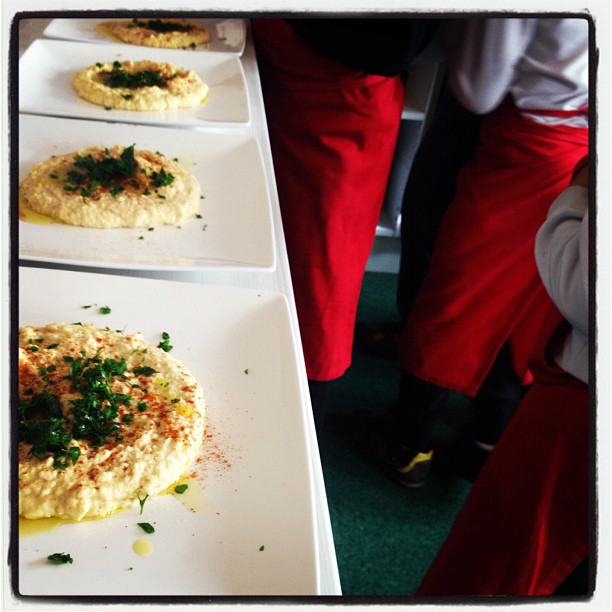
  • To serve, spread the warm hummus onto your serving plates, drizzle with a little stream of olive oil, a sprinkle of paprika, the reserved chickpeas and the chopped parsley.

Notes: What are pulses? Can you name any others? What is tahini? Where does hummus come from? What else you could eat hummus with?

Categories: Kitchen Garden, Recipe | Tags: , , , , , , , | Leave a comment

May 10th 2012

Well what a gorgeous start to the term: late autumn and we’ve got cool nights but warm, sunny days and the rays of sunshine are cascading over the stripy cottage tables and honeyed floorboards… it’s a beautiful place to be!

And with those cool nights my thoughts turn to warming dishes, and being autumn, mushrooms… we’re yet to find a dark enough place to cultivate our own here but I couldn’t let the season go past without experimenting with a mushroom ragu! This we matched with our own hand-rolled bigoli, a long thin pasta, originally from the region of Veneto in Italy. We’ve had discussion in class about this term’s theme in stages one & two: Local Places and Local Environment, as similar pasta is made in other regions but called different names, as pici from Tuscany and stringozzi from Umbria.

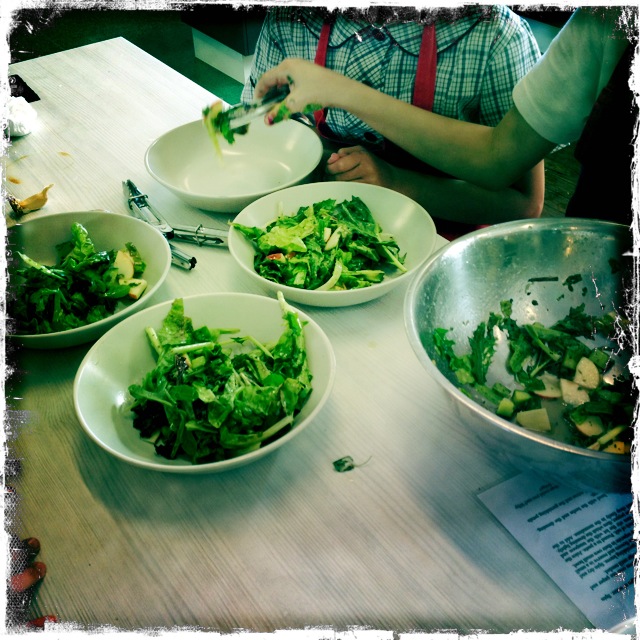
Also on the menu this last fortnight has been parmesan polenta with our own poached eggs and crispy sage; garden herb pizza with bocconcini and rocket; the perennial favourite – soup – with spinach, potato and landcress; a truly delicious lemony leaf salad with the last faithful cucumber; and just in time for the Mothers’ Day Tea (as we’re making extra!) some mini frittate of spinach, pumpkin and feta. Delicious!

I’ve been so impressed with all the kitchen classes, but especially 2F who were incredibly self-motivated and able to complete the recipes beautifully without much help at all! And they cleaned up (in every sense!) And thanks to all the wonderful volunteers who have pledged their support again for another term… Our success is all down to you!

And here below are the much-requested recipes for the bigoli with mushroom ragu. Happy Mothers’ Day to all!

Bigoli

Guy Grossi – Recipes From My Mother’s Kitchen

‘Bigoli is a specialty pasta from the northern Italian region of the Veneto. It is similar in shape to spaghetti, but slightly thicker. And unlike other forms of pasta, it includes butter in the dough.’ Other regions in Italy make similar types of noodles too, for example in Umbria they call them stringozzi, and in Tuscany they call them pici.

2 cups plain flour

Pinch salt

100g butter chopped

1 egg

¼ cup milk

 Place flour on a clean workbench and sprinkle with salt. Gently rub in butter until mixture resembles breadcrumbs. Make a well in the centre; add egg and milk, then knead for 10 minutes until smooth.

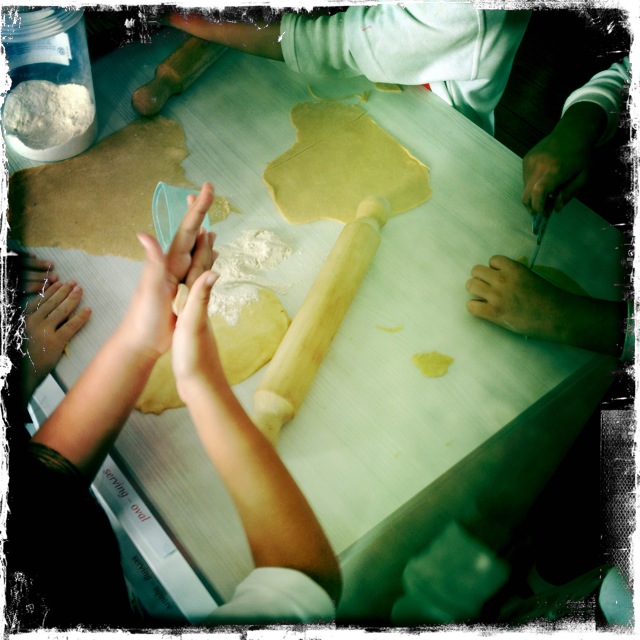
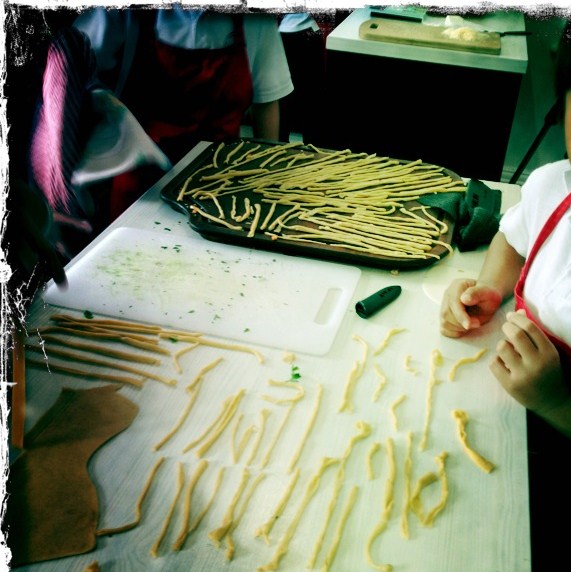
Flatten out dough, cut into quarters then roll each quarter into a sheet about 3mm thick. Using a pizza cutter, slice into spaghetti-like lengths about 3mm wide, then roll each length between your hands and the workbench so that they’re slightly wider than spaghetti.

Place bigoli on a floured baking tray, cover with a tea towel and set aside.

Cook bigoli in a large saucepan of plenty of salted water until al dente (2 to 3  minutes depending on thickness of pasta), then drain. Add bigoli to sauce and toss to coat.

 Mushroom ragù

Alice Waters – The Art of Simple Food

 1 large onion

1 large carrot

2 celery stalks

6 thyme sprigs

6 parsley sprigs

1 bay leaf

Salt

Extra-virgin olive oil

75g diced tomatoes

900g mushrooms – a mixture of 2 or 3 types

25g butter

100ml cream or crème fraiche

 Wash the carrot, celery and herbs. Spin dry the parsley and thyme, picking their leaves and finely chop the parsley.

Peel the onion & carrot then finely dice them with the celery.

Carefully clean the mushrooms then chop finely.

Heat 2 tablespoons of the olive oil in one of the frying pans and add the onion, carrot, celery and salt and cook over gentle heat until very tender but not browning.

When cooked add the thyme, parsley and bay leaf, and after a minute add the tomatoes.

In the other frying pan heat up another 2 tablespoons of olive oil with the butter and add the mushrooms, sautéing each type until tender and lightly browned.

Once all the mushrooms are cooked, combine with the vegetables and herbs and add the cream and 225ml water or chicken stock.

Bring to a simmer and cook for 15 minutes. Taste for salt and add as needed. Moisten with more liquid if too thick.

Categories: Kitchen Garden | Tags: , , , , , , , , , | Leave a comment

Marjoram! where’ve you been all my life?

I’m obsessed! Marjoram has taken over my life… I’m finding ways of getting it into all sorts of dishes these last few weeks and I’m loving it… I can’t have enough of marjoram, and thyme, and oregano and I can’t believe for the first 40 years of my life I only looked for basil and coriander in the herb section of the supermarket… with a bit of bay and a tiny bit of parsley (bleugh) and ignoring mint totally (BLEUGH).

And now I’m growing my own to keep with up with the amounts I need; it’s like a drug. A perfumed, lemony, herbaceous, aromatic and healthy drug, I’m chopping with abandon…!

Uses for marjoram leaves this week: tossed with leaves and a classic lemon vinaigrette for a crunchy almost-spring salad; chopped up with thyme, salt, a little chilli and butter and smeared under the skin of roasting chicken; sprinkled over a freshly cooked tomato, red onion & bocconcini pizza; sauced up with its aromatic herby friends – basil, coriander, thyme and oregano – garlic and butter and tossed through home-made linguine; garnishing a bowl of wintry Jerusalem artichoke soup; and my favourite: finishing off my easy-peasy & cheap one-pot chicken braise… delish. And now to the recipe!

Mel’s easy-peasy & cheap one-pot chicken braise – Serves 4 (with potential leftovers for pasta!)

 8 chicken drumsticks (free-range at least)

Olive oil

2 brown onions

4 cloves garlic

2 tins cherry tomatoes

A cup of chicken stock

Salt & pepper

Fresh herbs: handful marjoram, oregano, thyme

Dried herbs: 2 bay leaves

Preheat oven to 160°C.

Brown off the chicken drumsticks with a good glug of olive oil in an oven-proof casserole dish* (with lid & wide enough to fit chicken in one layer if possible). Remove.

Peel then halve onions & finely slice, add to hot pot and stir. Strip thyme leaves from stalks and add to the onions. Peel and crush the garlic, add to the pot and cook, stirring, on medium heat until the onions are soft but not brown.

Add chicken back to the pot, pour in the tomatoes and enough stock to almost cover the chicken, sprinkle a good pinch of salt, grind some pepper and add the bay leaves. Turn heat up and watch until it’s almost boiling, then pop lid on and place in oven for an hour.

With 20 minutes to go, take the lid off to let the liquid reduce a little.

Remove from the oven, pick the leaves from the marjoram and oregano, chop them up and sprinkle over the finished chicken. Serve immediately.

Best eaten with buttery boiled potatoes and garlicky broccoli.

*Best by far is to cook this in cast-iron – I’ve got a big Le Creuset and a small cheapie version from Aldi and they both cook up a storm… worth investing in (or not!).

dear dear marjoram, grow quickly please

Linguine and herbs

serves 6

 500g fresh linguine

1 tablespoon cooking salt

225 g butter

8 small cloves garlic

Small bunch basil to yield 1/3 cup

Bunch coriander to yield 1/3 cup

3 or 4 sprigs thyme to yield 2 tablespoons

3 or 4 sprigs marjoram to yield 2 tablespoons

3 or 4 sprigs oregano to yield 2 tablespoons

Small bunch parsley to yield 2 tablespoons

2 tablespoons black olives

Flaked salt & black pepper

 Fill a large stockpot with water and heat on high. Meanwhile wash & carefully dry the herbs, then pick the leaves if needed, discarding the stems. Finely chop herbs. Slice the olives & finely chop the garlic.

Melt the butter in the saucepan over medium heat. Stir in the garlic and cook gently for a couple of minutes. Stir in the herbs.

When the water is boiling add the pasta & cooking salt, stir, put lid back on and when boiling again cook for 3 minutes until ‘al dente’. Drain the pasta and transfer to back into the stockpot. Add the butter mixture to the stockpot and toss carefully. Season with salt and pepper. Sprinkle with black olive slices and serve into the serving bowls.

(Adapted from Alice Waters’ ‘The Art of Simple Food)

yum yum pigs bum.

Categories: Food, Garden | Tags: , , , , , , , , , , , , | Leave a comment

Blog at WordPress.com.