Posts Tagged With: vegetarian

Ottolenghi’s herb soup

Yotam says, “Herbs are too often the side show, a garnish for the main event. It’s time to put them centre stage. Soft herbs don’t always have to be treated as a garnish – whole bunches of the stuff go into this winning soup.” We say, ” WOW! All this texture and minty flavour in a SOUP?! We love it, even if it does taste a bit freaky!”
ourkitchengarden.net

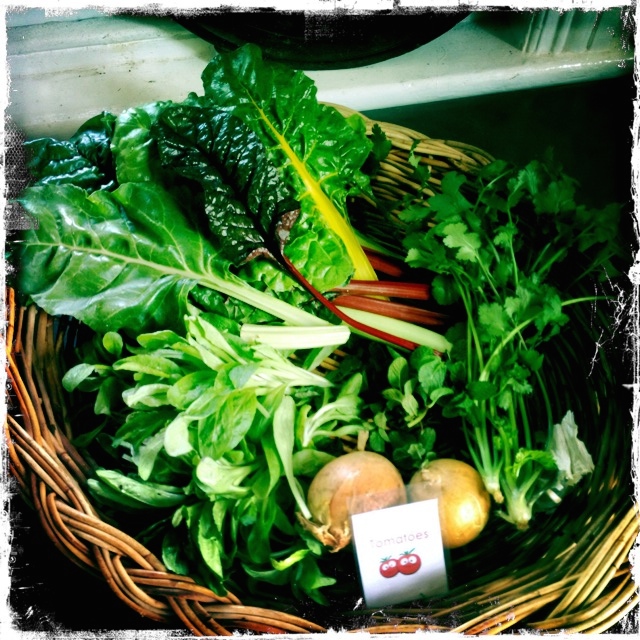
Fresh from the garden: parsley, coriander, mint, baby spinach, silverbeet, onion, garlic
Recipe source: adapted from Yotam Ottolenghi’s recipe in The Guardian

Equipment:

  • Chopping boards & knives
  • Garlic press
  • Microplane
  • Scales
  • Salad spinner
  • Large stockpot
  • Wooden spoon
  • Handheld (stick) blender
  • Measuring jug
  • Selection of mixing bowls
  • Ladle
  • Bowls to serve


Ingredients:

  • 5 tablespoons olive oil
  • 2 medium onions
  • 2 garlic cloves
  • 2 teaspoons ground turmeric
  • 1 nutmeg
  • 1 tablespoon dried mint
  • 250g baby spinach (we used lambs’ lettuce)
  • 250g silverbeet leaves
  • 25g parsley (leaves and stalks)
  • 25g coriander (leaves and stalks)
  • 1200ml hot water and a large tablespoon of bouillon (or vegetable stock)

To serve

  • 200g Greek yoghurt
  • 10g coriander leaves
  • 10g mint leaves
  • 5g parsley leaves
  • 200g feta
  • Flaked salt and black pepper

What to do:

  • Fill the kettle to 1200ml and set to boil.
  • Peel and roughly chop the onions. Peel and crush the garlic cloves.
  • Grate the nutmeg to yield 1 teaspoon.
  • Wash the baby spinach, silverbeet leaves & main herbs in several changes of water in large bowls & then carefully dry using the salad spinner.
  • Roughly chop the silverbeet leaves, rolling them up like a cigar and slicing. Finely chop the stalks.
  • Heat two tablespoons of the olive oil in the stockpot. Add the onion and sauté GENTLY for around five minutes, or until translucent and soft.
  • Stir in the turmeric, garlic and nutmeg, fry for a minute, then add the dried mint, spinach, silverbeet leaves, the whole parsley and coriander leaves and stalks, and stock.
  • Bring to a simmer and cook for 10 minutes. Season, then blitz the soup with the stick blender until smooth.
  • Meanwhile wash, carefully dry and then finely chop the ‘To Serve’ herbs.
  • Pour the yoghurt into the medium bowl. Whisk a ladleful of hot soup into the yoghurt, stirring constantly, and repeat with a couple more ladles of hot soup, then tip the yoghurt mix into the soup and whisk in.
  • Stir through the chopped herbs and crumble in half of the feta, reserving some leaves and cheese to garnish. Adjust the seasoning to taste.
  • Pour into soup bowls, sprinkle over the herbs and remaining feta, and finish with a little drizzle of olive oil.

Notes: How many herbs can you think of? What is feta? What does nutmeg small like? What was turmeric used for historically? What is silverbeet also known as?

ourkitchengarden.net

Categories: Kitchen Garden, Recipe | Tags: , , , , , , , | 1 Comment

Winter salad with poached eggs and roasted bits

We tend to veer towards slow-braised soups and stews in the winter, but I also love warm salads, blending crisp and green with warm and comforting, all in the one bowl…

Fresh from the garden: salad leaves, eggs, lemon, parsley, marjoram, thyme, coriander, chives
Recipe source: Melissa
Serves: 6 or 24 at home

Equipment:

  • Mixing bowls
  • Colander
  • Paper towel, tea towel
  • Chopping boards & knives
  • Measures:1/3 cup, tablespoon
  • 2 large baking trays
  • 2 salad spinners
  • Mortar & pestle
  • Citrus juicer
  • Mezzaluna
  • Whisk, tongs
  • Medium frying pan
  • Slotted spoon
  • Serving bowls


Ingredients:

  • A handful Brussels sprouts leaves
  • A handful cauliflower florets
  • A big bunch salad leaves: mache, mizuna, rocket, lettuce
  • A large handful of herbs
  • A few garnishing flowers
  • 4 eggs
  • Ground coriander and cumin

Herby vinaigrette dressing

  • 1 clove garlic
  • Flaked salt & black pepper
  • 1 lemon
  • 1/3 cup extra virgin olive oil
  • A small handful mixed herbs: parsley, marjoram, thyme, coriander, chives

What to do:

  • Preheat the oven the 180C.Wash the Brussels sprout leaves and cauliflower in a bowl of cold water, refilling if needed. Drain and pat dry with paper towel. Strip the leaves from the stalks and cut into ribbons. Cut the cauli into smaller florets. Turn the cauliflower into a clean dry bowl and sprinkle over a tablespoon of olive oil, a sprinkle of salt, ground coriander and ground cumin and mix to combine. Place on the baking tray and then add the Brussels sprout leaves, add another tablespoon of olive oil and sprinkle of salt etc. to the bowl. Lay the leaves out on a separate baking tray.
  • Roast the cauliflower for 20 minutes, then slide the tray of Brussels sprout leaves into the oven and roast for a further 5 to 10 minutes, removing when crispy.
  • Fill up 2 big bowls with cold water & wash the salad leaves in several changes of water. Spin dry and wipe the bowls dry. Lay out the tea towel and line it with kitchen paper. Spread the salad leaves over the paper and roll the whole lot up like a log. Keep the rolled parcel of leaves in the fridge until needed.
  • Fill up a medium bowl with water and wash the herbs and small garnishing leaves. Spin dry and pick leaves, discarding stalks into compost. Pick the petals from the flowers and reserve in a small bowl with the garnishing leaves. Chop the herbs finely and keep separate in their own small bowl.
  • Peel the garlic clove and put it in the mortar with a large pinch of salt. Pound to a paste. Juice the lemon and add the juice to the mortar (without pips) then stir the lot with a teaspoon and scrape it into a clean bowl. Stir in the oil and grind some pepper, then whisk the dressing lightly. Wash and spin dry the herbs, pick off the leaves and chop finely in the mezzaluna. Add to the dressing.
  • Meanwhile, to poach eggs, fill the medium sized frying pan with water and bring to a simmer. Carefully crack each egg into its own small bowl without breaking it and then carefully slide into the water. Let the pan sit for 4 minutes on the barest simmer until done.
  • Carefully remove oven tray of veggies with oven mitts and leave to cool for a few minutes.
  • Unwrap the parcel of salad leaves & tip them into the bowl with the herbs and the dressing. Add in the roasted cauliflower & sprout leaves and gently turn the leaves in the dressing using a clean hand or tongs.
  • Pile up the dressed leaves into the serving bowls, carefully drain an egg using a slotted spoon and place in the centre of each bowl of salad with garnishing petals or leaves and serve immediately.

Notes: What else could you add to a warm winter salad? What is the best way of using a mortar and pestle? What does ground coriander smell like? How is it made?

Categories: Kitchen Garden, Recipe | Tags: , , , , , , , | Leave a comment

Magic bean stew

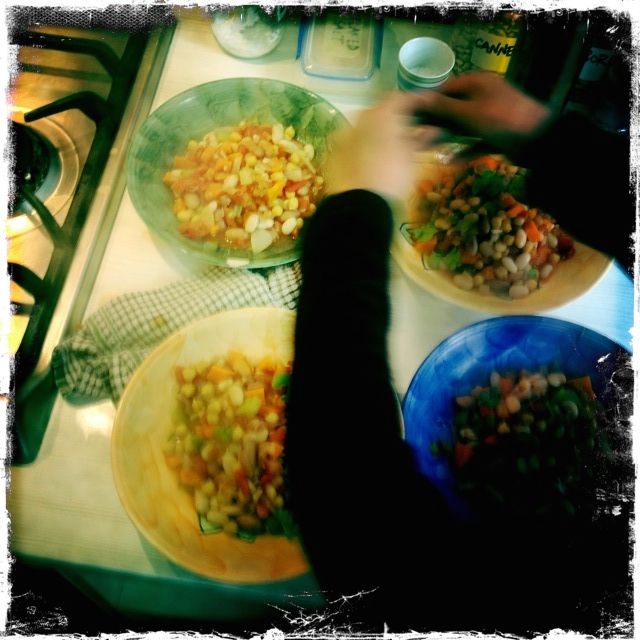
Why magic? Have you heard the story of Jack and the Beanstalk? These could be the same beans… anyway this stew certainly warms you up magically, and is great wrapped in a flour tortilla, burrito-style – or simply served with a slice of crusty bruschetta on the side.

ourkitchengarden.net

From the garden: garlic, onion, celery, carrots, coriander
Recipe source: Melissa
Serves: 6 or 24 tastes

Equipment:
  • Large glass bowl
  • Scales
  • Measures: tablespoon, teaspoon
  • Colander
  • A medium saucepan & a large heavy-based saucepan
  • Chopping boards & knives
  • Potato peelers
  • Salad spinner
  • Garlic press
  • Wooden spoon
  • Ladle
  • Serving bowls

Ingredients:

  • 100g dried cannellini beans
  • 100g dried borlotti beans
  • 100g black eyed beans
  • 100g dried chickpeas
  • 2 teaspoons bicarbonate of soda
  • 5 garlic cloves
  • 1 red onion
  • Olive oil
  • 2 stalks of celery
  • 2 carrots
  • 1 tin chopped tomatoes
  • 1 bunch coriander
  • Flaked salt & black pepper

What to do:

  • The night before, place your dried beans in the glass bowl and fill the bowl with cold water and the bicarb.
  • The next day, rinse and drain the beans, then put them into the medium saucepan with lots of fresh cold water to cover. Add 3 garlic cloves & grind of pepper. Set on a medium heat and simmer until beans are soft – should be around 20-30 minutes.
  • Meanwhile, peel and finely chop the onions.Wash and shake the celery dry then slice down the stalks, then chop the thin strips and leaves into small dice.
  • Wash and peel the carrots, slice into lengths then chop the lengths into small pieces.
  • Wash and spin dry the coriander and chop finely, keeping the stalks separate from the leaves.
  • Peel and squeeze the remaining garlic cloves through the press.
  • Heat a couple of tablespoons of oil in the large saucepan and fry the onion gently for 2 minutes, then add in the garlic, celery, carrot and chopped coriander stalks (not leaves, keep thewm for later) for about 5 minutes until the flavours combine.
  • Add the tomatoes and continue to cook on a gentle heat for a further 5 minutes, and then scoop out the beans and in to the tomato with a little liquid to moisten. Simmer for another 10 minutes.
  • Add a grind of pepper and a sprinkle of salt and taste to check seasoning.
  • Ladle into serving bowls, sprinkle with chopped coriander leaves and eat!

Notes: Why do we soak the beans overnight? What is another name for stew? What is coriander also known as?

Categories: Kitchen Garden, Recipe | Tags: , , , , , , | Leave a comment

Flour tortillas

These pliable tortillas are great for making burritos, with fillings you wrap up inside. You can also freeze any leftovers, then re-heat in a foil ‘packet’ when you need them. This recipe is also great if you want to use gluten-free plain flour, in fact the tortillas were even better!

ourkitchengarden.net

Recipe source: adapted from a recipe on cooks.com
Makes: 16 tortillas

Equipment:

  • Stand mixer and dough hook
  • Measures: cup, 1/3 cup, teaspoon
  • Spatula
  • Knife and chopping board
  • 2 tea towels
  • Large non-stick frying pan
  • Rolling pins
  • Tongs
  • Serving plates
Ingredients:

  • 3 cups flour
  • 1 teaspoon salt
  • 1 teaspoon baking powder
  • 1/3 cup vegetable or Rice Bran oil
  • 1 cup warm water

What to do:

  • Combine flour, salt and baking powder in the bowl of a stand mixer. With the dough hook attached, mix dry ingredients until well combined. Add oil and water with mixer running at a medium speed. Mix for 1 minute, stopping several times to scrape the sides of the bowl. After about 1 minute, or when mixture comes together and begins to form a ball, decrease mixing speed to low. Continue to mix for 1 minute or until dough is smooth.
  • Transfer from mixing bowl to a well-floured work surface. Divide dough in half, then in half again. Continue until you have 16 fairly equal portions. Form each piece into a ball and flatten with the palm of your hand as much as possible. If dough is sticky, use a bit more flour. Cover flattened balls of dough with a clean tea towel and allow to rest for 15 minutes before proceeding.
  • After rest period, roll each dough piece into a rough circle, about 15-20 cm in diameter, keeping work surface and rolling pins lightly floured. Don’t stack uncooked tortillas on top of each other or they will get soggy.
  • Heat the frying pan over medium-high heat. When pan is very hot, place one dough circle into pan and allow to cook about 1 minute or until bottom surface has a few pale brown spots. The uncooked surface will begin to show a few little bubbles. If tortilla is browning too fast, reduced heat a bit. If it’s taking longer than a minute to see a few pale golden brown spots on underside of tortillas, increase heat a bit. Flip to other side and cook for about 30 seconds. You want the tortilla to be soft but have a few small pale golden brown spots on surface. Remove from pan with tongs and stack, covered with a clean tea towel until all tortillas are cooked. This will keep them soft and pliable.
  • Wipe out the pan in between tortillas (carefully, with a piece of paper towel) if flour is started to accumulate.
  • Divide onto plates and serve warm.

Notes: What would you use as the filling in your burrito? What other sorts of tortillas are there?

ourkitchengarden.net

Categories: Kitchen Garden, Recipe | Tags: , , , , , | Leave a comment

Sharon’s broccoli soup

Sharon is my very good friend who cooks this soup for her kids, and mine too when they stay over. It was the first soup ever that my children specifically requested! Happy birthday Mrs!

ourkitchengarden.net

Fresh from the garden: broccoli, potatoes, spring onions, basil
Recipe source: adapted from a recipe by Sharon Quill
Serves: 6 or 24 tastes

Equipment:

  • Kettle
  • Chopping boards & knives
  • Mixing bowls
  • Colander
  • Salad spinner
  • Large stockpot
  • Wooden spoon
  • Measures: tablespoon
  • Scales
  • Handheld mixer
  • Ladle
  • Serving bowls
Ingredients:

  • 1.5 litres water & 1.5 tablespoons bouillon (or 1.5lt stock)
  • 500g waxy potatoes
  • A large onion
  • 4 spring onions
  • A large head broccoli & leaves
  • 4 garlic cloves
  • 25g unsalted butter
  • 2 bay leaves
  • A bunch of basil (or ready-made pesto)
  • Flaked salt and black pepper

What to do:

  • Fill the kettle up to the 1.5 litre mark and set to boil.
  • Wash and scrub potatoes & cut into 2cm cubes – do not peel. Peel and finely chop the onion.
  • Wash and trim spring onions, removing & discarding the tough outer layer. Slice into 1cm bits.
  • Wash the broccoli & shake dry. Cut off the florets leaving them walnut-sized, and chop up the stems into pieces about 1cm cubes, trimming off any hard edges. Strip any leaves from the stalks (discarding the stalks) and slice the leaves into strips.
  • Peel garlic cloves and finely slice.
  • Meltthe butter in the large stockpot over medium heat and gently sauté the chopped onion and spring onion for 2 minutes.
  • Add potato, garlic and bay leaves and turn with the wooden spoon so that the potato sweats in the butter. Add the hot water and bouillon or stock, bring to the boil then cover and simmer over low heat for 10 minutes.
  • Meanwhile, if you’re using fresh basil, pick the basil leaves from the stalks and wash them, then spin dry. Using your fingers, tear them into smaller pieces.
  • After the potatoes have simmered for 10 minutes, add the broccoli and cook for another 5 minutes. Remove the bay leaves and turn heat off. Drop the torn basil leaves, if using, into the soup or dollop in a tablespoon or two of pesto.
  • With dry hands, plug in the handheld mixer and carefully whizz the soup until it is silky smooth. Add salt to taste and a good grind of pepper and ladle into bowls to serve.

Notes: What is bouillon and where do we keep it? Why do we tear the basil with our fingers?

Categories: Uncategorized | Tags: , , , , , , , | Leave a comment

Silverbeet and ricotta tart

This is an open tart filled with a lovely soft silverbeet mixture. To save time, we use the pastry dough made by the class before, and then make the pastry for the next class.

ourkitchengarden.net

Fresh from the garden: silverbeet, marjoram, eggs, onion, lemon
Recipe source: adapted by Melissa from the recipe in The Silver Spoon
Serves: 6 or 24 tastes

Equipment:

  • Rolling pin
  • 26cm tart tin
  • Fork
  • Aluminium foil
  • Baking beans
  • Oven mitts
  • Chopping boards & knives
  • Mixing bowls – selection
  • Large frying pan
  • Whisk
  • Measuring cups – 1, ½, ¼
  • Scales
  • Large metal spoon
  • Microplane grater
  • Food processor
  • Cling film
  • Serving plates


Ingredients:

Italian shortcrust pastry

  • 1 lemon
  • 200g plain flour plus extra for rolling
  • 100g cold unsalted butter
  • 1 egg
  • 1 tablespoon iced water

Tart filling

  • An onion
  • 6 silverbeet stalks & leaves
  • 3 sprigs marjoram
  • 30g unsalted butter
  • 3 free-range eggs
  • 1 cup milk
  • ¼ cup cream
  • Salt and freshly ground black pepper to taste
  • 1 nutmeg
  • 100g ricotta

What to do:

Blind baking the pastry:

  • Preheat oven to 180C.
  • Roll out pastry onto floured surface to approximately 4mm thick.Rolling the pastry onto a rolling pin, lift it gently into the tart tin, and prick all over with a fork. Place a sheet of foil to cover the pastry, empty in the baking beans and blind bake in the oven for 15 minutes.

Preparing the tart:

  • Finely chop the onion and thoroughly wash the silverbeet. Wash, dry & pick the marjoram leaves.
  • Melt the butter in the large frying pan over medium/low heat. Add the onion and cook gently on a low heat, stirring regularly for 5 minutes.
  • Meanwhile shake off the excess water from the silverbeet, and slice it (including the stalks) finely. Add it to the frying pan and cook, stirring occasionally, for 5 minutes or so until it’s wilted but the leaves are still deep green. (If there is liquid in the base of the pan, briefly increase the heat to boil it off.) Turn off the heat. Set aside.
  • Whisk the eggs in the large bowl to break them up. Weigh the ricotta then push it through the sieve into the bowl then stir in the milk, cream, and a little salt, pepper and a grate of nutmeg. Stir in the silverbeet and the marjoram.
  • Using the oven mitts, remove the tart shell from the oven and let it cool for a few minutes. Pull off the beans (reserving them for future use) & discard the foil.
  • Using the large metal spoon, spread the silverbeet mixture evenly over the base of the tart shell.
  • Bake the tart for about 30 minutes until it is golden and lightly set. Use this time to make the pastry for the next class.
  • After 30 minutes is up, check the tart by inserting the tip of a knife into the middle and gently pressing the sides of the cut apart. The filling should be softly set with no liquid running into the cut.
  • Remove it from the oven and leave it to cool and settle for a few minutes before serving. Then just slip off the outer ring of the tin, gently slide the tart onto a clean chopping board to slice before placing onto your serving plates.

To make the pastry:

  • Carefully zest the lemon using the microplane grater.
  • For the pastry sift the flour and add to salt in food processor. Chop the butter and add to flour mixture – whiz until mixture resembles fine breadcrumbs.
  • Sprinkle in the zest and pulse to incorporate.
  • Separate the egg and add the yolk only to processor with the cold water and motor running.
  • As soon as the pastry resembles a ball, take out of processor. Flatten dough to form a disc and wrap in cling film. Refrigerate for at least an hour.

Notes: What else could be used in the filling instead of silverbeet? Why do we ‘blind bake’ & what does it mean? What does ‘shortcrust’ mean?

ourkitchengarden.net


Categories: Kitchen Garden, Recipe | Tags: , , , , , , , , | Leave a comment

Carrot soup with lemon tahini and crisped chickpeas

Carrot soup seems to go down a treat with our kids, and this one is super-special with a wonderful lemony dollop and also some crunch from roasted chickpeas.

ourkitchengarden.net

Fresh from the garden: carrots, onion, garlic, parsley, lemon
Recipe source: adapted from a recipe by Deb Perelman on smittenkitchen.com
Serves: 6 or 24 tastes

Equipment:

  • Kettle
  • Peelers
  • Chopping boards and knives
  • Large stockpot
  • Measures: tablespoon, teaspoon, ½ teaspoon
  • Baking tray and paper
  • Colander
  • Mixing bowls – selection
  • Citrus juicer
  • Salad spinner
  • Stick blender
  • Ladle
  • Serving bowls


Ingredients:

  • 1.5 litres boiling water with 2 tablespoons of bouillon (or 1.5 litres vegetable stock)
  • 2 tablespoons olive oil
  • 1kg carrots
  • 1 large onion
  • 4 garlic cloves
  • A teaspoon ground coriander
  • A teaspoon ground cumin
  • 1/2 teaspoon table salt, plus more if needed
  • Pinch of chilli flakes
  • A small handful flat leaf parsley

Crisped chickpeas

  • 400g tin of chickpeas
  • 1 generous tablespoon olive oil
  • 1/2 teaspoon coarse salt

Lemon-tahini dollop

  • 3 tablespoons tahini paste
  • A lemon
  • Pinch or two of salt
  • 2 tablespoons water

What to do:

  • Fill the kettle with cold water to the 1.5 litre mark and set it to boil. Preheat the oven to 220C.
  • Wash and peel carrots and dice into small cubes. Peel and finely chop the onion. Smash and peel the garlic cloves.
  • Heat two tablespoons olive oil in the large pot over medium heat. Add the onion and sauté gently for 5 minutes, then add the carrots, garlic, coriander, cumin and chilli flakes and cook until they begin to brown, about 5 minutes.
  • Once vegetables have begun to brown, add the hot water and bouillon (or stock), using it to scrape up any bits stuck to the bottom of the pot. Cover pot with lid and simmer until carrots are tender, stirring occasionally, about 15 minutes.

To make the chickpeas:

  • Meanwhile, line the tray with baking paper. Drain the chickpeas and then pat dry on paper towels and pop into a large bowl. Toss chickpeas with the olive oil, salt and cumin until they’re all coated. Spread them on the tray and roast them in the oven until they’re browned and crisp. This can take anywhere from 10 to 20 minutes, depending on the size and firmness of your chickpeas. Toss them occasionally to make sure they’re toasting evenly.

To make the lemon tahini:

  • Meanwhile cut the lemon in half and juice to yield 2 tablespoons. In a small dish, whisk together the juice, tahini, salt and water until smooth with a yogurt-like consistency. If more liquid is needed to thin it, you can add more lemon juice or water, a spoonful at a time, until you get your desired consistency.

To finish:

  • Wash and spin-dry the parsley. Pick the leaves from the stalks and chop.
  • Puree soup with the stick blender until smooth. Taste to check seasoning, then ladle into bowls. Dollop each with lemon-tahini, sprinkle with crisped chickpeas and garnish with chopped parsley. 

Notes: Carrot and cumin goes well together. What other classic combinations can you think of?

Categories: Kitchen Garden, Recipe | Tags: , , , , , , , , | Leave a comment

Roasted winter veggies with rosemary honey drizzle

The colder weather brings us turnips, Brussels sprouts and cauliflower but they’re a tricky bunch to convince kids to eat… Unless they’re swaddled in buttery honeyed goodness!

ourkitchengarden.net

Fresh from the garden: Japanese turnips, cauliflower, Brussels sprouts, kale, rosemary
Recipe source: adapted from a recipe by Susie Middleton in Fast, Fresh & Green
Serves: 6 or 24 tastes

Equipment:

  • Large rimmed baking tray
  • Baking paper
  • Paper towel
  • Chopping boards and knives
  • Colander
  • Salad spinner
  • Mixing bowls
  • Spatula
  • Mezzaluna
  • Scales
  • Measures: ¼ cup, tablespoon, teaspoon
  • Small saucepan
  • Serving bowls
Ingredients:

  • 4 or 5 medium Japanese turnips
  • 500g cauliflower
  • A large handful Brussels sprout leaves
  • A few branches of kale
  • 1/4 cup olive oil
  • 1½ teaspoons coarse salt
  • 25g unsalted butter
  • 1 tablespoon honey
  • 1 sprig fresh rosemary


What to do:

  • Preheat oven to 220C. Line a large rimmed baking sheet with baking paper and set aside.
  • Scrub the turnips under running water and wipe dry. Without peeling, chop them into 2cm cubes by cutting into slices first, then rods, then cubes.
  • Wash and dry the cauliflower and prepare in the same way as the turnips.
  • Wash the Brussels sprout leaves in a big bow of cold water, drain in the colander and dry in the salad spinner.
  • Wash the kale and strip the leaves from the stalks. Chop all finely.
  • In a large bowl, toss together all the veggies with the oil and salt until well combined. Place in an even layer on prepared baking sheet.
  • Transfer to oven and roast, turning with a spatula once or twice during cooking, until browned and turnips are easily pierced with a paring knife, for about 25 minutes.
  • Meanwhile, wash the rosemary sprig and wipe dry with paper towel. Strip the needles from the stalk and finely chop using the mezzaluna. We will need about a tablespoon worth.
  • Melt the butter in a small saucepan over medium heat. Add honey and rosemary; let simmer for a few seconds and remove from heat.
  • Transfer veggies to serving bowls and drizzle with butter mixture. Toss to combine and serve.

Notes: What other winter veggies can you name? What does a turnip smell like?

Categories: Kitchen Garden, Recipe | Tags: , , , , , , , , | Leave a comment

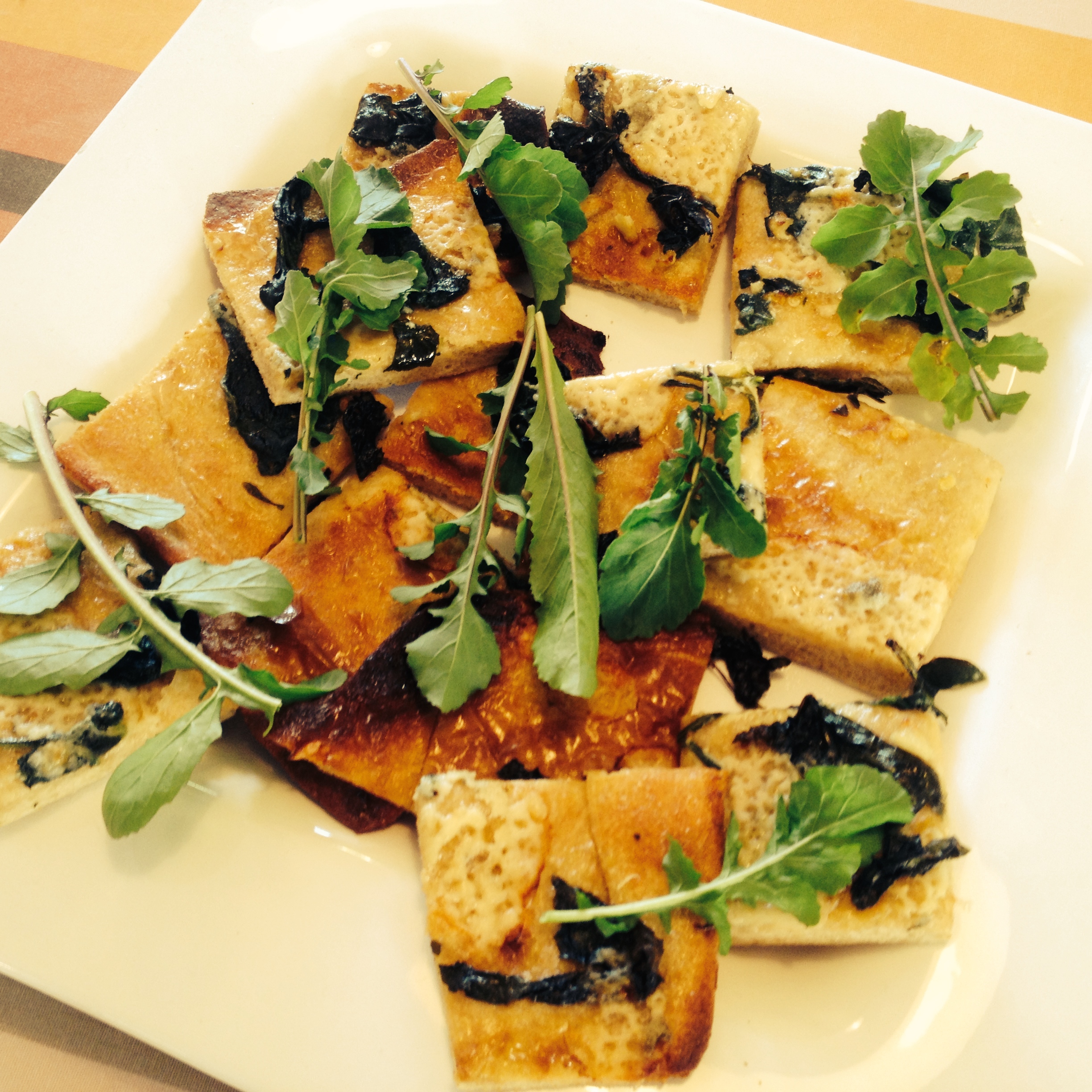
Bush tucker: Pizza bianca with Warrigal greens, kale and dolcelatte

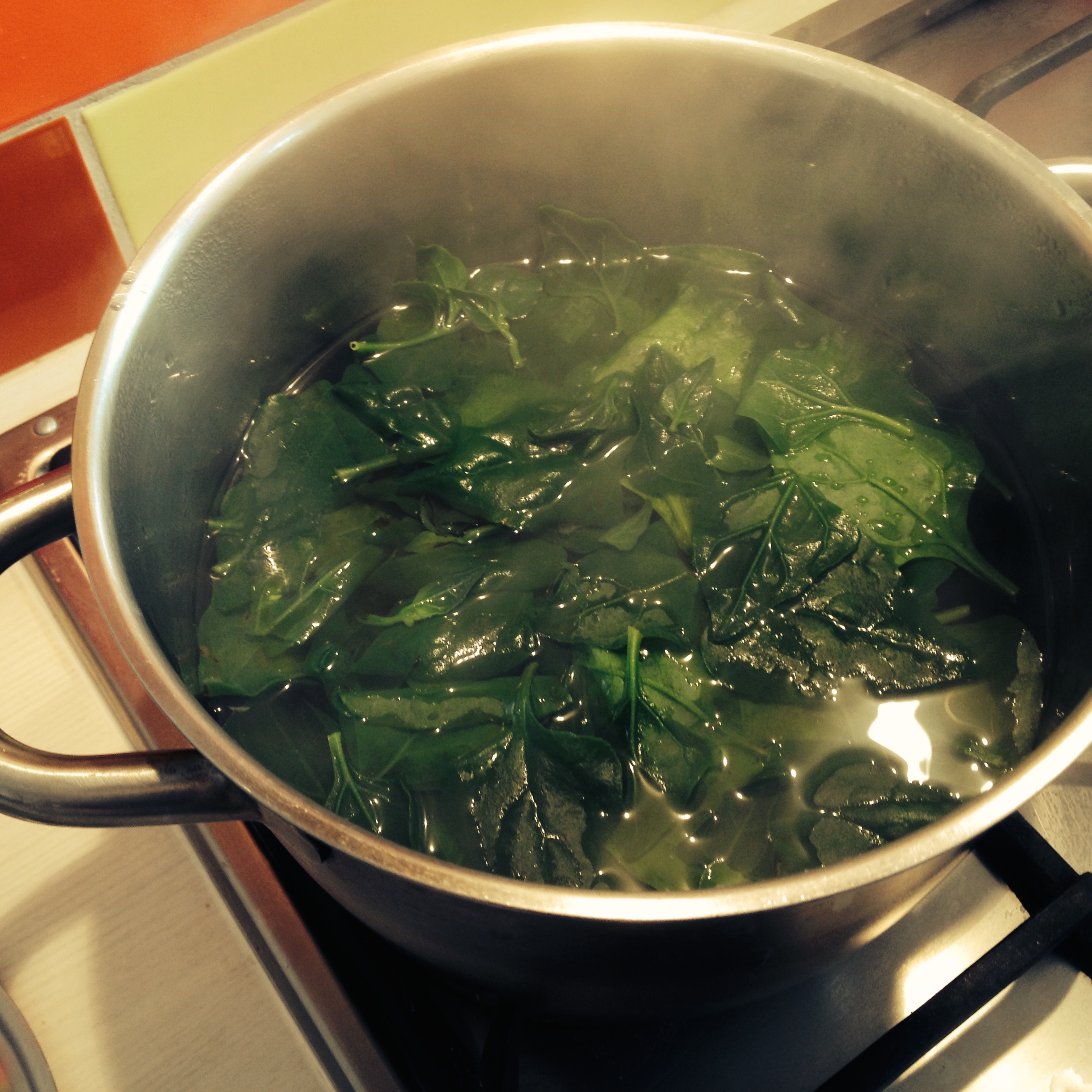
Warrigal greens are high in oxalic acid – and poisonous raw in large quantities – so need to be properly cooked first before eating. We blanch our leaves first in boiling water for a few minutes and then refresh before draining, and then using.

ourkitchengarden.net

Foraged bush tucker food: Warrigal greens
Recipe source: adapted from a recipe by Bill Granger in Sunday Life Magazine
Makes: 2 large pizzas

ourkitchengarden.net

Equipment:

  • Stand mixer, bowl and dough hook
  • Measures: cup, ½ cup, tablespoon, teaspoon, ½ teaspoon
  • Plastic wrap
  • Bowls – 2 medium, 2 small
  • Stockpot
  • Chopping boards and knives
  • Frying pan
  • Wooden spoon
  • 2 large oven trays
  • Rolling pins
  • Pastry brush
  • Metal spoons
  • Tongs
  • Wide egg lifter
  • Large wooden board
  • Pizza cutters
  • Serving plates
Ingredients:

For the pizza base:

  • 4 cups strong white bread flour plus extra for kneading
  • 2 teaspoons instant yeast
  • 1 teaspoon sugar
  • 1 teaspoon salt

For the pizza topping:

  • 4 tablespoons olive oil, plus extra for drizzling
  • 4 garlic cloves
  • A large handfulWarrigal greens
  • 4 large stalks of kale
  • A knob of butter
  • ½ teaspoon chilli flakes
  • 100g crème fraîche
  • 100g dolcelatte or other mild blue cheese
  • 2 handfuls of rocket

What to do:

For the pizza base, in advance:

  • Put the flour, yeast, sugar and salt into the bowl of the stand mixer and stir to combine. Make a well in the centre and pour in 1½ cups of tepid water. Turn mixer on and knead for 10 minutes until smooth and elastic.
  • Turn out onto your work surface and knead by hand for another minute or so, then place in a lightly oiled bowl and cover with plastic wrap. Leave for an hour until doubled in size.

To make the topping:

  • Half fill the stockpot with water and set to boil. Wash and shake the Warrigal greens dry, then when the water is boiling, add the greens and blanch for 3 minutes. Drain and refresh in a big bowl of cold water, then drain again.
  • Wash the kale then slice the leaves from the stalks, and chop into ribbons. Peel and thinly slice the garlic.
  • Heat the olive oil in the frying pan & gently cook the garlicand sizzle for a minute until fragrant. Add the kale ribbons and toss to coat in the oil. Pour in a cup of hot water and a teaspoon of bouillon and cook the kale gently until most of the liquid has evaporated and the leaves have wilted. Add in the Warrigal greens and toss to coat in the oil for one minute.
  • Toss in the butter and chilli flakes and shake the pan to coat the leaves. Set aside.
  • ourkitchengarden.net

Assembling the pizza:

  • Preheat the oven to 200C.
  • Brush the baking trays all over with a little olive oil.
  • With the dough still in the bowl, punch any air out, then divide into two and roll them out on a lightly floured surface. Transfer to the greased trays, pressing and pushing the dough into the corners using the palm of your hands.
  • Measure out the crème fraîche and dolcelatte.
  • Spoon the crème fraîcheover the pizza bases, then top with the Warrigal greens mix and chunks of dolcelatte.
  • Wash the rocket in a few changes of cold water and then spin it dry. Chop any large leaves into smaller ribbons. Reserve until the pizzas are cooked.

Baking the pizza:

  • Drizzle generously with olive oil and bake for 15-20 minutes until cooked through.
  • Use this time to make the dough for the next class if needed.
  • You may want to slip the pizza off the trays onto the rack for the last few minutes, so that you get a really crusty base.
  • Once the pizzasare done, transfer them to the large wooden board using the wide egg lifter.
  • Cut the pizzas crossways into small squares, and divide onto serving plates.
  • Sprinkle with rocket leaves and serve.
  • Yum!

Notes:What are Warrigal greens like and where do they grow? What is crème fraîche? What is dolcelatte and what does its name mean?

ourkitchengarden.net

Categories: Kitchen Garden, Recipe | Tags: , , , , , , | Leave a comment

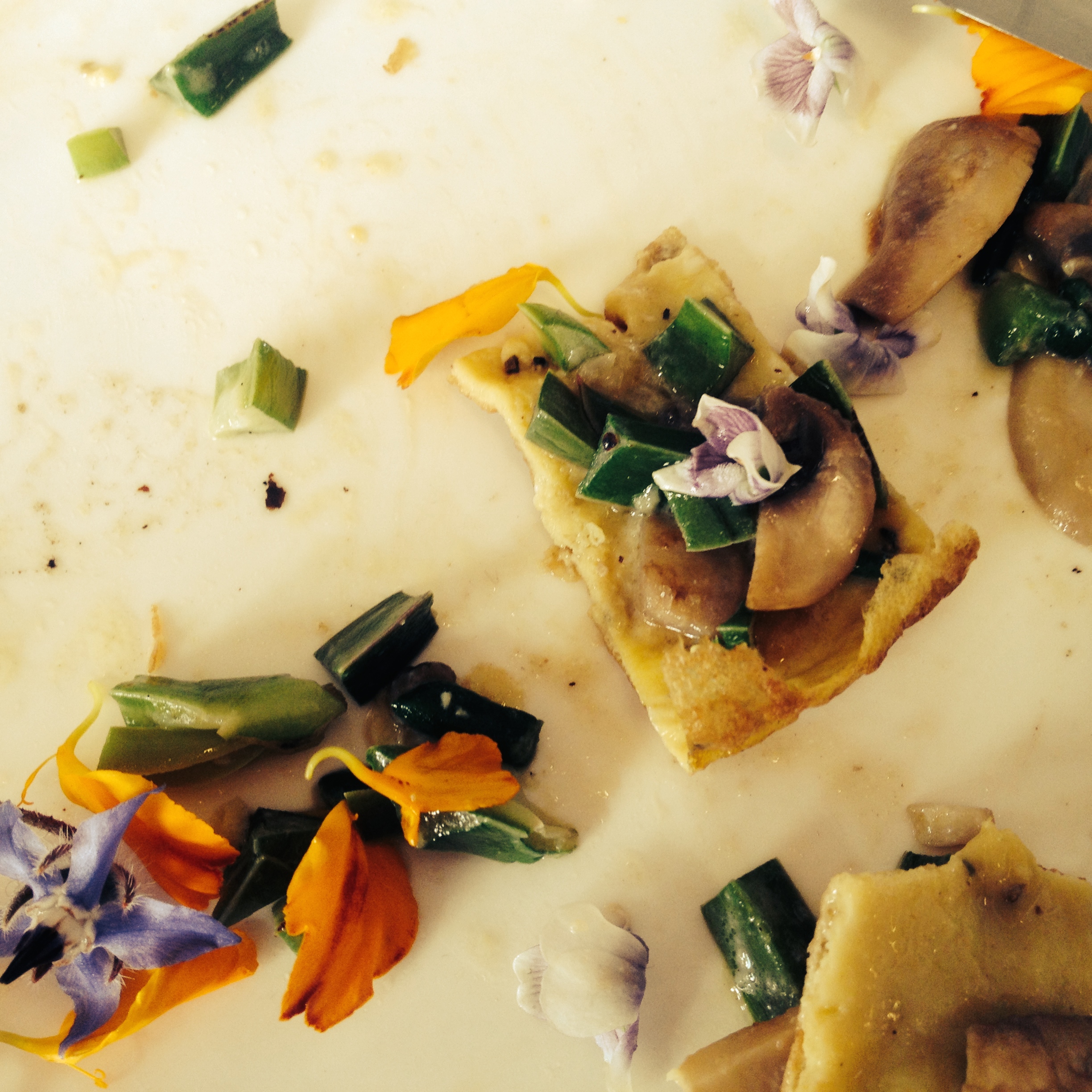
Bush tucker: Pigface and mushroom omelettes

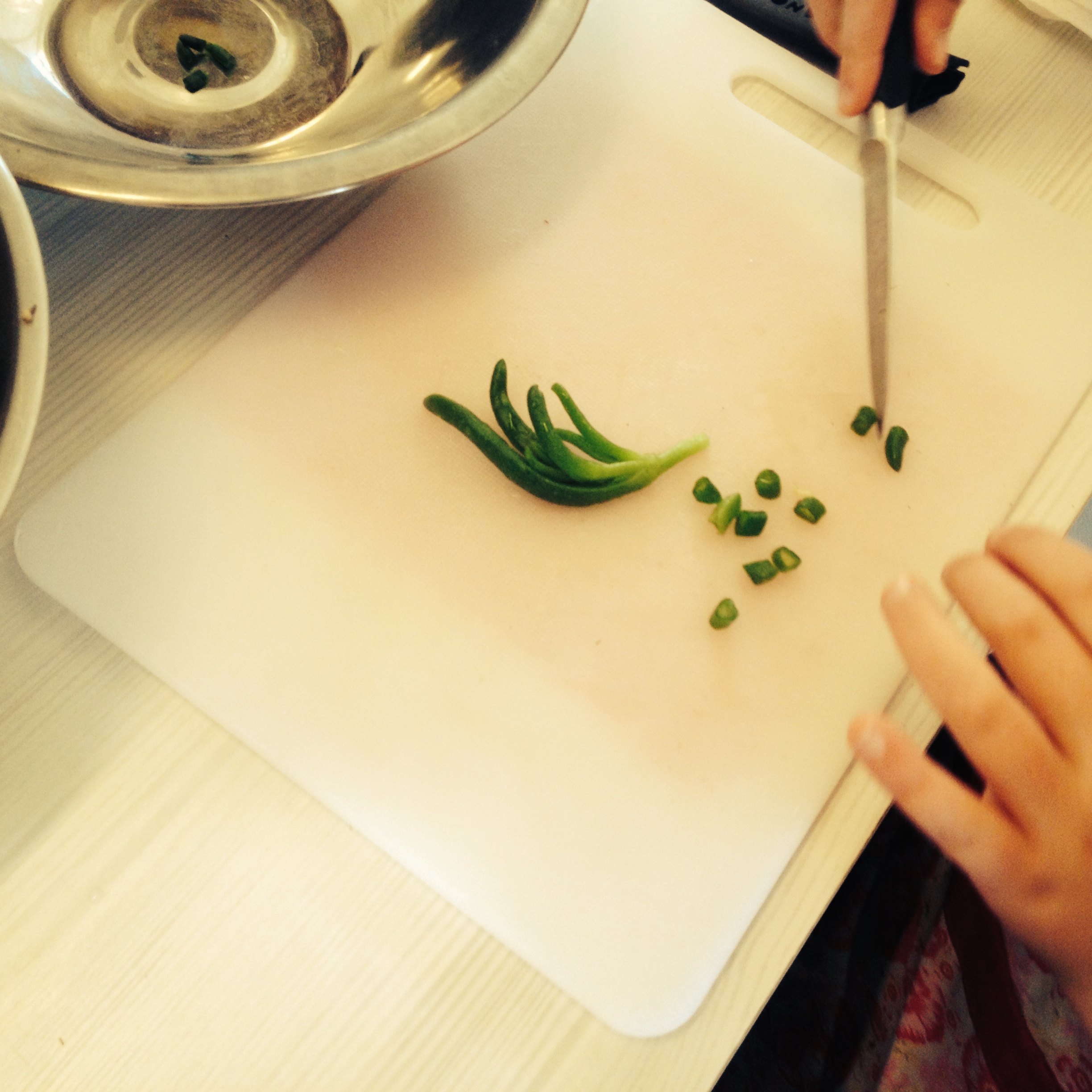
Pigface is also called karkalla or bush bananas & grows everywhere along the Eastern seaboard. Have a look next time you’re down at the beach!

ourkitchengarden.net

Foraged bush tucker food: pigface/ karkalla
Recipe source: Melissa
Makes: 4 omelettes

Equipment:

  • Paper towel
  • Chopping boards and knives
  • 1 large, 1 medium & 4 small mixing bowls
  • Garlic press
  • Colander
  • Fork, butter knife
  • A large wok
  • A non-stick frying pan
  • Wooden spoon with straight end
  • Egg slice
  • Serving plates
Ingredients:

  • A large handful of mushrooms
  • A clove of garlic
  • A large handful pigface
  • 8 eggs
  • Flaked salt & black pepper
  • 50g butter
  • Olive oil

What to do:

  • Trim the mushrooms of any dirt and wipe clean with a damp piece of paper towel. Chop into thin slices and reserve in a large bowl.
  • Peel the garlic clove and squeeze through the garlic press into the mushrooms.
  • Wash the pigface in a large bowl of cold water and drain. Pick through and discard any damaged ends and reserve the rest. Chop any large pieces into smaller slices.
  • Break 2 of the eggs at a time into each small bowl, season with salt and pepper and whisk lightly with a fork.
  • Heat a small knob of butter and a tablespoon of olive oil in the wok over medium heat until foaming. Add in the mushrooms and garlic and carefully toss a few times to cover in the butter mixture. Sprinkle in a few pinches of salt, a grind of pepper, and then sauté for 2 minutes until slippery.
  • Add the pigface to the wok and toss for another minute.
  • Add another small knob of butter to the frying pan and then when foaming, pour in one of the bowls of whisked egg mixture and gently tilt the pan to distribute. Cook for 20 seconds or so on a low heat, until it begins to bubble, then draw the egg into the centre with the wooden spoon and rotate the pan again to redistribute the uncooked egg.
  • The omelette is cooked when the base is set, but is still slightly runny in the middle.
  • Slide a quarter of the mushroom and pigface onto one half of one omelette, fold the other half over with the egg slice to form a half-moon and slice out on to one of the serving plates.
  • Repeat with the remaining omelettes and the rest of the mushroom mixture, and serve!

Notes: What does pigface look like and where does it grow?

ourkitchengarden.net

Categories: Kitchen Garden, Recipe | Tags: , , , , , , , | Leave a comment

Create a free website or blog at WordPress.com.