Author Archives: melhm

Ricotta fritters

FullSizeRender

Fresh from the garden: eggs, lemon/ orange
Recipe source: adapted from a recipe by Tobie Puttock in Daily Italian
Makes: about 20 fritters

Tobie says, “People are likely to fall in love with you if you cook them these fritters – that’s how good they are. They are best served hot but can be eaten cold.” We say start this recipe early as the dough needs to rest in the fridge before cooking!

Ingredients:

  • 400g fresh ricotta
  • 3 free-range eggs
  • 4 tablespoons caster sugar
  • Finely grated zest of one lemon (although I used orange instead)
  • A pinch of bicarb soda
  • 3 tablespoons sultanas (I didn’t use these at all)
  • 200g plain flour
  • 2 cups vegetable oil (I used Rice Bran)
  • Icing sugar for dusting

What to do:

  1. Drain the ricotta of excess moisture and place it a large mixing bowl with the eggs: beat until smooth.
  2. Add the sugar, lemon (or orange) zest, bicarb soda, sultanas (if using) and flour and stir well to combine the ingredients.
  3. Cover with plastic film and rest the flour in the fridge for about an hour.
  4. Set out a plate lined with kitchen paper.
  5. Heat the oil in a heavy based saucepan, and test it by dropping in a pinch of flour: if it starts to sizzle, the oil is ready to fry.
  6. Use a tablespoon to scoop out dollops of dough mix and carefully drop them into the oil. Depending on the size of your saucepan you’ll probably be able to fry just a few at a time.
  7. Cook until the fritters turn a nice golden brown, turning them over to cook if needed, then draining well on kitchen paper.

Warning:

  • Whenever working with hot oil, take extreme care and keep small children and pets well away.
  • Never leave hot oil unattended.
  • Never fill the pan more than half way with oil.

FullSizeRender

Categories: Kitchen Garden, Recipe | Tags: , , , , , , | 1 Comment

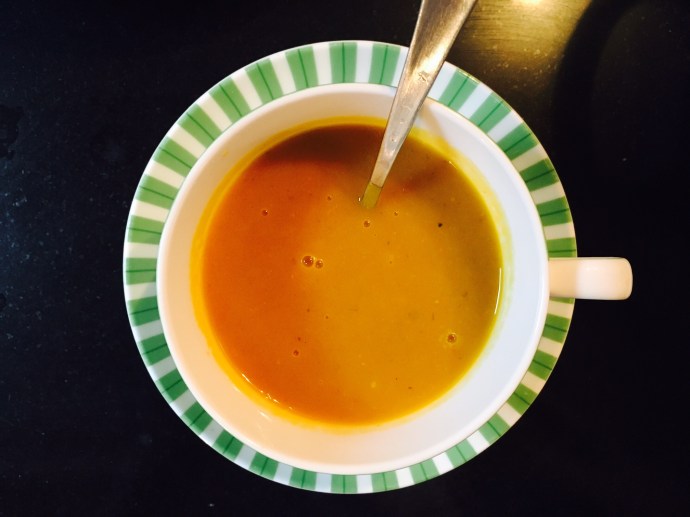
The best pumpkin soup ever!

FullSizeRender

This classic soup recipe has got to be the easiest one of all – and takes no time to cook! If you want to be a bit grown-up you can also garnish with some lightly toasted pine nuts and a dollop of Greek yoghurt but my kids like it just as it is…

Fresh from the garden: pumpkin, leek, thyme, coriander
Recipe source: Melissa
Serves: 6 or 24 tastes

Equipment:

  • Kettle
  • Chopping boards & knives
  • Mixing bowls
  • Measures: tablespoon
  • Scales
  • Salad spinner
  • Large stockpot
  • Stick blender
  • Ladle
  • Serving bowls
  • Scissors
Ingredients:

  • 1kg pumpkin, any type
  • One large leek
  • A small bunch of thyme
  • 20g butter
  • Olive oil
  • A tablespoon of ground cumin
  • A tablespoon of ground coriander
  • 1.5 litres water
  • 2 tablespoons bouillon
  • Flaked salt and black pepper
  • A small bunch of coriander

 What to do:

  1. Fill the kettle to 1.5 litres and set it to boil.
  2. Wash the pumpkin then place on a chopping board and scoop out all the seeds and membranes, saving for the chooks. Carefully slice off the skin – you may need to chop it up into a few smaller pieces first – then slice the pumpkin flesh into thin slices and reserve.
  3. Wash the leek under running water, trimming off the root and outer rough leaves, and slicing half way down the middle lengthways and peeling out to release any dirt trapped inside. Then slice into thin rings.
  4. Wash the thyme and dry it, then strip off the leaves and reserve. Wash the coriander and spin dry and reserve.
  5. Heat the butter and a glug of olive oil in the stockpot until bubbling, then add the chopped leek, the thyme and a good pinch of salt. Cook, stirring occasionally for a few minutes until the leek softens.
  6. Add in the sliced pumpkin and the two spices and stir again, then put the lid on the stockpot and turn right down to the lowest simmer for 5 minutes.
  7. Add in the boiling water until just covering the pumpkin, add in the bouillon with a grind of pepper and simmer for another 10 minutes.
  8. Meanwhile using the scissors, snip the coriander stalks and leaves into tiny pieces
  9. Plug in the stick blender and whizz until super-smooth. Taste to check if there is enough salt and add if needed.
  10. Ladle into bowls and garnish with coriander snips and serve straight away!

Notes: Where does the dirt hide in a leek? Is pumpkin skin edible?

Categories: Kitchen Garden, Recipe | Tags: , , , , , , , | Leave a comment

Kale, potato and egg soup

IMG_1709

Amazing what you can put in a soup isn’t it? Sounds very simple this one, but the flavours and bold and bright at the end. And it’s perfect for this freezing, wintry and blustery day…

Fresh from the garden: potatoes, garlic, kale, eggs
Recipe source: adapted from a recipe on thekitchn.com
Serves: 4 or 24 tastes

Equipment:

  • Chopping boards & knives
  • Garlic press
  • Measures: tablespoon, teaspoon
  • Medium stockpot
  • 4 little bowls or ramekins
  • Ladle
  • Microplane grater
  • 4 serving bowls


Ingredients:

  • 2 medium yellow potatoes
  • 3 garlic cloves
  • 1 teaspoon cooking salt
  • 1.5 litres water
  • 2 tablespoons bouillon
  • 1 bunch kale (about 15 big leaves)
  • 1 teaspoon apple cider vinegar
  • 4 large eggs
  • Flaked salt and pepper
  • 20g grana padano or parmesan cheese
  • Extra-virgin olive oil

What to do:

  1. Scrub the potatoes then chop it onto centimetre cubes. Peel the garlic cloves and squeeze them through the garlic press.
  2. Add potato, garlic, salt, water and bouillon to a medium stockpot over medium-high heat. Bring to a boil, then reduce the heat to simmer.
  3. While the potatoes start to cook, wash the kale and shake dry over the sink. Remove any thick, tough stems and chop them into tiny pieces. Add the chopped stems to the pot with the potatoes and simmer for 2 minutes.
  4. Stack the leaves of kale on top of each other. Slice them crosswise into thin ribbons, and add them to the pot with the potatoes and kale stems. If necessary, add more stock or water to the pot to just about cover the kale.
  5. Cover the pot and let the soup cook for 8 to 10 minutes. The soup is ready when the potatoes are easily pierced with a fork, and when a ribbon of kale has become tender, but has not yet become stringy or pulpy. Stir in the vinegar. Taste and season with more salt and fresh cracked pepper. Also add more stock or water if a more liquid soup is desired.
  6. To finish, crack the eggs into little bowls, and then gently slide them into the soup. Ladle some of the soup broth on top of the eggs to submerge them. Put the lid back on the pot and cook for 4 minutes. When done, the whites of the eggs should be opaque, but the yolk should still be soft. If the eggs break into the soup before they are poached, just use a fork to swirl them into the soup.
  7. Carefully spoon the eggs into a soup bowls. Ladle the soup on top. Finish with a grating of grana padano cheese and a thin drizzle of olive oil and serve.

Notes: What else could you put into a soup? What else could you use instead of kale?

IMG_1686

Categories: Kitchen Garden, Recipe, Uncategorized | Tags: , , , , , , , , | 1 Comment

Spinach and roasted garlic pizza

IMG_1677

This pizza bianca uses no tomato sauce, instead creamy ricotta is mixed with blanched spinach, roasted garlic and grated mozzarella and is quite the delicious thing!

Fresh from the garden: spinach, garlic, basil
Recipe source: Melissa
Makes: 4 medium pizze

Equipment:

·       Medium stockpot

·       Measures – cup, tablespoon, teaspoon

·       Foil

·       Colander

·       Bowls – large, med

·       Chopping boards & knives

·       Salad spinner

·       Scales

·       Grater

·       2 baking trays

·       Pastry brush

·       Wide egg lifter

·       Pizza cutting wheel

·      Serving plates

Ingredients:

·       A 500g quantity of Hugh’s Magic Dough

·       1 head of garlic

·       Extra virgin olive oil

·       2 cups ricotta cheese

·       A large sprig basil

·       A teaspoon of dried oregano

·       Cooking salt

·       Flaked salt and black pepper

·       A big bunch of spinach

·       225g mozzarella cheese


What to do:

  1. Preheat oven to 190C.
  2. Divide your dough into two balls and leave to rest before working.

For the topping:

  1. Fill the medium stockpot with water and set it to boil with a tablespoon of salt.
  2. Separate out the garlic cloves – do not peel them! – then lay out a large square of foil and place the unpeeled garlic cloves on top. Drizzle with a tablespoon of olive oil and sprinkle with a couple of pinches of cooking salt. Fold the foil into a sealed but loose packet and place on a tray in the oven. Roast the garlic until soft for about 25 minutes, then remove from oven and set aside to cool. Once cool enough to handle, squeeze the garlic out of their skins, discarding the skins into the compost and reserving the garlic.
  3. Increase oven heat to 230C to prepare it for baking the pizza.
  4. Meanwhile wash the spinach in plenty of cold water and shake dry over the sink. Slice off the stems and then when the water in the pot is boiling, add all the leaves in to blanch together. Put the lid back on and cook for 3 minutes until the spinach has wilted. Carefully drain into a colander placed in the sink, then press out all the water with a wooden spoon. When as dry as can be, turn out onto a chopping board and finely chop.
  5. Wash the basil, pick off the leaves and spin dry, then tear into small pieces.
  6. Weigh the mozzarella cheese and then grate it.
  7. Add half of the peeled garlic cloves to a medium bowl. Smash with a fork. Add the ricotta, a tablespoon of olive oil, basil, oregano, a pinch of salt and grind of pepper. Mix well.

Assembling the pizza:

  1. Lightly oil your baking trays and spread with a pastry brush.
  2. Roll and stretch out the pizza dough into two large rectangle shapes large enough to fill the baking trays, and then place on the greased baking trays.
  3. Top the crust with tablespoon-sized mounds of ricotta, as evenly spaced as possible. Scatter with the chopped spinach and remaining garlic cloves. Scatter mozzarella cheese over the top.

Baking the pizza:

  1. Bake at 230C until the crust is crisp and golden and the cheese is melted and bubbling for about 10 minutes.
  2. Use this time to make the dough for the next class if needed.
  3. Remove from oven and allow to cool for a couple of minutes before slicing into squares with a pizza cutter and serve.

Notes: What does to blanch mean? What happens to the garlic when it has been roasted?

Categories: Kitchen Garden, Recipe | Tags: , , , , , , | Leave a comment

Kitchen news 25th May 2016

IMG_1553

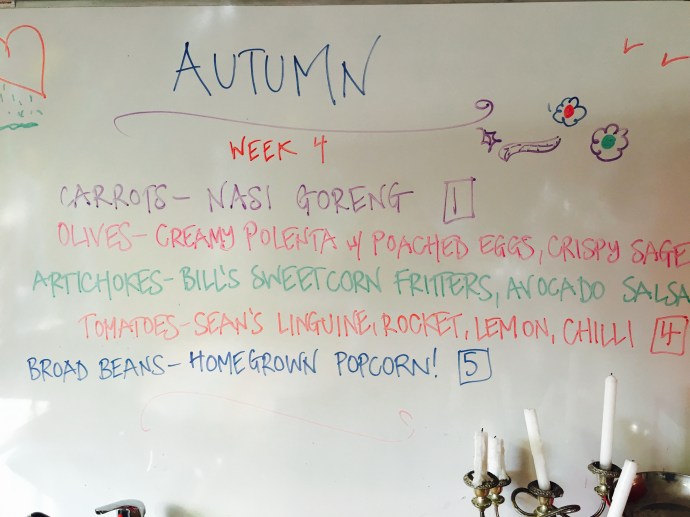
It seems we’re straddling the seasons right now with cool nights and still lovely warm days, so we’re trying to reflect this in the menu we’re preparing in the cottage: some lovely light dishes with fresh herbs and citrus, a few crispy and delicious fritters and also something heavier to make you think of open fires and warm jumpers…

So we’ve rolled handmade pasta into something light, fresh and slightly spicy with Sean’s linguine with rocket, lemon, parmesan and chilli oil – a big dish to get made from scratch although we cheat slightly by using the pasta dough made by the class before, and then when the linguine has been cut and the rocket ready, we make the dough for the next class. There is a lot to do in a short time but every class has managed to achieve the bowls of steaming hot and fragrant pasta well in time to eat it!

Another Bondi chef features on this menu too, with Bill’s famous sweetcorn fritters with avocado, lime and coriander salsa – a generous dad brought in a bag of avocadoes from his trees and they were fab mashed up with a little red onion too.

Autumn nights always make me feel like something a little richer, so we steeped some bay leaves in milk to whisk through polenta, and then added mascarpone and parmesan and finished with crispy sage leaves. Total comfort food – and totally gluten-free too! I reckon a slow-braise of lamb one weekend lunch soon would do just the job to match…

The Stage 3 kids have been talking in classroom activities about Asia, so to correspond with their lessons we’ve been wok-tossing Nasi Goreng – working out what the words actually mean – and also about how many languages put the noun first and the adjectives afterwards. And we’ve also been chatting about the nationalities that eat savoury food like rice and noodles for brekky instead of sweet cereal or toast and jam.

And finally we’ve been using up the popping corn we grew last term! The children have plucked and threshed the kernels from the cob, and made two flavours of popcorn: one with a rosemary and thyme oil, and the other with a spiced butter of cinnamon, smoked paprika and cumin. Delicious and fun… Sounds like the whole program to a tee!

Chooks: Thank you very much to the families that have signed up recently to feed and water the chooks or tuck ‘em in to bed! It’s great to have such community minded folk around!

Edmodo: do you want the recipes in advance of the lessons? Join the SAKGP group – ask me how!

IMG_1569

Categories: Kitchen Garden, News | Leave a comment

Popping corn with two flavours


Image

We made this recipe in my first lesson back in 2011, and just recently grew another crop of the little hard cobs.

Fresh from the garden: dried popcorn cob, rosemary, thyme
Recipe source: Melissa
Serves: 6 or 24 tastes

Equipment:

  • 2 tea towels
  • A large sieve
  • 2 large saucepans with lids
  • A small saucepan
  • Tongs
  • Large spoon
  • 8 small serving bowls


Ingredients:

  • 6 tablespoons Rice Bran oil
  • 3 cobs popping corn
  • A few sprigs rosemary
  • A few sprigs thyme
  • 50g butter
  • 1 teaspoon ground cinnamon
  • 1 teaspoon ground cumin
  • 1 teaspoon smoked paprika
  • 2 teaspoon table salt
  • 1 teaspoon sugar

What to do:

  1. Rub corncobs all over with a tea towel to remove any dust.
  2. Wash & carefully dry the herb sprigs.
  3. Pick off each corn kernel from the husk and place in the sieve. Once all removed, shake the sieve a little to dislodge the crispy end bits.
  4. Pour half the oil into each saucepan and add herb sprigs to one.
  5. Heat herbs until the oil simmers for five minutes to infuse the oil. Remove herbs.
  6. Turn heat up, add half the corn to each saucepan and immediately put lid on.
  7. Melt the butter with the spices, sugar and half the salt in the smaller saucepan and stir until the sugar has dissolved.
  8. After a minute the corn should start popping, turn heat down and wait until the noise almost stops. Then shake the saucepan while holding lid down to dislodge any tricky pieces.
  9. Only lift the lid when all popping has stopped! Then, turn heat off and lift the lid.
  10. To the herb popcorn: sprinkle the other half of the salt in, give a good stir and pour out into four small bowls.
  11. To the plain popcorn: pour over the spiced butter, stir well and pour into remaining four bowls.

Notes: What is the difference between popping corn and sweetcorn? What does savoury mean? Do you think popcorn is an old food or a modern food?

FullSizeRender


Categories: Kitchen Garden, Recipe | Tags: , , , , , , | Leave a comment

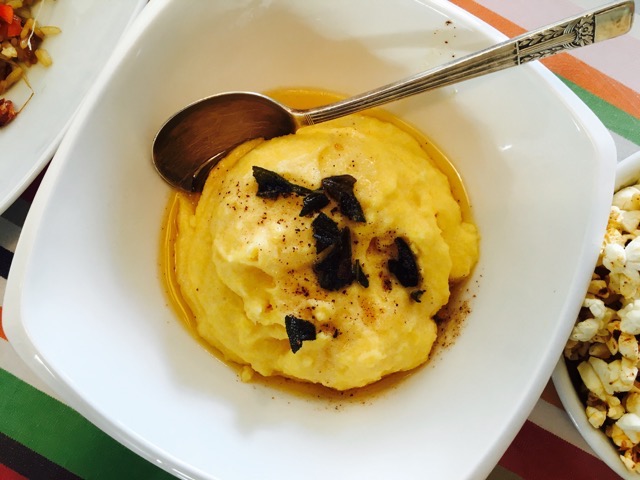
Creamy polenta with crispy sage

Image 1

This is such a vibrant and comforting dish, with the frizzled sage leaves giving everything a crispy, savoury lift.

From the garden: sage, garlic
Recipe source: Melissa
Serves: 4 or 24 tastes

Equipment:

  • Chopping board &small knife
  • 1 heavy-based saucepan & lid
  • Scales
  • Measuring jug
  • Grater
  • 1 small saucepan
  • Salad spinner
  • Paper towel
  • Wooden spoons
  • Bowls – 4 small
  • Deep-sided frying pan
  • Serving bowls
Ingredients:

  • 250ml milk plus extra 100ml on standby
  • 250ml water
  • 1 bay leaf
  • 1/2 cup fine polenta
  • 1/3 cup mascarpone
  • 50g grana padano parmesan
  • 25g butter
  • A branch of sage leaves
  • Flaked salt and black pepper

What to do:

  1. Bring the milk, water and bay leaf to the boil in the larger saucepan then remove from heat and allow to infuse for 20 minutes. Strain and discard the bay leaf, bring to the boil again, pour in the polenta and stir continuously until it thickens, about 10-20 minutes, depending on the variety of polenta.
  2. Meanwhile grate the parmesan and measure out the mascarpone.
  3. When the polenta is cooked, add the mascarpone and grated parmesan and mix until well combined. Taste for seasoning and add more salt if necessary. The polenta should be soft and creamy and only just hold its shape. You may need to add a little extra of the standby milk to loosen up the polenta if it becomes too stiff – this will also depend on what brand of polenta you use. You want a sloppy, porridge type consistency.
  4. Pick the sage leaves, then wash and spin them dry. With about a minute to go, heat the butter in the small saucepan over medium heat. Add the sage leaves and cook until they are dark green, crispy and fragrant and the butter is bubbling and turning brown.
  5. To serve, divide polenta among serving bowls. Season generously and scatter with the frizzled sage leaves & browned butter. 

Notes: What is polenta? What is cooking by ‘absorption’ method? What is mascarpone?

Categories: Kitchen Garden, Recipe | Tags: , , , , , , | Leave a comment

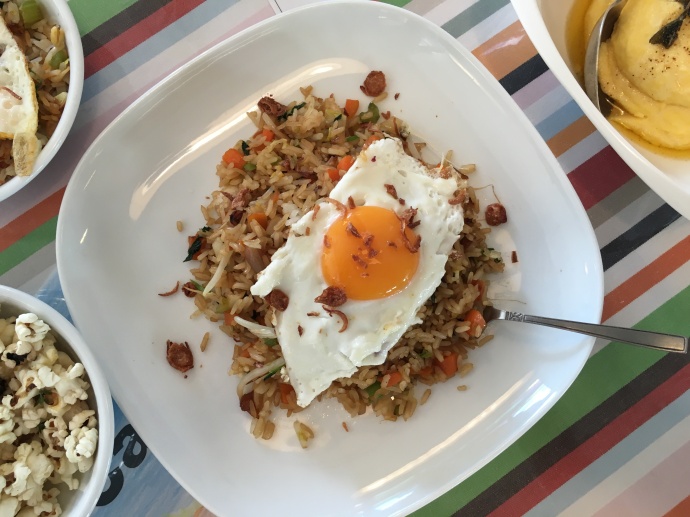
Nasi Goreng

IMG_1639

Nasi Goreng would have to be Indonesia’s most famous dish. It can be cooked with chicken, prawns and bacon as well as this veggie version, but always has kecap manis for that sweet kick!

From the garden: shallots, carrot, bean sprouts, celery, cabbage, garlic, eggs
Recipe source: Melissa, Kitchen Specialist at Bondi PS
Serves: 4 at home or 24 tastes

Equipment:

  • Kettle
  • Large saucepan
  • Baking tray to fit in fridge
  • Chopping boards & knives
  • Mixing bowls
  • Colander
  • Large wok & non-stick frying pan
  • Peeler
  • Measures: cup, tablespoon
  • Scales
  • Foil
  • Plate & egg slice
  • Serving bowls
Ingredients:

  • 2 cups white long grain rice
  • Rice Bran oil
  • Cooking salt
  • 5 shallots
  • 2 garlic cloves
  • 1 carrot
  • 1 celery stick
  • 40g Chinese cabbage
  • 80g bean sprouts
  • 2 tablespoons fried shallots
  • 2 tablespoons kecap manis
  • 1 tablespoon soy sauce
  • 4 eggs

What to do:

  1. Fill the kettle with at least 3 cups of water and set it to boil. Heat a tablespoon of oil in the large saucepan, add the 2 cups of rice and a pinch of salt and stir to heat. When the kettle has boiled, carefully measure 3 cups of water into the rice and stir again. Bring to the boil, the turn down to a simmer, put the lid on and cook for 14 minutes, setting the timer. When done, turn it off and leave for a few minutes with the lid on. Then fluff it up and spoon out into a tray and put in the fridge to cool completely. This rice will be used in the NEXT lesson, and your rice to use now will be in the fridge.
  2. Peel and thinly slice the garlic and shallots. Wash the carrot and celery stick. Peel the carrot and finely dice them both. Wash the cabbage and finely slice into thin shreds. Wash and drain the bean sprouts.
  3. Line the wok with oil, then heat over a low setting. Add the shallots and garlic, and stir-fry for a minute, then add the carrot and celery and stir-fry for 3 minutes until carrot is tender.
  4. Add the cabbage and stir-fry for 3 minutes until the cabbage wilts. Add cold rice, bean sprouts, half the fried shallots, the kecap manis and soy sauce. Stir-fry for 2 minutes or until heated through. Transfer to a large bowl. Cover with foil to keep warm.
  5. Heat a large non-stick frying pan over medium-high heat. Crack 2 eggs into the pan and cook, uncovered, for 2 minutes or until the white sets and the yolk is almost set (for a soft yolk) or until cooked to your liking. Transfer to a plate and repeat with remaining eggs.
  6. Spoon nasi goreng into shallow serving bowls. Top each with a fried egg and sprinkle over remaining fried shallots. Serve immediately.

Notes: What does Nasi Goreng mean? What is kecap manis? Why do we use the rice from the class before?

Categories: Kitchen Garden, Recipe | Tags: , , , , , , | Leave a comment

Bill’s sweetcorn fritters with avocado and lime salsa

IMG_1554

This classic dish from Bill’s just gets better with the addition of this herby salsa – feel free to add a drop of Tabasco or Cholula at home!

Fresh from the garden: sweetcorn, red onion, coriander, avocado, lime, eggs
Recipe source: adapted from Bill Granger’s recipe
Serves: 6 or 24 tastes

Equipment:

  • Chopping boards & knives
  • Citrus juicer
  • Salad spinner
  • Large metal spoons
  • Bowls: glass,
  • Measures: cup, ¼ cup, teaspoon, ½ teaspoon, ¼ teaspoon
  • Food processor
  • Spatula
  • Non stick frying pan
  • Soup spoon
  • Tea towel
  • Serving bowls for salsa
  • Serving plates


Ingredients:

Salsa

  • 1 small red onion
  • A small handful coriander
  • 1 large ripe avocado
  • 1 lime
  • 1 tablespoon extra-virgin olive oil

Corn fritters

  • 2 large corn cobs
  • 1 small red onion
  • 2 eggs
  • A small handful of coriander
  • 1¼ cups plain flour
  • 1 teaspoon baking powder
  • ¼ teaspoon salt
  • ½ teaspoon black pepper
  • ¼ teaspoon smoked paprika
  • ¼ teaspoon dried chilli flakes
  • Rice Bran oil for frying

What to do:

The salsa:

  1. Peel and finely chop the onion. Roll the lime on the table to soften, then cut in half and juice. Wash the coriander and spin it dry, then finely chop, reserving some leaves for garnish.
  2. Cut the avocadoes in half lengthwise, then neatly take the stone out. Using a large metal tablespoon, scoop out the flesh from half an avocado in one scoop. Place the flesh on a chopping board and slice into cubes.
  3. Place the avocado cubes in a glass bowl, spoon over 2 tablespoons lime juice & then add oil, onion and half of the coriander. Season with salt & pepper & toss gently to combine. Divide into serving bowls and reserve.

  The fritters:

  1. Strip the silks from the corn cobs and wash the cobs. Turn the cobs on one end and carefully slice the kernels from the stalk.
  2. Peel and finely chop the red onion.
  3. Toss about ½ of the corn kernels, and all of the onion, eggs, the other half of prepared coriander, flour, baking powder and spices into a food processor and whiz together until they are a thick, yellow, gloopy paste.
  4. Scrape out into a large bowl and add the rest of the corn kernels. Stir to combine.
  5. Heat up a non-stick frying pan and put about a tablespoon or two of Rice Bran oil in it. Heat it until it shimmers then dollop three mounds, each about the size of a heaped soupspoon worth of corn fritter batter into the pan.
  6. Fry them for about a minute on each side, checking that they are nicely browned before flipping. Repeat with the remaining batter, keeping the fritters warm on a plate under a tea towel. You should get about 16 fritters.
  7. Divide among serving plates and spoon on the salsa. Garnish with reserved coriander leaves and serve.

 Notes: Where does this salsa originate? What is a dollop?


Categories: Kitchen Garden, Recipe | Tags: , , , , , | Leave a comment

Kitchen news 6th April 2016

IMG_1423

We returned to a garden split between the last harvests of summer and the new plantings of winter, so we’ve an eclectic menu up on the board – Middle Eastern, Thai, Italian and olde English flavours mingling bizarrely but happily together on the tables…

The Olive group’s Quinoa tabbouleh has the knives sharpened to make light work of all the parsley, mint and basil that needs chopping and is the perfect dish to use up all the tiny baby tomatoes sprouting from absolutely everywhere in the garden!

The Tomato group is also chopping and blending frantically to make the paste for their Thai eggplant in coconut curry – and the results have been delicious and have had even the most reluctant child trying a little spoonful and agreeing it really is quite good indeed!

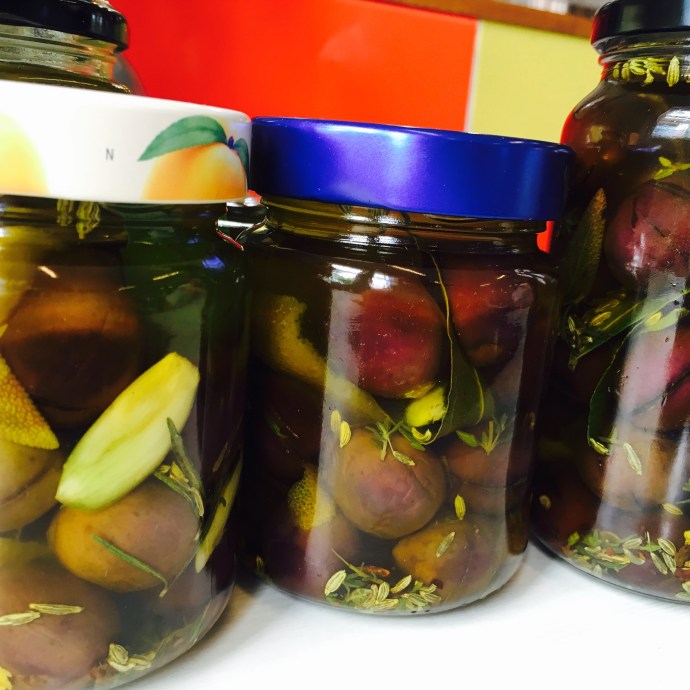
The Carrots have been very busy too, baking up some fabulous little parmesan biscuits and also marinating our own Bondi olives (picked in April and brining since) with orange zest, fennel and rosemary.

IMG_1425

We’ve had so much rocket rocketing up Mish has been pulling up whole clumps for the Artichokes to wash, chop and blend up with potatoes and silverbeet for a silky autumn soup, and finally the Broad Beans have been peeling, finely slicing and jamming up a ‘set’ for Mandarine marmalade – it has taken this long to be finally picking mandies from the tree at the front of the cottage. So exciting! I’m hoping there will plenty of jars of the marmalade and the olives for sale on the Kitchen Garden stall at the Halloween Fete!

 Cluck cluck! We really need ongoing help with the chickens on Saturdays and Sundays to open and feed in the morning, or close them up in the evening. Please sign up if you’re close by and can help! Please speak to Mish or email me if you can help.

IMG_1418

Categories: Kitchen Garden, News | Tags: , , | Leave a comment

Blog at WordPress.com.