Recipe

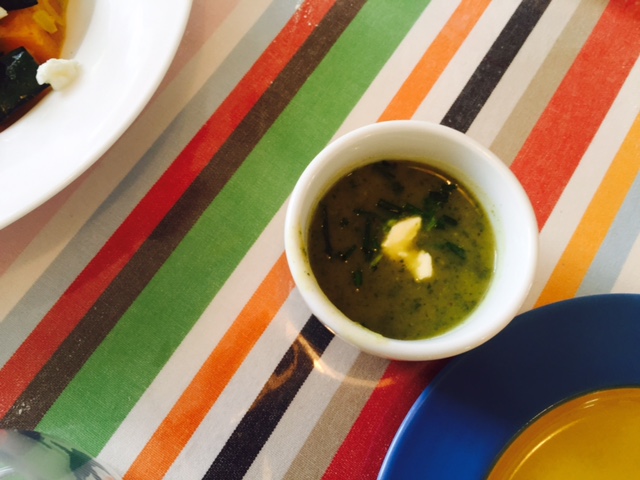
Silverbeet and garam masala soup

Garam is the Hindi word for hot, and masala, spice mixture. We often make our own garam masala blend of ground cumin, coriander, ginger and turmeric, cayenne and mustard seeds at school but it is commonly available in the spice section of any supermarket, already blended.

IMG_0520

Fresh from the garden: silverbeet (Swiss chard), onion, potatoes, garlic, coriander

Recipe source: Melissa

Serves: 6 or 24 tastes

Equipment:

  • Kettle
  • Chopping boards and knives
  • Selection of mixing bowls
  • Paper towel
  • Stockpot
  • Flat-ended wooden spoon
  • Measures: jug, tablespoon, teaspoon
  • Garlic press
  • Ladle
  • Stick blender
  • Serving bowls
Ingredients:

  • 1.5 litres boiling water and 2 tablespoons bouillon (or 1.5 litres vegetable stock)
  • 2 medium potatoes
  • 1 brown onion
  • 4 garlic cloves
  • A large bunch of silverbeet
  • Olive oil
  • A heaped teaspoon garam masala
  • Freshly ground black pepper
  • Flaked salt
  • A small handful of coriander

What to do:

  1. Fill the kettle to 1.5 litres and set it to boil.
  2. Wash or scrub the potatoes under running water (but don’t peel!) and then coarsely chop into 2cm cubes.
  3. Peel the onion and slice into two halves, then finely chop. Peel and chop the garlic.
  4. Wash the silverbeet & shake over the sink. Finely chop the silverbeet, using the whole stalk and leaves as well.
  5. Pour olive oil to cover the base of the stockpot and heat over medium heat for 30 seconds. Add the chopped onion and cook on low, stirring every now and then, for 5 minutes and then add the potato and cook for another few minutes.
  6. Add in the garlic, chopped silverbeet and the garam masala and stir together. Cook very gently for a minute until aromatic.
  7. Increase heat to high. Add the 1½ litres of hot water and the 2 tablespoons of bouillon and bring to the boil, then simmer gently, uncovered, for 10 minutes or until the potato is almost tender.
  8. Meanwhile wash and pat the coriander dry and finely chop.
  9. When the soup is ready and the potato is soft, grind a little bit of pepper in too and taste to see if you need to add any extra salt.
  10. Add in the coriander and then blitz the soup with the stick blender until it’s really smooth.
  11. Taste and add more salt if you need to.
  12. Ladle soup among serving bowls and serve!

 Notes: What do is silverbeet also known as? What is in the garam masala blend? Why do potato-based soups need more salt?

Categories: Kitchen Garden, Recipe | Tags: , , , , , , , , , , | Leave a comment

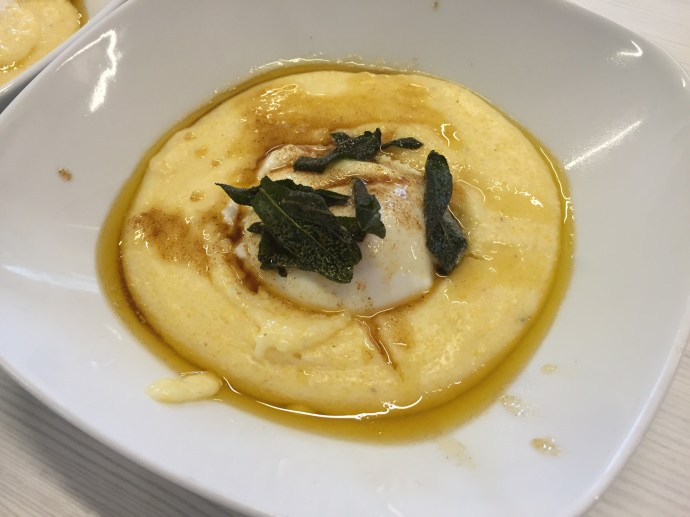
Creamy polenta with poached eggs and sage

This is comfort food at its creamiest, with the frizzled sage leaves giving everything a crispy, savoury lift. Just be sure the eggs are very fresh and that the yolks are intact when they go in to poach!

IMG_0521

From the garden: eggs, sage, bay

Recipe source: Melissa

Serves: 4 or 24 tastes

Equipment:

  • Chopping board & small knife
  • 1 heavy-based saucepan & lid and 1 small saucepan
  • Scales
  • Measures: jug, cup, 1/3 cup
  • Grater
  • Salad spinner & paper towel
  • Flat ended wooden spoon
  • Mixing bowls: 2 med, 4 small
  • Deep-sided frying pan
  • Serving bowls
Ingredients:

  • 400ml milk
  • 600ml water
  • 1 bay leaf
  • 1 cup polenta (cornmeal)
  • Cooking salt
  • 1/3 cup mascarpone
  • 50g grana padano parmesan
  • 50g butter
  • 4 very fresh large eggs
  • A branch of sage leaves
  • Flaked salt and black pepper

What to do:

  1. Measure the milk and water into the larger saucepan and pop in the bay leaf. Heat until almost boiling and then turn off and allow to infuse for 10 or 15 minutes.
  2. Meanwhile grate the parmesan, measure out the mascarpone and get the eggs ready by carefully and gently cracking each egg into its own separate small bowl – without breaking them!
  3. You can also wash and spin the sage leaves dry, separating if needed, and place them in the smaller saucepan. Weigh out the butter and place with the sage leaves.
  4. Removing the bay leaf from the milk mixture, heat the saucepan again and then sprinkle in the polenta and a teaspoon of cooking salt. Using the flat-ended wooden spoon stir continuously until it thickens and is not too grainy, about 10-20 minutes, depending on the variety of polenta.
  5. When the polenta is cooked, add the mascarpone and grated parmesan and mix until well combined. Taste for seasoning and add a little more salt if necessary. The polenta should be soft and creamy and only just hold its shape – you want a sloppy, porridge type consistency.
  6. About 5 mins before the polenta is ready, poach the eggs. Fill the deep-sided frying pan almost to the top with water and bring to a simmer. and then carefully slide into the water until they’re all in. Let the pan sit on a simmer for 4 minutes.
  7. When the eggs are almost ready, heat the butter and sage over medium heat until the butter is bubbling up and starting to turn brown and the leaves are crispy.
  8. To serve, pour out the polenta into serving bowls. Lift the eggs out of the water, drain, and then place one on top of each bowl. Season generously and scatter with the frizzled sage leaves & browned butter.

Notes: What is polenta? What is cooking by ‘absorption’ method? Why should we not break the egg yolks when poaching them? What is to simmer?

IMG_0519

Categories: Kitchen Garden, Recipe | Tags: , , , , , | Leave a comment

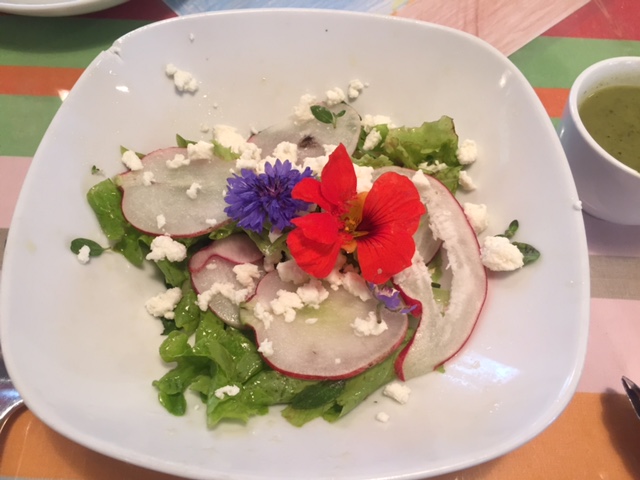
Spring salad of broad beans, radish and goats cheese

This salad is a beautiful celebration of spring, with lots of lovely texture from the broad beans, crunch from the radishes and creaminess from the goats cheese. At school the children love to run out and find edible flowers like nasturtiums or borage to garnish their salads. And if the broad beans are particularly small or very young, we don’t both to double-pod them.

IMG_0522

Fresh from the garden: lettuces, broad beans, radishes, marjoram, edible flowers

Recipe source: Melissa

Serves: 6 or 24 tastes

Equipment:

  • Saucepan & lid
  • Bowls – 2 large, 2 med, 2 small
  • Colander
  • 2 salad spinners
  • Paper towel
  • Mandoline slicer
  • Potato peeler
  • Measuring – 1/4 cup, tablespoon, teaspoon
  • A small jar with lid
  • Plates or bowls to serve
Ingredients:

  • A handful of lettuce leaves
  • A large handful broad beans in pod
  • A small handful of radishes
  • 2 sprigs marjoram
  • A small log of goats’ cheese
  • 1 tablespoon red wine vinegar
  • A teaspoon of honey
  • 1/4 cup extra-virgin olive oil
  • Flaked salt & black pepper
  • Edible flowers

What to do:

  1. Fill the saucepan with water & set to boil on high heat.
  2. Pod the broad beans, discarding the outer shell into the compost and add beans to the boiling water. Fill a large bowl with cold water and have ready.
  3. Boil the broad beans for 3 minutes, drain and then immediately refresh in the bowl of cold water. Drain again and double-pod by slipping the outer shell off into the compost. Reserve beans.
  4. Wash the lettuce leaves really well and spin dry in sections, reserving in a large clean, dry bowl. Wash & dry the marjoram sprigs, picking the leaves and leaving whole.
  5. Wash the flowers gently in a small bowl of cold water and reserve on a piece of paper towel until ready to use.
  6. Scrub the radishes clean, wipe dry and using the mandoline or a peeler, carefully slice into thin discs.
  7. For the dressing, measure the olive oil, red wine vinegar and honey and pour them into the jar. Add a sprinkle of salt and pepper, and then put the lid on & give the jar a good shake.
  8. Drizzle the dressing around the large lettuce bowl and gently turn the leaves with your fingers.
  9. Place the leaves in the serving bowls, then pour the broad beans, radish slices and snap peas into the bowl and mix to cover in the residual dressing. Then sprinkle over each bowl of leaves.
  10. Break the goats cheese into small chunks with your fingers and divide over the salads with the marjoram leaves.
  11. Finish by carefully placing the flowers on top of the bowls of salad. Serve immediately!

Notes: What does residual mean? Why do we use honey vinaigrette here instead of our usual lemony dressing? Can you name some edible flowers?

IMG_0426

Categories: Kitchen Garden, Recipe | Tags: , , , , , , , | Leave a comment

Orange and fennel salad with blood orange vinaigrette

This salad is a fresh and gorgeous, with contrasting flavours of orange and aniseed from the fennel. The lesson focusses on slicing oranges without squashing the juice out of them in the process!

ourkitchengarden.net

Fresh from the garden: oranges, blood oranges, fennel, red onion, parsley

Recipe source: Melissa

Serves: 6 or 24 tastes

Equipment:

  • Chopping boards and knives
  • Microplane grater
  • A medium jar with lid
  • Measures: jug, 1/3 cup, 1/4 cup, teaspoon
  • Selection of mixing bowls
  • Colander
  • Salad spinner
  • Paper towel
  • Bowls to serve
Ingredients:

  • 3 oranges
  • 2 small fennel bulbs
  • 1 medium red onion
  • A small handful parsley or coriander

Blood orange vinaigrette

  • 1 blood orange
  • 100mls olive oil
  • 1 teaspoon wholegrain mustard
  • Flaked salt & ground black pepper 

What to do:

To make the blood orange vinaigrette:

  1. Finely grate the rind from the blood orange using the microplane grater and reserve in a screw-top jar.
  2. Cut the blood orange in half and juice to make about 1/3 cup juice.
  3. Measure and add in the olive oil, blood orange juice, mustard and a pinch of salt and grind of pepper. Screw lid on securely and shake well.

To make the salad:

  1. Wash the fennel and trim it. Finely slice the fennel very carefully using a sharp knife.
  2. Peel the red onion and cut in half. Finely slice each half to form little half-moons.
  3. Peel the remaining oranges and cut in half. Place each half on the chopping board and very thinly slice them, without squashing the orange!
  4. Wash the parsley or coriander and spin-dry. Pick off the leaves, discarding the stalks and chop if needed.
  5. Toss the orange slices with the fennel and red onion in a bowl to combine. Place in a large mixing bowl, sprinkle with the parsley or coriander and pour over the orange vinaigrette.
  6. Toss to combine and then divide into your serving bowls.

Notes: Why is it called a blood orange? What does fennel smell like?

Categories: Kitchen Garden, Recipe | Tags: , , , , , , | 1 Comment

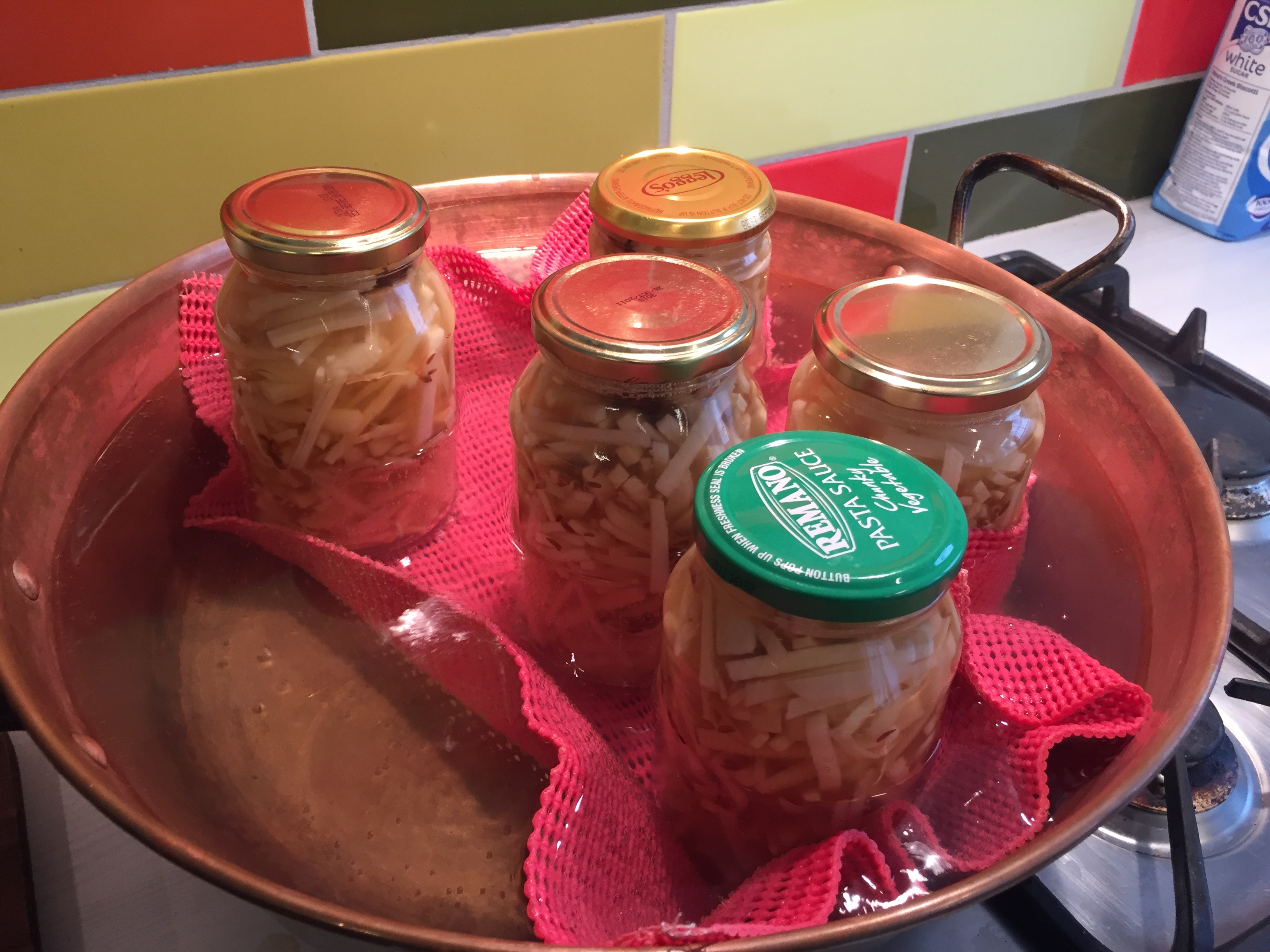
Honey pickled kohlrabi

Kohlrabi has to be the ugliest veg in the whole world, but its taste is somewhere between cabbage and apple! This is a great preserving recipe. Keep in the pantry for up to a year but once opened keep in the fridge and eat within 2 weeks.

ourkitchengarden.net

Fresh from the garden: kohlrabi

Recipe source: adapted from a recipe on puttingupwitherin.com

Makes: 4 large jars

Equipment:

  • Chopping boards and knives
  • Peelers
  • Measures: cup, tablespoon, teaspoon
  • Scales
  • Medium stockpot
  • Ladle & wooden spoon
  • Funnel
  • Paper towel
  • 4 x 470ml jars with lids
Ingredients:

  • 4 large kohlrabi heads
  • 1 litre apple cider vinegar
  • 1 litre water
  • 120g honey
  • 4 star anise
  • 2 teaspoons whole caraway seed
  • 1 tablespoon non-iodized sea salt

What to do:

To sterilize the jars:

  1. Wash the jars and lids in hot soapy water, rinse well and drain upside down.
  2. Place all the jars onto an oven tray, the right way up, and slide into the cold oven. Heat oven to 160C and leave to sterilize for 15 mins.
  3. Drain lids into the colander, then dry them with clean pieces of paper towel, taking care not to touch the inside of the lid.

To prepare the recipe:

  1. Wash the kohlrabi and then peel off the skin. You may need to ask an adult to help you slice the skin off if it is tough. Carefully cut into thin slices, then each slice into thin matchsticks.
  2. In a medium-sized stockpot combine vinegar, water, honey, star anise, caraway seeds and salt. Bring to a boil.
  3. Bring out the jars and leave to cool for a few minutes, then using tongs carefully pack the sterilized jars with kohlrabi matchsticks, leaving a bit of space at the top and not touching the inside of the jar.
  4. Then place the funnel into jar and ladle the hot honey brine (including caraway seeds) over kohlrabi leaving approx. 1cm headspace and including one star anise per jar.
  5. Using a clean piece of paper towel, wipe the rims, apply the dry lids and then process in hot water bath for 20 minutes (see Melissa).
  6. Let pickles sit a cool dry place for at least 3 weeks before consuming. 

Notes: What does kohlrabi look & smell like? Do you like pickles?

Categories: Kitchen Garden, Recipe | Tags: , , , , | Leave a comment

Green tabule salad for spring

Sarit Packer and Itamar Srulovich used to be the head chefs for Yotam Ottolenghi and now own their own restaurant in London called Honey and Co. They wrote a book of their delicious recipes, and this tabule is one of their favourites. They say: This (recipe) is the closest to original tabule salad. The dominant flavours are herby and green, and the taste of the olive oil should really shine through, so use the good stuff here.

We say: Get the kids chopping their little hearts out! Smart strong chops, no fiddling around. You want the parsley cut, not tickled!

ourkitchengarden.net

Fresh from the garden: cucumbers, spring onions, parsley, mint, lemon

Recipe source: adapted from a recipe in Honey and Co, Food From the Middle East

Equipment:

  • Kettle
  • Scales
  • Selection of mixing bowls
  • Plastic wrap/ cling film
  • Fork
  • Measures: jug, tablespoon, teaspoon
  • Salad spinner
  • Chopping boards and knives
  • Citrus juicer
  • Serving bowls
Ingredients:

·       75g bulgar wheat

·       2 spring onions

·       2 Lebanese cucumbers

·       1 bunch of parsley

·       6 sprigs of mint

·       1 teaspoon cooking salt plus a pinch

·       4 tablespoons best quality olive oil

·       1 lemon

What to do:

Basic bulgar wheat:

  1. For every 75g of bulgar wheat you will need a pinch of cooking salt, a splash of good olive oil and 75ml of boiling water (90ml for coarse bulgar wheat).
  2. Place the bulgar wheat, oil and salt into a bowl and stir well til the grains are all coated in the oil. Pour over the just boiled water and quickly cling-film the bowl to seal in the steam.
  3. Leave for 5 minutes and then carefully uncover. Use a fork to fluff the bulgar wheat up and break the mass into individual grains (or rub it between your palms to break it up). Allow to cool uncovered and then it is ready to use. It will keep like this for 3 days in an airtight container in the fridge.

To prepare the salad:

  1. Wash the spring onions and then peeling the first layer off, trim off the roots and discard. Finely chop.
  2. Wash the cucumber and then finely dice it.
  3. Wash the parsley and spin it dry, and finely chop the leaves and soft stalks.
  4. Wash the mint, spin it dry and pick off the leaves and finely chop them. You should have about 3 tablespoons’ worth.
  5. Cut the lemon in half and juice one half.

To finish the salad:

  1. Mix everything together as close to eating as possible for the best flavour and to stop it going soggy.
  2. They say: I recommend that you just add the juice of half the lemon to begin with and taste to see what you think. We love this sharp and would always add more lemon, but you may find that this is enough for you.

Notes: What is bulgar wheat? How many other ways can you spell tabule?

Categories: Kitchen Garden, Recipe | Tags: , , , , , , | Leave a comment

Spinach and ricotta calzone

ourkitchengarden.net

These folded pizzas are great with a homemade Napoli sauce served with – and you can even add prosciutto, ham or roasted chicken to the filling at home if you like. 

Fresh from the garden: spinach, garlic

Recipe source: Melissa

Makes: 4 calzone

Equipment:

·       Chopping boards & knives

·       Large frying pan or wok

·       Garlic press

·       Microplane zester

·       2 large bowls

·       Grater

·       Baking paper

·       Scales

·       Measuring cup

·       Metal spoon

·       Serving plates

Ingredients:

·       Plain flour, for rolling out dough

·       1 recipe Hugh’s Magic Dough

·       500g spinach or silverbeet

·       2 garlic cloves

·       2 cups ricotta

·       1 tub bocconcini

·       50g parmesan or grana padano

·       1 lemon

·       Flaked salt & black pepper

·       Coarse polenta for dusting baking sheet

·       Extra-virgin olive oil

What to do:

  1. Preheat oven to 200C.
  2. Lightly dust your work surface and rolling pin with flour. Divide the dough into 4 equal balls, then roll each out into large & long rectangles. Dust the baking sheets with a sprinkle of polenta and drape 2 dough rectangles over each tray, leaving half off the edge to fold over later.
  3. Wash the spinach, shake dry over the sink and slice the leaves into thin strips and the stalks into small squares.
  4. Squeeze the garlic through the press and add to the spinach. Using the fine microplane grater, zest only the fine yellow outer covering of the lemon.
  5. Heat the wok with 2 tablespoons of olive oil and add the spinach, the garlic & a pinch of salt to wilt. Cook, tossing for 3 or 4 minutes until cooked through. Squeeze moisture out with the back of a wooden spoon and place spinach in the large bowl.
  6. Drain the bocconcini & pull each ball apart into little pieces, add to the spinach with the measured ricotta and season with salt and pepper. Weigh the parmesan and then grate what you need and add to the spinach.
  7. Place the filling on the tray half of each oval leaving a 2cm border along the edge.
  8. Fold the remaining dough over the filling until the edges line up and pinch the edges together to seal. Gently roll the pinched edges under to form a decorative rim and brush the tops with olive oil.
  9. Bake for about 15 minutes until golden brown and the centre is hot and melted, rotating midway through cooking.
  10. Remove from the oven and allow to cool for a few minutes. Slice then gobble!

ourkitchengarden.net

Categories: Kitchen Garden, Recipe | Tags: , , , , , , , | 1 Comment

Quick pesto for the roasted pumpkin

This quantity of sauce is perfect for the roasted pumpkin recipe – but don’t stop there! Also wonderful with steaming hot pasta or as part of an antipasto plate with feta or goats’ cheese, roasted capsicum and garlicky bruschetta – or even added to toasted cheese sandwiches!

ourkitchengarden.net

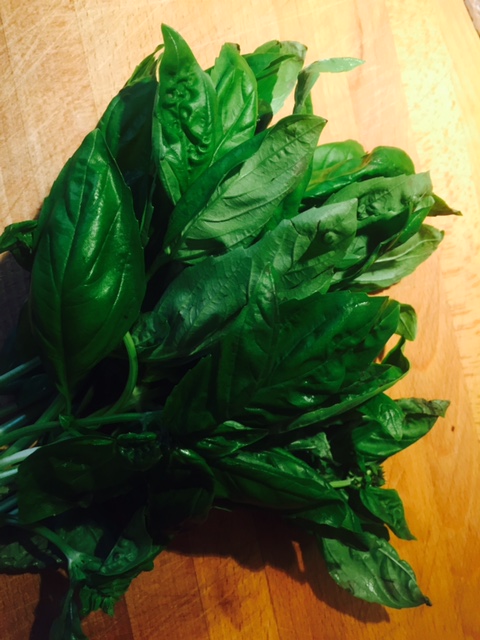
Basil!

Fresh from the garden: basil, garlic
Recipe source: Melissa
Makes: about 1 1/2 cups

Equipment:

  • Scales
  • Bowls – big, medium
  • Salad spinner
  • Grater
  • Small frying pan
  • Food processor
  • Chopping board and small knife
  • Spatula
  • Measuring jug
  • Tablespoon & jar if needed
  • Serving bowls if needed
Ingredients:

  • 1 bunch basil, to yield about 50g
  • 25g parmesan or grana padano
  • 40g pine nuts
  • 1 clove garlic
  • Flaked salt
  • 100ml extra-virgin olive oil plus extra

What to do:

  1. Pick the basil leaves from the stalks and weigh before you wash them!
  2. Then wash the basilin several changes of water, pick off the leaves and thoroughly spin-dry.
  3. Weigh then grate the parmesan.
  4. Heat the frying pan on a medium heat and lightly dry-toast the pine nuts, shaking regularly so that they don’t burn.
  5. Peel the garlic clove, chop it into small pieces and place in the bowl of the food processor with a good pinch of salt. Blend these to a paste and then add the pine nuts and blend again. Stir in the parmesan.
  6. Tear the basil leaves and put them into the mixture. Blending, gradually pour in all the olive oil. Scrape down with the spatula once or twice.
  7. Taste for salt and adjust if necessary.
  8. Serve, or if using later, spoon into a jar, pour in a thin layer of olive oil to cover, add the lid and refrigerate for up to 3 or 4 days.

Notes: Why do we weigh the basil before we wash it? Why do we weigh the parmesan before we grate it?

Categories: Kitchen Garden, Recipe | Tags: , , , , , , | Leave a comment

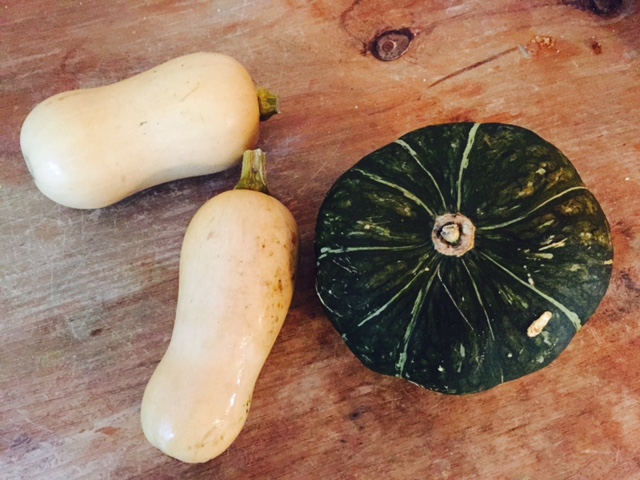
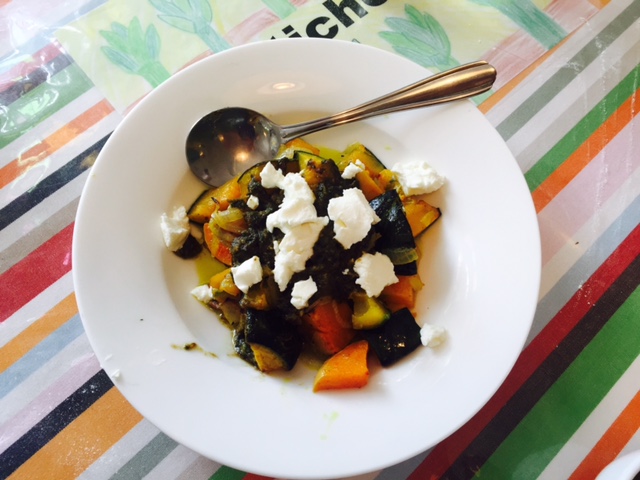
Roasted pumpkin with pesto and goats’ cheese

Pumpkin is transformed by a little hot-oven caramelisation and goes especially well with basil and bitey fresh goats cheese… a super-rustic dish perfect for these cooler nights! And instead of shop-bought garam masala (which I love) we used the leftover curry powder from our Curried carrot soup from the last fortnight’s menu. 

ourkitchengarden.net

Fresh from the garden: pumpkin, onions, basil
Recipe source: Melissa
Serves: 6 as a side order or 24 tastes

Equipment:

  •       Kitchen towel
  •       Chopping board & knife
  •       Baking tray
  •       Bowls – large
  •       Tongs
  •       Spoon
  •       Serving bowls
Ingredients:

  •       1kg pumpkin (Kent, Jap or Butternut)
  •       1 large onion
  •       1/4 cup extra-virgin olive oil
  •       1 teaspoon garam masala
  •       Flaked salt & black pepper
  •       1 quantity quick pesto
  •       100g goats’ cheese

What to do:

  1. Preheat oven to 220°C.
  2. Wash the pumpkin, scrubbing the skin clean, and wipe dry with some paper towel.
  3. If whole, carefully cut in half – you may need to ask an adult to help. Scrape out the seeds and membrane with the spoon and reserve for drying out (or the chooks!).
  4. Cut into cubes about 2cm square: you might find it easier to cut the pumpkin into slices first and then into smaller pieces. Be careful!
  5. Peel the onions and slice in half, then thinly slice.
  6. Drop the pumpkin pieces & onion slices into the large bowl, drizzle with the olive oil, a sprinkle of the garam masala & a good pinch of salt & grind of pepper. Toss to combine with your fingers then spread out onto the baking tray. Wash the bowl.
  7. Bake for 20 minutes until caramelised and tender but with little crispy black tinges.
  8. Meanwhile make the pesto – refer to separate recipe.
  9. Remove pumpkin from oven and using the tongs, place the pumpkin mixture into your serving bowls.
  10. Dribble or dob the pesto over the pumpkin.
  11. Open the packet of goats’ cheese and crumble off small pieces over the pumpkin.
  12. Serve immediately.

Notes: Why do we have to be careful when cutting up the pumpkin? What does caramelised mean? What does garam masala mean?

ourkitchengarden.net

Categories: Kitchen Garden, Recipe | Tags: , , , , , , | Leave a comment

Silverbeet soup with sour cream and chives

Slurpy, slinky soup chock-full of healthy stuff like silverbeet (or Swiss chard as it’s known in other parts), and a bit of creamy goodness too. Heaven.

ourkitchengarden.net

Fresh from the garden: onion, potatoes, celery, chives, silverbeet, garlic
Recipe source: Melissa
Serves: 6 or 24 tastes

Equipment:

  • Kettle
  • Chopping boards and knives
  • Peelers
  • Paper towel
  • Scissors
  • Stockpot, wooden spoon
  • Scales
  • Measures: jug, ½ cup, tablespoons, teaspoons
  • Garlic press, ladle
  • Stick blender
  • Serving bowls
  • Teaspoons
Ingredients:

  • 1 brown onion
  • 500g potatoes
  • 2 large or 3 small stalks celery
  • Small handful chives
  • 4 or 5 large silverbeet stalks
  • 2 tablespoons olive oil
  • 2 garlic cloves
  • 2 teaspoons ground cumin
  • 1.5 litres boiling water
  • 1.5 tablespoons bouillon
  • Salt & freshly ground black pepper
  • 1/2 tub crème fraîche or sour cream

What to do:

  1. Fill the kettle to the 1.5 litre mark and set it to boil.
  2. Peel and coarsely chop the onion.
  3. Peel and coarsely chop the potatoes into 2cm cubes.
  4. Wash and finely chop the celery, including leaves.
  5. Wash the chives and then roll them in a piece of paper towel. Snip into tiny pieces and reserve.
  6. Meanwhile wash the silverbeet stalks and shake dry. Slice off the stalks and finely chop, then roll up the leaves into a cigar shape and finely slice into ribbons.
  7. Heat the oil in the stockpot over medium heat. Add the onion and cook, stirring, for 5 minutes and then add the chopped celery and cook for another few minutes.
  8. Meanwhile peel and crush the garlic, and then add the garlic and ground cumin and cook, stirring, for 30 seconds or until aromatic.
  9. Increase heat to high. Add the stock (or hot water and bouillon) and bring to the boil. Add the potato and reduce heat to medium. Simmer, uncovered, for 10 minutes or until potato is almost tender.
  10. Add the chopped silverbeet stalks and cook for a few minutes and then add the sliced ribbons and simmer for a further 5 minutes.
  11. Remove from heat and blitz with the stick blender. (If you have time you may want to pass the soup through a mouli to make it super-smooth.)
  12. Taste and season with salt and pepper if needed.
  13. Ladle soup among serving bowls. Using 2 teaspoons, top with a wee dollop of crème fraîche and sprinkle with chives.
Categories: Kitchen Garden, Recipe | Tags: , , , , , , , | Leave a comment

Create a free website or blog at WordPress.com.