Posts Tagged With: gluten-free

Winter salad with poached eggs and roasted bits

We tend to veer towards slow-braised soups and stews in the winter, but I also love warm salads, blending crisp and green with warm and comforting, all in the one bowl…

Fresh from the garden: salad leaves, eggs, lemon, parsley, marjoram, thyme, coriander, chives
Recipe source: Melissa
Serves: 6 or 24 at home

Equipment:

  • Mixing bowls
  • Colander
  • Paper towel, tea towel
  • Chopping boards & knives
  • Measures:1/3 cup, tablespoon
  • 2 large baking trays
  • 2 salad spinners
  • Mortar & pestle
  • Citrus juicer
  • Mezzaluna
  • Whisk, tongs
  • Medium frying pan
  • Slotted spoon
  • Serving bowls


Ingredients:

  • A handful Brussels sprouts leaves
  • A handful cauliflower florets
  • A big bunch salad leaves: mache, mizuna, rocket, lettuce
  • A large handful of herbs
  • A few garnishing flowers
  • 4 eggs
  • Ground coriander and cumin

Herby vinaigrette dressing

  • 1 clove garlic
  • Flaked salt & black pepper
  • 1 lemon
  • 1/3 cup extra virgin olive oil
  • A small handful mixed herbs: parsley, marjoram, thyme, coriander, chives

What to do:

  • Preheat the oven the 180C.Wash the Brussels sprout leaves and cauliflower in a bowl of cold water, refilling if needed. Drain and pat dry with paper towel. Strip the leaves from the stalks and cut into ribbons. Cut the cauli into smaller florets. Turn the cauliflower into a clean dry bowl and sprinkle over a tablespoon of olive oil, a sprinkle of salt, ground coriander and ground cumin and mix to combine. Place on the baking tray and then add the Brussels sprout leaves, add another tablespoon of olive oil and sprinkle of salt etc. to the bowl. Lay the leaves out on a separate baking tray.
  • Roast the cauliflower for 20 minutes, then slide the tray of Brussels sprout leaves into the oven and roast for a further 5 to 10 minutes, removing when crispy.
  • Fill up 2 big bowls with cold water & wash the salad leaves in several changes of water. Spin dry and wipe the bowls dry. Lay out the tea towel and line it with kitchen paper. Spread the salad leaves over the paper and roll the whole lot up like a log. Keep the rolled parcel of leaves in the fridge until needed.
  • Fill up a medium bowl with water and wash the herbs and small garnishing leaves. Spin dry and pick leaves, discarding stalks into compost. Pick the petals from the flowers and reserve in a small bowl with the garnishing leaves. Chop the herbs finely and keep separate in their own small bowl.
  • Peel the garlic clove and put it in the mortar with a large pinch of salt. Pound to a paste. Juice the lemon and add the juice to the mortar (without pips) then stir the lot with a teaspoon and scrape it into a clean bowl. Stir in the oil and grind some pepper, then whisk the dressing lightly. Wash and spin dry the herbs, pick off the leaves and chop finely in the mezzaluna. Add to the dressing.
  • Meanwhile, to poach eggs, fill the medium sized frying pan with water and bring to a simmer. Carefully crack each egg into its own small bowl without breaking it and then carefully slide into the water. Let the pan sit for 4 minutes on the barest simmer until done.
  • Carefully remove oven tray of veggies with oven mitts and leave to cool for a few minutes.
  • Unwrap the parcel of salad leaves & tip them into the bowl with the herbs and the dressing. Add in the roasted cauliflower & sprout leaves and gently turn the leaves in the dressing using a clean hand or tongs.
  • Pile up the dressed leaves into the serving bowls, carefully drain an egg using a slotted spoon and place in the centre of each bowl of salad with garnishing petals or leaves and serve immediately.

Notes: What else could you add to a warm winter salad? What is the best way of using a mortar and pestle? What does ground coriander smell like? How is it made?

Categories: Kitchen Garden, Recipe | Tags: , , , , , , , | Leave a comment

Sharon’s broccoli soup

Sharon is my very good friend who cooks this soup for her kids, and mine too when they stay over. It was the first soup ever that my children specifically requested! Happy birthday Mrs!

ourkitchengarden.net

Fresh from the garden: broccoli, potatoes, spring onions, basil
Recipe source: adapted from a recipe by Sharon Quill
Serves: 6 or 24 tastes

Equipment:

  • Kettle
  • Chopping boards & knives
  • Mixing bowls
  • Colander
  • Salad spinner
  • Large stockpot
  • Wooden spoon
  • Measures: tablespoon
  • Scales
  • Handheld mixer
  • Ladle
  • Serving bowls
Ingredients:

  • 1.5 litres water & 1.5 tablespoons bouillon (or 1.5lt stock)
  • 500g waxy potatoes
  • A large onion
  • 4 spring onions
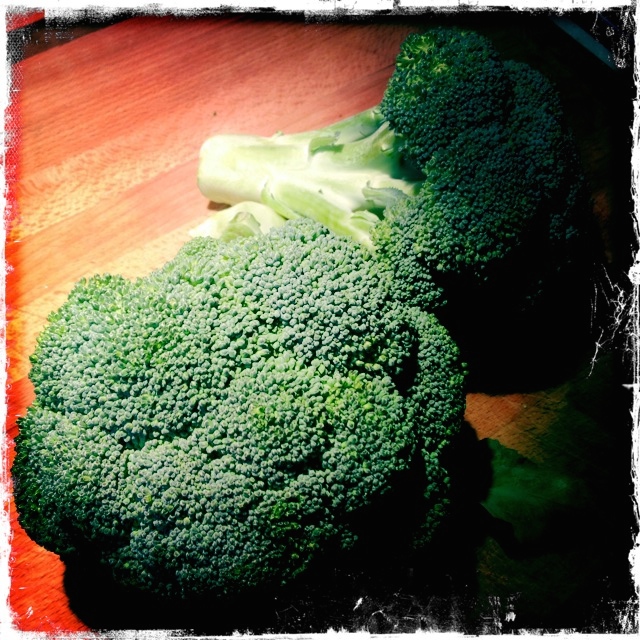
  • A large head broccoli & leaves
  • 4 garlic cloves
  • 25g unsalted butter
  • 2 bay leaves
  • A bunch of basil (or ready-made pesto)
  • Flaked salt and black pepper

What to do:

  • Fill the kettle up to the 1.5 litre mark and set to boil.
  • Wash and scrub potatoes & cut into 2cm cubes – do not peel. Peel and finely chop the onion.
  • Wash and trim spring onions, removing & discarding the tough outer layer. Slice into 1cm bits.
  • Wash the broccoli & shake dry. Cut off the florets leaving them walnut-sized, and chop up the stems into pieces about 1cm cubes, trimming off any hard edges. Strip any leaves from the stalks (discarding the stalks) and slice the leaves into strips.
  • Peel garlic cloves and finely slice.
  • Meltthe butter in the large stockpot over medium heat and gently sauté the chopped onion and spring onion for 2 minutes.
  • Add potato, garlic and bay leaves and turn with the wooden spoon so that the potato sweats in the butter. Add the hot water and bouillon or stock, bring to the boil then cover and simmer over low heat for 10 minutes.
  • Meanwhile, if you’re using fresh basil, pick the basil leaves from the stalks and wash them, then spin dry. Using your fingers, tear them into smaller pieces.
  • After the potatoes have simmered for 10 minutes, add the broccoli and cook for another 5 minutes. Remove the bay leaves and turn heat off. Drop the torn basil leaves, if using, into the soup or dollop in a tablespoon or two of pesto.
  • With dry hands, plug in the handheld mixer and carefully whizz the soup until it is silky smooth. Add salt to taste and a good grind of pepper and ladle into bowls to serve.

Notes: What is bouillon and where do we keep it? Why do we tear the basil with our fingers?

Categories: Uncategorized | Tags: , , , , , , , | Leave a comment

Carrot soup with lemon tahini and crisped chickpeas

Carrot soup seems to go down a treat with our kids, and this one is super-special with a wonderful lemony dollop and also some crunch from roasted chickpeas.

ourkitchengarden.net

Fresh from the garden: carrots, onion, garlic, parsley, lemon
Recipe source: adapted from a recipe by Deb Perelman on smittenkitchen.com
Serves: 6 or 24 tastes

Equipment:

  • Kettle
  • Peelers
  • Chopping boards and knives
  • Large stockpot
  • Measures: tablespoon, teaspoon, ½ teaspoon
  • Baking tray and paper
  • Colander
  • Mixing bowls – selection
  • Citrus juicer
  • Salad spinner
  • Stick blender
  • Ladle
  • Serving bowls


Ingredients:

  • 1.5 litres boiling water with 2 tablespoons of bouillon (or 1.5 litres vegetable stock)
  • 2 tablespoons olive oil
  • 1kg carrots
  • 1 large onion
  • 4 garlic cloves
  • A teaspoon ground coriander
  • A teaspoon ground cumin
  • 1/2 teaspoon table salt, plus more if needed
  • Pinch of chilli flakes
  • A small handful flat leaf parsley

Crisped chickpeas

  • 400g tin of chickpeas
  • 1 generous tablespoon olive oil
  • 1/2 teaspoon coarse salt

Lemon-tahini dollop

  • 3 tablespoons tahini paste
  • A lemon
  • Pinch or two of salt
  • 2 tablespoons water

What to do:

  • Fill the kettle with cold water to the 1.5 litre mark and set it to boil. Preheat the oven to 220C.
  • Wash and peel carrots and dice into small cubes. Peel and finely chop the onion. Smash and peel the garlic cloves.
  • Heat two tablespoons olive oil in the large pot over medium heat. Add the onion and sauté gently for 5 minutes, then add the carrots, garlic, coriander, cumin and chilli flakes and cook until they begin to brown, about 5 minutes.
  • Once vegetables have begun to brown, add the hot water and bouillon (or stock), using it to scrape up any bits stuck to the bottom of the pot. Cover pot with lid and simmer until carrots are tender, stirring occasionally, about 15 minutes.

To make the chickpeas:

  • Meanwhile, line the tray with baking paper. Drain the chickpeas and then pat dry on paper towels and pop into a large bowl. Toss chickpeas with the olive oil, salt and cumin until they’re all coated. Spread them on the tray and roast them in the oven until they’re browned and crisp. This can take anywhere from 10 to 20 minutes, depending on the size and firmness of your chickpeas. Toss them occasionally to make sure they’re toasting evenly.

To make the lemon tahini:

  • Meanwhile cut the lemon in half and juice to yield 2 tablespoons. In a small dish, whisk together the juice, tahini, salt and water until smooth with a yogurt-like consistency. If more liquid is needed to thin it, you can add more lemon juice or water, a spoonful at a time, until you get your desired consistency.

To finish:

  • Wash and spin-dry the parsley. Pick the leaves from the stalks and chop.
  • Puree soup with the stick blender until smooth. Taste to check seasoning, then ladle into bowls. Dollop each with lemon-tahini, sprinkle with crisped chickpeas and garnish with chopped parsley. 

Notes: Carrot and cumin goes well together. What other classic combinations can you think of?

Categories: Kitchen Garden, Recipe | Tags: , , , , , , , , | Leave a comment

Roasted winter veggies with rosemary honey drizzle

The colder weather brings us turnips, Brussels sprouts and cauliflower but they’re a tricky bunch to convince kids to eat… Unless they’re swaddled in buttery honeyed goodness!

ourkitchengarden.net

Fresh from the garden: Japanese turnips, cauliflower, Brussels sprouts, kale, rosemary
Recipe source: adapted from a recipe by Susie Middleton in Fast, Fresh & Green
Serves: 6 or 24 tastes

Equipment:

  • Large rimmed baking tray
  • Baking paper
  • Paper towel
  • Chopping boards and knives
  • Colander
  • Salad spinner
  • Mixing bowls
  • Spatula
  • Mezzaluna
  • Scales
  • Measures: ¼ cup, tablespoon, teaspoon
  • Small saucepan
  • Serving bowls
Ingredients:

  • 4 or 5 medium Japanese turnips
  • 500g cauliflower
  • A large handful Brussels sprout leaves
  • A few branches of kale
  • 1/4 cup olive oil
  • 1½ teaspoons coarse salt
  • 25g unsalted butter
  • 1 tablespoon honey
  • 1 sprig fresh rosemary


What to do:

  • Preheat oven to 220C. Line a large rimmed baking sheet with baking paper and set aside.
  • Scrub the turnips under running water and wipe dry. Without peeling, chop them into 2cm cubes by cutting into slices first, then rods, then cubes.
  • Wash and dry the cauliflower and prepare in the same way as the turnips.
  • Wash the Brussels sprout leaves in a big bow of cold water, drain in the colander and dry in the salad spinner.
  • Wash the kale and strip the leaves from the stalks. Chop all finely.
  • In a large bowl, toss together all the veggies with the oil and salt until well combined. Place in an even layer on prepared baking sheet.
  • Transfer to oven and roast, turning with a spatula once or twice during cooking, until browned and turnips are easily pierced with a paring knife, for about 25 minutes.
  • Meanwhile, wash the rosemary sprig and wipe dry with paper towel. Strip the needles from the stalk and finely chop using the mezzaluna. We will need about a tablespoon worth.
  • Melt the butter in a small saucepan over medium heat. Add honey and rosemary; let simmer for a few seconds and remove from heat.
  • Transfer veggies to serving bowls and drizzle with butter mixture. Toss to combine and serve.

Notes: What other winter veggies can you name? What does a turnip smell like?

Categories: Kitchen Garden, Recipe | Tags: , , , , , , , , | Leave a comment

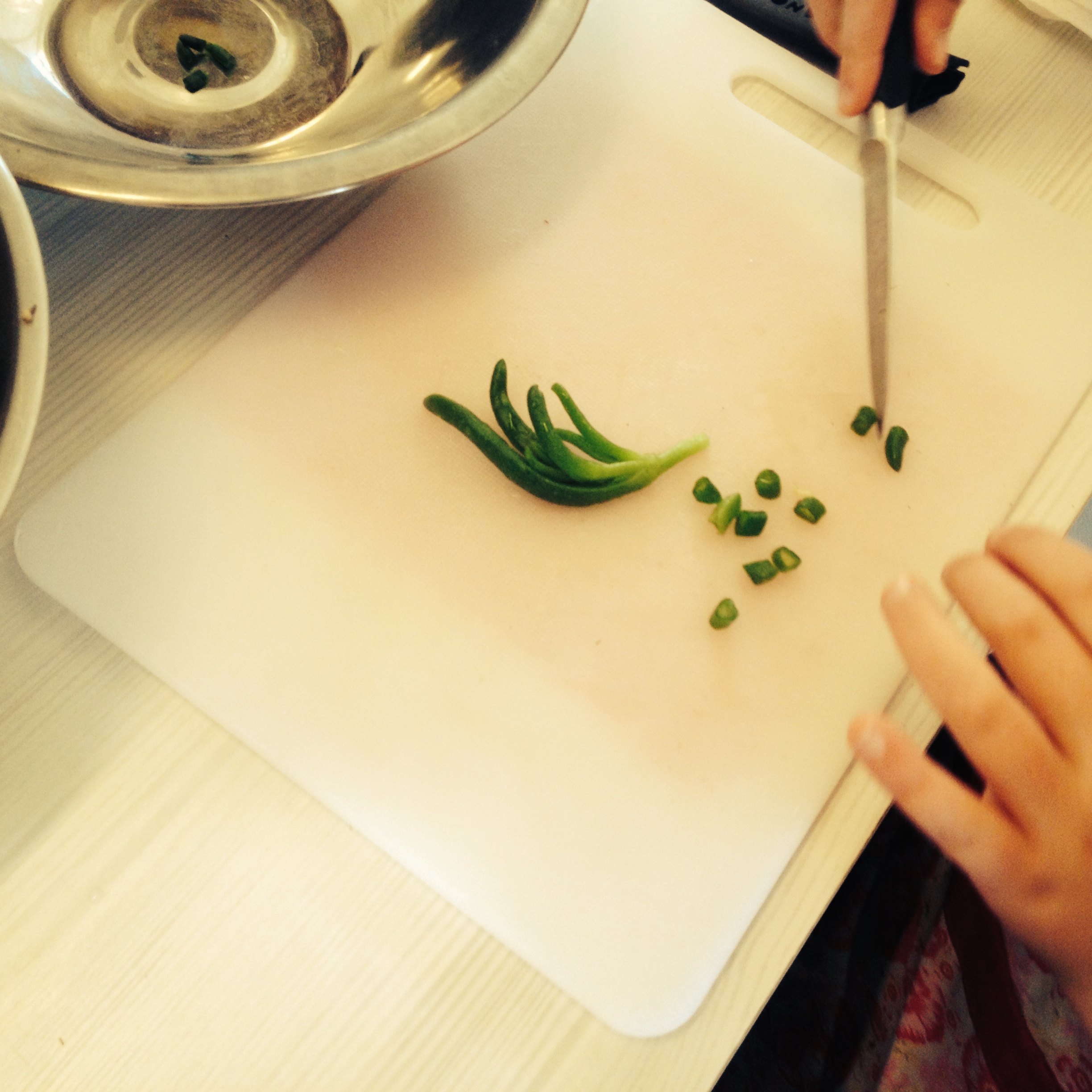
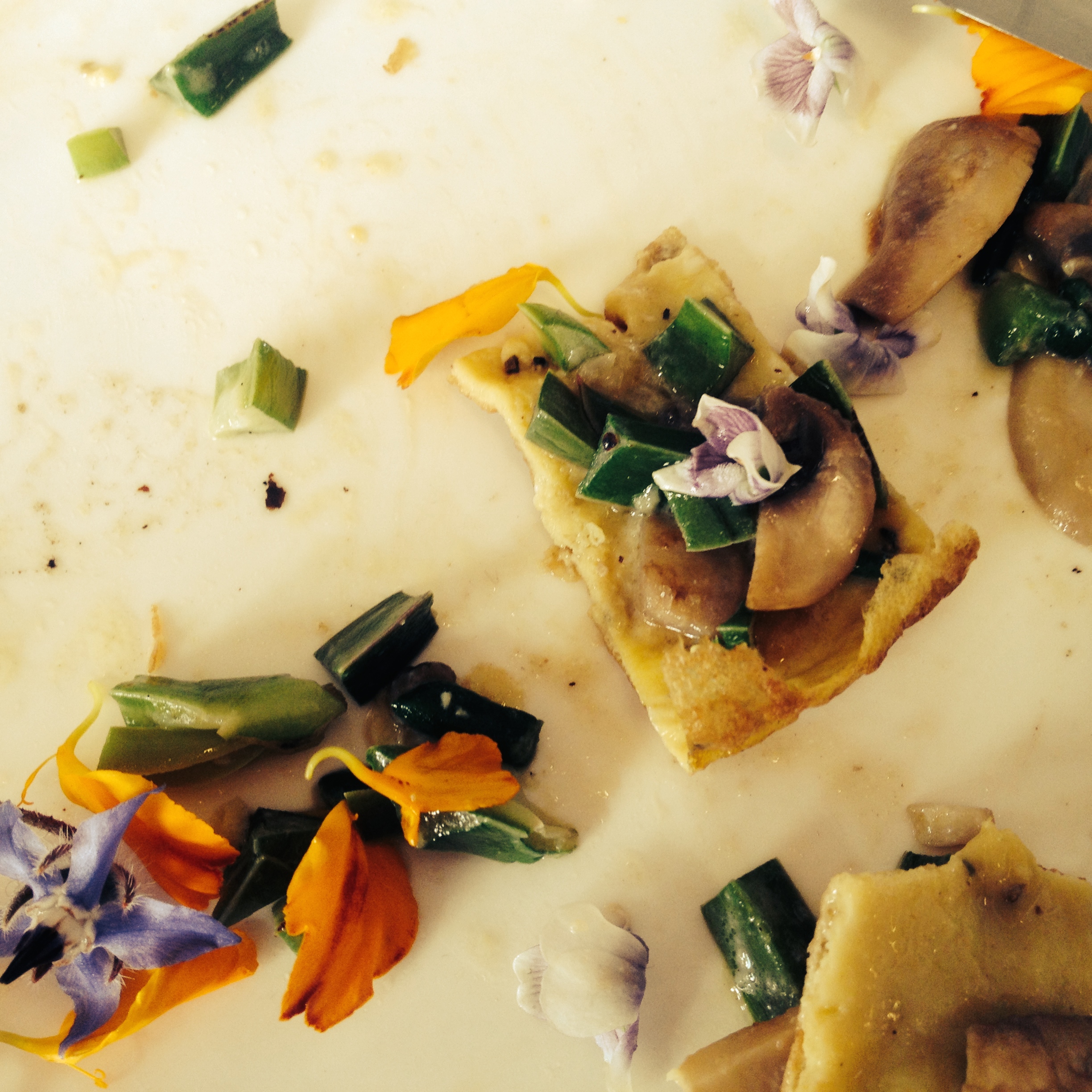
Bush tucker: Pigface and mushroom omelettes

Pigface is also called karkalla or bush bananas & grows everywhere along the Eastern seaboard. Have a look next time you’re down at the beach!

ourkitchengarden.net

Foraged bush tucker food: pigface/ karkalla
Recipe source: Melissa
Makes: 4 omelettes

Equipment:

  • Paper towel
  • Chopping boards and knives
  • 1 large, 1 medium & 4 small mixing bowls
  • Garlic press
  • Colander
  • Fork, butter knife
  • A large wok
  • A non-stick frying pan
  • Wooden spoon with straight end
  • Egg slice
  • Serving plates
Ingredients:

  • A large handful of mushrooms
  • A clove of garlic
  • A large handful pigface
  • 8 eggs
  • Flaked salt & black pepper
  • 50g butter
  • Olive oil

What to do:

  • Trim the mushrooms of any dirt and wipe clean with a damp piece of paper towel. Chop into thin slices and reserve in a large bowl.
  • Peel the garlic clove and squeeze through the garlic press into the mushrooms.
  • Wash the pigface in a large bowl of cold water and drain. Pick through and discard any damaged ends and reserve the rest. Chop any large pieces into smaller slices.
  • Break 2 of the eggs at a time into each small bowl, season with salt and pepper and whisk lightly with a fork.
  • Heat a small knob of butter and a tablespoon of olive oil in the wok over medium heat until foaming. Add in the mushrooms and garlic and carefully toss a few times to cover in the butter mixture. Sprinkle in a few pinches of salt, a grind of pepper, and then sauté for 2 minutes until slippery.
  • Add the pigface to the wok and toss for another minute.
  • Add another small knob of butter to the frying pan and then when foaming, pour in one of the bowls of whisked egg mixture and gently tilt the pan to distribute. Cook for 20 seconds or so on a low heat, until it begins to bubble, then draw the egg into the centre with the wooden spoon and rotate the pan again to redistribute the uncooked egg.
  • The omelette is cooked when the base is set, but is still slightly runny in the middle.
  • Slide a quarter of the mushroom and pigface onto one half of one omelette, fold the other half over with the egg slice to form a half-moon and slice out on to one of the serving plates.
  • Repeat with the remaining omelettes and the rest of the mushroom mixture, and serve!

Notes: What does pigface look like and where does it grow?

ourkitchengarden.net

Categories: Kitchen Garden, Recipe | Tags: , , , , , , , | Leave a comment

Bush tucker: Broccolini and lemon myrtle risotto

This lovely risotto is textural and beautifully herby, and very easy once you get past all the stirring! Serve just before eating while it’s still soupy.

ourkitchengarden.net

Foraged bush tucker food: lemon myrtle leaves
Recipe source: Melissa
Serves: 6 or 24 tastes


Equipment:

  • Saucepan
  • Measures: scales, jug, cup, ¼ cup, tablespoon
  • Salad spinner
  • Garlic press
  • Mixing bowls
  • Chopping boards & knives
  • Grater & microplane zester
  • Ladle
  • Wooden spoon with a straight end
  • Heavy based stockpot
  • 4 soup plates or bowls to serve


Ingredients:

  • 2 litres water with 2 tablespoons bouillon (or 2 litres stock)
  • 1 brown onion
  • 3 fresh lemon myrtle leaves
  • A small handful marjoram
  • 3 garlic cloves
  • 1 handful broccolini & leaves
  • 3 tablespoons extra-virgin olive oil
  • 20g butter
  • 400g Arborio rice
  • 50g parmesan
  • Flaked salt & black pepper

What to do:

  • Pour the water and bouillon into a saucepan, and bring it to a boil. When boiling, turn down to bare simmer and add the lemon myrtle leaves.
  • Peel and finely chop the onion. Squeeze the garlic cloves through the press into a small bowl.
  • Wash the broccolini & shake dry. Chop the stems into ½ cm pieces and add stems to the stock, reserving the florets. Wash the leaves, strip from the stalks and finely slice the leaves.
  • Heat the olive oil and butter over medium heat in the stockpot. Add the chopped onion and cook gently for about three minutes until translucent but not brown. Add the garlic and cook gently for another few seconds.
  • Stir in the rice until the grains separate and begin to crackle.
  • Begin adding the simmering stock, a ladle at a time, and stir in. The stock should just cover the rice and bubble. Stir every minute or so for about 15 minutes.
  • After about 10 minutes, add the broccoli florets & sliced leaves to the rice and keep stirring for about another 5 minutes. When the rice is just tender all the way through but still slightly firm, usually in about 20 minutes all up, it is done.
  • Meanwhile, weigh and cut the parmesan & grate it. Wash and spin dry the marjoram, strip and discard the stems.
  • Add the last ladleful of stock and the rest of the broccolini in to the rice. Stir in the marjoram and parmesan, and remove from the heat. Taste now and check the seasoning. The mixture should be creamy and lose.
  • Serve into the bowls and eat right away!

Notes: What sort of rice is Arborio? Why do we use this sort of rice? Why do we fry the rice off first? What does ‘yield’ mean? What do lemon myrtle leaves smell like?

Categories: Kitchen Garden, Recipe | Tags: , , , , , , , , | Leave a comment

Bush tucker: Barilla bower spinach and sweetcorn soup

This is a wonderful soup, full of gingery goodness! We were lucky enough to get some fresh organic turmeric that added quite a savoury aspect to the soup, and stained everything bright yellow, including fingers!

ourkitchengarden.net

Foraged bush tucker food: Barilla bower spinach
Recipe source: adapted from a Javanese recipe on riverford.co.uk
Serves: 6 or 24 tastes

Equipment:

  • Kettle
  • Chopping boards & knives
  • Peelers
  • Garlic press
  • Microplane
  • Mixing bowls
  • Colander
  • Stockpot
  • Measures: jug, tablespoon, teaspoon
  • Serving bowls
Ingredients:

  • 1.5 litres water
  • 1.5 tablespoons bouillon
  • 2 onions
  • 4 cloves garlic
  • 2cm piece of galangal
  • 2cm piece of ginger
  • 2 fresh corn cobs
  • 2 large handfuls Barilla spinach
  • 1cm piece of fresh turmeric
  • Rice Bran oil
  • 1 bay leaf
  • 1 teaspoon brown sugar
  • Flaked salt & pepper

What to do:

  • Fill the kettle and set it to boil. Peel and finely chop the onions. Peel and mince the garlic.
  • Peel the galangal, turmeric and ginger and carefully grate using the microplane.
  • Peel the silks from the corn cobs and wash the cobs. Cut in half across the middle and then, keeping the flat side on the chopping board, carefully slice off the kernels with a small sharp knife.
  • Wash the Barilla spinach in a big bowl and several changes of cold water, drain in the colander then roughly chop.
  • Drizzle roughly 2 tablespoons of oil into the stockpot and heat on medium. Fry off the onion gently for 3 minutes, stirring, then add the garlic, ginger and turmeric and cook for 30 seconds.
  • Add the hot water and bouillon, turmeric, bay leaf and brown sugar and simmer for 5 minutes, covered.
  • Add the corn and simmer for 5 minutes, partially covered, until the corn is tender.
  • Add the spinach and taste to check if you need any more seasoning.
  • Ladle into bowls and serve.

Notes: What is Barilla bower spinach like and where does it grow? What is turmeric and what does it look like?

Categories: Kitchen Garden, Recipe | Tags: , , , , , , , , | Leave a comment

Lemongrass and lemon balm tisane

Alice says: ‘A tisane is a fresh tea, an infusion of fragrant herbs, or flowers or spices, in boiling water. It is a soothing a refreshing finish to a meal, is complementary to most desserts, and offers a mild alternative to coffee. Tisane can be made from such flavourings as lemon verbena, mint, lemon thyme, lemon balm, hyssop, chamomile, citrus rind and ginger – alone and in combination. The one I make most is a combination of mint and lemon verbena. It is very beautiful made in a glass teapot so you can see the brilliant green leaves… I like to use small clear tea glasses, as they do in Morocco, so the lovely pale green colour is visible.’

Melissa says, ‘this is my tea! The botanical name for lemon balm is Melissa Officinalis – Melissa means honeybee in Greek, and so lemon balm was thus named as its white flowers attracted bees.’ Bzzzzzzzzzzzzzzzzzzzzzzzzzzzzzz.

ourkitchengarden.net

Fresh from the garden: lemongrass, lemon balm
Recipe source: inspired by Alice Waters: The Art of Simple Food
Makes: 2 to 3 litres

Equipment:
  • Stockpot
  • Tea glasses

Ingredients:

  • A bunch of lemongrass leaves
  • Several branches of lemon balm
  • 2 or 3 litres water

What to do:

  • Fill the stockpot with water and set it on high to boil with the lid on.
  • If you’re using lemongrass then take care as the leaves are sharp! Grab a bunch and tie together in a loop, then rinse the bunch well and shake dry.
  • Wash the lemon balm in cold water and shale dry. Strip off the leaves & discard the stalks.
  • Once the water is boiling, turn the pot off and carefully drop the herbs in.
  • Let the tisane steep for several minutes and serve, ladling the tea carefully into each glass.

Notes: What else is tisane know as? What other herbs or spices could you use? What are aromatics?

ourkitchengarden.net

Categories: Kitchen Garden, Recipe | Tags: , , , , , , , , | Leave a comment

Green salad

The title is simple but the ingredients are many and varied! Just take care when washing young delicate leaves so that they don’t get squashed…

ourkitchengarden.net

Fresh from the garden: rocket, lettuces, pea shoots, baby spinach, kale, spring onions, herbs
Recipe source: Melissa
Serves: 4 or 24 tastes

Equipment:

  • Mixing bowls – 3 big, 2 med, 2 small
  • Colanders
  • 2 salad spinners
  • Scissors
  • Paper towel
  • Measuring – 1/4 cup, tablespoon, teaspoon
  • A small jar with lid
  • Bowlsto serve


Ingredients:

  • A few stalks of kale
  • A large handful of rocket
  • A large handful lettuce leaves
  • A large handful pea shoots
  • A large handful baby spinach
  • A small bunch of spring onions
  • Edible flowers
  • A handful baby nasturtium leaves
  • A bunch of aromatic herbs: marjoram, basil, thyme, coriander
  • 1 tablespoon apple cider vinegar
  • A teaspoon of honey
  • 1/4 cup extra-virgin olive oil
  • Flaked salt & black pepper

What to do:

  • Wash the kale and shake dry. Cut the leaves from the stalks and discard the stalks. Roll up the kale leaves into a tube shape and then finely slice into very thin ribbons.
  • Wash all the leaves & pea shoots in several large bowls and many changes of cold water, filling up the bowls with the water and gently swilling the leaves around, draining in the colander and checking each time for any dirt left in the water. Spin dry in handfuls, reserving the leaves in a large clean, dry bowl.
  • Wash and trim the spring onions, discarding any roots and browning layers. Using scissors, snip into tiny discs and add to the bowl of prepared leaves and shoots.
  • Reserve the edible flowers and nasturtium leaves in a small bowl of cold water. When ready to use, drain on a piece of paper towel and use for the garnish.
  • Wash & dry the herb sprigs, leaving small leaves whole and chopping or snipping with scissors any large leaves and the coriander stalks into tiny pieces.
  • For the dressing, measure the olive oil, vinegar and honey and pour them into the jar. Add all the herbs with a sprinkle of salt and pepper, then put the lid on & give the jar a good shake.
  • Drizzle the dressing around the leaves and gently turn the leaves with your fingers so that all the leaves are covered. Lift out and drain the dressed leaves, dividing into serving bowls.
  • Finish by popping the edible flowers and nasturtium leaves on top of the bowls of salad. Serve immediately!

Notes: Why do we have to be so gentle when preparing these leaves and pea shoots? What is vinaigrette? What do the edible flowers taste like?

Categories: Kitchen Garden, Recipe | Tags: , , , , , , , , | Leave a comment

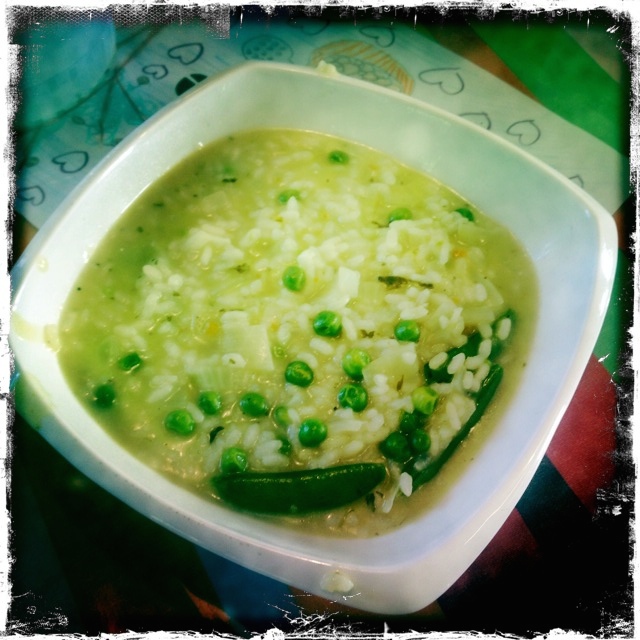
Risi e bisi

This soupy rice and peas dish originating in Venice amounts on the plate to so much more than its simple name suggests. Make sure you retain the pods of your peas as they are incorporated in.

ourkitchengarden.net

Fresh from the garden: shelling peas, sugar snaps, onions
Recipe source: adapted from a recipe  by Stevie Parle on telegraph.co.uk
Serves: 6 or 24 tastes

Equipment:
  • Mixing bowls, 5 mixed size
  • Scales
  • Measures – jug, tablespoon
  • Chopping boards and knife
  • Large stockpot & smaller saucepan
  • Large spoon
  • Stick blender with small blending bowl attachment
  • Spatula
  • Ladle
  • Sieve
  • Wooden spoon
  • Grater
  • Serving bowls

Ingredients:

  • 300g peas (combination of freshly podded, frozen and sugar snaps)
  • 1½ litres water
  • 2 onions
  • 75g butter
  • Olive oil
  • Flaked salt & black pepper
  • 2 tablespoons bouillon
  • 300g Arborio rice
  • 75g parmigiano or grana padano

What to do:

  • Pod the fresh peas, keeping the peas and pods in separate bowls.Wash the sugar snaps, de-string and slice in half or into thirds. Weigh the peas and sugar snaps and then add frozen peas to make up the remainder of the 300g.
  • Measure the water into the smaller of the saucepans and set it to boil. Peel and finely chop the onions.
  • Melt the butter with a splash of oil in a nice big saucepan or stockpot over a low heat. Add the onions and a pinch of salt and gently fry until very soft but not coloured (about 15 minutes).
  • Meanwhile, add the bouillon and the pea pods (not the peas) to the boiling water in the smaller saucepan and boil hard for at least 10 minutes until soft.
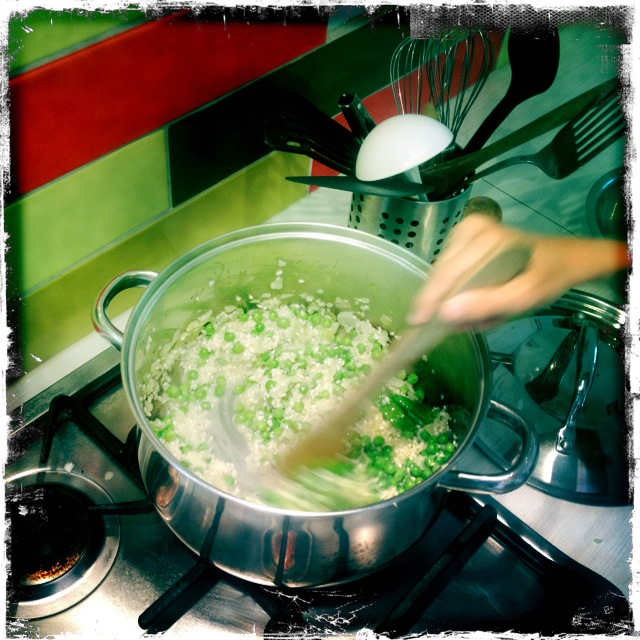
  • Stir all the peas and the rice into the onions and season well. Make sure everything is nicely coated in the butter, then add the reserved stock, gradually bringing it to the boil and stirring gently. Turn the heat down low so that it is gently simmering and leave it to bubble away, stirring occasionally until the rice is just cooked and the peas are soft (about 20 minutes).
  • When the 10 minutes is up for the smaller saucepan, carefully using the large spoon, scoop out the solids to the blending bowl of the stick blender, with a small amount of liquid. Blend them until you have a slightly stringy paste, then pass through the sieve so you have a purée. Add a splash of oil and a little seasoning and put to one side.
  • Grate the parmesan. After the 20 minutes are up for the stockpot, stir in the purée and parmesan, check the seasoning, and add a little more stock or hot water if the consistency is not soupy enough (you should need a spoon to eat it) then spoon into bowls and serve.

Notes: How many peas are in a pod? What does risi e bisi mean?

ourkitchengarden.net

Categories: Kitchen Garden, Recipe | Tags: , , , , , , , , , | Leave a comment

Blog at WordPress.com.