Author Archives: melhm

Kitchen News – June 7th 2012

Well that’s definitely it for summer then! With crazy winds and notice to tidy up gutters and garden toys we’ve well and truly launched into the coldest season…

And that’s fabulous news in the kitchen!

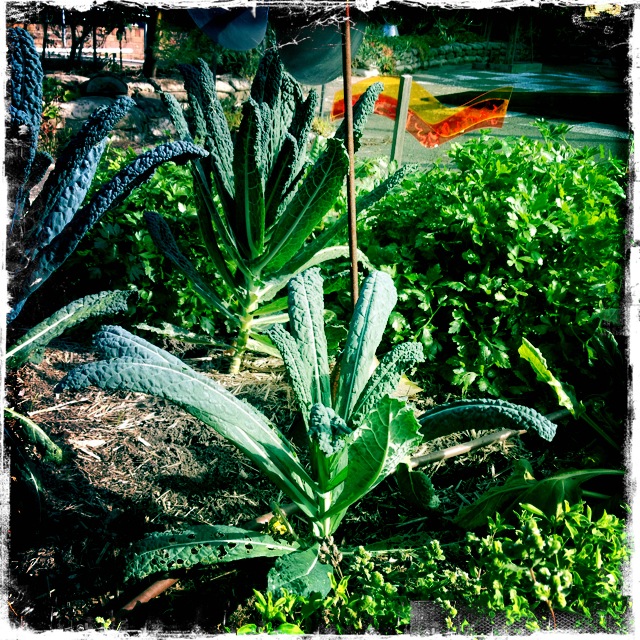
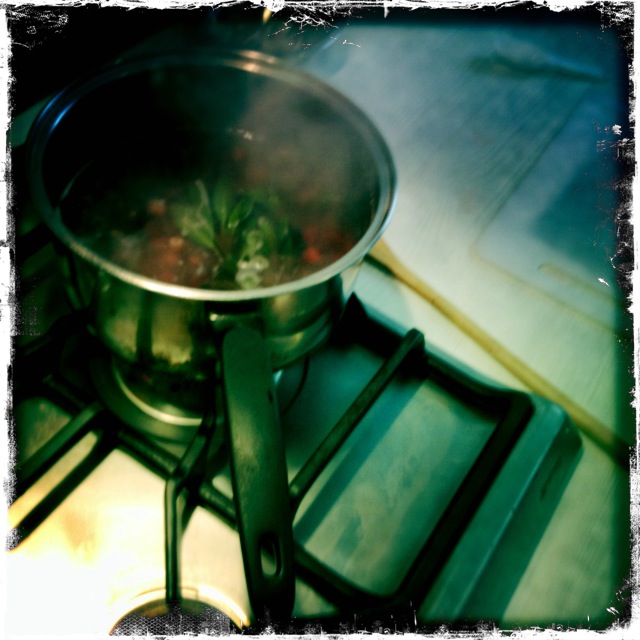
A hit this week is our Hearty Cabbage & Chickpea soup, with veggies left chunky and our knife skills put to the test… also using up our bumper crop of cabbage: the crunchy, slippery goodness of iceberg Sang choi bao with stir-fried cabbage & crispy kale. Fingerlicking good… passed the dripping-soy-sauce-down-the-arm test! We’ve also been experimenting with a gluten and lactose-free version of Schiacciata con l’uva e olio d’oliva, and I can confidently say that it was gobbled up by everybody! And last but not least, our ever-morphing Our winter salad with poached eggs & baby beets – simple and delicious!

Placing the grapes just so...

And click on these links for recipes from the last few weeks: Gnocchi with burnt butter & sage and Broccoli and garden herb pizza. If you need any other recipes and don’t see them on this site, drop me a line here & I’ll put them up for you!

What you lookin' at?

Happy souping everybody!

And don’t forget, spaces are filling fast for Our Kitchen Garden School Holiday Program… Head on over to the page & check it out!

Categories: Kitchen Garden, Recipe | Tags: , , , , , , , , , , , , | Leave a comment

Gnocchi with burnt butter and sage

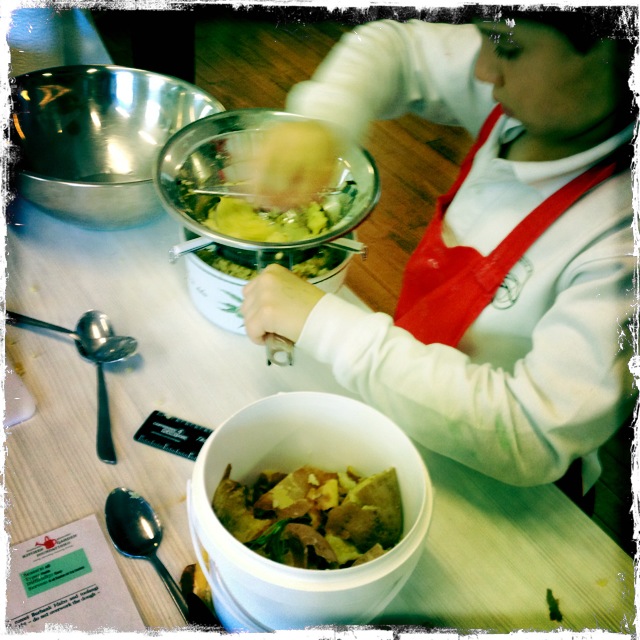
Passing potatoes through the mouli for gnocchi

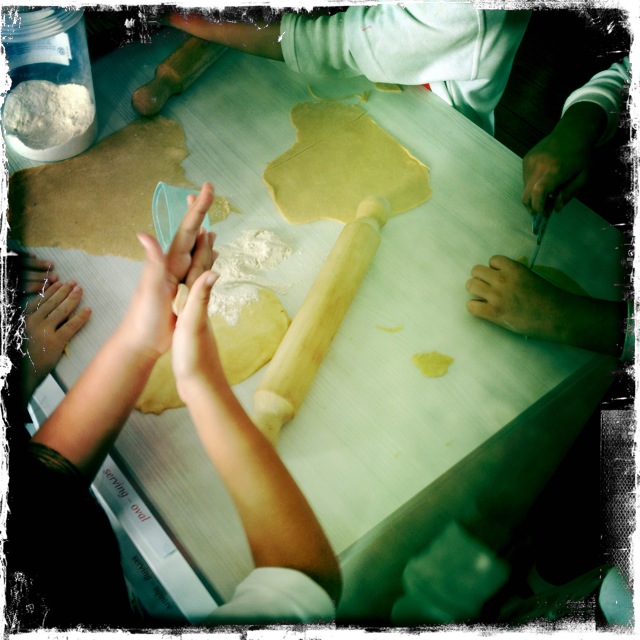
The volunteers occasionally freak out when I tell them they’re making gnocchi. But I say, have no fear! It’s child’s play… as long as the spuds cool down enough once they’re out of the oven & you help a bit with getting the gnocchi out of the pot, it’s a great dish to do with children as there’s a few different procedures & fun (and teamwork required) playing with the mouli to get the potatoes mashed… and who doesn’t love a bit of playdoh-style rolling out with the dough? I do anyway…

Gnocchi with burnt butter and sage

Fresh from the garden: potatoes, sage, eggs

Recipe source: Melissa, kitchen specialist at Bondi PS

………………………………………………………………………………………………………………………………………………

Floury potatoes work best here: nicola, desiree, pink eye, russet Burbank Idaho and toolangi delight are all great varieties. The trick is to keep your work light – do not overwork the dough – and your gnocchi will be light too.

Equipment:

  • Baking tray
  • Paper towel
  • Large saucepan with lid
  • Small saucepan
  • Large knife, spoon
  • Oven glove or tea towel
  • Ricer, mouli or sieve
  • Bowls – 1 large, 4 small bowls
  • Scales, grater
  • Baking sheet
  • Slotted spoon
  • Serving plates
Ingredients:

  • 1.5kg floury potatoes
  • 150g plain flour plus extra
  • 2 egg yolks
  • ½ teaspoon salt
  • 1 nutmeg
  • 150g parmesan
  • 125g salted butter
  • Small branch of sage


What to do:

For the gnocchi:

  • Preheat the oven to 180°C.
  • Scrub potatoes well & wipe dry with paper towel. Prick all over with a fork and bake in their jackets in the oven for an hour until tender to squeeze.
  • Put the large pot of water on high heat to boil.
  • Cut potatoes in half. Hold half in an oven glove or folded tea towel & scoop out the flesh into a large bowl then press into the ricer, mouli or sieve to cool.
  • Grate parmesan into a small bowl. Grate nutmeg into a small bowl to make about ¼ teaspoon and wash and carefully dry the sage, picking off the leaves.
  • Make a well in the centre of potato mound and add a handful of flour, the yolks, salt, nutmeg and 50g of the parmesan.
  • Fold continuously toward centre, gradually adding more flour until it comes together without being sticky. Allow to rest for 5 minutes.
  • Roll some mixture into a sausage shape about 3cm in diameter and cut off 3cm pieces.
  • Lightly flour the baking sheet. Roll each piece on the back of a fork using thumb and forefinger & place gnocchi there until ready to use
  • Poach gnocchi in a large pot of salted boiling water until they rise to the surface, then scoop onto your serving plates.

For the burnt butter:

  • Chop the butter into small pieces and then in the small saucepan heat the butter on medium until it develops a nut-brown colour.
  • Add sage and continue cooking for 30 seconds until the leaves are crisp.
  • Sprinkle remaining parmesan onto the gnocchi and then drizzle on the sizzling crispy sage & butter.


Categories: Kitchen Garden, Recipe | Tags: , , , , , , , , , | Leave a comment

Cannellini beans with sage, garlic and rocket

We’ve recently discovered the joys of cooking our own soaked beans – the only thing is to remember to start at least 12 hours before as the beans need that soaking time.  These accompaniments are very basic but so delicious & perfect for a one-bowl supper in front of Masterchef! You can also substitute borlotti beans for an earthier dish…

Cannellini beans with sage, garlic and rocket

From the garden: sage, parsley, rocket

Recipe source: Melissa, kitchen specialist Bondi PS

………………………………………………………………………………………………………………………………………………

Soaking dried beans and then cooking them the next day is such a rewarding experience – and these simple accompaniments make the beans a lovely autumn dish. Serve with crusty sourdough!

Equipment:

  • Bowls – large, heatproof
  • Colander
  • 2 saucepans – medium
  • Kitchen towel
  • Measures: tablespoon, jug
  • Chopping board & knife
  • Sieve
  • Microplane grater
  • Serving bowls


Ingredients:

  • 250g dried cannellini beans
  • 1 tablespoon bicarbonate of soda
  • A small branch of sage
  • A small bunch of flat-leaf parsley
  • A handful of rocket
  • Cooking salt
  • Flaked salt & black pepper
  • 3 garlic cloves
  • A splash of extra-virgin olive oil
  • 50g grana padano cheese

What to do:

  • The night before, place your dried beans in the large bowl and fill the bowl with cold water well over the beans, add the bicarb and stir. They will need to soak for at least 12 hours.
  • At the start of your lesson, drain the beans into the colander and rinse them well, then put them into the medium saucepan with about 3cm cold water to cover.
  • Rinse the sage, keeping the branch whole, and shake dry. Peel 3 of the garlic cloves and add them, whole, to the saucepan. Also add the branch of sage, a teaspoon of salt & grind of pepper. Set on a medium heat and simmer until beans are soft, probably about 2o minutes.
  • Meanwhile wash the parsley and spin dry. Discarding the stalks, finely chop the leaves.
  • Wash the rocket and spin that dry too. Chop the stalks in half or thirds depending on the size.
  • When the beans are soft, turn off the heat and let them cool slightly in the water for a minute or two.
  • Set the sieve over a heatproof bowl and carefully pour the beans and their liquid in to drain.
  • Scrape the beans into a large bowl and toss in the rocket to wilt. Add a cup of cooking liquid back in with a splash of olive oil and stir.
  • Check for seasoning, then sprinkle over the chopped parsley and divide among serving bowls. Grate over some parmesan cheese and serve.
Categories: Kitchen Garden, Recipe | Tags: , , , , , , , , , , , | Leave a comment

Rocket & coriander soup

Winter has hit with force… I juggle the washing line with obsessive compulsion, trying to dodge the showers and sprinkles and hoping for a ray or two of sun to dry the tea towels and aprons. And sit at this computer with a thick scarf double-draped around my neck, and dream of soup… this recipe has been slurped up greedily in the last two weeks and is a cinch to make. Soup on!

Fresh from the garden: rocket, potatoes, spring onions, coriander, bay leaves

Recipe source: Melissa, kitchen specialist at Bondi PS

………………………………………………………………………………………………………………………………………………

Soups have always been a popular dish for the students at Bondi Public – no matter how green they are (the soups, not the kids!) And it’s fun to prepare, with many different procedures and fun equipment.

Equipment:

  • Salad spinner
  • Bowls – large and medium
  • Potato peelers
  • Chopping board & knife
  • Garlic press
  • Large stockpot
  • Wooden spoon
  • Handheld mixer
  • Ladle
  • Serving bowls
Ingredients:

  • 4 spring onions
  • 1kg waxy potatoes
  • 1 big bunch rocket
  • 6 cloves garlic
  • 60g unsalted butter
  • 2 bay leaves
  • Small bunch of coriander
  • 1.5lt water
  • Cooking salt
  • Flaked salt and black pepper

What to do:

  • Wash and trim the spring onions, removing & discarding the tough outer layer. Slice into 1cm bits.
  • Peel potatoes and cut into 2cm cubes.
  • Peel and squeeze the garlic cloves through the garlic press.
  • Wash the rocket in several changes of water, spin dry and remove & chop into ribbons.
  • Melt butter in the large stockpot over medium heat and sauté spring onion and garlic for 2 minutes.
  • Add the potato cubes, a teaspoon of cooking salt and the bay leaves and stir a few times with the wooden spoon so that the potato sweats in the butter.
  • Add the water, bring to a simmer over medium heat then cover and cook gently over low heat for 10 minutes.
  • Meanwhile wash and spin dry the coriander and then chop the stalks & leaves really finely.
  • After 2 minutes check that the potato is tender, then stir in the chopped rocket, increase heat to medium and cook for 2 minutes. Remove the bay leaves and turn heat off, adding a good grind of pepper.
  • With dry hands, plug in the handheld mixer and carefully whizz the soup until it is silky smooth.
  • Taste for correct seasoning, sprinkle in the coriander and ladle into bowls to serve.

Notes: What other vegetables can be used for soup? How many different procedures are there in this recipe? Why do we want the potato to ‘sweat’? Why do we take out the bay leaves?


Categories: Kitchen Garden, Recipe | Tags: , , , , , , , | Leave a comment

Schiacciata con l’uva

This recipe was a great hit last week – at school and at home! We rarely cook sweet dishes but when we do, the children obviously love it…  I changed the original recipe calling for plain flour and butter to gluten-free flour and olive oil so that our coeliac and lactose-intolerant friends could also enjoy some baked goodies for a change. I hope you enjoy it too… happy baking!

Schiacciata con l’uva (sweet grape focaccia)

Fresh from the garden: grapes, eggs

Recipe source: adapted from a recipe by Jill Dupleix

………………………………………………………………………………………………………………………………………………

‘This is part shortbread & part cake, and is a very rustic, simple way to enjoy the last grapes of the season.’ And is also dairy and gluten-free!

Equipment:

  • Scales
  • Small saucepan
  • Sieve or sifter
  • Bowl – large, small
  • Table knife & fork
  • Plastic wrap & baking paper
  • Baking sheet
  • Measures – tablespoon
  • Rolling pin
  • Chopping board & small knife
  • Skewer
  • Serving plates
Ingredients:

  • 250g gluten-free plain flour
  • 1 teaspoon gluten-free baking powder
  • 125g caster sugar, plus 2 tablespoons for topping
  • Pinch of sea salt
  • 75ml extra-virgin olive oil
  • 2 medium eggs
  • 160g mixed green and red grapes

What to do:

  • Sift flour and baking powder into a large bowl and mix in 125g caster sugar and a pinch of salt.
  • Make a well in the centre and add the olive oil, stirring with the knife to gradually draw in the flour.
  • Lightly beat one egg at a time and add to dough, stirring until mixed. Shape into a ball (if too soft, add an extra tablespoon of sifted flour), wrap in plastic film and refrigerate for one hour to help firm it up.

At the start of the lesson:

  • Pre-heat the oven to 180C.
  • Use a floured rolling pin to lightly roll out the dough or just pat it out with floured hands into a rough oval shape on a sheet of baking paper, then transfer, on the paper, to a baking tray.
  • Wash and de-stem the grapes and cut in half lengthways. Scatter the grapes on top, half of them cut-side up, half cut-side down, pressing in lightly.
  • Scatter with remaining sugar and bake for 15 minutes until golden, and a thin skewer inserted into the middle should come out clean.
  • Turn out onto a wooden chopping board and cut into small squares or slices and place on serving plates.
  • While the schiacciata is cooking you can make the dough for the next class before cleaning up!

Notes: How many different procedures are there in this recipe? What other foreign language recipe names can you think of? Why do we use a knife to mix the dough?

Categories: Kitchen Garden, Recipe | Tags: , , , , , , , , | Leave a comment

Soft parmesan polenta with poached eggs and sage

From the garden: sweetcorn, eggs, sage

Recipe source: adapted from a recipe on the Wholefoods House website

………………………………………………………………………………………………………………………………………………

This is such a vibrant and comforting dish, with the frizzled sage leaves giving everything a crispy, colourful lift. Just be sure the eggs are very fresh!

Equipment:

  • Chopping board & small knife
  • Grater
  • Scales
  • 1 heavy-based saucepan & lid
  • Garlic press
  • Measuring jug
  • 1 small saucepan
  • Salad spinner
  • Paper towel
  • Wooden spoons
  • Bowls – 4 small
  • Medium frying pan
  • Serving bowls
Ingredients:

  • 1 large corn cob
  • 1 garlic clove
  • 100g coarse polenta
  • 50g grana padano
  • Extra-virgin olive oil
  • 6 very fresh large eggs
  • 75g goats’ cheese (or other soft white cheese)
  • 30 sage leaves
  • Flaked salt and black pepper

What to do:

  • Remove jacket and silk from corn, and with a small sharp knife shear the kernels off. Add them to the heavy-based saucepan.
  • Peel and crush the garlic with the garlic press and add it to the corn with 500ml water and bring to the boil over a moderate flame.
  • Rain in the polenta, stirring. Cover & reduce to a mere simmer 15 mins, stirring every few minutes. Grate the parmesan.
  • When the polenta is ready, remove the lid, beat in the parmesan and season well.
  • Meanwhile, to poach eggs, fill the medium sized frying pan 5cm deep with water and bring to a simmer. Fill the large bowl with cold water. Carefully crack each egg into a small bowl without breaking it and then carefully slide into the water. Let the pan sit for 4 minutes before removing each egg into the bowl of cold water with a slotted spoon.
  • Wash the sage leaves and spin them dry. Heat the olive oil in a small saucepan over medium heat. Add the sage and cook, stirring, for about a minute or until they are dark green, crispy and fragrant.
  • To serve, divide polenta among serving bowls. Crumble goats’ cheese over then place an egg on top of each serving. Season generously and scatter with the frizzled sage leaves & scented olive oil.

Notes: What is polenta? What is cooking by ‘absorption’ method? Why shouldn’t we break the eggs when poaching them? What does ‘fragrant’ mean?

Categories: Recipe | Tags: , , , , , , | Leave a comment

May 24th 2012

With a sniffle and a snuffle we’re slowly making our way into winter – one more week to go chaps! – with cold nights and misty mornings, and my scarf wardrobe getting a workout… we’ve been late-autumning it up a bit in the cottage: last week the classes made the hearty ribollita soup from Tuscany (cavolo nero, overnight-soaked cannellini beans, carrot, tomato, celery, onion, stale ciabatta) and warmed up with a hit of chilli oil in Sean’s Panaroma’s recipe of handmade lingine with rocket, chilli, lemon and parmesan… alas the children ate all the linguine and left little for the grown-up volunteers… not even the chilli held them back! There was a little rhubarb for some crumble (of course!) and a drizzle of crème Anglaise for a lovely and rare sweet treat 😉

So we’re continuing on this week with the dried bean obsession – cooking off soaked borlotti beans in water with lots of sage and garlic until soft, then dousing in some rosemary-infused olive oil and finishing with a sprinkle of parsley. So simple and sooo good. Only bettered by spreading over buttered Iggy’s country sourdough! And jazzing up a crunchy radish salad with poached eggs and tarragon sauce – and we’ve now finished off the olives we picked in March in some hand-punched olive and rosemary foccacia.

To finish: for those cold nights with the heater dusted off and turned up to 11, we heartily recommend the rocket and coriander soup we’ve been making this week. Recipe to follow!

Keep warm out there… Melissa

Categories: Kitchen Garden | Tags: , , , , , , , , , , | Leave a comment

School Holiday Program 2012

How exciting! We’ve just announced our inaugural School Holiday Program for 2012… Head on over to the School Holiday Program page to see the deets but I can also say we’ll be cooking (and digging!) up a storm!

These are some of the fab activites we’ll be doing:

Rolling hand-made pasta and throwing pizza dough for lunch –

Earning your own Our Kitchen Garden knife licence as we chop, slice and dice the organic herbs and veggies we’ve harvested from the garden –

Meeting and feeding the chooks –

Planting seeds for a take home ‘watch & grow’ project so bring your own plastic bottle destined for recycling or landfill –

Creating your own seasonal, local and organic morning tea and lunch while learning some amazing life skills in the kitchen and garden –

And of course, having fun!

LIMITED SPACES ONLY!

DOWNLOAD Our Kitchen Garden booking form HERE!

Categories: Kitchen Garden, School Holiday Program | Tags: , , , , , , | Leave a comment

May 10th 2012

Well what a gorgeous start to the term: late autumn and we’ve got cool nights but warm, sunny days and the rays of sunshine are cascading over the stripy cottage tables and honeyed floorboards… it’s a beautiful place to be!
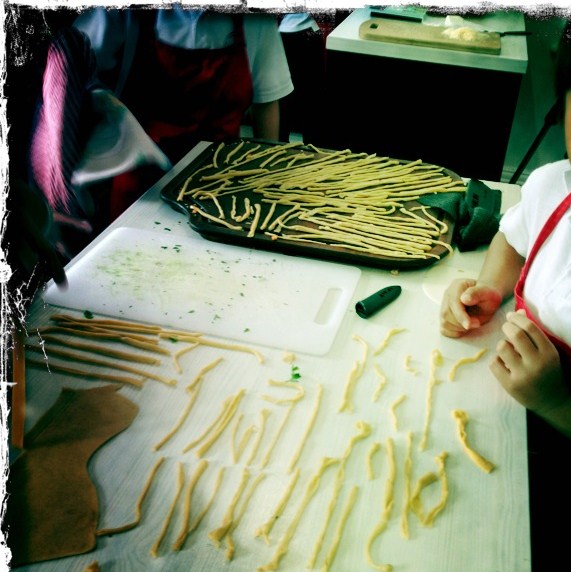
And with those cool nights my thoughts turn to warming dishes, and being autumn, mushrooms… we’re yet to find a dark enough place to cultivate our own here but I couldn’t let the season go past without experimenting with a mushroom ragu! This we matched with our own hand-rolled bigoli, a long thin pasta, originally from the region of Veneto in Italy. We’ve had discussion in class about this term’s theme in stages one & two: Local Places and Local Environment, as similar pasta is made in other regions but called different names, as pici from Tuscany and stringozzi from Umbria.

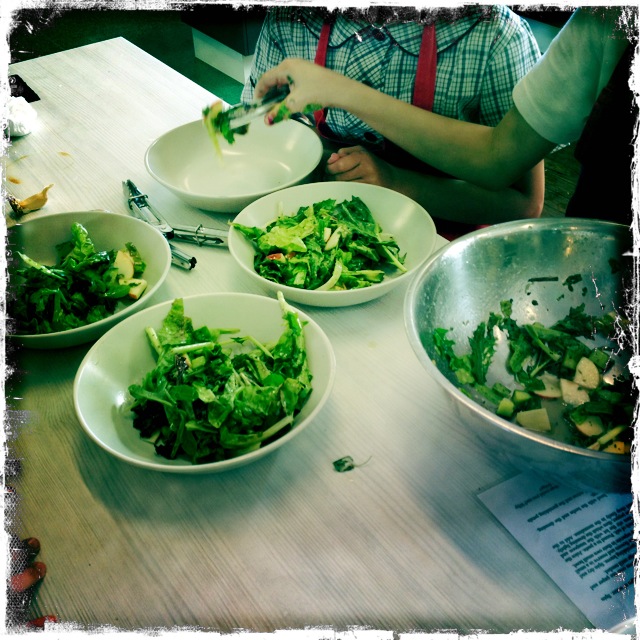
Also on the menu this last fortnight has been parmesan polenta with our own poached eggs and crispy sage; garden herb pizza with bocconcini and rocket; the perennial favourite – soup – with spinach, potato and landcress; a truly delicious lemony leaf salad with the last faithful cucumber; and just in time for the Mothers’ Day Tea (as we’re making extra!) some mini frittate of spinach, pumpkin and feta. Delicious!

I’ve been so impressed with all the kitchen classes, but especially 2F who were incredibly self-motivated and able to complete the recipes beautifully without much help at all! And they cleaned up (in every sense!) And thanks to all the wonderful volunteers who have pledged their support again for another term… Our success is all down to you!

And here below are the much-requested recipes for the bigoli with mushroom ragu. Happy Mothers’ Day to all!

Bigoli

Guy Grossi – Recipes From My Mother’s Kitchen

‘Bigoli is a specialty pasta from the northern Italian region of the Veneto. It is similar in shape to spaghetti, but slightly thicker. And unlike other forms of pasta, it includes butter in the dough.’ Other regions in Italy make similar types of noodles too, for example in Umbria they call them stringozzi, and in Tuscany they call them pici.

2 cups plain flour

Pinch salt

100g butter chopped

1 egg

¼ cup milk

 Place flour on a clean workbench and sprinkle with salt. Gently rub in butter until mixture resembles breadcrumbs. Make a well in the centre; add egg and milk, then knead for 10 minutes until smooth.

Flatten out dough, cut into quarters then roll each quarter into a sheet about 3mm thick. Using a pizza cutter, slice into spaghetti-like lengths about 3mm wide, then roll each length between your hands and the workbench so that they’re slightly wider than spaghetti.

Place bigoli on a floured baking tray, cover with a tea towel and set aside.

Cook bigoli in a large saucepan of plenty of salted water until al dente (2 to 3  minutes depending on thickness of pasta), then drain. Add bigoli to sauce and toss to coat.

 Mushroom ragù

Alice Waters – The Art of Simple Food

 1 large onion

1 large carrot

2 celery stalks

6 thyme sprigs

6 parsley sprigs

1 bay leaf

Salt

Extra-virgin olive oil

75g diced tomatoes

900g mushrooms – a mixture of 2 or 3 types

25g butter

100ml cream or crème fraiche

 Wash the carrot, celery and herbs. Spin dry the parsley and thyme, picking their leaves and finely chop the parsley.

Peel the onion & carrot then finely dice them with the celery.

Carefully clean the mushrooms then chop finely.

Heat 2 tablespoons of the olive oil in one of the frying pans and add the onion, carrot, celery and salt and cook over gentle heat until very tender but not browning.

When cooked add the thyme, parsley and bay leaf, and after a minute add the tomatoes.

In the other frying pan heat up another 2 tablespoons of olive oil with the butter and add the mushrooms, sautéing each type until tender and lightly browned.

Once all the mushrooms are cooked, combine with the vegetables and herbs and add the cream and 225ml water or chicken stock.

Bring to a simmer and cook for 15 minutes. Taste for salt and add as needed. Moisten with more liquid if too thick.

Categories: Kitchen Garden | Tags: , , , , , , , , , | Leave a comment

April 5th 2012

And here we are at the last day of term! What a lovely start to the year… some great cooking, fabulous volunteers & creative and delicious children! Thank you to everybody 🙂

This week has seen us celebrate our season with fabulous fat eggs from our five chooks – they are truly settling into their strides with huge beautiful offerings every day: over 50g each, just like in the shops! So in honour, we’re creating a Poached Egg Salad with Tarragon Sauce, Sean’s Sweetcorn Chowder, our version of Torta Pasqualina, a few handmade chocolate truffles – and the ubiquitous but nevertheless yummy hot cross bun (with a difference!) And here below is the recipe… happy holidays and see you next term! Melissa

APRICOT & CARDAMOM HOT CROSS BUNS – Jeremy & Jane Strode

Ingredients:

  • 20g dried yeast
  • 100g caster sugar plus a pinch
  • 100g butter
  • ½ teaspoon salt
  • ½ teaspoon ground cardamom
  • 500g plain flour
  • 2 eggs
  • 200g apricots
  • 90g self-raising flour
  • 10g skim milk powder
  • Butter & jam to serve

Glaze

  • 1/3 cup water
  • 2 tablespoons caster sugar

What to do:

  • Mix yeast with 200ml warm water & pinch of sugar in a small bowl and leave in a warm place for 5 minutes to activate.
  • Chop the apricots.
  • Place butter, salt, cardamom, plain flour and remaining sugar in the mixer and combine.
  • Add eggs and activated yeast and beat until smooth.
  • Add apricots and when combined, leave in a warm place for 1 to 1½ hours to double in size.

Start of lesson:

  • Line a large baking tray with non-stick baking paper. Punch dough down to its original size. Knead on a lightly floured surface until smooth. Divide into 12 even portions. Shape each portion into a ball. Place balls onto lined tray, about 1cm apart. Cover with plastic wrap. Set aside in a warm, draught-free place for 30 minutes. Preheat oven to 190°C.
  • Mix self-raising flour, milk powder and 100ml water together in a small bowl until smooth. Spoon into a small snap-lock bag. Snip off a tiny hole in 1 corner of bag. Pipe flour paste over tops of buns to form crosses. Bake for 20 minutes until buns are cooked through.
  • Make glaze: Place 1/3 cup water and sugar into a small saucepan over low heat. Stir until sugar dissolves. Bring to the boil. Boil for 5 minutes. Brush warm glaze over warm hot cross buns. Divide among serving plates & serve warm with butter & jam.

Categories: Kitchen Garden | Tags: , , , , , , , , , , , , , , | Leave a comment

Blog at WordPress.com.