Kitchen Garden

Broccoli and lemon risotto

This lovely risotto is textural and beautifully herby, and very easy once you get past all the stirring!

ourkitchengarden.net

Fresh from the garden: broccoli, marjoram, garlic, onion, lemon
Recipe source: Melissa
Serves: 8 or 30 tastes

Equipment:

  • Saucepan
  • Salad spinner
  • Garlic press
  • Bowls – 1 large, small, med
  • Large knife & chopping board
  • Grater & microplane zester
  • Ladle & wooden spoon with a flat end
  • Heavy based stockpot
  • Metric
  • Measures: scales, jug, cup, ¼ cup, tablespoon
  • 4 soup plates to serve
Ingredients:

  • 2.3 litres  vegetable stock (or  2.3 litres boiling water with 2.5 tablespoons bouillon)
  • A small handful marjoram
  • 3 garlic cloves
  • 1 brown onion
  • 1 large head of broccoli
  • 3 tablespoons extra-virgin olive oil
  • 20g butter
  • 500g arborio rice
  • 1 lemon
  • 50g parmesan
  • Cooking salt & black pepper

What to do:

  • Pour the stock into a saucepan, and bring it to a simmer on medium heat.
  • Wash and spin dry the marjoram, strip and discard the stems.
  • Squeeze the garlic cloves through the press into a small bowl. Peel and finely chop the onion.
  • Wash the broccoli & shake dry. Chop the stalk into 5mm cubes and add to the stock, reserving the florets.
  • Heat the olive oil and butter over medium heat in the stockpot. Add the chopped onion and a cook gently until just tender, about three minutes. Do not brown. Add the garlic and cook gently for another few seconds.
  • Stir in the rice until the grains separate and begin to crackle.
  • Begin adding the simmering stock, a ladle at a time, and stir in. The stock should just cover the rice and bubble. Stir every minute or so for about 15 minutes.
  • Meanwhile, zest the lemon and grate the parmesan to yield about ½ cup.
  • After about 15 minutes, add the broccoli florets to the rice and keep stirring for about another 5 minutes. When the rice is just tender all the way through but still slightly firm, usually in about 20 minutes, it is done.
  • Add the last ladleful of stock and the rest of the broccoli to the rice. Stir in the marjoram, lemon zest and parmesan, and remove from the heat. Taste now and check the seasoning. The mixture should be creamy.
  • Serve onto the soup plates and eat right away!

Notes: What sort of rice is Arborio? Why do we use this sort of rice? Why do we fry the rice off first? What does ‘yield’ mean? What does to check the seasoning mean?

Categories: Kitchen Garden, Recipe | Tags: , , , , , , , , | 1 Comment

Veggie patch fritatta

This is such a lovely fresh recipe. Add a beautifully tossed salad & some great bread and you have all the makings of a wonderful and simple lunch or supper. We’ve used what we had in the garden: radishes and snowpeas – so use what YOU have!

ourkitchengarden.net

Fresh from the garden: eggs, onion, radishes, snowpeas, parsley, rocket
Recipe source: Melissa
Serves: 4 at home or 24 tastes 

Equipment:

  • Chopping board & knife
  • Salad spinner
  • Tea towel
  • Measures: tablespoon
  • Medium ovenproof frying pan
  • Large bowl
  • Whisk
  • Oven mitts
  • 4 serving plates
Ingredients:

  • An onion
  • A small handful radishes
  • A small handful snowpeas
  • A small handful parsley
  • A tablespoon of butter
  • 2 tablespoons extra-virgin olive oil
  • 12 large eggs
  • Flaked salt and pepper
  • A small handful rocket for garnish

What to do:

  • Preheat the oven with grill element on to 180C.
  • Peel and finely chop the onion. Trim the radishes, wash well and then carefully slice into thin discs.
  • Top, tail and de-string the snowpeas and chop into 4 or 5 pieces. Wash and spin-dry parsley and chop finely.
  • Wash and spin-dry the rocket and roll up in a clean tea towel, reserving in the fridge until needed.
  • Heat the butter and olive oil in the frying pan, and when melted, add the onion and cook on a medium heat until translucent. Then add the radish slices and cook for about 5 minutes until golden. Sprinkle with a pinch of flaked salt and add the snowpeas, tossing to combine.
  • Meanwhile, crack the eggs into the large bowl – making sure there is no shell – and beat them together with a pinch of salt and grind of pepper. Stir in the parsley.
  • When the butter has melted, carefully pour the eggs into the frying pan and turn the heat to medium-low. Cook, undisturbed, for about 5 minutes or until the bottom of the frittata is firm, checking by gently lifting up the frittata up at the side of the pan.
  • Transfer the frying pan to the oven. Bake, checking every couple of minutes or so, just until the top of the frittata is no longer runny. This should take about 5 to 7 minutes more.
  • Carefully remove from the oven with oven mitts – remembering that the handle will be HOT! – and let rest for a few minutes.
  • Then, still holding the handle with the oven mitt place a clean medium chopping board over the frying pan and turn the whole lot upside down so that the frittata falls gently onto the board.
  • Divide the rocket onto the serving plates with a little drizzle of olive oil, cut the frittata into wedges or cubes, and transfer onto the rocket. Serve and eat!
Categories: Kitchen Garden, Recipe | Tags: , , , , , , | Leave a comment

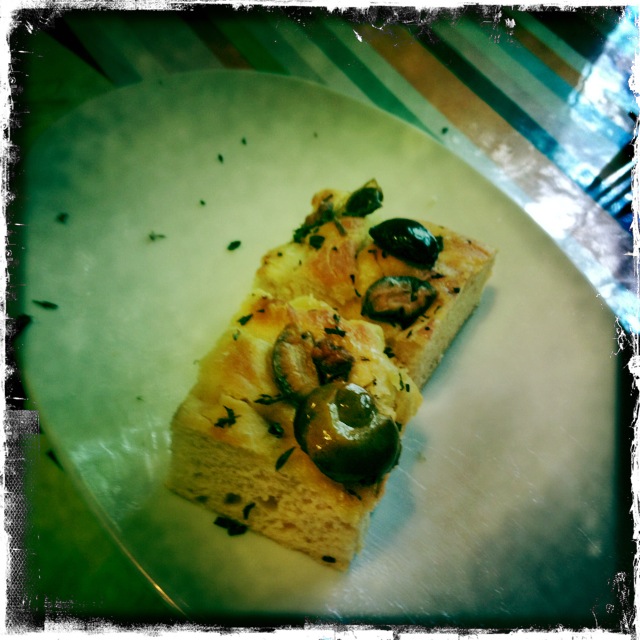
Rosemary and olive focaccia

We love preparing dough at Bondi, and this soft focaccia studded with olives and rosemary is fantastic as part of an antipasto plate or with a hearty soup. We used Our Bondi Olives that were picked in February then brined over the course of two months, marinated (olive oil, orange peel, garlic, fennel seed, bay, thyme) and bottled in May, then cupboard-aged for another 2 months… we also used a combination of fresh rosemary, picked from the stalk, with rosemary spines dried over the last 6 months. A variation:  adding halved cherry tomatoes or preserved artichokes or whatever you feel like!

ourkitchengarden.net

From the garden: olives, rosemary
Recipe source: adapted from a recipe on taste.com
Serves: 8 at home or 24 tastes

Equipment:

  • Bowls – small, med
  • Measures – jug, teaspoon, tablespoon
  • Scales
  • Stand mixer & dough hook
  • Pastry brush
  • 20 x 30cm Swiss roll pan
  • Clean tea towel
  • Chopping board
  • Serving plates
Ingredients:

  • 310ml warm water
  • 2 teaspoons dried yeast
  • 2 teaspoons caster sugar
  • 3½ tablespoons olive oil
  • 450g plain flour
  • 2 teaspoons salt flakes
  • 1 large sprig of rosemary
  • A jar of our marinated Bondi PS olives

What to do:

To make the dough:

  • Combine the water, yeast and sugar in a small bowl and set aside in a warm, draught-free place for about 5 minutes until frothy & bubbling. Then add 2 tablespoons of olive oil.
  • Place flour and half of the flaked salt in the bowl of the mixer. Make a well in the centre and pour in yeast mixture. On the lowest setting, mix for 10 minutes.
  • Turn onto a lightly floured surface and knead for another minute or so until smooth and elastic. Brush a medium bowl with a little olive oil to grease. Place dough in bowl and cover with a clean tea towel. Set aside in a warm, draught-free place for about an hour until doubled in size.

 Start of lesson:

  • Preheat oven to 200°C.
  • Brush the pan with 2 teaspoons of remaining oil. Punch down the centre of the dough with your fist. Turn onto a lightly floured surface and knead for 2 minutes or until dough is elastic and has returned to original size. Press into the prepared pan. Cover with the clean tea towel and set aside in a warm, draught-free place to prove for 20 minutes or until doubled in height.
  • Meanwhile wash & carefully dry the rosemary and pick the leaves from the stalks. Pit the olives.
  • Use your finger to press dimples into the dough. Brush with remaining oil and sprinkle over the rosemary and remaining salt. Press the olives into the dough.
  • Bake in oven for 25-30 minutes or until golden and the focaccia sounds hollow when tapped on base. Serve warm or at room temperature, carved into thin slices.
  • While the focaccia is cooking you can make the dough for the next class before cleaning up!

Notes: Why do we wait for the yeast mixture first? What is process of doubling the dough in size called?

Categories: Kitchen Garden, Recipe | Tags: , , , , , , , , | Leave a comment

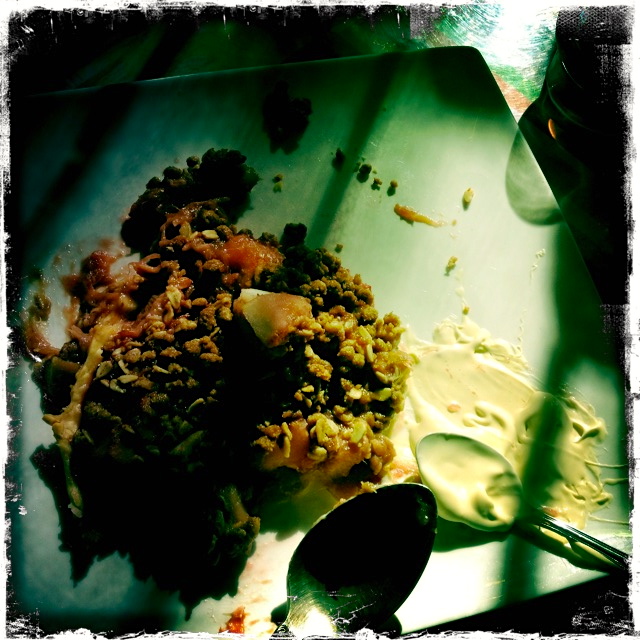
Rhubarb and apple crumble tarts

Winter: the perfect time for rhubarb crumble! And here made dainty in the form of little tarts…

ourkitchengarden.net

Fresh from the garden: rhubarb, apple
Recipe source: Melissa
Serves: 4 or 24 tastes

Equipment:

  • 4 x 10cm fluted tart tins with removable bases
  • Chopping board and knife
  • Small baking tray
  • Peelers and corer
  • Large saucepan
  • Wooden spoon
  • Measures: scales, ½ cup, 1/3 cup, ¼ cup, teaspoon
  • Bowls – large, medium
  • Baking paper & baking beans
  • Serving plates
Ingredients:

  • 1 sheet (25cm) ready-rolled shortcrust pastry
  • 2 granny smith apples
  • 1/2 bunch rhubarb
  • 1/3 cup caster sugar
  • Double cream, to serve

Oaty crumble

  • 50g butter, softened
  • 1/4 cup brown sugar
  • 1/2 cup plain flour
  • 1/2 cup rolled oats
  • 1 teaspoon ground cinnamon

What to do:

  • Preheat oven to 200°C.
  • Bring the pastry out of the freezer and carefully separate one sheet from the others. (You may need to do this with a long bread knife, sliding it between the sheets to break apart). Let the sheet thaw for about 5 – 10 minutes.
  • Place the tins onto a baking tray. With the pastry sheet still on its plastic, divide into quarters, then line your tart tins with the pastry, gently pushing into the corners to shape.
  • Line the pastry with baking paper and fill with baking beans. Bake in the preheated oven for 8 minutes. Remove the paper and beans and bake for a further 5 minutes until golden and crisp. Remove from oven.
  • Meanwhile, peel and core the apples and then chop into 1cm pieces. Wash and chop the rhubarb into similar pieces.
  • Place the apple, rhubarb and sugar in a large saucepan over medium-low heat. Cook, gently stirring occasionally, for 10 minutes or until apple and rhubarb have released their juices and are just tender. Remove from heat.
  • To make the crumble, measure the sugar, flour, oats and cinnamon in a medium bowl and stir until well mixed. Then chop up the butter and place into the oat mixture, using your fingertips to rub the butter into the mixture until just combined.
  • Spoon the rhubarb mixture evenly among the crisped pastry cases, then sprinkle with the crumble mixture. Return to the oven and bake for 10 minutes or until the crumble mixture is golden brown and crisp.
  • Carefully slide out of the oven and leave to cool for a few minutes before lifting the tarts out of the cases, placing them on a clean, dry chopping board and slicing into small wedges.
  • Serve warm or at room temperature, topped with a dollop of double cream if you like!

Notes: Can you eat rhubarb leaves? Why do we bake the cases first? What is this called? What are baking beans or beans?

ourkitchengarden.net

Categories: Kitchen Garden, Recipe | Tags: , , , , , , , | Leave a comment

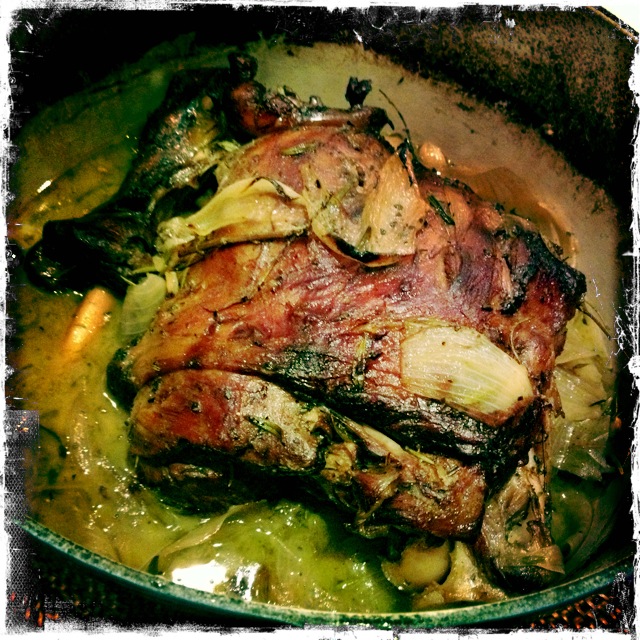
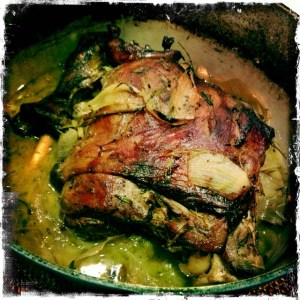
Greek slow-roasted leg of lamb

On a day like today when the rain is pelting down outside, all I can think of is popping the oven on and cooking something hearty and absolutely delicious for a few hours…  the original recipes calls for roasting potatoes on high in the lamb fat once the meat is done – so of course that is what we did – but I also made some pitta to roll around the juicy lamb, along with some tzatziki, some crunchy rocket, and also a fresh tomato, cucumber and onion salad to squash in too. Sounds like a lot of work but not really… and so worth it! Do it, do it!

So here follows the recipe for the lamb, the potatoes, the tomato salad and the tzatziki. The pitta bread recipe has been posted separately!
ourkitchengarden.net

Recipe source: kalofagas.ca (many thanks for this recipe, it was truly scrumptious)
Serves: 8-10 (or 4 with loads left over for the next day!)

1 leg of lamb (bone in) 2½ kg to 3½ kg
1 head of garlic
fine sea salt
fresh black pepper
2 teaspoons sweet paprika
2 medium onions, peeled & quartered
1 cup dry white wine
2-3 sprigs of fresh rosemary
10 sprigs of fresh thyme
2-3 teaspoons dried Greek oregano
2-3 bay leaves
Juice of 2 lemons
1/2 cup extra-virgin olive oil
hot water or stock
salt and pepper to taste

  1. Peel the skins off the garlic clove and slice them into slivers. Stick a paring knife into the lamb and make a hole, then slip a sliver of garlic. Repeat and insert as many slivers of garlic as you can.
  2. Pre-heat your oven to the highest possible temperature and place the rack in the middle position. Drizzle your lamb with some olive oil and season with salt, pepper and paprika. Place the leg of lamb in a roasting pan that just fits the leg. Place in your pre-heated oven and roast uncovered for about 10-15 minutes or until browned, then flip the leg and roast for another 10-15 minutes.
  3. Remove the lamb from the oven and reduce the heat to 180C. Place the quartered onions around the lamb, add any remaining slivers of garlic, add the herbs (thyme, bay, rosemary, oregano) and squeeze in the lemon juice and pour the wine into the pan. Add the olive oil and enough hot water or stock to cover a third of the lamb.
  4. Cover and place the lamb back in the oven for 2 hours (add more hot water or stock if needed), baste the lamb once an hour. After two hours, flip the leg of lamb (add more water if necessary and adjust seasoning of liquid with salt and pepper).
  5. After 3 hours, the leg of lamb should be a deep brown and the bones will be exposed and the meat will be falling off the bone.
  6. Remove the lamb from the oven, baste with liquid and allow to rest. Serve with roast potatoes tossed in lamb drippings* & with pita bread & tomato salad!

ourkitchengarden.net

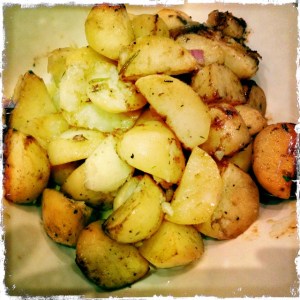
Roast potatoes: Have some peeled & quartered potatoes to roast in another roasting pan and drizzle with olive oil and season with salt and pepper. Pour enough pan juices from the lamb leg to come up a third of the way on the potatoes and toss to coat. Taste, adjust seasoning and crank your oven up to 220C and place the potatoes in the oven to roast for 35-40 minutes or until fork-tender (the lamb will stay warm covered in the roasting pan on the stove-top).
ourkitchengarden.net

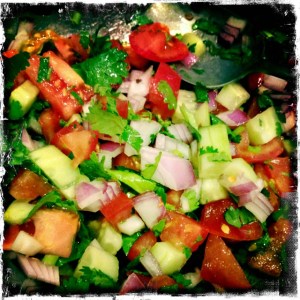
Tomato, cucumber and onion salad: Chunky-chop 2 or 3 vine-ripe tomatoes into a bowl and add a similar amount of chopped cucumber (peeled if you like or not!). Add half a finely chopped red onion, a bunch of washed and finely chopped coriander stalks and stems, a squeeze of fresh lime, a sprinkle of flaked salt, grind of pepper and half a teaspoon of chilli flakes (if you like some heat). Toss and serve.
ourkitchjengarden.net

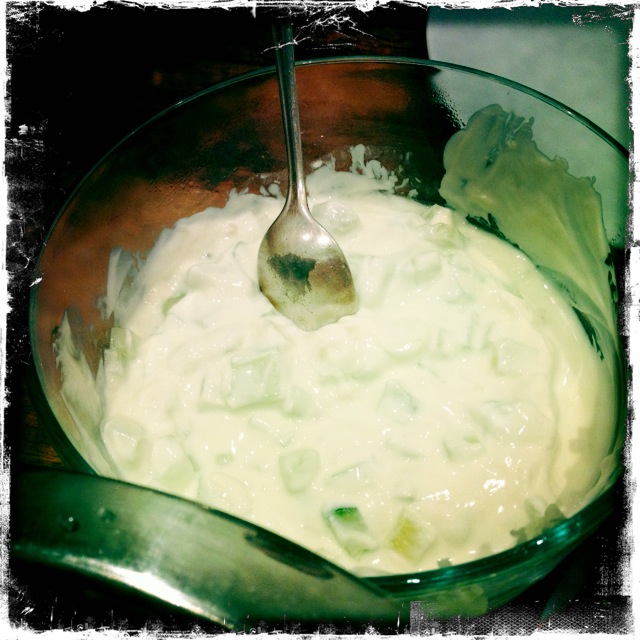
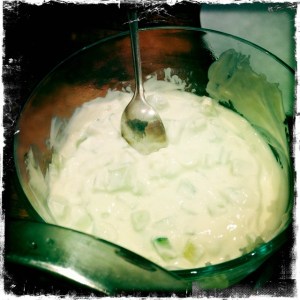
Tzatziki: Peel and finely chop half a cucumber and add to a bowl with a small tub of Greek-style yoghurt. Add a clove of garlic, very finely chopped, and a sprinkle of flaked salt and stir well. This can keep for a few days so make beforehand if you need.
ourkitchengarden.net

Categories: Kitchen Garden, Recipe | Tags: , , , , , , , , , , , , , | 2 Comments

Cath Claringbold’s pitta

These are great to wrap around salads and especially the Greek slow-roasted lamb featured in this blog! As long as you give it enough time to prove, the rest is easy. The dough can be frozen too – I drizzle a little olive oil into a plastic bag, pop the dough in & tie it tight with a little room to move. It only needs a couple of hours to defrost…

ourkitchengarden.net

Recipe source Cath Claringbold, published in Good Weekend magazine July 2010
Makes 12 individual pittas

Ingredients

  • 1¼ cups tepid water
  • 1½ teaspoons dry yeast
  • 1½ teaspoons caster sugar
  • 460g plain flour
  • ½ teaspoons sea salt
  • ½ cup olive oil

Method
Combine the water, yeast and sugar in a small bowl and leave in a warm spot for about 20 minutes or until the mixture foams.

In a large bowl, mix the flour and salt, then make a well in the centre. Add the olive oil and the yeast mix, and combine. Work the dough until it comes together, then turn out onto a lightly floured bench and and knead for a few minutes until it becomes silky and smooth. Return the dough to the bowl, cover it with a towel and leave it to prove for 15-20 minutes or until it has doubled in size.

Preheat the barbecue to medium or heat a non-stick pan over medium heat. (Note: I used a ridged cast iron skillet, worked a treat!)

Divide the dough into 12 portions and roll each piece into a flat, thin, even disk about 16cm in diameter.

Brush a flat bread with olive oil and place it, oil side down, on the bars of the barbecue. Gently brush a little oil on top as well. In seconds, the bread will start to puff. After 20-25 seconds, flip it over and cook for 20 seconds more. Do not cook for too long or the bread will dry out and become crisp. Repeat with the remaining disks.

Stack the cooked breads and wrap them tightly in a clean tea towel or even cling wrap to keep them warm. Serve with yummy ingredients & roll up to eat!

ourkitchengarden.net

Categories: Kitchen Garden, Recipe | Tags: , , , , , , , | Leave a comment

Kitchen garden news – 28th June 2013

So here we are the end of Term 2 with winter well and truly upon us.  At least winter solstice has been and gone so the days are getting ever-so-slightly longer now…. I do love this time of year though: the oven on and slow-cooking anything in my path, and parking spaces to be found readily around Bondi, and with an almost leisurely commute to school in the mornings!

This week we’ve taken a break from the usual routine to welcome the Year 1 classes to the Kitchen Garden program… it has been lovely to see the wee ones down here and also to say hi to the new wave of Future Volunteers (!) We made some delicious crusty bocconcini and garden herb pizza and slurped some creamy green soup: landcress, potato, rocket and leek this time… I think we all had a great time… And the little aprons looked very cute indeed!

ourkitchengarden.net

And with a tear in my eye I farewell lovely Ella and her family for the time being… Have fun in New York – I can’t wait to see your photos and to hear all about it!

ourkitchengarden.net

Bye bye lovely Ella!

For loads of great photos from the week and recipes updated fortnightly, subscribe here to this blog by clicking the Sign Me Up button on the right!
Cheers all & happy hols! Melissa x

Categories: Kitchen Garden, News | Tags: , , , , , , , | Leave a comment

Creamy rocket, potato and leek soup

This soup just morphs every time we have a new garden veg to use… as long as the base includes aromatic veggies like onions, garlic and leek, along with something to thicken like potato (or barley, or rice) and some fabulous vegetables – you can pretty much add anything you like! I served it to the year 1 students to have with their pizza – a taste of soupy things to come!

And if you prefer to have no dairy, then simply substitute the butter with olive oil and omit the creme fraiche… still delish.

ourkitchengarden.net

From the garden: rocket, landcress, leeks, onion, potatoes, chives, garlic, bay
Recipe source: Melissa
Serves: 8 or 24 tastes

Equipment:

  • Chopping board & knife
  • Scales
  • Small paring knife& scissors
  • Potato peelers
  • Kitchen paper
  • 1 heavy-based stockpot & lid
  • Measuring jug, tablespoon
  • Wooden spoon
  • Stick blender
  • 2 teaspoons
  • Serving bowls
Ingredients:

  • 3 large bunches landcress
  • A small bunch rocket
  • 1 brown onion
  • 2 leeks
  • 4 medium potatoes
  • 4 garlic cloves
  • 2 bay leaves
  • Small bunch chives
  • 100g butter
  • 1½ litres vegetable or chicken stock (or 1½ litres water and a tablespoon and a half of bouillon)
  • 150ml crème fraîche
  • Flaked salt and black pepper

What to do:

  • Fill up the kettle and set it to boil.
  • Wash the landcress & rocket well and shake dry. Trim any brittle stalks and chop the leaves.
  • Peel and finely chop the onion.
  • Wash the leeks well, inserting a slit down the middle of each and rinsing out any dirt. Trim and chop finely.
  • Peel the potatoes over the sink and wash thoroughly. Chop into 2cm cubes.
  • Wash the chives, carefully shake dry & roll up in a piece of kitchen paper to dry. Snip or chop finely.
  • Melt the butter in the large thick-based saucepan, then add the onion, prepared leeks, potato, garlic and bay leaves and stir them around so that they’re coated with the melted butter. Next sprinkle in some salt then cover with a lid and let the vegetables sweat over a very gentle heat for about 15 minutes, giving the mixture a good stir about halfway through.
  • Meanwhile prepare the stock: Measure 1½ tablespoons of bouillon into the measuring jug and then carefully add a litre and a half of boiling water into it, and stir. You may need to do this in two lots.
  • After that, add the stock, bring everything up to simmering point and simmer, covered, for about 10-15 minutes or until the potatoes are quite tender.
  • Add the landcress and rocket and simmer for a further 3 or 4 minutes.
  • Then remove the pan from the heat and when it’s cooled a little liquidise the soup with the stick blender and season to taste.
  • When ready to serve, swirl in three tablespoons of crème fraîche. Then pour in to bowls and garnish each one with a little extra crème fraîche and some snipped chives.

Notes: What is crème fraîche? What is the difference between landcress and watercress? What is bouillon?

Categories: Kitchen Garden, Recipe | Tags: , , , , , , , | Leave a comment

Bocconcini and garden herb pizza

The year 1 kids came to visit – and this is what they made!

ourkitchengarden.net

Fresh from the garden: fresh herbs, onion, garlic
Recipe source: Melissa
Makes: 1 large pizza

Equipment:

  • Bowls – 1 medium, 2 small
  • Salad spinner
  • Grater
  • 1 large oven tray
  • Wide egg lifter
  • Large wooden board
  • Pizza cutter
  • Tablespoon measure, scales
  • Kitchen towel
  • Tongs
  • Metal spoons
  • Serving plates
Ingredients:For the pizza topping:

  • 1 quantity Hugh’s Magic Dough
  • ½ tub bocconcini
  • 1 tablespoon extra-virgin olive oil
  • Small handful mixed herb sprigs: thyme, marjoram, parsley
  • 20g parmesan
  • A small bowl of prepared tomato pizza sauce
  • Flaked salt and black pepper

What to do:

  • Preheat the oven to 220C. You can prepare the topping now while you wait for the oven to heat up.
  • Wash and spin-dry the herb sprigs – pick the leaves, discarding the stalks into the compost.
  • Tear each ball of bocconcini in half.
  • Grate the parmesan and reserve.

 Assembling the pizza:

  • Scatter some flour on the table and roll the dough out to form an even rectangle to cover the baking tray.
  • Assemble the pizza directly onto the tray, flouring the tray well first.
  • Using the metal spoon, swirl a couple of spoonfuls of tomato sauce onto the pizza bases, spreading so that they become totally covered.
  • Layer the bocconcini on top and season well, then scatter the herbs over the pizza.
  • Drizzle the pizza with about a tablespoon of olive oil, then slide it into the oven.

 Baking the pizza:

  • Bake the pizza for about 12 minutes or until the edges are very crusty and the cheese is bubbling.
  • You may want to slip the pizza off the tray onto the rack for the last few minutes, so that you get a really crusty base.
  • Once the pizza is done, transfer it to the large wooden board using the wide egg lifter.
  • Cut the pizzas crossways into small squares, and lift onto serving plates.
  • Sprinkle the reserved parmesan cheese over the slices and then get ready to eat!

Notes: What other sort of vegetables could you use in a pizza? What sort of other pizza could we make?

Categories: Kitchen Garden, Recipe | Tags: , , , , , , , | Leave a comment

Hugh’s Magic Dough (for 1 pizza)

The Year 1 kids came to visit and made the pizza dough for the next group, while using the dough that the class before made…

ourkitchengarden.net

Squishing and squashing the dough

Recipe source: Hugh Fearnley-Whittingstall, Veg Every Day
Makes: 1 large pizza

Equipment:

  • Scales
  • Bowls – large, medium
  • Wooden spoon
  • Measures – tablespoon, teaspoon, ½ teaspoon
  • Cling film
Ingredients:

  • 125g plain white flour plus extra to flour
  • 125g strong white flour
  • 1 level teaspoon fine sea salt
  • 1 teaspoon instant dried yeast
  • 1 tablespoon olive oil, plus a little extra for oiling
  • 160ml warm water

What to do:

  • Weigh the two flours into a big bowl and then add the salt and yeast. Mix well using the wooden spoon.
  • Measure out the warm water and then add the water and the oil to the flours and mix to a rough dough. Knead for a few minutes and then turn out onto a lightly floured table and knead again for about 10 minutes, until smooth. This is quite a loose and sticky dough, which is just as it should be – you get better-textured bread this way – so try not to add too much flour if you can help it, it will become less sticky as you knead.
  • Trickle a little oil into a medium bowl, add the kneaded dough and turn it in the oil so it is covered with a light film. Cover the bowl with cling film and leave in a warm place to rise until doubled in size – at least an hour, probably closer to two – or if using the next day, wrap bowl in cling film and put straight into the fridge to prove slowly.
  • When the dough is well risen and puffy, tip it out and ‘knock it back’ by poking it with your outstretched fingers until it collapses to its former size. It’s now ready to be shaped to your will.

Notes: Why do we leave the dough to rise? What is this process called? What does to knock it back mean? What will you make with your dough?

Categories: Kitchen Garden, Recipe | Tags: , , , , , , , , , | Leave a comment

Blog at WordPress.com.