Recipe

Creamy polenta with poached eggs and sage

This is such a vibrant and comforting dish, with the frizzled sage leaves giving everything a crispy, colourful lift. Just be sure the eggs are very fresh – and then there’s no need to add vinegar or do any of that silly swirling stuff!

ourkitchengarden.net

From the garden: eggs, sage, garlic
Recipe source: Melissa
Serves: 4 or 24 tastes

Equipment:

  • Chopping board &small knife
  • 1 heavy-based saucepan & lid
  • Scales
  • Measuring jug
  • Grater
  • 1 small saucepan
  • Salad spinner
  • Paper towel
  • Wooden spoons
  • Bowls – 4 small
  • Deep-sided frying pan
  • Serving bowls
Ingredients:

  • 250ml milk plus extra 100ml on standby
  • 250ml water
  • 1 bay leaf
  • 1/2 cup fine polenta
  • 1/3 cup mascarpone
  • 50g pecorino
  • 25g butter
  • 4 very fresh large eggs
  • A branch of sage leaves
  • Flaked salt and black pepper

ourkitchengarden.net What to do:

  • Bring the milk, water and bay leaf to the boil in the larger saucepan then remove from heat and allow to infuse for 20 minutes. Strain and discard the bay leaf, bring to the boil again, pour in the polenta and stir continuously until it thickens, about 10-20 minutes, depending on the variety of polenta.
  • Meanwhile grate the pecorino and measure out the mascarpone.
  • When the polenta is cooked, add the mascarpone and grated pecorino and mix until well combined. Taste for seasoning and adjust if necessary. The polenta should be soft and creamy and only just hold its shape. You may need to add a little extra of the standby milk to loosen up the polenta if it becomes too stiff – this will also depend on what brand of polenta you use. You want a sloppy, porridge type consistency.
  • About 5 mins before the polenta is ready, poach the eggs. Fill the deep-sided frying pan 5cm deep with water and bring to a simmer. Carefully crack each egg separately into a small bowl without breaking it and then carefully slide into the water until they’re all in. Let the pan sit on a simmer for 4 minutes.
  • Pick the sage leaves, then wash and spin them dry. Heat the butter in the small saucepan over medium heat. Add the sage leaves and cook, stirring, until they are dark green, crispy and fragrant.
  • To serve, divide polenta among serving bowls. Lift the eggs out of the water, drain, and then place one on top of each bowl. Season generously and scatter with the frizzled sage leaves & browned butter.

Notes: What is polenta? What is cooking by ‘absorption’ method? Why shouldn’t we break the eggs when poaching them? What is to simmer?

ourkitchengarden.net

Categories: Kitchen Garden, Recipe | Tags: , , , , , , , , , , , , | Leave a comment

Pizza with broccoli, garlic and anchovies

We love kneading out any sort of dough but pizza is the best – you can take away any sort of bad mood or grumpiness in pounding out pizza dough! Fed up with homework? Whack! Not allowed to watch telly? Thump! Must tidy your room? Whump! (Insert gripe here:____________________________________)

PIzza broccoli, anchovy, garlic

Fresh from the garden: broccoli, onion, garlic, oregano, thyme
Recipe source: Melissa
Serves: 8 or 24 tastes

Equipment:

  • 2 wooden chopping boards & knives
  • 2 frying pans
  • Bowls – large, med
  • Salad spinner
  • Small saucepan
  • Measures – ¼ cup, tablespoons, teaspoons
  • Colander, grater
  • Scales
  • Wooden spoon
  • Kitchen towel
  • 2 pizza trays
  • Metal tablespoons
  • Wide egg lifter
  • Pizza cutting wheels
  • Serving plates
Ingredients:

  • 1 amount Hugh’s magic dough recipe

For the pizza topping:

  • 1 tub bocconcini
  • 1 head broccoli
  • 2 tablespoons extra-virgin olive oil
  • 6 anchovies
  • 2 cloves garlic
  • 30g parmesan

Tomato sauce:

  • 1 onion
  • 2 cloves garlic
  • 3 sprigs each oregano & thyme
  • ¼ cup extra-virgin olive oil
  • 1 tin diced tomatoes
  • Flaked salt and black pepper

What to do:

  • Preheat the oven to 220C.

For the tomato sauce:

  • Peel and finely chop the onion and garlic, reserving half of the garlic for the broccoli.
  • Heat the olive oil in the frying pan & gently cook the onion and garlic until translucent but not brown.
  • Open the tin of tomato and add to the frying pan with a pinch of salt and a grind of pepper.
  • Wash, dry and pick the herbs. Roughly chop then add to the tomatoes.
  • Simmer gently for 10 minutes, stirring occasionally, until quite reduced.

For the topping: 

  • Fill the saucepan with water and set to boil.
  • Wash the broccoli, and cut finely into 1cm slices, keeping the florets intact. Drop them into the boiling saucepan with a teaspoon of salt and cook for 2 minutes. Drain into the colander.
  • Gently set the 2nd frying pan to heat and add the 2 tablespoons of olive oil, the reserved garlic and the anchovies. Simmer slowly until the anchovies have almost melted, and then add the broccoli and toss or stir to incorporate. Taste for seasoning.
  • Open the tub of bocconcini and cut each ball into 3 or 4 slices.
  • Grate the parmesan.

Assembling the pizza:

  • Scatter some flour on the workbench, divide the dough in two and roll to form two thin shapes about 26 cm in diameter.
  • Assemble the pizzas directly onto the trays, flouring the trays first.
  • Using the metal spoon, swirl a couple of spoonfuls of tomato sauce onto the pizza bases, spreading so that they become totally covered with a clean border.
  • Layer the bocconcini on top, spoon on the garlicky broccoli with a drizzle of the oil, then slide the pizzas into the oven.
  • Wash and dry the wooden chopping boards and set them out ready.

Baking the pizza:

  • Bake the pizzas for 12 minutes or until the edges are very crusty and the cheese is bubbling.
  • Use this time to make the dough for the next class if needed.
  • You may want to slip the pizza off the tray onto the rack for the last few minutes, so that you get a really crusty base.
  • Once the pizzas are done, transfer them to the wooden boards using the wide egg lifter.
  • Cut the pizzas in half first, and then each half into squares for each plate. Sprinkle with the grated parmesan.
  • Lift onto serving plates and eat!

Notes: Where does pizza come from? What other sort of vegetables could you use in a pizza? What sort of other pizza could we make? What other cheeses could we use?

ourkitchengarden.net

Categories: Kitchen Garden, Recipe | Tags: , , , , , , , , , , , | Leave a comment

Cabbage, barley and coriander soup

Thick and chunky, perfect for a winter’s day outside in the fields threshing wheat, or even dealing with the Westfield car park… We used Demeter organic pearled barley – super texture, super delish!

ourkitchengarden.net

Fresh from the garden: cabbage, onion, garlic, carrots, bay, coriander
Recipe source: Melissa
Serves: 8 or 24 tastes

Equipment:

  • Kettle
  • Chopping board & knife
  • Bowls – large, med
  • Peelers
  • Colander
  • Salad spinner
  • A large stockpot
  • Measures – jug, ½ cup, tablespoon
  • Wooden spoon
  • Serving bowls
Ingredients:

  • 1 medium onion
  • 4 cloves garlic
  • 4 large carrots
  • 1/2 large head cabbage
  • 2 tablespoons olive oil
  • 1½ litres stock (or 1½ litres boiling water & 1½ tablespoons bouillon)
  • 1 tin diced tomatoes
  • 1/2 cup pearled barley
  • A teaspoon of ground coriander
  • 1 bay leaf
  • Black pepper
  • A small bunch of fresh coriander

What to do:

  • Fill the kettle and set it to boil.
  • Peel and finely chop the onion and garlic.
  • Peel, wash and chop the carrots into small bite-sized chunks.
  • In a large stockpot, heat olive oil over medium heat.
  • Add onion and garlic, and cook until fragrant and translucent, about 3-5 minutes. Stir in carrots and cook until slightly softened, about 5 minutes.
  • Measure out the boiling water & add to bouillon, stir and carefully pour in to the stockpot. Bring to the boil then measure out and add the barley, bay leaf, the ground coriander and a few grinds of pepper.
  • Cut the cabbage into quarters, wash them then chop out the core (good for the chooks!) and roughly chop. Then add the cabbage and tomatoes and return to the boil. Simmer for about 25 minutes all up, stirring occasionally, until the barley is cooked.
  • Meanwhile wash and spin the fresh coriander dry, then finely chop (but not into mush!!!)
  • When the soup is done, divide among bowls, sprinkle on the coriander and eat hot!

Notes: What does fragrant and translucent mean? What is barley? What does pearled barley mean? What else is coriander known as?

ourkitchengarden.net

Categories: Kitchen Garden, Recipe | Tags: , , , , , , , , , , | 2 Comments

Cauliflower and borlotti bean soup

There is something almost saintly about a pureed bean soup – and this has texture and flavour & a wonderful creaminess from the beans. And protein! Although who cares how healthy this is for you when it tastes so good?!

ourkitchengarden.net

Fresh from the garden: onion, garlic, bay, cauliflower, parsley
Recipe source: Melissa
Serves: 6 or 24 tastes

Equipment:

  • Kettle
  • Chopping board & knife
  • Colander, sieve
  • Large saucepan or stockpot
  • Measures – jug, tablespoon, teaspoon
  • Bowls – big, medium
  • Salad spinner
  • Stick blender
  • Mouli
  • Ladle
  • Serving bowls


Ingredients:

  • 1 large brown onion
  • 4 or 5 garlic cloves
  • 1 large head of cauliflower
  • 2 tins of borlotti beans
  • 2 tablespoons olive oil
  • 2 teaspoons fennel seeds
  • 2 bay leaves
  • 1½ litres vegetable or chicken stock (or 1½ litres water and a tablespoon and a half of bouillon)
  • A small handful parsley
  • Black pepper

What to do:

  • Fill the kettle and set it to boil.
  • Peel and finely dice the onion. Peel and slice the garlic. Wash, drain and chop the cauliflower, finely chopping the stalks and discarding the leaves to the chook bin.
  • Open the tins of borlotti beans, drain into the sieve and rinse well under cold water.
  • Heat the olive oil in the saucepan and gently sauté the onion until soft for about 5 minutes and then add the garlic, fennel seeds & bay leaves and cook gently for another minute.
  • Add the cauliflower and the drained beans. Pour in the stock or water and bouillon.
  • Bring to a boil, then reduce the heat and simmer for 10 minutes until the cauliflower is tender.
  • Meanwhile wash and spin the parsley dry. Pick off the leaves, discarding the stalks, and finely chop.
  • Fish out the bay leaves, grind a little pepper in and then carefully whizz until smooth using the stick blender.
  • For a silky smooth finish you may want to pass the soup through the fine setting of a mouli, and then reheat.
  • Taste for correct seasoning and ladle into bowls.
  • Garnish with parsley and serve!

 Notes: We are using tinned beans in this recipe. What would you need to do if you were using dried beans? What other sort of beans are there? What is bouillon?

ourkitchengarden.net

Categories: Kitchen Garden, Recipe | Tags: , , , , , , , , , , , , , | Leave a comment

Tempura veggies

These crunchy, crispy and delicious veggies are easy to make as long as you are super-careful with the hot oil… Please read the warning below before you start!

ourkitchengarden.net

Fresh from the garden: zucchini, zucchini flowers, capsicum, eggplant, carrot
Recipe source: adapted from a recipe by Damian Heads in Ready Steady Cook

Equipment:

  • Bowls – big, small
  • Chopping board & knife
  • Paper towel, plate
  • Zip-lock freezer bag
  • Rolling pin
  • Tea towel
  • Measures –  jug, cup
  • Whisk
  • Saucepan
  • Tongs, slotted spoon
  • Serving plates
Ingredients:

  • Vegetable or Rice Bran oil, for deep frying
  • 1 cup self-raising flour
  • 3 ice cubes
  • 200-300ml soda water
  • A selection of veggies: bokchoy, zucchini, zucchini flowers, capsicum, eggplant etc


What to do:

  • Pre-heat the oven to 150C and line a baking tray with paper towel.
  • Wash the vegetables thoroughly, separating any leaves and drying well. Slice any firm vegetables into thin strips or slices. If using zucchini flowers, check to make sure there aren’t any ants or bugs inside each flower & remove the stamen.
  • Take 3 ice cubes from the freezer and zip into a plastic freezer bag.  Place the bag onto the chopping board, cover with the tea towel and bash a few times with the rolling pin to form crystals.
  • Measure the flour and 200ml soda water into a big bowl, add the crushed ice and then whisk to make a batter – do not over mix, the flour should still be a little lumpy. If it’s too thick then add a little more soda water but you’ll need it to be thick enough to cling!
  • Pour the oil into a medium saucepan until one-third full. Heat over medium-high heat until hot. SEE WARNING!
  • Using tongs, dip each vegetable piece into the batter allowing excess to run off, then carefully lower one at a time into the pan to deep fry, until a few are cooking at the same time in batches. Fry for a minute or two, then scoop out with the slotted spoon on to the lined baking tray and place back in the oven with the door slightly ajar.
  • Finish all the veggies – then divide among serving plates & eat hot!

Warning:

  • Whenever working with hot oil, take extreme care and keep small children and pets well away.
  • Never leave hot oil unattended. Never fill the pan more than half way with oil.
  • Make sure any saucepan handle is turned in & not overhanging the stove.
  • Drop food to fry in carefully, using tongs – and make sure the food isn’t wet or the water will make the oil spit!

Notes: Why do we need to take care around hot oil and never leave the pan unattended? Why can we not fill the pan more than half full? Why should the handle be turned in?

ourkitchengarden.net

Bashing out the ice-cubes for tempura

Categories: Kitchen Garden, Recipe | Tags: , , , , , , | Leave a comment

Basil aioli

Herby? Garlicky? Yup, ticks all the boxes… yum yum yum! Hooray for mayonnaise!

ourkitchengarden.net

Fresh from the garden: lemon, eggs, basil, garlic
Recipe source: Melissa
Makes: about 300ml

Equipment:

  • Salad spinner
  • Bowls – large, small
  • Chopping board & knife
  • Citrus juicer
  • Garlic press
  • Stick blender & cup
  • Measuring – jug, cup, teaspoon
  • Serving bowls

Ingredients:

  • A small handful basil
  • 1 juicy lemon
  • 2 garlic cloves
  • 3 eggs
  • 1 teaspoon Dijon mustard
  • 1 cup rice bran oil
  • Flaked salt & black pepper

What to do:

  • Pick the basil leaves, wash them well, spin them dry and finely chop.
  • Cut the lemon in half and juice the halves. You will need 50ml lemon juice in total.
  • Smash the garlic cloves, peel them and squeeze them through the garlic press.
  • Separate two of the eggs and reserve the 2 yolks in a small bowl.
  • Into the stick blender cup add the whole egg, the egg yolks, the mustard and only 20ml lemon juice. Whizz together until all is combined.
  • Measure the rice bran oil, then get a friend to help super-slowly stream in the oil into the egg mixture while you are whizzing (this takes a few minutes so don’t rush it).
  • To make this mayo into an aioli, slowly add in the remaining 30ml lemon juice, the pressed garlic, the chopped basil and a good sprinkle of salt and pepper. Blend until smooth.

Notes: What is aioli? Why is it different to mayonnaise? What else could you serve it with? What could you make with the leftover egg whites?

Categories: Kitchen Garden, Recipe | Tags: , , , , , , , , , , | Leave a comment

Mini chive, gruyere and rocket frittate

Tasty little morsels – these are lovely just warm out of the oven with a dollop of basil aioli or even cold to pop in a lunch box!

ourkitchengarden.net

Fresh from the garden: chives, eggs, rocket, parsley
Recipe source: adapted from recipe by Cynthia Black Australian Good Taste
Makes: 48 mini frittate

Equipment

  • Pastry brush
  • 2 mini muffin pans
  • Paper towel
  • Scissors
  • Graters
  • Bowls – big, small
  • Chopping board & knife
  • Whisk
  • Salad spinner
  • Measures –  jug, cup, tablespoon, teaspoon
  • Serving plates
Ingredients:

  • 2 tablespoons olive oil
  • A small bunch of chives
  • 9 eggs
  • 200ml thickened cream
  • 50g gruyere
  • 30g parmesan
  • A small handful rocket plus extra to garnish
  • 2 or 3 sprigs of parsley
  • Basil aioli

What to do:

  • Preheat oven to 180°C. Brush the holes of the non-stick mini muffin pans with a little of the oil.
  • Wash the chives and pat dry with paper towel. Using the scissors, thinly snip. Divide the chives between the mini-muffin holes.
  • Measure and coarsely grate the gruyere. Finely grate the parmesan. Sprinkle the cheeses into each of the chive holes.
  • Wash, spin-dry and shred most of the rocket to yield about a cup, reserving a few leaves for the garnish. Wash and spin-dry the parsley, discard the stalks and chop the leaves to yield about a tablespoon. Add these too to the pans.
  • Crack the eggs into a large bowl and lightly whisk. Measure the cream & add into the same bowl, whisk again and then carefully pour into the prepared pans.
  • Bake for 20 minutes or until just set.
  • Meanwhile clean up your station & then make the aioli (see separate recipe).
  • When the frittate are ready, set aside in pans for 5 minutes to cool slightly before dividing onto your serving plates. Soak the pans in water straight away…!
  • Garnish your serving plates with the rocket, add the frittate, serve with a dollop of aioli & eat!

Notes: Why do we need to preheat the oven? What is gruyere? What does to shred mean?

Categories: Kitchen Garden, Recipe | Tags: , , , , , , , , , | Leave a comment

Green soup!

(Rocket, silverbeet and potato…)

These sunny-but-cool days & lengthening nights sing to me of soup, soup and more soup – and this is a great way to use up the bolting rocket!

ourkitchengarden.net

Green soup!

Fresh from the garden: rocket, silverbeet, potatoes, chives
Recipe source: Melissa
Serves: 8 or 24 tastes

Equipment:

  • Kettle
  • Scales
  • Chopping boards & knives, scissors
  • Peelers, garlic press
  • Bowls – big
  • Salad spinner
  • Large stockpot
  • Wooden spoon
  • Measures – litre jug, tablespoon
  • Handheld mixer
  • Ladle
  • Serving bowls
Ingredients:

  • 500g waxy potatoes
  • A small bunch of chives
  • 1 big bunch rocket
  • 2 or 3 silverbeet stems & leaves
  • 4 cloves garlic
  • 50g unsalted butter
  • 1 litre water
  • 1 tablespoon bouillon
  • Black pepper

What to do:

  • Fill the kettle and, making sure you have dry hands, set it to boil.
  • Peel the potatoes under running cold water & cut into 2cm cubes.
  • Wash the chives, shake dry and slice into 1cm bits.
  • Peel the garlic cloves and squeeze them through the garlic press.
  • Melt butter in the large stockpot over medium heat and sauté the chives and garlic for a minute, and then add the potato cubes and turn so that the potato sweats in the butter.
  • Meanwhile wash the rocket in several changes of water and spin dry. Roll up and slice into thin ribbons.
  • Wash the silverbeet in several changes of water and shake dry. Slice or cut the leaves up the middle to remove the stems, then chop them into cm pieces. Roll up the leaves and finely slice them into ribbons.
  • Measure the bouillon & boiling water into a litre jug, stir and then pour it into the potatoes. Bring them to a boil, then turn down to a simmer, cover and cook gently over low heat for 10 minutes, then add the silverbeet stalks.
  • Cook for 2 minutes – check that the potato is tender, then stir in rocket and silverbeet leaves. Increase heat to medium and simmer for another 2 minutes. If it’s really thick you may want to add another cup of hot water.
  • With dry hands, plug in the handheld mixer and carefully whizz the soup until it is silky smooth.
  • Taste for correct seasoning (the bouillon is salty so you may not need any extra salt) and ladle into bowls to serve.

Notes: What other vegetables can be used for soup? How many different procedures are there in this recipe? Why do we want the potato to ‘sweat’?

ourkitchengarden.net

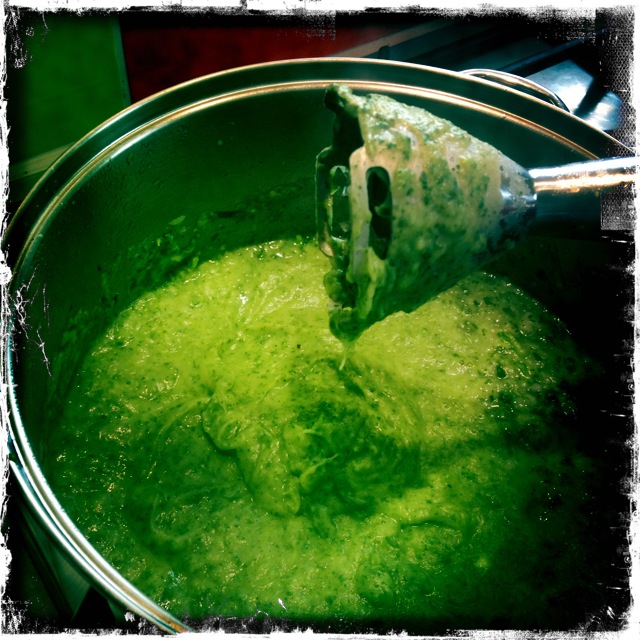
Thick green soup!

Categories: Kitchen Garden, Recipe | Tags: , , , , , , , , , , , , , | Leave a comment

Warm salad of chestnuts, apple & sage

I love autumn and the change in vegetables and fruits, as well as the colder nights and return to heartier dishes. This is lovely as a first course, or as an accompaniment to roast pork or even a slab of sheep’s milk cheese…

ourkitchengarden.net

Warm salad of chestnuts, apple & sage

Fresh from the garden: chestnuts, apples, red onion, lettuces, sage
Recipe source: Melissa
Serves: 6 or 24 tastes

Equipment:

  • Chopping board and knives
  • Baking tray
  • Bowls – big
  • Salad spinner
  • Paper towel & tea towel
  • Apple corer, mandoline
  • Measures – scales, tablespoon
  • Frying pan, slotted spoon
  • Wooden spoon, foil, plate
  • Serving bowls
Ingredients:

  • 10 fresh chestnuts
  • 2 pink lady apples
  • 1 red onion
  • A head of lettuce
  • A handful of radishes
  • Extra-virgin olive oil
  • 20 fresh sage leaves
  • 20g butter
  • Aged balsamic vinegar

What to do:

  • Preheat oven to 180C.
  • Carefully cut a small cross in the base of each chestnut. Place on a baking tray and roast in the oven for about 20 minutes until soft.
  • Meanwhile, separate out the lettuce leaves and wash thoroughly in several bowls of cold water. Spin-dry and then break or chop up the leaves into mouth-sized pieces. Wrap the leaves in a paper towel-lined tea towel and store in the fridge until you need them.
  • Wash and spin-dry the sage leaves. Wash the radishes & slice them with the mandoline.
  • Wash and wipe the apples dry, then using the corer, cut out the apple cores. Cut in half, then crossways into thin 5mm slices.
  • Peel the onion, cut it in half and then thinly slice it using the mandoline.
  • Heat the butter in the frying pan over medium heat. Add the sage leaves and cook until crisp, stirring & then transfer to a plate lined with paper towel.
  • Then add the apple slices to the frying pan and cook, stirring occasionally, for 5 minutes or until apples are golden and tender. Use a slotted spoon to transfer the apple slices to a plate.
  • Add the onion to the frying pan and cook, stirring occasionally, for 5 minutes until soft.
  • Carefully slide the chestnuts out of the oven & leave to cool for 5 minutes until cool enough to handle. Peel away the shells and the light brown skin and break into pieces. Set aside.
  • Bring out the leaves from the fridge and drop into a large bowl. Drizzle with a tablespoon of balsamic vinegar, add a pinch of flaked salt and grind of pepper. Gently toss with your fingers, then add the radishes, apple slices & chestnut pieces and divide among serving bowls. Finish off by garnishing with the crispy sage leaves.
ourkitchengarden.net

Infernal chestnuts!

Categories: Kitchen Garden, Recipe | Tags: , , , , , , , , , , | Leave a comment

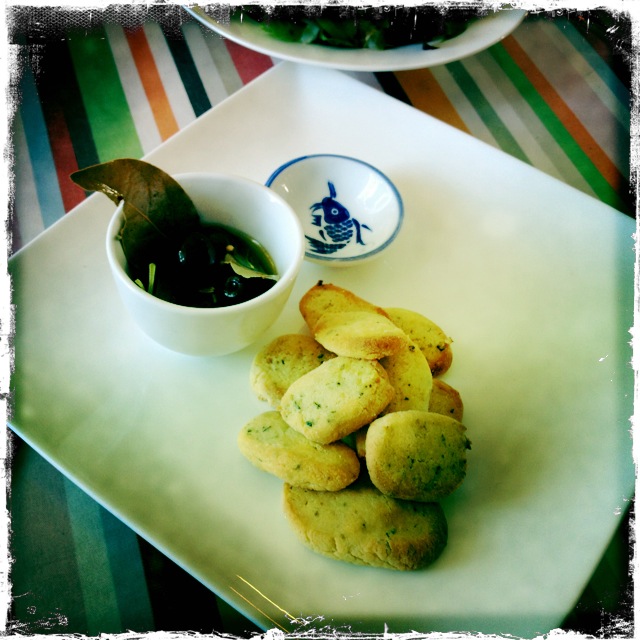
Parmesan and dried rosemary biscuits

When I worked at bel mondo a few years ago for the Manfredis we used to serve the parmesan biscuits with little bowls of marinated olives to guests as they sat down at the table – and tried not to eat them while we worked!

ourkitchengarden.net

Parmesan biscuits & olives, simply

Fresh from the garden: rosemary, egg
Recipe source: adapted from a recipe by Steve Manfredi 
Makes: about 30 biscuits

Equipment:

  • Grater
  • Bowls – small
  • Fork
  • Paper towel
  • Chopping board & knife
  • Food processor
  • Scales
  • Cling film & baking paper
  • Baking sheets
  • Serving plates
Ingredients:

  • 80g parmesan
  • 1 egg
  • A few stalks of dried rosemary
  • 125g salted butter at room temperature
  • 250g plain flour
  • Cooking salt

 What to do:

  • Grate the parmesan. Crack the egg into the small bowl and lightly whisk with the fork.
  • Slide the rosemary leaves from the stalks and run them through the food processor. Then add in the salted butter, plain flour, grated parmesan, egg and a pinch of salt.
  • Pulse until they are well incorporated and the dough forms a ball. If the ingredients are too dry add a little water until the dough catches.
  • Remove from the processor, form the dough into a sausage about the diameter of a 50c piece, wrap in cling film and rest in the refrigerator for 20 minutes.
  • Preheat the oven to 180C and line the baking sheets with baking paper.
  • Cut the sausage into coins 3-4mm thick and place on the baking sheets.
  • Cook for 10-12 minutes until golden.

Notes: How is the dried rosemary different to the fresh? Why do we ‘rest’ the dough? What would you serve these biscuits with? What other herbs could you use?

Categories: Kitchen Garden, Recipe | Tags: , , , , , , , | Leave a comment

Blog at WordPress.com.