Recipe

Moroccan carrot dip

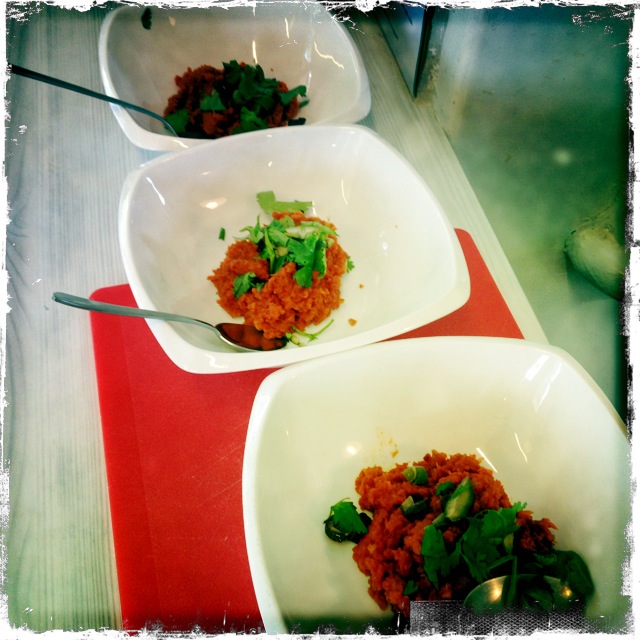
Jill says, “Serve this warmly coloured and sweetly spiced Moroccan carrot dip as part of a tabletop spread, along with some olives, flat bread, grills and salad.” We say, “whoa there! This is super-delicious! We used purple as well as normal carrots and with the paprika dye the result was a neon and spiced-up bowl of yum!” And of course I used coriander – not that I’m necessarily anti-parsley – but you just would, wouldn’t you?!

ourkitchengarden.net

Moroccan carrot dip

Fresh from the garden: carrots, garlic, lemon, olives, parsley or coriander
Recipe source: Jill Dupleix
Serves: 6 or 24 tastes

Equipment:

  • Medium saucepan& lid
  • Scales
  • Peelers
  • Chopping board and knife
  • Citrus juicer
  • Measures: tablespoon, ½ teaspoon
  • Bowls – large, small
  • Food processor
  • Spatula
  • Salad spinner
  • Paper towel
  • Serving bowls
Ingredients:

  • 500g carrots
  • 1 garlic clove
  • Half teaspoon ground cumin
  • Half teaspoon paprika
  • Half teaspoon ground ginger
  • Half teaspoon ground cinnamon
  • Pinch of cayenne pepper
  • Flaked salt
  • 1 tablespoon honey
  • Half a lemon
  • 3 tablespoons olive oil
  • 2 tablespoons green olives
  • A small handful flat parsley or coriander leaves

What to do:

  • Fill the saucepan with water and set to boil.
  • Meanwhile peel the garlic clove, then peel the carrots, chop into large chunks and cook in simmering, salted water with the garlic for about 20 minutes or until soft.
  • Squeeze the lemon to yield 2 tablespoons juice.
  • Measure out the cumin, paprika, ginger, cinnamon, cayenne, salt, honey and lemon juice into a small bowl.
  • Drain the carrots into the colander, and return to the hot, dry pan for a minute or two over medium heat to dry them out further.
  • Mash or whiz the carrots and garlic in the food processor until smooth. Add the bowl of spices, salt, honey and lemon juice and mix well or whiz again, scraping down with the spatula when needed.
  • Add the olive oil gradually, while still beating. Allow to cool for a minute or two.
  • Wash, spin-dry and chop the parsley or coriander leaves to yield 2 tablespoons.
  • Spoon into serving bowls, scatter with olives and parsley leaves and drizzle with a little extra olive oil to serve.

 Notes: Where is Morocco? What other spices can you think of? What is cayenne?

Categories: Kitchen Garden, Recipe | Tags: , , , , , , , , , , , , | Leave a comment

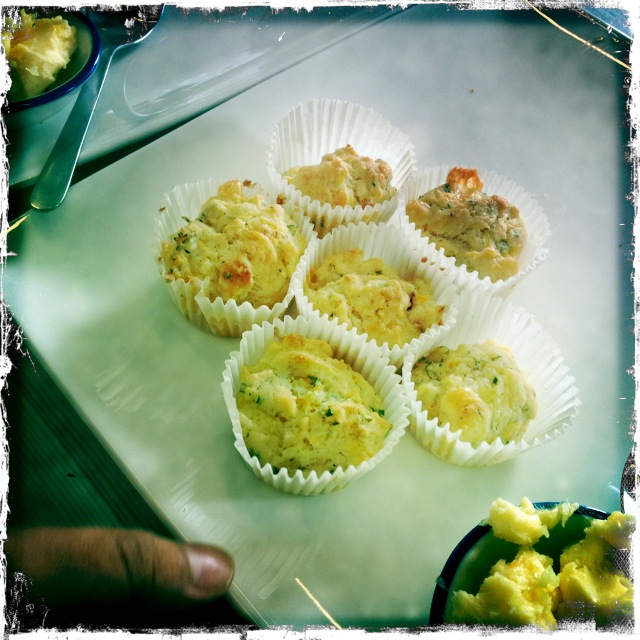
Carrot muffins with garlic butter

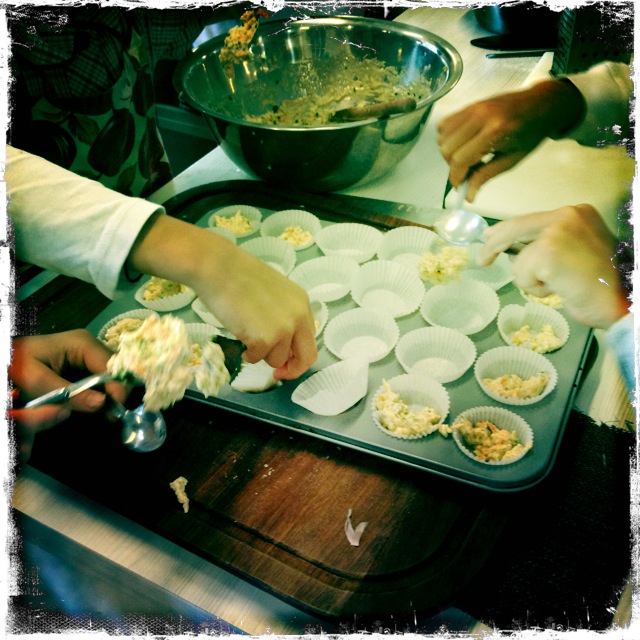
These are wonderful straight out of the oven, with the garlicky butter melting away in a hole in the middle…It’s a great recipe to make with the kids as there’s lots of grating, mashing and snipping, measuring and weighing… If you have no cupcake cases, just melt a tablespoon of butter in a small saucepan and, using a pastry brush cover each hole with a thin film of butter. This will stop the muffins sticking to the pan. We also used chives instead of parsley – snipping them with kids’ scissors – & made them even better!

ourkitchengarden.net

Carrot muffins with garlic butter

From the garden: carrots, parsley, eggs, garlic
Recipe source: adapted from Stephanie Alexander’s Kitchen Garden Cooking with Kids
Makes: 12 large or about 30 mini muffins

Equipment:

  • 12 or 24 hole muffin tin
  • 12 large or 24 small cupcake cases
  • Peeler, grater
  • Chopping board & knives
  • Bowls – 2 medium, 1 small
  • Measures: ½ cup, ¼ cup, teaspoon
  • Scales
  • Garlic press, whisk
  • Baking paper
  • Wire rack
  • Serving plates
Ingredients:

  • 2 large or 4 medium carrots
  • 15 stalks parsley
  • 60g cheddar or gruyere
  • 220g self-raising flour
  • 1 teaspoon table salt
  • 1 egg
  • 3/4 cup buttermilk
  • 1/2 cup vegetable oil
  • 2 cloves garlic
  • 100g unsalted butter at room temperature
  • Flaked salt

ourkitchengarden.net What to do:

  • Preheat oven to 180C. Drop the cupcake cases into the tin.
  • Wash, peel and grate the carrot to yield about ½ a cup. Wash, dry and chop the parsley. Weigh the cheese & then grate it.
  • Weigh the flour then mix it with the cheese, carrot, parsley and table salt together in a medium bowl.
  • In the other medium bowl whisk the egg, buttermilk and oil together.
  • Make a well in the dry ingredients and add the liquid mixture. Mix lightly and then spoon into muffin cases to about 2/3 full. Bake for 25 minutes for the large & about 15-20 for the small muffins.
  • While the muffins are cooking, make the garlic butter: Squeeze the garlic through the garlic press into the small bowl and add the butter and a pinch of salt. Mix until smooth. Place in a log shape on a piece of baking paper, roll up lightly, sealing the edges and put in freezer until firm.
  • Remove muffins from the oven. Allow to sit for a minute before turning out onto the wire rack to cool. Remove the butter from the freezer and slice into thin discs.
  • When the muffins are cool, make a slit in the top of each insert a slice of garlic butter and place on serving plates.

 Notes: What is buttermilk? What is a well in the centre of the dry ingredients?

ourkitchengarden.net

Buttery garlic goodness…

Categories: Kitchen Garden, Recipe | Tags: , , , , , , , , , , , | 1 Comment

Autumn fridge soup

Today dawned cold, rainy and most definitely autumnal after a month of lovely Indian summer… perfect soup weather! And no better excuse to clean out the scary fridge drawers of limp & sad veggies, and freezer of half-blocks of icy stock…

ourkitchengarden.net

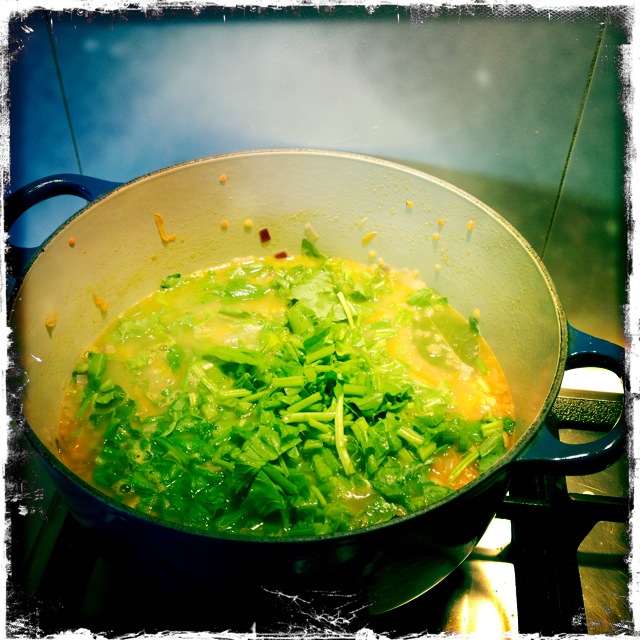
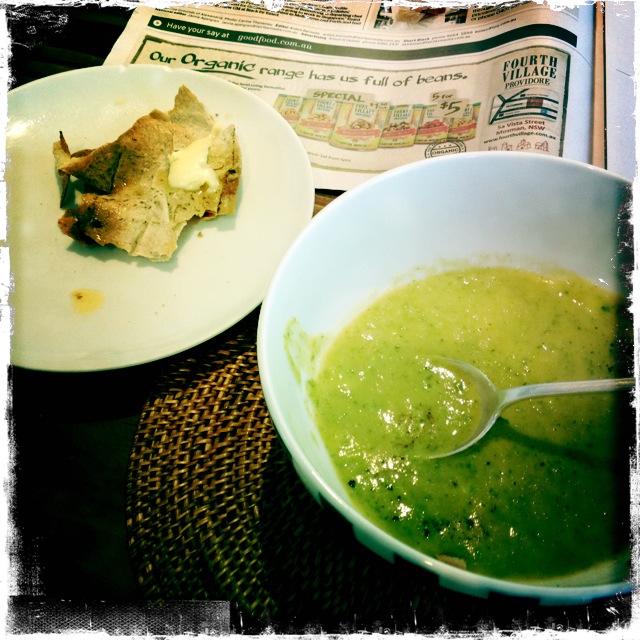
Fridge soup: rocket, spinach, lentil goodness

Fresh (or not!) from the fridge: I used half a Spanish onion, a brown onion, a potato, a carrot, some very floppy spring onions, garlic, some rocket from about a week ago and some spinach stalks that I was saving for the chooks (sorry girls).
Recipe source: Melissa


Equipment:

  • 1 large, 1 med saucepans with lid
  • Kettle
  • Chopping board & knife
  • Peeler
  • Mandoline
  • Sieve
  • Measures – litre jug, cup
  • Colander
  • Bowls – big, med
  • Stick blender
  • Wooden spoon, ladle
  • Serving bowls
Ingredients:

  • 1 brown onion
  • ½ a Spanish onion
  • 3 soft spring onions
  • 1 tablespoon extra-virgin olive oil
  • 1 knob of butter
  • Flaked salt and freshly-ground black pepper
  • 2 cloves garlic
  • 1 large potato
  • 1 large carrot
  • About a litre of vegetable stock
  • A cup of red lentils
  • 3 bay leaves
  • A bunch of spinach stalks
  • A small handful of rocket (refreshed in a big bowl of cold water for 10 minutes…)


ourkitchengarden.net

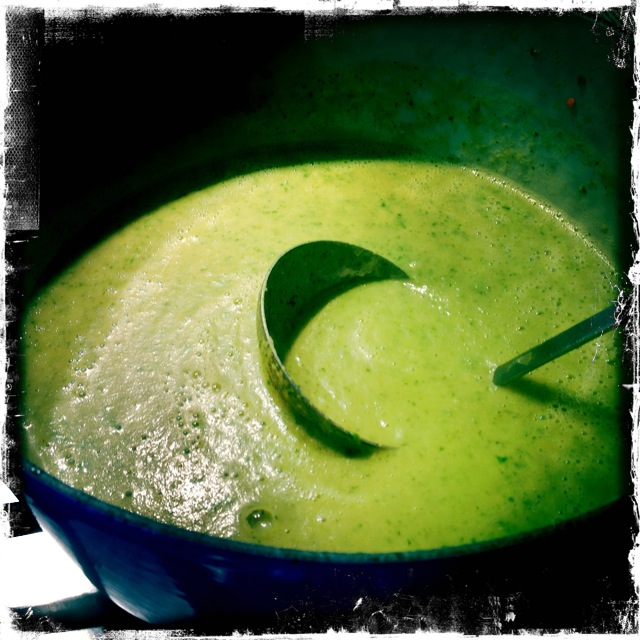
Fridge soup, green all over

What to do:

  • Pour the stock into the medium saucepan with lid on and heat to a simmer. (I had to semi-thaw mine before I could get it out of the container…)
  • Half fill the kettle and set to boil.
  • Measure the lentils into the sieve and give them a good rinse under the cold water tap, discarding any discoloured lentils or little stones.
  • Peel the onions and dice. Peel off the first layer of spring onion, tail and then slice into small discs.
  • Heat the olive oil and butter together in the large saucepan and then add all the onions and a sprinkle of flaked salt, stirring to coat.
  • Peel the potato under running water and then slice finely using the mandoline. Add to the sweating onions.
  • Peel and chop or slice the garlic and add that in too with the bay leaves.
  • Peel and the grate the carrot straight into the saucepan.
  • Pour the hot stock into the large saucepan, add the lentils and then simmer for about 10 minutes until the potato & lentils are tender. You may need to add a little extra hot water from the kettle, depending on how big a bunch of veggies you have.
  • Meanwhile wash the leafy veg thoroughly (discarding any manky bits), shake dry and chop into bite-sized pieces. Add any stalks into the soup to start cooking first, and then add the chopped leaves. Cook for another 5 minutes to wilt the green veggies.
  • Taste the soup to check seasoning and then puree with the stick blender.
  • Ladle into bowls to serve and add a grind of black pepper to finish.
  • Eat with buttery toasted Lebanese bread, and feel all warm and sustainable, all at the same time…

Notes: Do you have to soak lentils? What’s the number one rule with the mandoline? What does sweating do to the onions?

ourkitchengarden.net

Fridge soup, toasted pita, paper…


Categories: Kitchen Garden, Recipe | Tags: , , , , , , , , , , , | Leave a comment

Rocket and basil pesto

For this alternative pesto, we add rocket leaves to the basil and pound them together but you could also try a parsley or even coriander combination… We love them all! It also seems like a lot of olive oil so tone it back if you like, but I think it’s warranted, especially over freshly cooked pasta & muddled with a ladleful of  pasta-water!

ourkitchengarden.net

Handmade pasta, rocket & basil pesto

Fresh from the garden: rocket, basil, garlic
Recipe source: Melissa
Makes: 3 cups

Equipment:

  • Mortar & pestle
  • Cheese grater
  • Medium frying pan
  • Tea towel
  • Scales
  • Measuring jug
  • Medium bowl
  • Tablespoon
  • Serving bowls if needed
Ingredients:

  • 1 bunch basil
  • 1 bunch rocket
  • 2 large garlic cloves
  • Salt
  • 80g pine nuts
  • 50g parmesan cheese
  • 200ml extra virgin olive oil

What to do:

  • Before you wash the basil or rocket, pick the stalks from the basil and discard. Weigh the leaves with the rocket – you’ll need about 100g all up.
  • Wash and then spin-dry the basil and rocket, you might need to do this in several stages to make sure the leaves are as dry as can be!
  • Grate the parmesan cheese.
  • Heat the frying pan on a medium heat and lightly dry-toast the pine nuts, shaking regularly so that they don’t stick.
  • Peel the garlic cloves and place in the mortar and pestle with a good pinch of salt. Pound these to a paste.
  • Add the pine nuts to the mortar & pestle and continue to pound. Once smooth-ish, transfer to the bowl and stir in the parmesan.
  • Tear the basil leaves and put them into the mortar. Pound the leaves to a paste. Return the pine nut mixture to the mortar and, pounding it all together, gradually pour in all the olive oil.
  • Taste for salt and adjust if necessary.
  • Mix into steaming hot pasta, spread on bruschetta, drizzle over tomato slices, serve as part of an antipasto plate with goats’ cheese and roasted capsicum or spoon into serving bowls to serve as a dip with flatbreads.

Notes: With what else can you use pesto? What also goes with well with basil? Why do we toast the pine nuts? What does several mean? Why do we weigh the leaves before we wash them?

Categories: Kitchen Garden, Recipe | Tags: , , , , , , , , , , | 2 Comments

Potato, rosemary & rocket pizza

I think it’s a law that every child should love pizza… and mine certainly do! This one’s a very different style to the usual however, as there’s no tomato nor mozzarella – or even pineapple! But delish nevertheless, and is also a leeeetle bit healthy…

ourkitchengarden.net

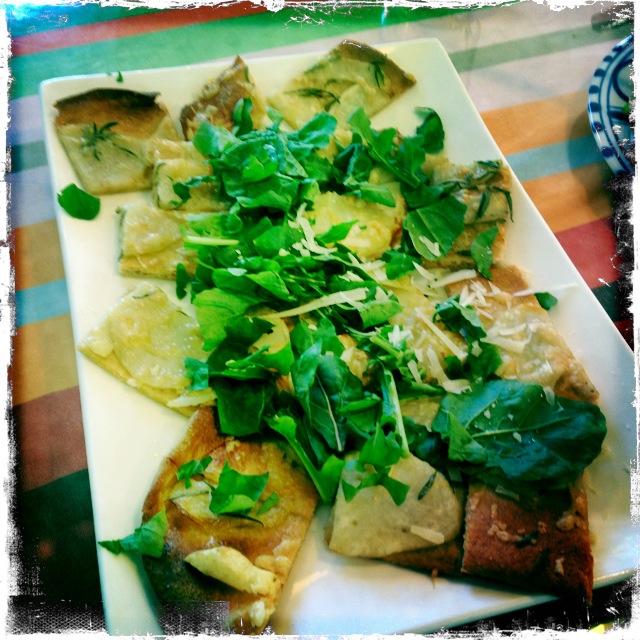
Potato, rosemary & rocket pizza

Fresh from the garden: potatoes, rosemary, rocket
Recipe source: adapted from Stephanie Alexander Kitchen Garden Cooking with Kids
Serves:  8 or 24 tastes

Equipment:

For the pizza dough:

  • Bowls – 1 small, 2 large
  • Fork
  • Scales
  • Measures: cup, ½ cup, tablespoon, teaspoon
  • Stand mixer with dough hook
  • Pastry brush
  • 2 large oven trays
  • Wide egg lifter
  • Large boards for cutting pizza
  • Pizza cutter

For the pizza topping:

  • Salad spinner
  • Scales
  • 2 clean, dry tea towels
  • Kitchen paper
  • Chopping board
  • Grater & peelers
  • Mandoline & mezzaluna
Ingredients:

For the pizza dough:

  • 1 cup lukewarm water
  • 3 teaspoons instant dry yeast
  • 1 teaspoon sugar
  • 1½ tablespoons extra virgin olive oil, plus extra for greasing
  • 400g plain flour, plus extra for flouring
  • 2 teaspoons cooking salt

For the pizza topping:

  • 3 handfuls rocket leaves
  • 100g parmesan cheese
  • 4 sprigs rosemary
  • 3 medium-to-large potatoes
  • 1/2 cup extra-virgin olive oil


What to do:

To make the dough:

  • Place the water, yeast and sugar in the small bowl. Mix with the fork and leave for 5–10 minutes until the mixture looks frothy.
  • Add the 2 teaspoons of oil to the yeast mixture and mix well.
  • Place the flour and salt and yeast mixture in the bowl of the stand mixer and beat for at least 8 minutes, until the dough looks smooth.
  • Brush the inside of a large bowl with a little of the extra virgin olive oil, using the pastry brush.
  • Turn the pizza dough into the oiled bowl. Cover with a clean, dry tea towel and put in a draught-free place until the dough has doubled in size. This process, which is called ‘proving’, will take at least 1 hour.

What to do:

Start of lesson:

  • Tip the risen dough onto the workbench and knead briefly, then shape it into a round ball and return it to the bowl.
  • Cover the bowl with the tea towel and leave again, this time for at least 20 minutes.
  • Preheat the oven to 200C. You can prepare the topping now while you wait for the oven to heat up.

For the topping:

  • Rinse the rocket leaves and dry them in the salad spinner. Shred the rocket into fine strips. Lay a piece of kitchen paper on a dry tea towel and spread the dry leaves over the paper and then roll the whole lot up like a log. Keep the rolled parcel of leaves in the refrigerator until needed.
  • Shave off pieces of parmesan using either a grater (if it has a wide slicing option) or a normal potato peeler.
  • Pull the rosemary needles from the stalks and chop them using the mezzaluna.
  • Peel the potatoes, washing them as you go, and slice them very thinly and very carefully using the mandoline & guard.
  • Tip the sliced potatoes into the large bowl and drizzle with most of the oil.
  • Add the rosemary and salt and pepper, then mix together so that all the slices are lightly oiled.

Assembling the pizza:

  • Scatter some flour on the workbench, divide the dough in two and roll to form two thin rectangles to fit the baking trays.
  • Assemble the pizzas directly onto the trays, flouring the trays first.
  • Arrange the slices of potato on the pizzas, overlapping them.
  • Sprinkle most of the Parmesan over the potato, keeping some aside.
  • Drizzle the pizzas with the last of the oil, then place the pizzas in the oven for about 10 minutes or until the edges are very crusty and the cheese is bubbling. 

Finishing off:

  • While the pizzas are baking you can make the dough for the next class (see above).
  • You may want to slip the pizza off the tray onto the rack for the last few minutes, so that you get a really crusty base.
  • Once the pizzas are done, transfer them to the wooden chopping boards using the wide egg lifter.
  • Cut the pizzas in half, and then into small slices or squares and then slide half a pizza onto each plate.
  • Top each with a handful of the shredded rocket leaves and remaining parmesan.

Notes: Where does pizza come from? What type of potatoes will you use here? What other sort of vegetables could you use in a pizza? What sort of other pizza could we make?

ourkitchengarden.net

Yes please, I’ll have another

Categories: Kitchen Garden, Recipe | Tags: , , , , , , , , , , | Leave a comment

Apricot, cranberry and cardamom hot cross buns

‘… if you have no daughters, give them to your sons…’ At this time of year it is possible to buy hot cross buns anywhere – but I think there is nothing better than freshly made ones!

ourkitchengarden.net

Warm cross dough

Recipe source: adapted from a recipe by Jeremy Strode in Good Living 2011
Makes: 12 large or 24 small buns

Equipment:

  • Stand mixer & dough hook
  • Bowls – large, small
  • Measuring – ½ teaspoon, tablespoon
  • Small saucepan
  • Fork
  • Spatula
  • Plastic wrap & baking paper
  • Large baking tray
  • Chopping board & knife
  • Small snap lock bags
  • Scissors
  • Pastry brush
  • Serving plates
Ingredients:

  • 20g dried yeast
  • 100g caster sugar plus a pinch
  • 100g butter at room temperature
  • ½ teaspoon salt
  • ½ teaspoon ground cardamom
  • 500g plain flour
  • 2 eggs
  • 150g apricots
  • 50g dried cranberries

Crosses

  • 90g self-raising flour
  • 10g skim milk powder

Glaze

  • 1/3 cup water
  • 2 tablespoons caster sugar

What to do:

The dough mixture:

  • Mix yeast with 200ml warm water & pinch of sugar in a small bowl and leave in a warm place for 5 minutes to activate.
  • Chop the apricots.
  • Place butter, salt, cardamom, the rest of the sugar and the plain flour in the mixer and combine.
  • Add eggs and yeast mixture and beat until smooth.
  • Add apricots and when combined, leave in a warm place for 1 to 1½ hours to double in size.

Start of lesson:

  • Line a large baking tray with non-stick baking paper. Punch dough down to its original size. Knead on a lightly floured surface until smooth. Divide into 12 even portions. Shape each portion into a ball. Place balls onto baking paper-lined tray so that the balls just touch. Cover with plastic wrap. Set aside in a warm, draught-free place to prove for 30 minutes. Preheat oven to 190°C.
  • Whilst the buns are proving you can make the next dough mixture (above) for the next class.
  • After the 30 minutes is up, mix self-raising flour, milk powder and 100ml water together in a small bowl until smooth. Spoon into a small snap-lock bag. Snip off a tiny hole in 1 corner of bag. Pipe flour paste over tops of buns to form crosses. Bake for 20 minutes until buns are cooked through.
  • Meanwhile make the glaze: Place 1/3-cup water and sugar into a small saucepan over low heat. Stir until sugar dissolves. Bring to the boil. Boil for 5 minutes. Brush warm glaze over warm hot cross buns. Divide among serving plates – slicing if needed – & then eat!

Notes: If you have no skim milk powder for the crosses then the self-raising flour will work with milk or even water!

ourkitchengarden.net

Hot cross bunsters

Categories: Kitchen Garden, Recipe | Tags: , , , , , , , , , | 2 Comments

Autumn salad with poached eggs & tarragon and landcress mayo

The list of ingredients we can add to a salad is endless… here at Bondi we base our salads on lettuce leaves, fresh herbs and then seasonal additions. This one is a favourite with just-poached eggs and a wonderfully creamy dressing. You can substitute watercress for landcress if you like.
ourkitchengarden.net

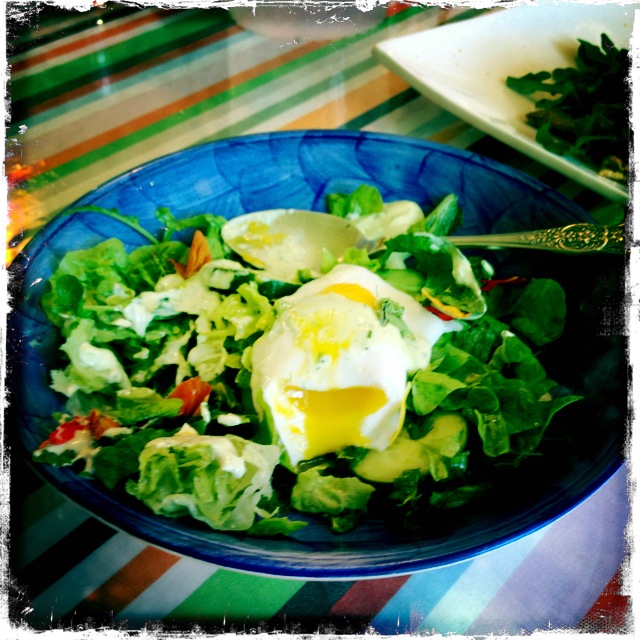
The double-yolk autumn salad with tarragon & landcress mayo

Fresh from the garden: Salad leaves, eggs, tarragon, chives, oregano, thyme, marjoram, edible flowers, cucumber, spring onions, garlic, lemon – the list goes on…!
Recipe source: Melissa
Serves: 4 at home or 24 tastes

Equipment:

  • Bowls – 2 large, 1 medium, 2 small
  • 2 salad spinners
  • Tea towel, kitchen paper
  • Chopping boards & knives
  • Non-stick frying pan
  • Slotted spoon
  • Stick blender & cup
  • Measuring: jug, teaspoon, ½ teaspoon
  • Scales
  • Mezzaluna
  • Citrus juicer
  • Serving bowls


Ingredients:

  • 4 freshest eggs
  • A bunch of salad leaves
  • A large handful of herbs
  • A few garnishing flowers
  • Special extras: cucumber, spring onions – whatever you have

For the tarragon mayonnaise:

  • A small bunch of landcress
  • 1 large sprig tarragon
  • 1 extra egg
  • ½ teaspoon salt
  • 1 small clove garlic
  • 1 level teaspoon mustard powder
  • 120ml rice bran or veg oil
  • 25ml extra-virgin olive oil
  • 1 teaspoon white wine vinegar
  • ½ a lemon
  • Freshly milled black pepper

What to do:

For the salad:

  • Fill up the 2 big bowls with cold water & wash the salad leaves in several changes of water. Spin dry and wipe the bowls dry.
  • Lay out the tea towel and line it with kitchen paper. Spread the salad leaves over the paper and roll the whole lot up like a log. Keep the rolled parcel of leaves in the fridge until needed.
  • Fill up another bowl with water and wash the herbs and small garnishing leaves. Spin dry and  pick leaves, discarding stalks into compost.
  • Pick the petals from the flowers and reserve in a small bowl with the garnishing leaves.
  • Chop the herbs and keep separate in their own small bowl.
  • Cut the root end from the spring onion and strip off the first layer or two. Thoroughly wash the remaining part and then chop into fine discs. 

To poach the eggs:

  • Fill a medium-sized frying pan with water to a depth of about 5cm, then heat it to a bare simmer.
  • Then break the eggs into the simmering water, one at a time until they’re all in, and let them cook, uncovered, for 2 minutes. Fill a large bowl with cold water.
  • Then use a draining spoon to lift them from the water and transfer them to the bowl of cold water until you are ready to use them.

For the sauce:

  • Wash, spin dry and separate off the landcress leaves and discard any tough stalks into the compost.  Wash & spin dry the tarragon. Pick the tarragon to yield about 1 tablespoon leaves.
  • Squeeze the lemon half to yield ½ teaspoon lemon juice. Peel the garlic clove & finely chop. Wash & dry the chives and snip finely.
  • Now break the extra egg into the cup of the stock blender, add the salt, garlic, mustard powder and a few twists of freshly milled black pepper, then blitz to blend these together.
  • Now mix the oils in the jug and ask a helper to pour it in a thin trickle into the cup whilst it’s blending. When all the oil is in, add the vinegar, lemon juice, landcress and tarragon leaves, then blend again until the leaves are quite finely chopped.

 To serve:

  • Take the lettuce from the fridge and chop or tear into mouth-sized strips. Pop them into a big bowl, then add the spring onions and drizzle about a teaspoon of olive oil, a teaspoon of white wine vinegar  & a sprinkle of flaked salt over the whole lot.
  • Using your hands, turn the leaves to coat in the dressing and then divide the lot among your serving bowls.
  • Spoon an egg at a time out of the water and dry off with some paper towel or a tea towel, and then carefully arrange one egg on the top of each salad.
  • Drizzle the mayo over the top of each salad, followed by a sprinkle of herbs and the flowers and serve immediately!

Notes: What is mayo short for? What other salad dressings could you use? Why do we need to wash the leaves so well? Why do we roll the leaves up to put them in the fridge? Why don’t we need to use vinegar to poach the eggs? Why do we put the eggs into cold water?

Categories: Kitchen Garden, Recipe | Tags: , , , , , , , , , , , | Leave a comment

Kylie Kwong’s chilled cucumber salad

Kylie describes this dish as taking on whole different tones, being slippery, silky, yet still crunchy. It is very refreshing, and wonderfully easy to make.

ourkitchengarden.net
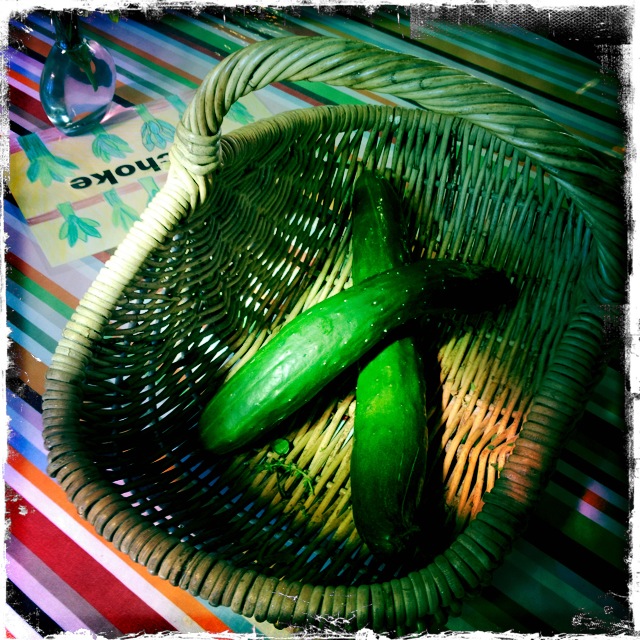
Fresh from the garden: cucumbers, ginger, garlic
Recipe source: adapted from a recipe by Kylie Kwong in Simple Chinese Cooking
Serves: 6 as a side dish or 24 tastes

Equipment:

  • Peelers
  • Chopping boards and knives
  • Teaspoons
  • Measures – tablespoon, teaspoon, ½ teaspoon
  • Bowls – large, small
  • Teaspoon
  • Serving bowls


Ingredients:For the salad

  • 5 small or 2 large cucumbers
  • 1 tablespoon white sugar
  • 1 teaspoon sea salt
  • 1 pinch of ground black pepper

For the dressing

  • 2 tablespoons light soy sauce
  • 2 cloves garlic
  • 1 small knob ginger
  • ½ teaspoon sesame oil

 What to do:

  • Wash the cucumber, then peel and cut in half lengthways. Scoop out the seeds using a teaspoon. Place cut-side down on a chopping board and cut on the diagonal into 1.5cm pieces.
  • Place cucumber in a bowl, sprinkle with sugar and salt and mix well. Cover and refrigerate for 30 minutes.
  • Meanwhile to make the dressing, peel and finely chop the garlic cloves. Peel and finely dice the ginger to yield 1 tablespoon. Place the garlic, ginger and the rest of the dressing ingredients in a small bowl and stir to combine.
  • When the time is up, drain the cucumbers, and using your hands, gently squeeze out excess liquid.
  • Place back into the bowl, combine the chilled cucumber with the dressing and toss to incorporate.
  • Divide among serving bowls and sprinkle with black pepper. Serve immediately.

Notes: What does the sugar and salt do to the cucumber? Why do we scrape the seeds out? How does it feel the squeeze the cucumber pieces with your hands?

Categories: Kitchen Garden, Recipe | Tags: , , , , , , , , , , | Leave a comment

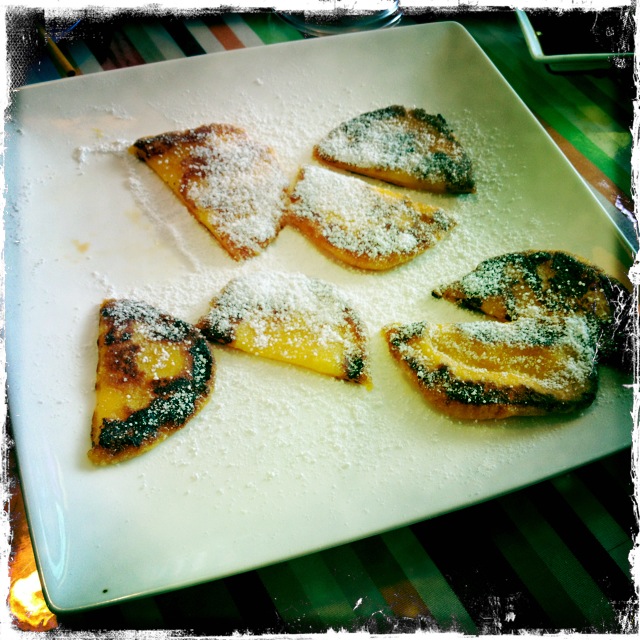
Nan Gua Bing (Chinese pumpkin pancakes)

Angela says, ‘Like a lot of Asian desserts the recipes aren’t really recipes but more like guidelines. The more often I make something the better I get at it. This truly applies to nan gua bing, the texture changes a little with the weather and humidity, I add the flour little by little so that I can feel the texture of the dough in my hands to know when it’s right. It’s like fresh pasta, it’s an ever changing friendship that weathers the seasons; my hands always know and keep the memory of when it’s just right.’

ourkitchengarden.net

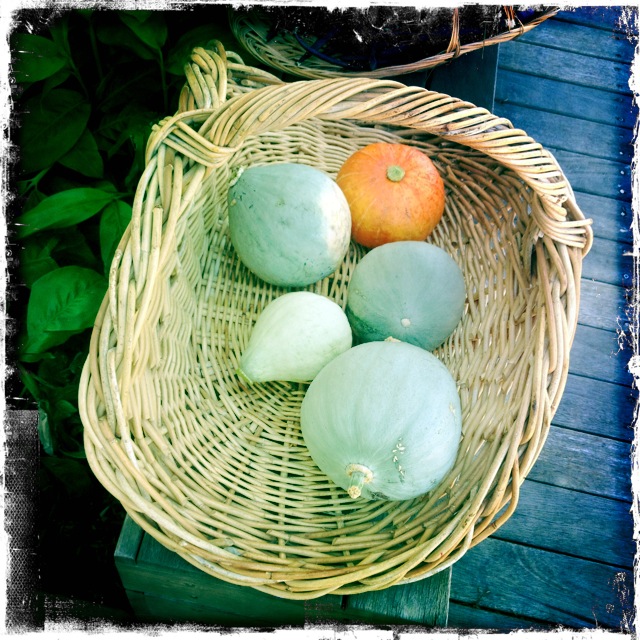
Fresh from the garden: pumpkin
Recipe source: adapted from a recipe on angelamay.net
Makes: 12 small pancakes that we halved to share

Equipment:

  • Chopping boards and knives
  • Bowls – large, small
  • Steamer basket & wok
  • Baking paper
  • Scales
  • Measures – jug, cup, ½ cup, tablespoons
  • Mouli & metal spoon
  • A non-stick frying pan
  • Rolling pins
  • Serving plates
Ingredients:

  • 1 small pumpkin (kabocha or jap is ideal)
  • ½ cup caster sugar
  • 1½ cups glutinous rice flour (not the rice flour for gluten-free baking)
  • Rice bran or vegetable oil
  • 2 tablespoons icing sugar for dusting

ourkitchengarden.net 

What to do:

  • Carefully chop the pumpkin into 2cm wedges and then carefully peel the slices with a very sharp knife or peeler. Weigh the peeled pumpkin to yield 225g, then cut each slice into 2cm cubes.
  • Put the steamer basket into the wok and then using a jug, fill the wok with cold water to just touch the bottom of the basket. Remove the basket and turn the wok on to boil the water.
  • Line the basket with baking paper, then pop the pumpkin cubes in and place the basket on to steam for 20 minutes or until fork-tender, making sure the water doesn’t touch any paper or pumpkin.
  • While the pumpkin is still very hot pass it through the mouli so the pumpkin is smooth with no lumps. Then, working quickly to make sure the pumpkin stays hot, stir in all the sugar and flour bit by bit, mixing and kneading until the dough is slightly sticky yet smooth.
  • Shape the dough into small balls and then either using a rolling pin or your hands, flatten each ball out into a small circular pancake about ½cm thick.
  • Heat the frying pan on medium heat and pour in a thin layer of oil. Add a layer of pancakes and fry until lightly colored golden brown, flipping and turning heat down to medium low to cook through.
  • Transfer to serving plates and spoon the icing sugar into a sieve, lightly dusting over the pancakes – serve immediately.

Notes: What other vegetables can be eaten as dessert? What is a mouli?

ourkitchengarden.net

Categories: Kitchen Garden, Recipe | Tags: , , , , , , , | Leave a comment

Perfect steamed rice!

So many fantastic home cooks I know are scared of rice! When it comes to steaming you really don’t need a rice cooker (unless you’re cooking for 100 people!) as a simple saucepan will do the job perfectly…

ourkitchengarden.net

Recipe source: Melissa
Serves: 8 or 24 tastes

Equipment:

  • Measures – cup
  • Large saucepan & lid
  • Sieve
  • Knife
  • Serving bowl or small bowl and plates
Ingredients:

  • 3 cups jasmine or basmati rice
  • 4 cups cold water

What to do:

  • Measure the rice grains into the saucepan. Wash the rice with cold running water and swish with your hands. Drain carefully into a sieve and repeat 3 more times until the water is no longer milky. This helps remove excess starch and cleans the grains.
  • Empty the washed rice back into the pot and add the 4 cups of cold water. Turn the heat to high – when the water in the pot starts to bubble, stir then cover the pot and reduce heat to the lowest flame. Simmer for 15 minutes without disturbing.
  • After the 15 minutes is up, just turn off the heat without disturbing the saucepan. Just let it sit with the lid on for 5 minutes to finish the steaming process.
  • Using a knife, transfer the rice into a large serving bowl, fluffing as you go. Serve in one bowl, or alternatively cram spoonfuls of rice into a small deep bowl  – just rinsed & wet – until full and level, then place bowl upside-down onto a plate, tap and pull off the bowl leaving a bowl-shaped rice mound!

Notes: Where does rice come from? How is it grown? What other dishes can you make with rice?

Categories: Kitchen Garden, Recipe | Tags: , , , , , , , , , , | Leave a comment

Create a free website or blog at WordPress.com.