Posts Tagged With: children

Only 3 places available!


Two spots free on Tuesday 2nd October and one available on Wednesday 3rd – jump to it! Text your email address to 0414 978 957 & I’ll shoot you through a booking form right away…

I’m finalising the program’s menus in the next few days and I can’t wait to use all the beautiful spring produce that’s available: I’ve seen fat broad beans, juicy strawberries, crunchy beetroot, aromatic marjoram and so much more – yum yum – watch this space!

Mx

ourkitchengarden.net


Categories: Kitchen Garden, School Holiday Program | Tags: , , , , , , , | Leave a comment

Bocconcini, garden herb, rocket and red onion pizza

We love the whole gamut of pizza qualities! Making the dough is great fun (and very therapeutic…!) and we love using our big muscles to roll out the bases… We wash and spin and chop our herbs, and simmer up our own garlicky tomato sauce – with fresh tomatoes in summer and tinned toms out of season – and compile our toppings based on what’s growing…  this week it’s loads of sweet onion, marjoram, rocket and curly parsley… We grate and tear and zest, and we LOVE the smell as the pizza bakes… But most of all, we adore devouring the pizza. Mmmmm.

ourkitchengarden.net

Fresh from the garden: rocket, red & brown onions, thyme, marjoram, parsley
Recipe source: Melissa, kitchen specialist at Bondi PS

Equipment:For the pizza dough

  • Bowls – 1 small, 1 large
    • Fork
    • Scales
    • Measures: cup, tablespoon, teaspoon
    • Stand mixer with a dough hook
    • Pastry brush
    • 2 rolling pins
    • 2 baking or pizza trays
    • wide egg lifter

For the pizza topping:

  • Chopping board & knife
  • Medium frying pan
    • Measures: ¼ cup, tablespoon
  • Wooden spoon
    • Grater, tongs
  • Kitchen towel
  • Large bowl
  • Salad spinner
  • Large board for cutting pizza
  • Pizza cutters
  • Serving plates
Ingredients:For the pizza dough

  • 1 cup lukewarm water
  • 3 teaspoons instant dry yeast
  • 1 teaspoon sugar
  • 1 tablespoon extra-virgin olive oil, plus extra for greasing
  • 400g plain flour, plus extra for flouring
  • 2 teaspoons salt

For the pizza topping:

  • 1 tub bocconcini
  • 1 large red onion
  • 2 tablespoons extra-virgin olive oil
  • Small handful marjoram, parsley and thyme
  • A small handful rocket
  • 30g parmesan

Tomato sauce:

  • ¼ cup extra-virgin olive oil
  • 1 onion
  • 2 garlic cloves
  • 1 can chopped tomatoes
  • Flaked salt and black pepper

What to do:
To make the dough:

  • Place the water, yeast and sugar in the small bowl. Mix with the fork and leave for 5–10 minutes until the mixture looks frothy.
  • Add the 2 teaspoons of oil to the yeast mixture and mix well.
  • Place the flour and salt and yeast mixture in the bowl of the electric mixer and beat for at least 8 minutes, until the dough looks smooth.
  • Brush the inside of a large bowl with a little of the extra virgin olive oil, using the pastry brush.
  • Turn the pizza dough into the oiled bowl. Cover with a clean, dry tea towel and put in a draught-free place until the dough has doubled in size. This process, which is called ‘proving’, will take at least 1 hour.
  • After an hour, tip the risen dough onto the workbench and knead briefly, then shape it into a round ball and return it to the bowl. Cover the bowl with the tea towel and leave again, this time for at least 20 minutes.                                                                                 

What to do:

Start of lesson:

  • Preheat the oven to maximum. You can prepare the topping now while you wait for the oven to heat up.
  • Scatter some flour on the workbench, divide the pizza dough in two and roll to form two thin rectangles to fit the baking trays.
  • Assemble the pizzas directly onto the trays, flouring the trays a little first.

For the tomato sauce:

  • Peel and finely chop the onion and garlic.
  • Heat the olive oil in the frying pan & gently cook the onion and garlic until translucent but not brown.
  • Open the tin of tomato and add to the frying pan with a pinch of salt and a grind of pepper.
  • Simmer gently for 10 minutes, stirring occasionally, until quite reduced.

For the topping: 

  • Peel the red onion, cut in half and finely slice into rings
  • Wash and carefully dry the herb sprigs – pick the leaves, discarding the stalks. Finely chop all the herbs.
  • Wash the rocket and spin it dry. Leaving small leaves whole, chop large leaves into ribbons.
  • Peel the onion, cut in half and finely slice into rings.
  • Open the tub of bocconcini and cut or tear each ball into 3 or 4 pieces.
  • Grate the parmesan.

Assembling the pizza:

  • Using a metal spoon, swirl a couple of spoonfuls of tomato sauce onto the pizza bases, spreading so that they become totally covered.
  • Layer the onion slices on top and then lay on the bocconcini. Season well.
  • Drizzle the pizzas with the last of the oil, then slide them into the oven.

Baking the pizza:

  • Bake the pizzas for 12 minutes or until the edges are very crusty and the cheese is bubbling.
  • At this stage you can make the dough for the next class.
  • Once the pizzas are done, transfer them to a board using the wide egg lifter. Cut the pizzas crossways into small squares, and lift onto serving plates.
  • Sprinkle with the herbs and the grated parmesan and finish with the rocket.
  • Serve and eat!

Notes: What other sort of vegetables could you use in a pizza? What sort of other pizza could we make?

Categories: Kitchen Garden, Recipe | Tags: , , , , , , , , , | 1 Comment

Spinach soup with sour cream and crunchy croutons

This is such a lovely spring soup, verdant and vibrant! And made even more delicious by the addition of sour cream and crunchy croutons at the end.

ourkitchengarden.net

Fresh from the garden: potatoes, spinach, onions
Recipe source: Melissa, kitchen specialist at Bondi PS

Equipment:

  • Small saucepan
  • Chopping board & knife
  • Baking sheet
  • Scales
  • Bowls – 2 large, med
  • Garlic press
  • Potato peelers
  • Small stockpot
  • Wooden spoon
  • Measuring: jug,1/2 cup, tablespoon, teaspoon, ½ teaspoon
  • Stick blender
  • Ladle
  • Teaspoons
  • Serving bowls


Ingredients:For the croutons

  • 2 tablespoons unsalted butter
  • 1 tablespoon extra-virgin olive oil
  • Half a loaf sourdough of bread
  • 2 teaspoons salt
  • 1/4 teaspoon ground cayenne
  • 1/2 teaspoon ground black pepper

For the soup

  • 1 tablespoon olive oil
  • 1 brown onion
  • 2 garlic cloves
  • 2 teaspoons ground cumin
  • 1 litre vegetable or chicken stock
  • 1kg all-purpose potatoes
  • 2 bunches spinach
  • Flaked salt & black pepper
  • 1/2 cup sour cream

What to do:

  • Preheat the oven to 200C.
    Wash the spinach in several changes of water and shake dry. Trim the stems and then slice stems and leaves into pieces 2cm wide.
  • Peel, halve and coarsely chop the onion. Squeeze the garlic through the garlic press. Wash and peel the potatoes and chop into 2cm cubes.
  • Heat the oil in stockpot over medium heat. Add the onion and cook, stirring, for 5 minutes or until soft. Add the garlic and cumin and cook, stirring, for 30 seconds or until aromatic.
  • Increase heat to high. Add the stock and bring to the boil. Add potato and reduce heat to medium. Simmer, uncovered, for 10 minutes or until potato is tender.
  • Meanwhile, carefully melt the butter in the small saucepan.
  • Remove the crust from the half-loaf of bread and then slice the bread into cubes.
  • Combine the melted butter and tablespoon of olive oil in a large bowl. Add the cubes of bread, and toss until coated. Sprinkle with salt, cayenne pepper, and black pepper; toss until evenly coated. Spread the bread in a single layer on a baking sheet. Bake until croutons are golden, about 10 minutes.
  • Add spinach to the soup and cook for 2-3 minutes or until the spinach wilts.
  • Using the stick blender, whizz the soup until smooth. Taste and season with salt and pepper.
  • Ladle soup among serving bowls. Top with half a teaspoon of sour cream and a sprinkle of croutons.

Notes: What is an all-purpose potato? What does cumin smell like?

Categories: Kitchen Garden, Recipe | Tags: , , , , , | Leave a comment

Fritatte of beetroot leaf, sweet potato and feta

Gordon’s original recipe calls for spinach but I think this is a great way to use up our many beetroot leaves. He also suggests cooking in one big pan over heat and then finishing under the grill, where we pour ours into muffin pans to oven-bake… We also add some of our lovely herbs for an aromatic twist.

ourklitchengarden.net

From the garden: sweet potato, beetroot leaves, eggs, marjoram, parsley
Recipe source: adapted from a recipe by Gordon Ramsay

Equipment:

  • Pastry brush, potato peelers
  • Scales
  • Chopping board & knives
  • Paper towel
  • Measuring tablespoon
  • Large frying pan
  • Wooden spoon
  • Large bowl
  • Tongs, whisk
  • Cupcake tins: 2×12-hole large or 2×24-hole mini
  • Serving plates
Ingredients:

  • 1 large sweet potato (about 500g)
  • Large handful of beetroot leaves
  • Small handful marjoram and parsley
  • 4 tablespoons olive oil plus extra
  • Flaked salt and freshly ground black pepper
  • 200g feta cheese
  • 20g parmesan
  • 12 large eggs

What to do:

  • Preheat the oven to 180C. Brush a little olive oil into each cupcake hole.
  • Peel the sweet potato, and then chop flesh evenly into 1cm cubes.
  • Wash the beetroot leaves in several changes of water and shake dry. Chop the stalks and leaves into 1cm strips, to yield about 150g cut strips.
  • Wash the herbs and pat dry with paper towel. Strip the leaves from the stalks & chop finely.
  • Heat the frying pan with the oil and toss in the sweet potato. Season well with salt and pepper. Cook, turning occasionally, for about 4 minutes over medium heat until the cubes are just tender and lightly golden at the sides.
  • Meanwhile, cut the feta into small cubes and grate the parmesan.
  • Stir the beetroot leaves into the sweet potato and cook for about 3 minutes until wilted.
  • Then add the cubed feta and gently stir to mix in.
  • In the large bowl, lightly beat the eggs with the herbs, parmesan, a pinch of salt and a grind of pepper.
  • Divide the sweet potato mixture evenly into the cupcake holes, spoon the egg mixture over and bake in 180C oven: about 15 minutes for the mini frittate and 20 minutes for the large.

Notes: Why is the name of this recipe frittate, ending in e? What other vegetables could you use in the recipe? Which animals’ milk can make feta?

ourkitchengarden.net

Categories: Kitchen Garden, Recipe | Tags: , , , , , , , , , , , | Leave a comment

Blood orange honey cake with vanilla yoghurt

At this time of year we try and incorporate as many blood oranges into recipes as possible! Cakes always go down well as a treat, and this one is dairy-free too if you don’t serve the yoghurt.

ourkitchengarden.net

From the garden: eggs, blood oranges
Recipe source: adapted from a recipe by Melissa Klemke for Kidspot

Equipment:

  • A large cake tin
  • Pastry brush
  • Baking paper
  • Measuring: cup, ½ cup, teaspoon, ½ teaspoon
  • Microplane zester
  • Bowls – 2 big
  • Electric mixer
  • Citrus juicer
  • Skewer
  • Wire rack
  • Serving plates
Ingredients:

  • 2½ cups self raising flour
  • 1 teaspoon baking powder
  • ½ teaspoon bicarbonate of soda
  • 1 teaspoon ground cinnamon
  • 1 cup raw caster sugar
  • ½ cup honey
  • ½ cup vegetable oil
  • 4 eggs
  • 3 blood oranges
  • 1 vanilla bean
  • 200ml natural Greek yoghurt
  • 1 tablespoon white caster sugar


What to do:

  • Preheat oven to 170°C.
  • Brush the cake tin with a little vegetable oil and then line with baking paper.
  • Using the microplane, carefully zest the blood oranges.
  • Juice the oranges and mix the zest with the juice.
  • Mix the eggs, honey, raw caster sugar and vegetable oil in a large bowl.
  • Sift flour, baking powder, bicarb soda and cinnamon into another bowl.
  • Using the electric mixer, mix in the flour and orange juice/zest alternately until all combined.
  • Pour into the greased & lined tin.
  • Bake in oven for 40 minutes, checking after the 30 minute mark – use the skewer test to check that it is cooked.
  • Meanwhile, if making the vanilla yoghurt: halve the vanilla pod and scrape the seeds from inside each half. Mix these into the yoghurt with the tablespoon of white caster sugar. Chill until ready to serve.
  • When the cake is cooked, turn out on wire rack and cool before cutting.
  • Divide among serving plates and serve with the vanilla yoghurt if needed.

Notes: Why do we grease and line the tin? What do baking powder and bicarb soda do?


Categories: Kitchen Garden, Recipe | Tags: , , , , , , , , | Leave a comment

Salad of blood orange, beetroot, radish and goats’ cheese

We love the arrival of blood oranges to signify the end of winter & beginning of spring! This salad is a firm favourite of ours, with its contrasting flavours and textures, and beautiful deep colours.

Our Kitchen Garden

Serves: 6 or 24 tastes
Fresh from the garden: blood oranges, radishes, beetroot, beetroot leaves, lettuce leaves, marjoram

Equipment:

  • Chopping board & knife
  • Small saucepan & lid
  • Colander
  • Paper towel
  • Measuring: tablespoon, teaspoon
  • Bowls – large, small
  • Garlic press
  • Salad spinner
  • Fork
  • Plates to serve
Ingredients:

  • 3 or 4 baby beetroot
  • A small bunch of radishes
  • Small sprig of marjoram
  • A handful of lettuce leaves
  • 3 blood oranges
  • 1 garlic clove
  • 2 teaspoons aged balsamic vinegar
  • 2 tablespoons extra-virgin olive oil
  • A small roll of goats’ cheese
  • Flaked salt and black pepper

What to do:

  • Cut the leaves from the beetroot, leaving about 2cms of stalk and reserving any small leaves. Gently scrub the beets to remove any dirt and place them in the saucepan with cold water to cover by about 5cm. Heat on high with lid on and boil for 20 minutes until soft when pierced.
  • Remove the stalks from the radishes & discard. Wash them well and then wipe dry with paper towel. Finely slice the radishes into thin discs and slide them into the big bowl.
  • Wash, dry and pick the marjoram leaves and reserve for the garnish.
  • Carefully wash and spin the lettuce and beetroot leaves dry. Break up into smaller pieces with your hands if needed, then roll up into a kitchen paper-lined tea towel & place in the fridge until needed.
  • Peel the oranges, removing any white pith and discarding it. Carefully cut the oranges into thin slices crossways and then place them into the big bowl. Scrape any juice into the bowl.
  • Squeeze the garlic through the garlic press into the small bowl.
  • Mix into the garlic the balsamic vinegar and olive oil, whisk with the fork and pour over the orange and radishes.
  • Season with salt and pepper and stir together gently. Leave to marinate for 10 minutes.
  • Meanwhile when the beetroot are soft, drain the saucepan and fill with cold water to cool the beets. When cool to handle, slide off the skins and root and thinly slice the beetroot. Add the slices to the radish and orange and combine in the dressing.
  • To finish, divide the salad leaves among your serving plates and scatter the beetroot mixture on top. Remove the wrapping from the goats’ cheese and dab chunks of cheese over each salad. Sprinkle with the marjoram and serve.

Notes: What other fruit and vegetable combinations can you think of for a salad? What other fruits can be dressed with balsamic vinegar? Why do we let the salad ‘rest’ for 10 minutes?

Categories: Kitchen Garden, Recipe | Tags: , , , , , , , , , , , | Leave a comment

October 2012 school holiday program

We have only two spaces left in the full-day sessions for kids aged 7 to 12!
One spot on Tuesday 2nd & one on Wednesday the 3rd October… the morning session for the little kids on Friday 5th October is FULL!

9.30am to 3pm @ $85 per child.

Give me a call on 0414 978 957 to book in for the Tuesday or Wednesday sessions and I’ll forward on the booking form – or you can download it here – or message me below to register for future programs.

Thanks! Melissa

Our Kitchen Garden

Categories: Kitchen Garden, School Holiday Program | Tags: , , , , , , , | Leave a comment

Hail mighty Caesar!

There are many variations on this classic salad, at home you can add some grilled chicken or crispy bacon – but this is the original, and a mighty fine one at that…!

Our Kitchen Garden

Fresh from the garden: cos (romaine) lettuce, eggs, lemon

Recipe source: adapted from a recipe by Martha Stewart

Equipment:

  • Measuring – ½ cup, tablespoon, teaspoon, ½ teaspoon, 1/4 teaspoon
  • Small saucepan
  • Salad spinner
  • Chopping board & knife
  • Scales
  • Citrus juicer
  • Bowls – large, small
  • Mortar & pestle
  • Fork
  • Medium frying pan
  • Slotted spoon
  • Serving bowls


Ingredients:

For the croutons

  • 2 tablespoons unsalted butter
  • 1 tablespoon extra-virgin olive oil
  • Half a loaf of sourdough bread
  • 2 teaspoons salt
  • 1/4 teaspoon ground cayenne
  • 1/2 teaspoon ground black pepper

For the salad

  • 2 garlic cloves
  • 4 anchovy fillets
  • Flaked salt & black pepper
  • 1 lemon
  • 1 teaspoon Worcestershire sauce
  • 1/2 teaspoon Dijon mustard
  • 4 large eggs to poach plus 1 extra
  • 1/2 cup extra-virgin olive oil
  • 1 large cos (romaine) lettuce
  • 80g Parmesan


What to do:

  • Preheat the oven to 200C.
  • Carefully melt the butter in the small saucepan.
  • Remove the crust from the half-loaf of bread and then slice the bread into cubes.
  • Combine the melted butter and tablespoon of olive oil in a large bowl. Add the cubes of bread and then sprinkle with salt, cayenne pepper, and black pepper; toss until evenly coated. Spread the bread in a single layer on a baking sheet. Bake until croutons are golden for about 10 minutes.
  • Meanwhile, discard the outer leaves of the lettuce, wash the inner leaves and spin them dry. Chop the leaves into 3cm ribbons.
  • Slice the crusts from the bread, discarding them, and cut the bread into 1cm cubes.
  • To poach 4 eggs, fill the medium sized frying pan 5cm deep with water and bring to a simmer. Fill the large bowl with cold water. Carefully crack each egg into a small bowl without breaking it and then carefully slide into the water. Let the pan sit for 4 minutes before removing each egg into the bowl of cold water with a slotted spoon.
  • Meanwhile, weigh the parmesan and grate it. Juice the lemon to yield 1 tablespoon juice. Separate the remaining egg and reserve the yolk.
  • Place the garlic, anchovy fillets, and a teaspoon of salt into the mortar. Using the pestle, mash the garlic and anchovies into a paste. Using the fork, whisk in a grind of pepper, lemon juice, Worcestershire sauce, mustard, and egg yolk. Transfer to the large bowl and whisk in the olive oil.
  • Add the croutons, the lettuce and most of the cheese to the bowl, and toss well. Divide into your serving bowls.
  • Carefully drain the eggs one by one and place on top of each salad. Sprinkle the remaining parmesan on and serve immediately!
Categories: Kitchen Garden, Recipe | Tags: , , , , , , , , , | Leave a comment

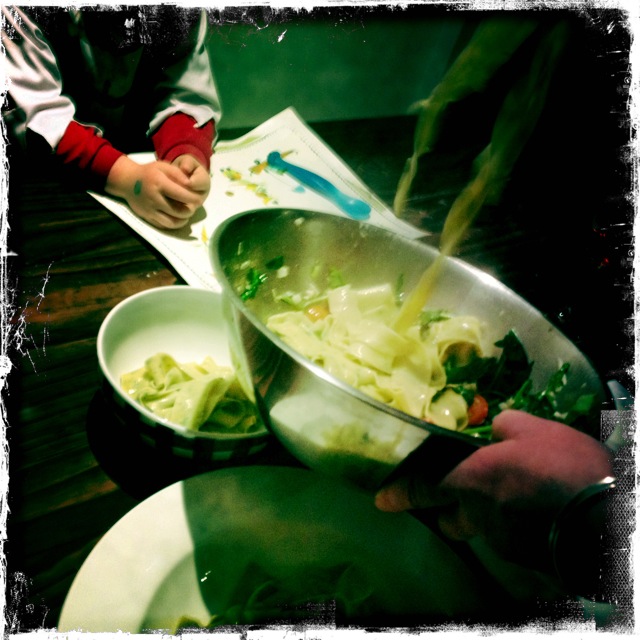
Handcut rocket pappardelle with lemon and olive oil

Fresh from the garden: eggs, rocket, lemon

Recipe source: Pasta: Stephanie Alexander, Kitchen Garden Cooking with Kids. Dressing: Melissa

Our Kitchen Garden students love making pasta! This recipe includes the dough mixture as well as instructions on how to use a pasta machine. In the summer you could add chopped cherry tomatoes too, for their explosive bite…

Our Kitchen Garden


Equipment:

  • Salad spinner
  • Pasta machine
  • Scales, garlic press
  • Measures – teaspoon
  • Food processor
  • Plastic wrap
  • Chopping board & knife
  • Pastry brush, grater
  • Large stock pot
  • Tongs, large bowl
  • Serving bowls
Ingredients:

  • 500g plain ‘00’ flour
  • 5 free-range eggs
  • Salt
  • 2 handfuls of rocket
  • 1/3 cup extra-virgin olive oil
  • A lemon
  • 3 garlic cloves
  • Flaked salt & black pepper
  • 50g parmesan

What to do:

To make the pasta:

  • Wash a handful of rocket thoroughly and spin dry. Discard any tough stalks and chop roughly.
  • Weigh the flour, then combine it with 1½ teaspoons of salt in the bowl of the food processor. With the motor running, add the eggs and the chopped rocket. Process for a few minutes until the dough clings together and feels quite springy.
  • Tip the dough onto a clean, dry workbench. Knead the dough for a few minutes, then wrap it in plastic film and let it rest for 1 hour at room temperature.

_____________________________________________________________________________________________

  • Fill the large stockpot with water and set to boil on high with the lid on.
  • Fix the pasta machine to a suitable bench or table – if the surface is not thick enough you may need to place a thick book under the machine. Screw the clamp very tightly.
  • Clear a large space on the workbench alongside the pasta machine. All surfaces must be clean and dry. Press or roll the dough into a rectangle about 8 cm wide.
  • Set the rollers on the pasta machine to the widest setting and pass the dough through. The dough will probably look quite ragged at this stage. Fold it in 3, turn it 90 degrees and roll it through again. Go to the next-thickest setting and pass the dough through 3-4 times.
  • Continue in this manner (changing the settings and passing the dough through) until the dough has passed through the second thinnest setting. Don’t use the very thinnest setting, as the dough gets too fine and is hard to manage. If the dough gets too long to handle comfortably, cut it into 2-3 pieces using the large knife, and roll each piece separately.
  • Lay the pasta strips on a lightly floured surface & dust with a little more flour. Fold up carefully 2 or 3 times and then using a knife or cutter, slice pasta into strips about 2cm wide.
  • Carefully unravel each strip as you go and hang to dry.
  • Clean the pasta machine by brushing it with a dry, wide pastry brush & putting back in its box. At this stage you can make the dough for the next lesson!

To finish the dish:

  • Check that the stockpot has been filled with water and is set on high to boil.
  • Wash the remaining handful of rocket and spin it dry. Discard any tough stalks and chop roughly and put into the large bowl.
  • Wash and dry the lemon and zest it into the rocket. Cut the lemon in half and squeeze the juice of one half into the bowl.
  • Peel the garlic cloves and squeeze them into the bowl.
  • Measure the parmesan and grate what you need.
  • Measure 1/3 cup of olive oil into the bowl and sprinkle on a few pinches of flaked salt and a good grind of pepper and toss to incorporate.
  • When the stockpot has started a fast boil, gather your drying pasta on a large baking tray. Add  the pasta to the pot with a tablespoon of cooking salt, stir once and quickly put the lid back on.
  • As soon as the pot begins to boil again, take the lid off. The pasta should only take 2 minutes or so to cook from boiling. Taste to check – it’s important that the pasta remains al dente and is not overcooked!
  • Using tongs, carefully pull the pasta (and some of its cooking liquid) out and into the big lemony, rocket bowl and toss to thoroughly incorporate. The rocket should start to wilt.
  • Divide into serving bowls, sprinkle a little parmesan on and eat immediately!

Notes: Never wash the pasta machine – it will rust! Just brush down with a strong brush to remove the leftover dough.

Categories: Kitchen Garden, Recipe | Tags: , , , , , , , , , , | Leave a comment

Borscht – of one kind or another

This recipe is an easy variation of the Eastern European variation. It is usually made with beef broth or stock but with a garden full of veggies we can’t go past using our rich vegetable stock!

Our Kitchen Garden

Fresh from the garden: onion, thyme, chives, beetroot

Recipe source: Melissa, kitchen specialist at Bondi PS

Equipment:

  • Chopping board and knife
  • Garlic press
  • Kitchen paper
  • Grater
  • Tablespoon measure
  • Measuring jug
  • Stockpot
  • Wooden spoon
  • Stick blender
  • Teaspoons
  • Serving bowls
Ingredients:

  • 1 medium onion
  • 3 cloves garlic
  • 4 sprigs thyme
  • Small bunch chives
  • 3 large or 6 medium beetroot
  • 3 tablespoons olive oil
  • 1lt beef or rich vegetable stock
  • 1 tin chopped tomatoes
  • salt and freshly ground black pepper
  • 1 small tub crème fraiche or sour cream

What to do:

  • Peel and chop the onion. Peel and squeeze the garlic through the press.
  • Wash the chives and lay out on a piece of kitchen paper to dry, then snip or chop finely. Wash and dry the thyme and pick the leaves, then chop finely.
  • Wash and peel the beetroot. Chop into 1cm cubes or grate.
  • Warm olive oil in the stockpot over medium heat. Stir in the onions and garlic and cook until soft but not browned, about 5 minutes. Stir in chopped & grated beetroot and the chopped thyme and cook for 1 minute.
  • Stir in tomatoes and stock and season with salt and pepper. Bring to the boil and then cover and simmer until the beetroot is tender, about 20 minutes. Remove from heat and allow to cool slightly.
  • Whizz the soup with the stick blender, stirring to get all the solids mixed in. Check the seasoning, then ladle into bowls and garnish with a swirl of the crème fraiche or sour cream and sprinkle of chives.

Notes: What other dishes have their original names in a different language?


Categories: Kitchen Garden, Recipe | Tags: , , , , , | Leave a comment

Blog at WordPress.com.