Posts Tagged With: cooking

Poached egg salad with peas and basil mayo

We love making mayonnaise at Bondi and always talk about the difference in flavour from the ready-bought stuff! This salad is wonderful – creamy from the mayo and egg yolk but also tangy from the dressed lettuce – and it’s so worth fetching some fresh peas to pod as they really pop in your mouth!

ourkitchengarden.net

Fresh from the garden: lettuce, eggs, peas, basil, salad burnet, lemon, garlic
Recipe source: Melissa
Serves: 4 at home or 24 tastes

Equipment:

  • Small saucepan
  • Colander
  • Medium high-sided frying pan
  • Bowls – 3 large, at least 4 small
  • Salad spinner
  • Paper towel & tea towel
  • Citrus juicer
  • Chopping boards and knives, scissors
  • Measures: tablespoon, teaspoon, ½ teaspoon
  • Stick blender & its cup
  • Measuring jug, fork
  • Slotted spoon
  • Serving plates


Ingredients:

  • A handful of fresh peas in the shell
  • 4 eggs
  • 2 large handfuls of lettuce
  • A handful salad burnet

For the basil mayonnaise:

  • A small branch of basil leaves
  • 1 egg
  • ½ teaspoon salt
  • 1 small clove garlic
  • 1 level teaspoon mustard powder
  • 120ml rice bran oil
  • 25ml olive oil
  • 1 teaspoon white wine vinegar
  • 1 lemon
  • Freshly milled black pepper

What to do:

For the salad:

  • Fill the small saucepan up with water and set it to boil. Pod the peas and have ready a big bowl of cold water. When the water is boiling, add the podded peas and cook for 3 minutes. Drain and refresh in the bowl of cold water. Drain and reserve.
  • Separate out the lettuce leaves over the sink and rinse under the tap.Fill up a big bowl with cold water & wash the iceberg leaves in several changes of water, looking for any dirt in the bottom of the bowl. Spin dry in small batches.
  • Lay out the tea towel and line it with kitchen paper. Spread the salad leaves over the paper and roll the whole lot up like a log. Keep the rolled parcel of leaves in the fridge until needed.
  • Wash and spin dry the burnet and strip off the leaves, discarding the stalks. Wrap them carefully in paper towel and keep them in the fridge with the lettuce.

For the mayonnaise:

  • Wash, spin dry and separate off the basil leaves and discard the stalks into the compost.
  • Cut the lemon in half and squeeze one half to yield ½ teaspoon lemon juice. Peel the garlic clove and finely slice.
  • Now break the egg into the cup of the stock blender, add the salt, garlic, mustard powder and a few twists of freshly milled black pepper, thenblitz to blend these together.
  • Now measure the oils into the jug, mix well with a fork and ask a helper to pour it in a thin trickle into the cup whilst it’s blending. When all the oil is in, add the vinegar, lemon juice and basil leaves, then blend again until the leaves are quite finely chopped.

To poach the eggs:

  • Fill a medium-sized frying pan with water to a depth of approximately 5cm, heat it up to the boil, then lower the heat it to a bare simmer.
  • Then break the 4 eggs into the four separate small bowls taking care not to break the yolks and removing any shell with your fingertips. Then lower them, one at a time, into the simmering water and let them cook together, uncovered, for 4 minutes. Fill a large bowl with cold water.
  • Then, use the slotted spoon to lift them from the water and transfer them to the bowl of cold water, until you are ready to use them.

To serve:

  • Bring the lettuce out of the fridge, gently slice up the leaves if needed and put into a big mixing bowl. Drizzle a teaspoon each of olive oil and white wine vinegar over the leaves with a pinch of salt and grind of pepper, and turn gently to combine.
  • Arrange the leaves on each serving plate.
  • Holding a clean tea towel in one hand, scoop up an egg with the slotted spoon and carefully drain of water. Arrange a poached egg in the centre of each salad plate, drizzle some of the mayonnaise over the top of each salad, followed by a sprinkle of the peas and then the salad burnet leaves.
  • Serve.

Notes:Why do we add a trickle of oil at first into the egg mixture of the mayonnaise? Why shouldn’t we break the eggs when poaching them? What is salad burnet and what does it smell like?

Categories: Kitchen Garden, Recipe | Tags: , , , , , , , , | Leave a comment

Cheese and spring onion souffles

This classic comfort food recipe has appeared on this blog in a slightly different version of two cheeses souffle – but this version with spring onions has gone down a treat, even if we do say so ourselves…

Fresh from the garden: eggs, spring onion
Recipe source: adapted from a recipe on bbcgoodfood.com
Serves: 5 at home or 25 tastes

ourkitchengarden.net

Equipment:

  • 5 x 250ml ramekins or soufflé dishes
  • Baking paper & string
  • Scissors
  • Baking tray
  • Scales
  • Paper towel, pot holders
  • Bowls – 1 large, 5 small
  • Saucepan
  • Wooden spoon
  • Measuring jug
  • Stand mixer and bowl
  • Metal spoon
  • 4 under-plates to serve
Ingredients:

  • 25g butter plus extra to grease the ramekins
  • 100g feta cheese
  • 100g parmesan
  • 2 or 3 spring onions
  • 5 eggs
  • 25g flour
  • 250ml milk
  • Flaked salt & black pepper

What to do:

  • Heat the oven to 200C. Butter the ramekins.
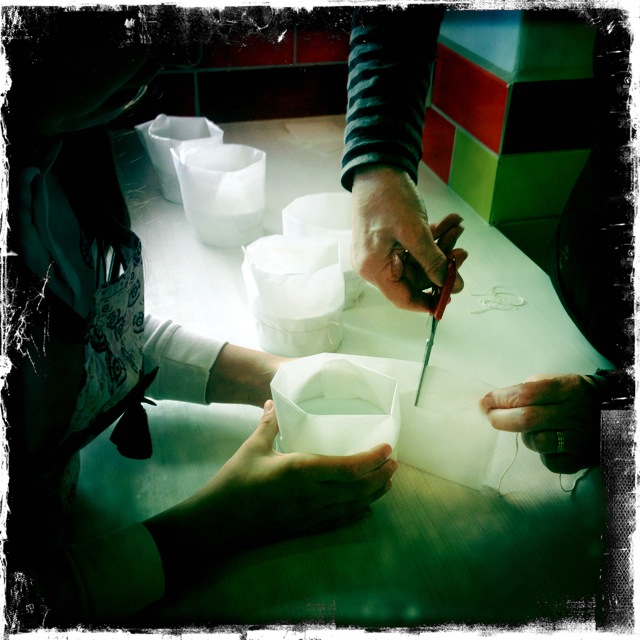
  • Make a collar for each ramekin by tearing a 40cm length of baking paper, folding it into thirds, and buttering one side. Then roll it around the ramekin, buttered side in, and tying with string to secure. Place them on the baking tray when done.
  • Measure the parmesan, then grate it. Crumble the feta cheese.
  • Wash the spring onions and pat dry with paper towel. Strip off the tough outer layer and trim the roots and tops. Finely chop them into thin discs to yield about 2 tablespoons.
  • Carefully separate each of the eggs, putting the whites into the very clean and dry bowl of the stand mixer, and reserving the yolks in a small bowl.
  • Melt 25g butter in the saucepan, stir in the flour and gently cook on a low heat for a minute or so. Slowly add the milk, stirring all the time to make a thick sauce. Cook for a couple of minutes to cook out the flour.
  • Stir in the cheeses and spring onions then add 4 of the egg yolks, season generously and mix well.
  • Whisk the egg whites until they are stiff and form soft peaks.
  • Using a metal spoon, start folding the egg whites into the cheese mixture carefully – begin by using about 1/3 of the whites first and then adding the rest once combined – and pour into the buttered soufflé dishes.
  • Cook for 12–15 minutes until the soufflés are risen and golden.
  • Using pot holders, carefully place a soufflé on to an lined underplate and serve TOUT SUITE!

Notes: What is a ramekin? Why do we separate the egg yolks and whites? Why do we need to cook out the flour? Where does the word soufflé come from?

ourkitchengarden.net

Categories: Kitchen Garden, Recipe | Tags: , , , , , , , , , | Leave a comment

Moroccan chickpea hotpot

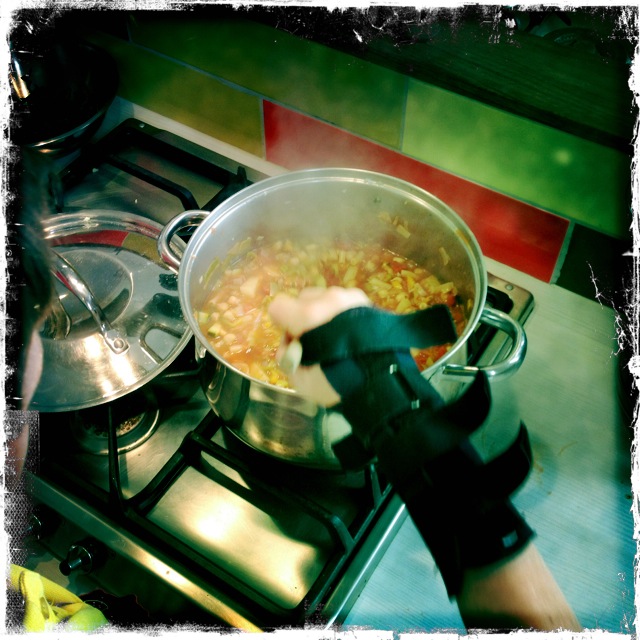
As soon as the weather starts to chill, our thoughts turn to hearty veggie soups and stews…

ourkitchengarden.net

From the garden: onion, garlic, celery, carrot, coriander
Recipe source: Melissa
Serves: 6 at home or 24 tastes

Equipment:

  • Kettle
  • Chopping boards and knives
  • Stockpot
  • Wooden spoon
  • Measures – jug, tablespoon, teaspoon, ¼ teaspoon
  • C0lander
  • Paper towel
  • Scissors
  • Serving bowls
  • Ladle


Ingredients:

  • 1 litre boiling water and a tablespoon of bouillon (or 1 litre stock)
  • 1 brown onion
  • 2 garlic cloves
  • 2 celery sticks
  • 1 large carrot
  • 1 tablespoon olive oil
  • 2 teaspoons ground cumin
  • 1 teaspoon sweet paprika
  • 1/4 teaspoon ground ginger
  • A pinch of ground cinnamon
  • 2 tins diced tomatoes
  • 1 tin chickpeas
  • A small handful fresh coriander

What to do:

  • Fill the kettle and set it to boil.
  • Peel and coarsely chop the onion. Peel and crush the garlic.
  • Wash and trim the ends from the celery and thinly slice. Wash, peel and finely chop the carrot.
  • Heat the oil in the stockpot over medium-low heat. Add the onion, celery and carrot and cook, stirring occasionally, for 7 minutes or until the onion is soft. Add the garlic, ground cumin, sweet paprika, ground ginger and the ground cinnamon and cook, stirring, for 1 minute or until aromatic.
  • Add the tomato and hot water and bouillon (or stock) and bring to the boil over high heat. Reduce the heat to medium and simmer, partially covered, for 10 minutes.
  • Rinse and drain the chickpeas and add to the pot, cooking for 2 minutes or until heated through. Season with salt and pepper.
  • Wash and pat the coriander dry and finely snip with scissors into tiny pieces.
  • Ladle the soup among serving bowls. Sprinkle with coriander and serve immediately.

Notes: What does cumin smell like? Where does the bouillon live? What is a hotpot?

Categories: Kitchen Garden | Tags: , , , , , , , | Leave a comment

Vacation Care Autumn Program – April 2014

Once again we had eager wee beavers come along to the Holiday Cooking Program in the cottage – it’s so lovely to wee the children in their colourful ‘mufti’ clothes, and with big smiles on their faces… We run 2 classes a day over 2 days so it’s busy, busy, busy – but the children are wonderful helpers so the cooking gets done quickly and professionally – and some even stay to help clean up at the end!

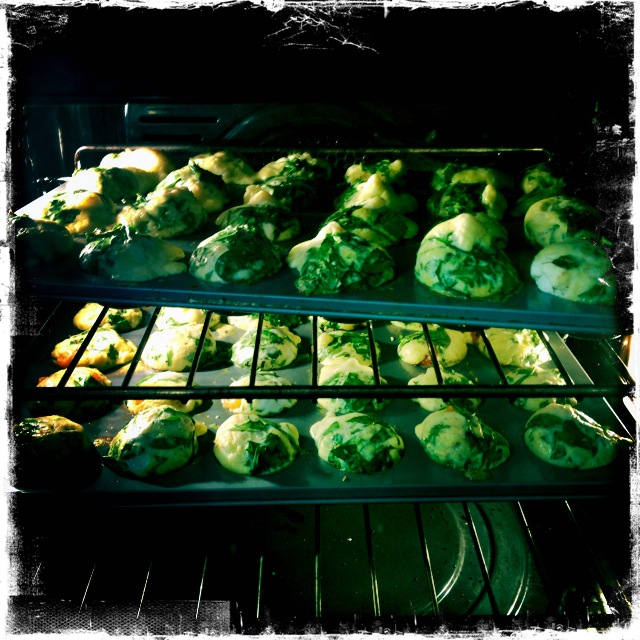
So to the menu: Green herb soup to kick off – a fab way of using up a surplus of herbs, and the choice of which to use is totally up to you… The junior team whipped up a few batches of individual Spinach, feta and pumpkin frittate as well, and we had great fun using our new Spiraliser gadget to  make Zucchini, mint and feta salad with pangrattato. Our main course was a deliciously aromatic Autumn pizza with herby mushrooms and rocket, and we finished with Ava’s Orange Anzacs as the big day was only around the corner…

Thanks for coming everybody and I hope to see you next holidays!

ourkitchengarden.net


Categories: Kitchen Garden, News | Tags: , , , | Leave a comment

Ava’s orange Anzacs

My daughter Ava has been ‘helping’ me in the kitchen since she was 3, and especially loves rolling biscuits. She tries to hide under the table to eat the raw mixture, but I see through her tricks!

Fresh from the garden: oranges
Recipe source: Melissa. And Ava!
Makes: about 30 biscuits

ourkitchengarden.net

Equipment:

  • Bowls – big, small
  • Measures – cup, tablespoon, ½ teaspoon
  • Sieve
  • Microplane zester
  • Large spoon x 2
  • Small saucepan
  • Scales
  • Eggcup
  • Spatula
  • Teaspoons
  • Kettle
  • 2 baking trays & baking paper
Ingredients:

  • 1 cup plain flour
  • ¾ cup desiccated coconut
  • 1 cup rolled oats
  • 1 cup raw sugar
  • 1 orange
  • 125g butter
  • 2 tablespoons golden syrup
  • ½ teaspoon bicarbonate of soda
  • 1 tablespoon boiling water


What to do:

  • Preheat oven to 150°C. Line the baking trays with the baking paper.
  • Sift the flour into the large bowl. Add the coconut, oats and sugar and stir to combine.
  • Finely zest the orange and add the zest to the mixture. Stir until well combined.
  • In the small saucepan, melt the butter and golden syrup over a gentle heat until liquid.
  • Measure the bicarb soda into the eggcup and mix in the boiling water.Add it to the saucepan of melted butter mixture, stirring and then scrape this into the dry ingredients.
  • Take a teaspoonful of mixture at a time and with your hands, roll into even small balls. Place these in even lines on the baking trays, allowing room to spread.
  • Cook for about 15 minutes, until lovely and golden.
  • Allow to cool on the trays and then eat!

Notes: Why are these called ‘Anzac’ biscuits? What does the bicarb soda do? Why is it important to roll the balls into similar sizes?


Categories: Kitchen Garden, Recipe | Tags: , , , , , , , | Leave a comment

Autumn pizza with herby mushrooms and rocket

Pizza – and making, rolling and stretching out dough – is a surefire winner with kids, and you get to put any number of cunning vegetables on the top, in the form of pizza sauce and artfully decorated toppings… and the smell from the oven as the pizza cooks! Devine…

Fresh from the garden: mushrooms, fresh herbs, onion, garlic, rocket
Recipe source: Melissa
Makes: 2 large or 4 small pizza

ourkitchengarden.net

Equipment:

  • Bowls – 2 medium, 2 small
  • Salad spinner
  • Rolling pins
  • Grater
  • 2 large oven trays
  • Wide egg lifter
  • Large wooden board
  • Pizza cutter
  • Tablespoon measure, scales
  • Kitchen towel
  • Tongs
  • Metal spoons
  • Serving plates
Ingredients:

Tomato sauce:

  • 1 onion
  • 2 cloves garlic
  • 3 sprigs thyme
  • ¼ cup extra-virgin olive oil
  • 1 tin diced tomatoes
  • Flaked salt and black pepper

For the pizza topping:

  • A handful mushrooms
  • Small handful mixed herb sprigs
  • 2 garlic cloves
  • 1 tub bocconcini
  • 2 tablespoon extra-virgin olive oil
  • 50g parmesan
  • Flaked salt and black pepper
  • A handful of rocket

What to do:

  • Preheat the oven to 220C. You can prepare the topping now while you wait for the oven to heat up.

For the tomato sauce:

  • Peel and finely chop the onion and garlic, reserving half of the garlic for the topping.
  • Heat the olive oil in the frying pan & gently cook the onion until translucent but not brown.
  • Add the garlic to the pan, then open the tin of tomato and add to the frying pan with a pinch of salt and a grind of pepper.
  • Wash, dry and pick the thyme and add to the tomatoes.
  • Simmer gently for 10 minutes, stirring occasionally, until quite reduced.

For the topping:

  • Wipe the mushrooms and break or slice into thin slices into a big bowl. Drizzle with a tablespoon or two of olive oil and a pinch of salt.
  • Wash and carefully dry the herb sprigs – pick the leaves, discarding the stalks – and add to the mushrooms. Peel the garlic and squeeze through the press into the mushrooms. Stir.
  • Tear each ball of bocconcini in half. Grate the parmesan.

Assembling the pizza:

  • Scatter some flour on the table and roll the dough out to form 2 even rectangles to cover the baking trays.
  • Assemble the 2 pizza directly onto the trays, flouring the trays well first.
  • Using the metal spoon, swirl a couple of spoonfuls of tomato sauce onto the pizza bases, spreading so that they become totally covered.
  • Layer the bocconcini on top and season well, then scatter the herby mushrooms over the pizza and then the parmesan.

Baking the pizza:

  • Bake the pizza for about 12 minutes or until the edges are very crusty and the cheese is bubbling.
  • Use this time to make the dough for the next class if needed.
  • You may want to slip the pizza off the tray onto the rack for the last few minutes, so that you get a really crusty base.
  • Meanwhile wash the rocket and spin dry. Leave the leaves whole.
  • Once the pizza is done, transfer it to a large wooden board using the wide egg lifter.
  • Cut the pizza crossways into small squares, and divide onto serving plates.
  • Sprinkle the rocket over the slices and then get ready to eat!

Notes: What other sort of vegetables could you use in a pizza? What other pizza is there?

Categories: Kitchen Garden, Recipe | Tags: , , , , , , , , | 1 Comment

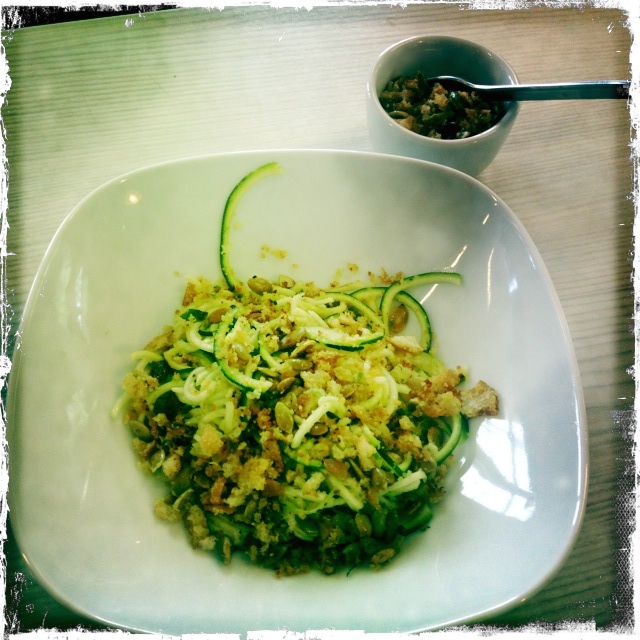
Zucchini, mint and feta salad with pangrattato

If you have a spiraliser gadget then this dish is easy and looks fantastic! If not, then julienne your zucchini by slicing or peeling them into as thin strips as possible.

Fresh from the garden: zucchini, lemon, sage, mint
Recipe source: Melissa
Serves: 6 or 24 tastes

ourekitchengarden.net

Equipment:

  • Food processor
  • Measures – cup, ½ cup, tablespoon, teaspoon
  • Microplane zester
  • Paper towel
  • Large frying pan
  • Spiraliser
  • Scissors
  • Citrus juicer
  • Serving bowls and smaller bowls for pangrattato


Ingredients:For the pangrattato:

  • 1/2 teaspoon fennel seeds
  • 1/2 teaspoon chilli flakes
  • 2 tablespoons olive oil
  • Half a small loaf of sourdough bread
  • 1/2 cup pepitas (pumpkin seeds)
  • 1 lemon
  • 3 sage leaves

For the salad:

  • 3 zucchini
  • A small branch of mint leaves
  • 3 tablespoons olive oil
  • 200g Danish feta
  • Flaked salt

What to do:

For pangrattato:

  • Break or tear the sourdough into small chunks and then blend up in the food processor until they resemble breadcrumbs. You’ll need about a heaped cup worth.
  • Wash and wipe the lemon dry, then zest the lemon, taking only the thin layer of skin off and leaving the white pith on. Wash the sage leaves and gently press dry with a piece of paper towel. With scissors, snip into thin strips.
  • Heat the 2 tablespoons of olive oil in the frying pan. Add the rest of the pangrattato ingredients and toss until golden and crunchy (this takes about 5 minutes). Taste and add more seasoning if needed. Set aside to cool and crisp up.

For zucchini salad:

  • Wash the zucchini and wipe dry, then spiralise or julienne them into thin strips. Wash the mint, press dry with a piece of paper towel and using the scissors, snip them into thin strips. You should have about 2 tablespoons worth.
  • Cut the zested lemon in half and juice one half.

To finish:

  • Place zucchini in a dish, top with mint leaves, oil and the lemon juice and season with a grind of pepper. Check the seasoning and add a sprinkle of salt if needed. Unwrap the feta and crumble it into the zucchini. Toss to combine and divide out into your serving bowls.
  • To serve, top salad with a little of the pangrattato and serve the rest in little bowls on the side for each person to help themselves to, just before eating.

Notes: What does a heaped cup mean? What does a spiraliser do? What is pith?

ourkitchengarden.net

Categories: Kitchen Garden, Recipe | Tags: , , , , , , , , | Leave a comment

Green herb soup

You can use any herbs here depending on what you have fresh – we use a combination of mint, sage, tarragon, thyme, rosemary, basil and marjoram. Herbilicious!

ourkitchengarden.net

Fresh from the garden: potatoes, spring onions, lettuce, lemon, herbs
Recipe source: adapted from a recipe by Delia Smith
Serves: 6 or 24 tastes

Equipment:

  • Kettle
  • Scales
  • Chopping boards and knives
  • Scissors, colander
  • Bowls – big, small
  • Large stockpot
  • Wooden spoon
  • Salad spinner
  • Citrus juicer
  • Measures – jug, tablespoon
  • Stick blender
  • Soup bowls or cups
Ingredients:

  • 1 litre boiling water and tablespoon of bouillon or 1 litre light stock
  • 350g potatoes
  • 10 spring onions
  • 300g lettuce leaves
  • 50g butter
  • A large handful of fresh herbs
  • A lemon
  • 150ml cream
  • Flaked salt and fresh black pepper


What to do:

  • Fill the kettle and set it to boil.
  • Scrub the potatoes until they are absolutely clean and then cut into thick slices and then cubes.
  • Snip the very end of the spring onions so that there are no roots remaining. Wash under cold water and then thinly slice the whole onion, green ends too.
  • Melt the butter in the stockpot, and stir in the thinly sliced spring onions and the cubed potatoes. Stir and cook over a gentle heat so the vegetables soften gently without browning.
    Meanwhile wash the lettuce leaves in several changes of water and shake dry. Roll up a handful of lettuce leaves at a time and then cut into thin ribbons. This is called shredding.
  • Wash the herbs and spin them dry. Pick off the leaves and chop any coarse leaves into small pieces. Cut the lemon in half and squeeze the halves.
  • Now stir in the shredded lettuce. Get it all nicely coated with butter. Then add the stock or hot water and bouillon, bring to simmering point, cover and cook gently for about 10 minutes or just long enough for the potatoes to soften.
  • Carefully remove the pot from the heat, add the chopped fresh herbs and cream and blend it all together with the stick blender until smooth.
  • Add lemon juice to taste, a little at a time, and checking seasoning as you go.
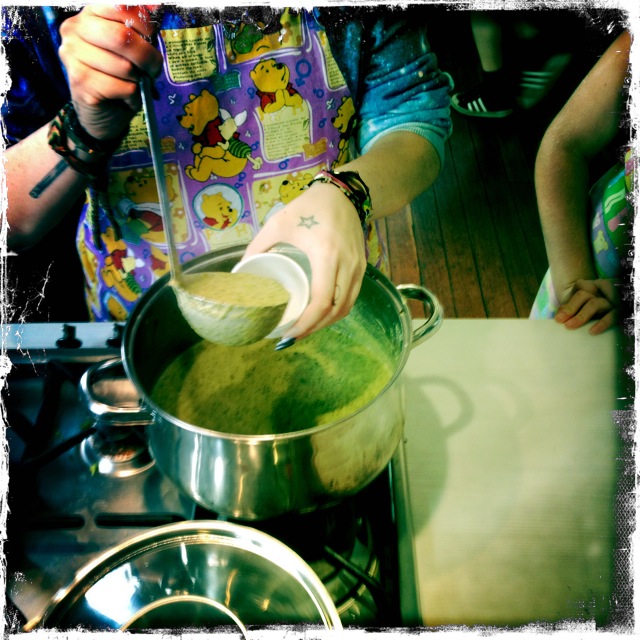
  • Ladle into soup cups or bowls and serve!

Notes: What are coarse leaves? How do you shred lettuce? Where is the bouillon stored?

ourkitchengarden.net

Categories: Kitchen Garden, Recipe | Tags: , , , , , , , , | Leave a comment

Spinach, mint and pinenut gozleme

Bill says, “These parcels can be made with ready-made pastry, but they do taste that bit more authentic if you go to the effort yourself. They remind me of weekend wanders around farmers’ markets.”

Fresh from the garden: spinach, lemon, mint
Recipe source: adapted from a recipe by Bill Granger in the SMH
Makes: 8 gozleme

ourkitchengarden.net

Equipment:

  • Stand mixer
  • Measures: jug, cup, 1/3 cup, tablespoon, teaspoon, ½ & ¼ teaspoon
  • Scales
  • Bowls – big, med, small
  • 2 non-stick frying pans
  • Salad spinner, rolling pins
  • A large knife, scissors
  • Microplane zester
  • Paper towel, tea towels
  • 8 medium chopping boards
  • Tongs, egg slice
  • Serving plates
Ingredients:

For the pastry:

  • 1 teaspoon instant dried yeast
  • ½ teaspoon caster sugar
  • 2 cups plain flour
  • ¼ teaspoon salt
  • 3 teaspoons olive oil, plus extra

For the filling:

  • 400g spinach leaves
  • 1 lemon
  • 1/3 cup pine nuts
  • 200g feta cheese
  • 2 large branches mint
  • Black pepper

What to do:

  • For the pastry: Measure the yeast, sugar, flour and salt into the bowl of the stand mixer and mix lightly. Then add the olive oil and 180ml to 200ml lukewarm water and mix on low for 8 minutes to form a soft dough until smooth and elastic.
  • Turn the dough out on to a floured surface and knead for a minute or two and then place dough into a lightly oiled bowl, cover with cling film and leave in a warm place to double in size for an hour or two, or into the fridge if needed the next day.
  • For the filling: Wash the spinach in several changes of water and spin dry, and then slice handfuls into 2cm wide ribbons. Measure out the pine nuts and dry-toast carefully in one of the frying pans.
  • Wash the lemon, wipe it dry, then zest it into a small bowl before cutting it into wedges and reserving for garnish. Wash the mint and spin it dry. Pick the leaves and then using scissors, snip into thin ribbons. You will need about 3 tablespoons’ worth of mint.
  • When the pine nuts are toasted, reserve in a small bowl and then heat up a tablespoon of olive oil in the same frying pan, and when hot cook the spinach over a medium heat for a few minutes. Remove with tongs into a sieve and drain any excess liquid. Place in a big bowl and allow to cool for a minute before stirring in the lemon zest, pine nuts and mint. Crumble in the feta and then season with black pepper. Wipe the frying pan clean with paper towel.
  • Divide the dough into 8 small balls. Using a rolling pin, roll each ball into a circle about the size of a large dinner plate and lift each one onto a medium floured chopping board. Divide the filling equally between the circles, spooning over one half of the circle, leaving a 2cm border. Fold over the other half and press the edges together to secure.
  • Heat the frying pans with a tablespoon of olive oil in each and then carefully slide a gozleme into each and cook for about 3 minutes on medium. Brush the other side with a little more oil then flip over and cook for a further 2-3 minutes. Keep warm under a clean tea towel while you cook the remaining gozleme.
  • Cut into slices and divide among serving plates with the lemon wedges.

ourkitchengarden.net

Categories: Kitchen Garden, Recipe | Tags: , , , , , , , , | Leave a comment

Minestrone

Jamie says, “Save the rinds from your Parmesan cheese and pop into your soup for some extra flavour, just remember to remove before serving – those little piece of rind that you’d normally throw away are super tasty and not to be wasted.”

ourkitchengarden.net

Fresh from the garden: loads!
Recipe source: adapted from a recipe on Jamie Oliver’s Food Revolution
Serves: 8 or 30 tastes

Equipment:

  • Chopping boards & knives
  • Peeler
  • Large stockpot
  • Measures: jug, ½ cup, tablespoon, teaspoon
  • Scales
  • Salad spinner
  • Mixing bowls – big, med, small
  • Grater
  • Scissors
  • Wooden spoon
  • Ladle
  • Serving bowls


Ingredients:

  • 1 red onion
  • 1 large potato
  • 5 cloves garlic
  • 2 carrots
  • 2 sticks celery
  • 1 zucchini
  • 1 small leek
  • 1 tablespoon olive oil
  • A teaspoon dried oregano
  • 1 bay leaf
  • 2 cans chopped tomatoes
  • 1 can chickpeas
  • 1 litre vegetable stock or boiling water and 1 tablespoon bouillon
  • Large handful kale
  • ½ cup small pasta
  • A bunch of basil
  • Freshly ground black pepper
  • 50g parmesan cheese

What to do:

    • Peel and finely chop the onion. Peel the potato under running water and then dice. Peel and chop the garlic. Wash and finely chop the carrots. Wash and finely chop the celery, including the leaves. Wash and finely chop the zucchini. Wash the leek thoroughly, peeling back the layers under running water, and finely slice.
    • Heat a large pot over a medium heat and add a lug of olive oil. Throw in the onion and fry it gently until it starts to smell fantastic. Add the garlic, carrots, celery, zucchini, leek, oregano and bay leaf and cook slowly for about 10 minutes, stirring now and then, until the vegetables have softened.
    • Add the tomatoes, potato, drained and rinsed chickpeas and vegetable stock or hot water and bouillon, then cover with a lid and bring everything slowly to the boil. Simmer for another 5 minutes.
    • Meanwhile wash the kale and shake dry, then remove the stalks (and discard) and chop the leaves into thin ribbons. Wash the basil, pick the leaves and spin them dry. Measure the parmesan and grate it.
    • Add the kale and pasta, and cook for 10 more minutes, until the pasta is cooked. If the soup is too thick for you after cooking the pasta, thin it with a little more hot water.
    • Snip the basil leaves with scissors into thin ribbons and then stir into the soup with a grind of black pepper. Taste to check the seasoning and add more salt or pepper if needed.
    • Finish by ladling into soup bowls and sprinkling a little Parmesan on. Serve!

Notes: Where does minestrone originate? What is parmesan rind? What is another name for chickpeas?

Categories: Kitchen Garden, Recipe | Tags: , , , , , , | Leave a comment

Create a free website or blog at WordPress.com.