Posts Tagged With: cooking

Blood orange cordial

Blood oranges arrive at the end of winter and herald the start of longer days and slightly warmer weather. They’re the quintessential seasonal fruit and are only around for a short time so get out there & grab some while you can! And look: too much sugar is a bad thing but at least with this treat you’re avoiding all the hideous all-pervading artificial colours & flavours seen in supermarket brands…

Our Kitchen Garden

Fresh from the garden: blood oranges

Recipe source: Melissa, kitchen specialist at Bondi PS

Equipment:

  • Chopping board and knife
  • Citrus juicers
  • Electric juice fountain & parts
  • Medium saucepan
  • Wooden spoon
  • Glass bottles & lids
  • Baking tray
  • Measuring jug
  • Large jug
  • Strainer & funnel
  • Glasses to serve
Ingredients:

  • 6 blood oranges
  • 1½ cups water
  • 1½ cups caster sugar
  • 1½ litres mineral or soda water
  • ice


What to do:

  • Roll each blood orange a few times between the heel of your palm and the tabletop to release the juice, and then cut each in half. Hand juice the oranges with the citrus juicer and measure the liquid to yield about 375ml.
  • Or, if using an electric juice fountain, peel the skin from all the oranges, turn the motor on with dry hands, fix the jug underneath the chute & juice away! You will need to clean the machine straight away after juicing otherwise the pulp will stick – do this by dismantling the machine parts and carefully scrubbing away at them under running water. The leftover pulp can go to the compost.
  • Place the water, blood orange juice and sugar into the saucepan over medium heat and stir until the sugar dissolves. Simmer for 10 minutes with the lid off until the liquid is reduced by about a third.
  • Meanwhile preheat the oven to 180C. Wash the bottles in hot, soapy water & rinse. Drain them and then place on a baking tray and carefully slide into the hot oven for 5 minutes. Remove when the bottles are dry and leave them to cool somewhere safe. This process is to sterilise the bottles before filling.
  • Cool the liquid in the saucepan for a few minutes before measuring out & then pouring into a large jug filled with ice. Add twice the amount of fizzy water to the cordial and serve immediately!
  • If you’re bottling the cordial, strain it into a large jug and then funnel it into the bottles. Close tightly and store in the fridge for up to a month.

Notes: What does seasonal mean? Why are they called blood oranges? Why do we sterilise the bottles?

Categories: Kitchen Garden, Recipe | Tags: , , , , , , | Leave a comment

Spring School Holiday Programs for 4 years and up!

Do you have a kid as-keen-as-a-bean in the garden and kitchen? Send them to us in the holidays to participate in a ‘Day in the Life’ of a Kitchen Garden School Program! We are offering a full-day program for 7 to 12 year-olds and also now a half-day mini-program for 4 to 6 year-olds!

Check out the School Holiday page on this site for more info… and take a look at my recent posts on this site with photos of the wonderful kids on our last school holiday program where we harvested, chooked, chopped, stirred, set and ate over the course of a full day… We’ve just announced some new dates so lock in a reservation for your Year 2 to Year 6 mini-Heston or Costa Georgiadis straight away!

And due to  overwhelming demand, I will be offering a half-day session on Friday for the little ones – so if you have a keen 4, 5 or 6 year-old wee wannabe cook who would like to feed the chooks, help me in the garden, and then cook up a storm for  morning tea and lunch – book them in ASAP!

Message me below if you have any questions!

Categories: Kitchen Garden, School Holiday Program | Tags: , , , , , , , | Leave a comment

Pita bread

If you’ve never made bread from scratch, pita is the perfect place to start. If you have made bread before, you’ll know how delicious these can be! They are great served with hummus for dipping, or our falafel with herby yoghurt… this recipe makes about 20 small pita breads.

Equipment:

  • Measuring jug
  • Bowl – 2 small
  • Bowl – large mixing
  • Teaspoon
  • Tablespoon
  • Glad wrap
  • Rolling pin
  • Fork
  • 6  tea towels
  • Medium frying pan
  • Large knife
  • 4 serving plates
Ingredients:

  • 7g dried yeast
  • 20g sugar
  • 375ml warm water
  • 2 teaspoon salt
  • 500g plain unbleached flour, plus extra
  • 100g fine semolina
  • 1 tablespoon olive oil, plus extra

What to do:

  • Dissolve the yeast and sugar in 125ml warm water, cover and set aside for 15 minutes until frothy. Dissolve salt in remaining 250ml warm water.
  • Place flour and semolina in a large mixing bowl and make a well in the centre. Add yeast mixture, 1 tablespoon olive oil and salt water. Knead with hands for 10 minutes in the bowl. Shape into a ball in the bowl, cover with glad wrap and place in a warm area to rise. Wait about one hour until dough has doubled in volume.
  • Punch down dough and knead on a floured surface for one minute. Divide dough into pieces slightly larger than an egg and roll quickly into little balls. Leave to rest under a damp tea towel for 5 minutes, then roll out on a floured surface to a thickness of about 6mm. Prick bread with a fork in several places.
  • Preheat a frying pan, add a dash of olive oil and cook bread over high heat for a couple of minutes each side until lightly browned. Repeat with remaining breads, carefully wiping out the frying pan if smoking and adding oil for every second one if necessary.
  • Stack breads on a clean tea towel, placing clean tea towels between each second one to absorb the moisture, and allow to cool.
  • Slice into quarters or strips and divide onto the plates.

Notes: Where does pita bread originate? Where are other flat breads used? What other sort of dishes do they go with? What does dissolve mean? What does absorb mean?

Categories: Kitchen Garden, Recipe | Tags: , , , , , , , , | Leave a comment

Gordon Ramsay’s broccoli soup

Quite often here in the cottage we prepare dishes with loads of ingredients… here is a recipe with very few! Simple and delicious… at home you can also add some walnuts to the finished soup if you like.

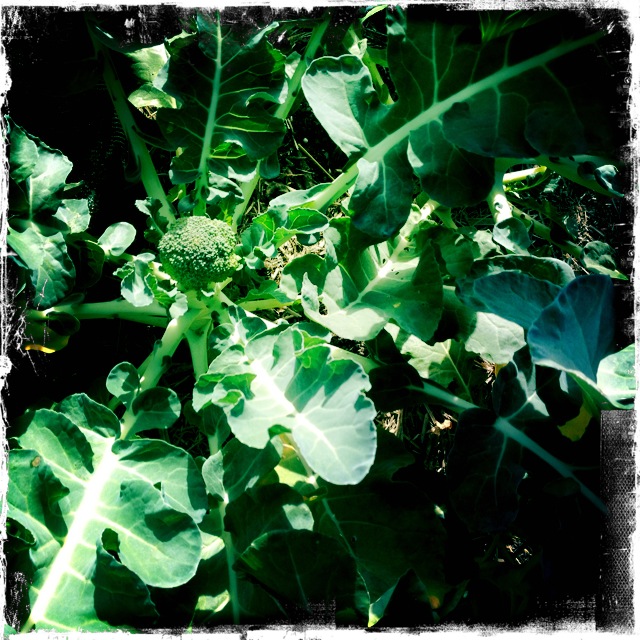
Fresh from the garden: broccoli

Equipment:

  • 2 large stockpots, 1 lid
  • Chopping board & knife
  • Bowls – large
  • Colander
  • Slotted spoon
  • Blender
  • Measuring – tablespoon
  • Ladle
  • Bowls to serve
Ingredients:

  • 2 large broccoli heads
  • Cooking & flaked salt
  • Ground black pepper
  • Water
  • Extra-virgin olive oil
  • 1 small log of goats’ cheese, preferably ashed

What to do:

  • Fill one of the stockpots with water and set to boil.
  • Cut the broccoli into florets the size of a golf ball and wash, shake dry.
  • When the water is at a rapid boil, add a tablespoon of cooking salt and then carefully drop in the broccoli and replace the lid to return to the boil.
  • You will want to slice your goats’ cheese at this point. Dip the knife into the boiling hot water before each slice for even, smooth slices.
  • Your broccoli is finished cooking when you can pierce it with little or no effort – should be about 4 minutes but check first.
  • Place the colander over the 2nd stockpot, and then drain the broccoli into it, reserving the hot broccoli water.
  • Using the slotted spoon, add the broccoli to the blender to fill about ¾ of the way and then pour enough of the broccoli water in to fill the blender half way. Add a pinch of flaked salt. Use several pulses on your blender to break the broccoli up and then puree for several seconds. Check the seasoning.
  • Place the slices of goats’ cheese into the centre of your serving bowls and then carefully pour the soup around.
  • Drizzle lightly with a trickle of olive oil and serve at once.

Notes: Why do we put the lid on the stockpot when boiling water? What does ashed goats’ cheese taste like?

Categories: Kitchen Garden, Recipe | Tags: , , , , , | Leave a comment

Jamie Oliver’s stewed rhubarb and vanilla yoghurt

Jamie Oliver is an English chef, well-known for his food-focussed television shows, a multitude of restaurants globally and campaigns against processed foods in English schools. He has recently started a push toward the British equivalent of our own Kitchen Garden Program for school kids.

Fresh from the garden: rhubarb, orange

Equipment:

  • Chopping board & knife
  • Citrus juicer
  • Microplane zester
  • Scales
  • Medium saucepan
  • Measures – jug, tablespoon, teaspoon
  • Serving bowls


Ingredients:

  • 750g rhubarb
  • Juice and zest of 1 large orange
  • 100g caster sugar, plus 1 tablespoon extra
  • 2 pieces stem ginger
  • 2 teaspoons rosewater
  • 1 vanilla bean
  • 250ml natural Greek yoghurt

What to do:

  • Wash and shake the rhubarb stems dry. Trim all the leaves completely from the stalks and discard. Chop the stalks into 2cm strips.
  • Zest and then juice the orange. Finely chop the ginger.
  • Place the chopped rhubarb in the saucepan with the orange juice and zest, 100g caster sugar, 2 tablespoons of water and the ginger. Bring to the boil, then turn down the heat and simmer for 5 minutes until the rhubarb is soft and cooked, but still holds its shape. Stir in the teaspoon of rosewater.
  • Meanwhile, halve the vanilla pod and scrape the seeds from each half. Mix these into the yoghurt with the remaining tablespoon of sugar. Serve the warm rhubarb topped with a large dollop of vanilla yoghurt.

Notes: Are rhubarb leaves edible or poisonous? What does rhubarb taste like? Is rhubarb a fruit or a vegetable? What is rosewater and what does it remind you of?

Categories: Kitchen Garden, Recipe | Tags: , , , , , , | Leave a comment

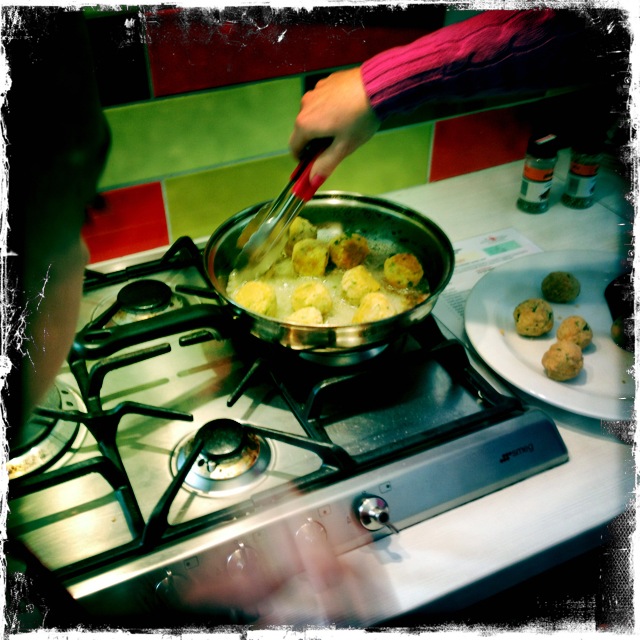
Simon Rimmer’s carrot and coriander falafel

Simon Rimmer is a British chef with a reputation for heading wonderful vegetarian restaurants in England whilst not actually being vegetarian himself. He has written four cookbooks.

Fresh from the garden: carrot, chilli, coriander, parsley, mint

Equipment:

  • Frying pan
  • Mortar & pestle
  • Peelers, sieve
  • Kitchen paper
  • Salad spinner
  • Chopping board & knife
  • Lemon juicer
  • Garlic press
  • Food processor
  • Spatula
  • Grater
  • Plate
  • Slotted spoon & metal spoon
  • Measures – tablespoon, teaspoon, ½ teaspoon
  • Serving plates
Ingredients:

For the falafels

  • 1 teaspoon cumin seeds
  • 1 teaspoon coriander seeds
  • 2 x 400g cans chickpeas
  • salt and freshly ground black pepper
  • 1½ teaspoons baking powder
  • 2 tablespoons plain flour
  • 100g carrot
  • 1 red chilli (optional)
  • 1 garlic clove
  • A small handful fresh coriander
  • A small handful fresh parsley
  • 1 lemon
  • vegetable oil, for frying
  • sesame seeds, to garnish

For the yoghurt dip

  • 100ml Greek yoghurt
  • A small handful fresh coriander
  • A small handful fresh mint
  • 1 lime
  • 1 tablespoon tahini

What to do:

  • For the falafels, toast the cumin and coriander seeds in the dry frying pan for 1-2 minutes, or until fragrant. Grind the seeds in the pestle and mortar.
  • Peel and finely grate the carrot & squeeze the moisture out a piece of kitchen paper. Wash, spin-dry the coriander, parsley and mint and finely chop to yield 2 tablespoons of each. Reserve some of the coriander and all of the mint for the yoghurt dip. Zest the lemon and peel and crush the garlic clove. Juice the lime. Drain the chickpeas into the sieve & rinse.
  • Blend the toasted spices together with the rest of the falafel ingredients in the food processor until well combined.
  • Shape spoonfuls of the falafel mixture into balls and set aside on a plate.
  • Meanwhile, heat 1cm vegetable oil in the frying pan and fry the falafels for 1-2 minutes on each side. Remove the falafel from the pan with a slotted spoon and set aside to drain on kitchen paper. Sprinkle with the sesame seeds.
  • For the yoghurt dip, combine the Greek yoghurt, coriander, mint, lime and tahini in the jug of the stick blender and whizz until smooth.
  • Serve the falafels with the yoghurt dressing and toasted pita breads if you have them!
Categories: Kitchen Garden, Recipe | Tags: , , , , , , , , , , , | Leave a comment

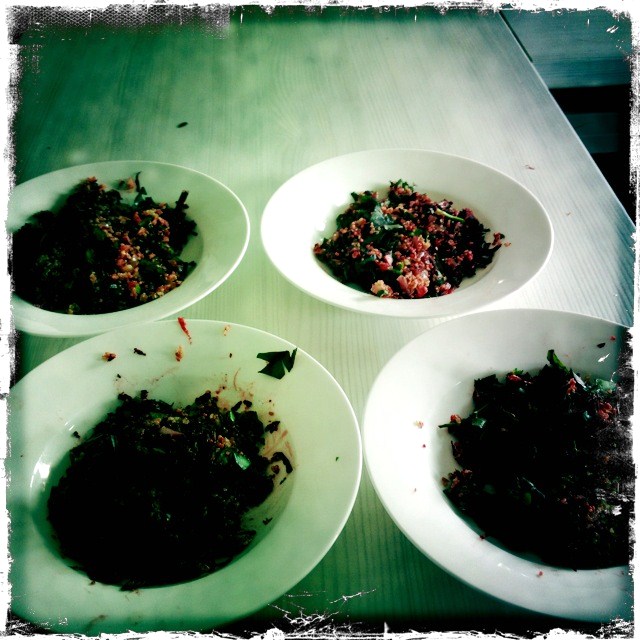
Rose Elliott’s warm beetroot and quinoa tabbouleh

Rose Elliott is a British vegetarian cookery writer. She first became a vegetarian at the age of three and has since written 55 books on vegetarian cookery.

 Fresh from the garden: lemon, beetroot, onions, parsley


Equipment:

  • Scales
  • Sieve
  • Saucepans & lids – med, large
  • Chopping board & knife
  • Peelers
  • Bowls – 2 large
  • Grater
  • Salad spinner
  • Citrus juicer
  • Measures – tablespoon
  • Serving bowls
Ingredients:

  • 125g quinoa
  • 2 tablespoons olive oil
  • 2 large red onions
  • 2 tablespoons balsamic vinegar
  • ½ a lemon
  • 2 small raw beetroot & any small leaves
  • A handful flat-leaf parsley
  • Salt and freshly ground black pepper

What to do:

  • Put the quinoa in a sieve and rinse thoroughly under the cold tap, then put into a saucepan with 300ml water and bring to the boil. Cover and leave to cook slowly for 18 minutes. Remove from the heat and leave to stand, still lidded, for 5 minutes.
  • Meanwhile peel, halve and finely slice the onions. Warm the olive oil in a roomy saucepan, put in the onions, stir to coat with the oil, then cover and leave to cook gently for 10 minutes, or until very tender.
  • Wash, peel and chop off the beetroot leaves. Carefully grate the beetroot to yield about 200g. Wash and spin-dry the small beetroot leaves & parsley and chop the leaves coarsely. Juice the half lemon.
  • Stir the balsamic vinegar into the onion, let it bubble, then remove from the heat and add the quinoa, 2 tablespoons of lemon juice, beetroot, parsley and plenty of salt and freshly ground black pepper to taste.

 Notes: What is quinoa? Are beetroot leaves edible? What is balsamic vinegar? Where does the name tabbouleh come from?


Categories: Kitchen Garden, Recipe | Tags: , , , , , , , , , | Leave a comment

Hugh Fearnley-Whittingstall’s chickpea, potato and kale curry

Hugh Fearnley-Whittingstall is a British chef, famous for the TV show ‘River Cottage’ and his support of real food, local and seasonal foods, and humanely produced livestock .

Fresh from the garden: potatoes, kale, onion, coriander

Equipment:

  • Bowls – glass, large
  • Saucepans – med, large
  • Sieve & colander
  • Chopping board & knife
  • Microplane zester
  • Salad spinner
  • Peeler
  • Measures – jug, tablespoon, teaspoon, ½ teaspoon
  • Scales
  • Frying pan
  • Mortar & pestle
  • Wooden spoon
  • Serving bowls
Ingredients:

  • 300g dried chickpeas (or 2 tins, drained and rinsed)
  • 1 teaspoon cumin seeds, plus a little extra to garnish
  • 1 teaspoon coriander seeds
  • ½ teaspoon mustard seeds
  • 1 hot, dried red chilli, crumbled
  • 1 teaspoon ground turmeric
  • 2.5cm piece fresh ginger
  • 1 tablespoon rice bran oil
  • 1 large onion
  • 2 cloves garlic
  • 700ml chicken or vegetable stock
  • 250g potatoes
  • 150g kale (or cabbage)
  • Greek yogurt, to serve
  • A small handful coriander leaves

What to do:

  • Soak the chickpeas overnight in plenty of cold water.
  • Next day, drain, rinse and simmer them for about 30 minutes in fresh ­water until tender, then drain. (If using tinned, just drain and rinse.)
  • Peel and grate the ginger with the microplane zester. Peel, halve and finely slice the onion. Peel and finely chop the garlic. Peel and chop the potato into 3cm dice.
  • Wash and shake the kale leaves dry. Strip the leaves from the stem (discarding the stem) and finely shred the leaves. Wash and spin-dry the coriander and finely chop.
  • Put the frying pan over a medium heat and, when hot, dry-toast the cumin, coriander seeds and mustard seeds and the chilli for a couple of minutes ­until they smell ­really fragrant and the mustard starts to pop. Grind to a powder with the pestle and mortar, and mix in the turmeric and ginger.
  • Heat the oil in a large saucepan over a medium heat, and fry the onion, stirring regularly, until soft and golden brown. Stir in the garlic and spices, leave to cook for a minute or two, and add the stock. Simmer for five minutes, then add the chickpeas and potatoes. Cook until the spuds are tender, then add the kale. Cook for a few minutes, until the greens are tender, then serve with a dollop of thick yogurt on top, along with a ­sprinkling of toasted cumin seeds and some coriander leaves.

Notes: Why do we dry-toast the spices? What does to shred the leaves mean?

Categories: Kitchen Garden, Recipe | Tags: , , , , , , , , , , , , | Leave a comment

Home-made tomato ketchup!

Fresh from the garden: tomatoes, fennel, celery, basil, chilli

Recipe source: adapted from a recipe by Jamie Oliver

We love to try our hands at something home-made, and this tomato sauce is a real winner. A bottle of it makes a great present too!

Equipment:

  • Chopping board & knife
  • Colander
  • Bowls – 2 large, 2 med
  • Heavy-bottomed saucepan
  • Wooden spoon
  • Measures – cup, ½ cup, 1/3 cup, tablespoon
  • Hand blender
  • Funnel and bottles with lids if preserving
Ingredients:

  • 1 large red onion
  • 1/2 a bulb of fennel
  • 1 stick of celery
  • olive oil
  • a thumb-sized piece of fresh ginger
  • 2 cloves of garlic
  • 1/2 a fresh red chilli
  • a bunch of fresh basil
  • 1 tablespoon coriander seeds
  • 2 cloves
  • 1 teaspoon freshly ground black pepper
  • sea salt
  • 400g cherry tomatoes
  • 1 tin chopped tomatoes
  • 3/4 cup plus 2 tablespoons red wine vinegar
  • 1/3 cup soft brown sugar

What to do:

  • Peel and chop the onion. Wash, trim and roughly chop the fennel & celery. Peel and roughly chop the ginger and garlic. De-seed and carefully chop the chilli.
  • Wash the basil, pick off the leaves and chop the stalks.
  • Wash and drain the cherry tomatoes and cut them in half.
  • Place all the vegetables in a large heavy-bottomed saucepan with a big splash of olive oil and the ginger, garlic, chilli, basil stalks, coriander seeds and cloves. Season with the pepper and a good pinch of salt.
  • Cook gently over a low heat for 10 to 15 minutes until softened, stirring every so often. Add all the tomatoes and 1½ cups of cold water. Bring to the boil and simmer gently until the sauce reduces by half.
  • Add the basil leaves, then whiz the sauce with the hand blender and push it through the sieve twice, to make it smooth and shiny. Put the sauce into a clean pan and add the vinegar and the sugar. Place the sauce on the heat and simmer until it reduces and thickens to the consistency of tomato ketchup. At this point, correct the seasoning to taste.
  • Serve immediately or keep, covered, in the fridge for up to five days.
  • Or for preserving: Carefully spoon the ketchup through a sterilized funnel into sterilized bottles if using, then seal tightly and place in a cool dark place until needed – it should keep for six months.

Notes: Where does the word ketchup come from? What does to sterilize mean?

Categories: Kitchen Garden, Recipe | Tags: , , , , , , , , | Leave a comment

Luxury potato salad

Fresh from the garden: Potatoes, corn, chives, coriander, mint, spring onions

Recipe source: Melissa

………………………………………………………………………………………………………………………………………………

We’re enjoying some slightly warmer weather – hurray! Whether in the park at a picnic, or at home with a BBQ this salad is always a winner – and especially with this luxurious mayo.

Equipment:

  • Scrubby brush
  • Large saucepan
  • Chopping board & knife
  • Measuring tablespoon, teaspoon
  • Salad spinner, paper towel
  • 2 medium bowls
  • Garlic press
  • Tea towel
  • Measuring jug
  • Electric whisk, 2 beaters
  • Glad wrap
  • Colander
  • Metal spoon
  • Serving bowls
Ingredients:

  • 2kg chat potatoes
  • 2 corn cobs
  • 2 sprigs mint
  • 8 spring onions
  • A small handful parsley
  • 12 chives
  • A small handful coriander
  • Flaked salt

Mayonnaise

  • 2 large eggs
  • 1 garlic clove
  • 1 heaped teaspoon English mustard powder
  • Cooking salt & black pepper
  • 275ml Rice Bran or peanut oil
  • White wine vinegar

What to do:

  • Wash the potatoes well, using a brush if needed, and cut any larger ones in half or quarter. Put them all into the large saucepan, cover with cold water and set to boil.
  • Strip the husks from the corn cobs, wash and wipe dry and then carefully slice off the kernels.
  • Wash the mint and add to the potatoes with a tablespoon of cooking salt. Once the water is boiling, check to see if tender after about 15 minutes. In the last minute of cooking, add the corn kernels.
  • Meanwhile make the mayonnaise (see over for recipe) and wash the remaining herbs and spring onions and dry well. Pick the herbs and finely chop; remove the outer layer of spring onion (discarding it) and chop into slices about half the size of the nail on your little finger.
  • When the potatoes & corn are tender, pour out into a colander and drain. Shake to remove excess water and turn back into the warm saucepan, immediately adding the mayonnaise and spring onions. Using the metal spoon, carefully turn the warm mixture so that all is covered. Taste for seasoning and add if needed.
  • Just before serving, sprinkle over the chopped herbs and turn out into serving bowls.

Mayonnaise

  • Separate the eggs and put the 2 yolks into a medium bowl reserving the whites for another use.
  • Crush the garlic clove and add to yolks with the mustard powder and a teaspoon of white wine vinegar.
  • Season with a level teaspoon of salt and a few twists of freshly milled pepper, and mix well together. Place the bowl onto a folded damp tea towel to steady.
  • Measure the rice bran oil into a jug, and using the electric whisk in one hand, add just only one drop of oil to the egg mixture, and whisk that in. Keep adding just one drop at a time, mixing in well after each addition.
  • As soon as it begins to thicken, begin to add the oil in larger drops.
  • When about half the oil is in you can begin pouring in the oil in a thin, steady trickle – whisking the whole time.
  • When it’s all in, taste and season with salt and freshly ground black pepper and, if it needs it, a little more vinegar to taste. Cover with wrap and chill until the potatoes are ready.

TROUBLESHOOTING!

  • There is a risk home-made mayonnaise will curdle or split if you add the oil too fast, too soon. If that happens, just put a fresh yolk into a clean bowl, add the curdled mixture to that, drop by drop, and then carry on with the remainder of the oil as if nothing had happened.

Notes: What does to curdle mean? What is a chat potato? Why do we start cooking the potatoes in cold water?

Categories: Kitchen Garden, Recipe | Tags: , , , , , , , | Leave a comment

Blog at WordPress.com.