Posts Tagged With: Herbs

Fritatte of beetroot leaf, sweet potato and feta

Gordon’s original recipe calls for spinach but I think this is a great way to use up our many beetroot leaves. He also suggests cooking in one big pan over heat and then finishing under the grill, where we pour ours into muffin pans to oven-bake… We also add some of our lovely herbs for an aromatic twist.

ourklitchengarden.net

From the garden: sweet potato, beetroot leaves, eggs, marjoram, parsley
Recipe source: adapted from a recipe by Gordon Ramsay

Equipment:

  • Pastry brush, potato peelers
  • Scales
  • Chopping board & knives
  • Paper towel
  • Measuring tablespoon
  • Large frying pan
  • Wooden spoon
  • Large bowl
  • Tongs, whisk
  • Cupcake tins: 2×12-hole large or 2×24-hole mini
  • Serving plates
Ingredients:

  • 1 large sweet potato (about 500g)
  • Large handful of beetroot leaves
  • Small handful marjoram and parsley
  • 4 tablespoons olive oil plus extra
  • Flaked salt and freshly ground black pepper
  • 200g feta cheese
  • 20g parmesan
  • 12 large eggs

What to do:

  • Preheat the oven to 180C. Brush a little olive oil into each cupcake hole.
  • Peel the sweet potato, and then chop flesh evenly into 1cm cubes.
  • Wash the beetroot leaves in several changes of water and shake dry. Chop the stalks and leaves into 1cm strips, to yield about 150g cut strips.
  • Wash the herbs and pat dry with paper towel. Strip the leaves from the stalks & chop finely.
  • Heat the frying pan with the oil and toss in the sweet potato. Season well with salt and pepper. Cook, turning occasionally, for about 4 minutes over medium heat until the cubes are just tender and lightly golden at the sides.
  • Meanwhile, cut the feta into small cubes and grate the parmesan.
  • Stir the beetroot leaves into the sweet potato and cook for about 3 minutes until wilted.
  • Then add the cubed feta and gently stir to mix in.
  • In the large bowl, lightly beat the eggs with the herbs, parmesan, a pinch of salt and a grind of pepper.
  • Divide the sweet potato mixture evenly into the cupcake holes, spoon the egg mixture over and bake in 180C oven: about 15 minutes for the mini frittate and 20 minutes for the large.

Notes: Why is the name of this recipe frittate, ending in e? What other vegetables could you use in the recipe? Which animals’ milk can make feta?

ourkitchengarden.net

Categories: Kitchen Garden, Recipe | Tags: , , , , , , , , , , , | Leave a comment

Salad of blood orange, beetroot, radish and goats’ cheese

We love the arrival of blood oranges to signify the end of winter & beginning of spring! This salad is a firm favourite of ours, with its contrasting flavours and textures, and beautiful deep colours.

Our Kitchen Garden

Serves: 6 or 24 tastes
Fresh from the garden: blood oranges, radishes, beetroot, beetroot leaves, lettuce leaves, marjoram

Equipment:

  • Chopping board & knife
  • Small saucepan & lid
  • Colander
  • Paper towel
  • Measuring: tablespoon, teaspoon
  • Bowls – large, small
  • Garlic press
  • Salad spinner
  • Fork
  • Plates to serve
Ingredients:

  • 3 or 4 baby beetroot
  • A small bunch of radishes
  • Small sprig of marjoram
  • A handful of lettuce leaves
  • 3 blood oranges
  • 1 garlic clove
  • 2 teaspoons aged balsamic vinegar
  • 2 tablespoons extra-virgin olive oil
  • A small roll of goats’ cheese
  • Flaked salt and black pepper

What to do:

  • Cut the leaves from the beetroot, leaving about 2cms of stalk and reserving any small leaves. Gently scrub the beets to remove any dirt and place them in the saucepan with cold water to cover by about 5cm. Heat on high with lid on and boil for 20 minutes until soft when pierced.
  • Remove the stalks from the radishes & discard. Wash them well and then wipe dry with paper towel. Finely slice the radishes into thin discs and slide them into the big bowl.
  • Wash, dry and pick the marjoram leaves and reserve for the garnish.
  • Carefully wash and spin the lettuce and beetroot leaves dry. Break up into smaller pieces with your hands if needed, then roll up into a kitchen paper-lined tea towel & place in the fridge until needed.
  • Peel the oranges, removing any white pith and discarding it. Carefully cut the oranges into thin slices crossways and then place them into the big bowl. Scrape any juice into the bowl.
  • Squeeze the garlic through the garlic press into the small bowl.
  • Mix into the garlic the balsamic vinegar and olive oil, whisk with the fork and pour over the orange and radishes.
  • Season with salt and pepper and stir together gently. Leave to marinate for 10 minutes.
  • Meanwhile when the beetroot are soft, drain the saucepan and fill with cold water to cool the beets. When cool to handle, slide off the skins and root and thinly slice the beetroot. Add the slices to the radish and orange and combine in the dressing.
  • To finish, divide the salad leaves among your serving plates and scatter the beetroot mixture on top. Remove the wrapping from the goats’ cheese and dab chunks of cheese over each salad. Sprinkle with the marjoram and serve.

Notes: What other fruit and vegetable combinations can you think of for a salad? What other fruits can be dressed with balsamic vinegar? Why do we let the salad ‘rest’ for 10 minutes?

Categories: Kitchen Garden, Recipe | Tags: , , , , , , , , , , , | Leave a comment

Borscht – of one kind or another

This recipe is an easy variation of the Eastern European variation. It is usually made with beef broth or stock but with a garden full of veggies we can’t go past using our rich vegetable stock!

Our Kitchen Garden

Fresh from the garden: onion, thyme, chives, beetroot

Recipe source: Melissa, kitchen specialist at Bondi PS

Equipment:

  • Chopping board and knife
  • Garlic press
  • Kitchen paper
  • Grater
  • Tablespoon measure
  • Measuring jug
  • Stockpot
  • Wooden spoon
  • Stick blender
  • Teaspoons
  • Serving bowls
Ingredients:

  • 1 medium onion
  • 3 cloves garlic
  • 4 sprigs thyme
  • Small bunch chives
  • 3 large or 6 medium beetroot
  • 3 tablespoons olive oil
  • 1lt beef or rich vegetable stock
  • 1 tin chopped tomatoes
  • salt and freshly ground black pepper
  • 1 small tub crème fraiche or sour cream

What to do:

  • Peel and chop the onion. Peel and squeeze the garlic through the press.
  • Wash the chives and lay out on a piece of kitchen paper to dry, then snip or chop finely. Wash and dry the thyme and pick the leaves, then chop finely.
  • Wash and peel the beetroot. Chop into 1cm cubes or grate.
  • Warm olive oil in the stockpot over medium heat. Stir in the onions and garlic and cook until soft but not browned, about 5 minutes. Stir in chopped & grated beetroot and the chopped thyme and cook for 1 minute.
  • Stir in tomatoes and stock and season with salt and pepper. Bring to the boil and then cover and simmer until the beetroot is tender, about 20 minutes. Remove from heat and allow to cool slightly.
  • Whizz the soup with the stick blender, stirring to get all the solids mixed in. Check the seasoning, then ladle into bowls and garnish with a swirl of the crème fraiche or sour cream and sprinkle of chives.

Notes: What other dishes have their original names in a different language?


Categories: Kitchen Garden, Recipe | Tags: , , , , , | Leave a comment

Simon Rimmer’s carrot and coriander falafel

Simon Rimmer is a British chef with a reputation for heading wonderful vegetarian restaurants in England whilst not actually being vegetarian himself. He has written four cookbooks.

Fresh from the garden: carrot, chilli, coriander, parsley, mint

Equipment:

  • Frying pan
  • Mortar & pestle
  • Peelers, sieve
  • Kitchen paper
  • Salad spinner
  • Chopping board & knife
  • Lemon juicer
  • Garlic press
  • Food processor
  • Spatula
  • Grater
  • Plate
  • Slotted spoon & metal spoon
  • Measures – tablespoon, teaspoon, ½ teaspoon
  • Serving plates
Ingredients:

For the falafels

  • 1 teaspoon cumin seeds
  • 1 teaspoon coriander seeds
  • 2 x 400g cans chickpeas
  • salt and freshly ground black pepper
  • 1½ teaspoons baking powder
  • 2 tablespoons plain flour
  • 100g carrot
  • 1 red chilli (optional)
  • 1 garlic clove
  • A small handful fresh coriander
  • A small handful fresh parsley
  • 1 lemon
  • vegetable oil, for frying
  • sesame seeds, to garnish

For the yoghurt dip

  • 100ml Greek yoghurt
  • A small handful fresh coriander
  • A small handful fresh mint
  • 1 lime
  • 1 tablespoon tahini

What to do:

  • For the falafels, toast the cumin and coriander seeds in the dry frying pan for 1-2 minutes, or until fragrant. Grind the seeds in the pestle and mortar.
  • Peel and finely grate the carrot & squeeze the moisture out a piece of kitchen paper. Wash, spin-dry the coriander, parsley and mint and finely chop to yield 2 tablespoons of each. Reserve some of the coriander and all of the mint for the yoghurt dip. Zest the lemon and peel and crush the garlic clove. Juice the lime. Drain the chickpeas into the sieve & rinse.
  • Blend the toasted spices together with the rest of the falafel ingredients in the food processor until well combined.
  • Shape spoonfuls of the falafel mixture into balls and set aside on a plate.
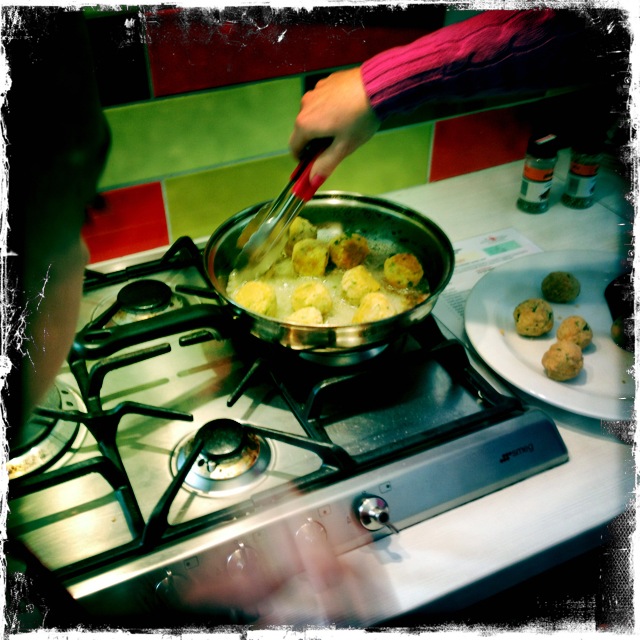
  • Meanwhile, heat 1cm vegetable oil in the frying pan and fry the falafels for 1-2 minutes on each side. Remove the falafel from the pan with a slotted spoon and set aside to drain on kitchen paper. Sprinkle with the sesame seeds.
  • For the yoghurt dip, combine the Greek yoghurt, coriander, mint, lime and tahini in the jug of the stick blender and whizz until smooth.
  • Serve the falafels with the yoghurt dressing and toasted pita breads if you have them!
Categories: Kitchen Garden, Recipe | Tags: , , , , , , , , , , , | Leave a comment

Hugh Fearnley-Whittingstall’s chickpea, potato and kale curry

Hugh Fearnley-Whittingstall is a British chef, famous for the TV show ‘River Cottage’ and his support of real food, local and seasonal foods, and humanely produced livestock .

Fresh from the garden: potatoes, kale, onion, coriander

Equipment:

  • Bowls – glass, large
  • Saucepans – med, large
  • Sieve & colander
  • Chopping board & knife
  • Microplane zester
  • Salad spinner
  • Peeler
  • Measures – jug, tablespoon, teaspoon, ½ teaspoon
  • Scales
  • Frying pan
  • Mortar & pestle
  • Wooden spoon
  • Serving bowls
Ingredients:

  • 300g dried chickpeas (or 2 tins, drained and rinsed)
  • 1 teaspoon cumin seeds, plus a little extra to garnish
  • 1 teaspoon coriander seeds
  • ½ teaspoon mustard seeds
  • 1 hot, dried red chilli, crumbled
  • 1 teaspoon ground turmeric
  • 2.5cm piece fresh ginger
  • 1 tablespoon rice bran oil
  • 1 large onion
  • 2 cloves garlic
  • 700ml chicken or vegetable stock
  • 250g potatoes
  • 150g kale (or cabbage)
  • Greek yogurt, to serve
  • A small handful coriander leaves

What to do:

  • Soak the chickpeas overnight in plenty of cold water.
  • Next day, drain, rinse and simmer them for about 30 minutes in fresh ­water until tender, then drain. (If using tinned, just drain and rinse.)
  • Peel and grate the ginger with the microplane zester. Peel, halve and finely slice the onion. Peel and finely chop the garlic. Peel and chop the potato into 3cm dice.
  • Wash and shake the kale leaves dry. Strip the leaves from the stem (discarding the stem) and finely shred the leaves. Wash and spin-dry the coriander and finely chop.
  • Put the frying pan over a medium heat and, when hot, dry-toast the cumin, coriander seeds and mustard seeds and the chilli for a couple of minutes ­until they smell ­really fragrant and the mustard starts to pop. Grind to a powder with the pestle and mortar, and mix in the turmeric and ginger.
  • Heat the oil in a large saucepan over a medium heat, and fry the onion, stirring regularly, until soft and golden brown. Stir in the garlic and spices, leave to cook for a minute or two, and add the stock. Simmer for five minutes, then add the chickpeas and potatoes. Cook until the spuds are tender, then add the kale. Cook for a few minutes, until the greens are tender, then serve with a dollop of thick yogurt on top, along with a ­sprinkling of toasted cumin seeds and some coriander leaves.

Notes: Why do we dry-toast the spices? What does to shred the leaves mean?

Categories: Kitchen Garden, Recipe | Tags: , , , , , , , , , , , , | Leave a comment

Home-made tomato ketchup!

Fresh from the garden: tomatoes, fennel, celery, basil, chilli

Recipe source: adapted from a recipe by Jamie Oliver

We love to try our hands at something home-made, and this tomato sauce is a real winner. A bottle of it makes a great present too!

Equipment:

  • Chopping board & knife
  • Colander
  • Bowls – 2 large, 2 med
  • Heavy-bottomed saucepan
  • Wooden spoon
  • Measures – cup, ½ cup, 1/3 cup, tablespoon
  • Hand blender
  • Funnel and bottles with lids if preserving
Ingredients:

  • 1 large red onion
  • 1/2 a bulb of fennel
  • 1 stick of celery
  • olive oil
  • a thumb-sized piece of fresh ginger
  • 2 cloves of garlic
  • 1/2 a fresh red chilli
  • a bunch of fresh basil
  • 1 tablespoon coriander seeds
  • 2 cloves
  • 1 teaspoon freshly ground black pepper
  • sea salt
  • 400g cherry tomatoes
  • 1 tin chopped tomatoes
  • 3/4 cup plus 2 tablespoons red wine vinegar
  • 1/3 cup soft brown sugar

What to do:

  • Peel and chop the onion. Wash, trim and roughly chop the fennel & celery. Peel and roughly chop the ginger and garlic. De-seed and carefully chop the chilli.
  • Wash the basil, pick off the leaves and chop the stalks.
  • Wash and drain the cherry tomatoes and cut them in half.
  • Place all the vegetables in a large heavy-bottomed saucepan with a big splash of olive oil and the ginger, garlic, chilli, basil stalks, coriander seeds and cloves. Season with the pepper and a good pinch of salt.
  • Cook gently over a low heat for 10 to 15 minutes until softened, stirring every so often. Add all the tomatoes and 1½ cups of cold water. Bring to the boil and simmer gently until the sauce reduces by half.
  • Add the basil leaves, then whiz the sauce with the hand blender and push it through the sieve twice, to make it smooth and shiny. Put the sauce into a clean pan and add the vinegar and the sugar. Place the sauce on the heat and simmer until it reduces and thickens to the consistency of tomato ketchup. At this point, correct the seasoning to taste.
  • Serve immediately or keep, covered, in the fridge for up to five days.
  • Or for preserving: Carefully spoon the ketchup through a sterilized funnel into sterilized bottles if using, then seal tightly and place in a cool dark place until needed – it should keep for six months.

Notes: Where does the word ketchup come from? What does to sterilize mean?

Categories: Kitchen Garden, Recipe | Tags: , , , , , , , , | Leave a comment

Luxury potato salad

Fresh from the garden: Potatoes, corn, chives, coriander, mint, spring onions

Recipe source: Melissa

………………………………………………………………………………………………………………………………………………

We’re enjoying some slightly warmer weather – hurray! Whether in the park at a picnic, or at home with a BBQ this salad is always a winner – and especially with this luxurious mayo.

Equipment:

  • Scrubby brush
  • Large saucepan
  • Chopping board & knife
  • Measuring tablespoon, teaspoon
  • Salad spinner, paper towel
  • 2 medium bowls
  • Garlic press
  • Tea towel
  • Measuring jug
  • Electric whisk, 2 beaters
  • Glad wrap
  • Colander
  • Metal spoon
  • Serving bowls
Ingredients:

  • 2kg chat potatoes
  • 2 corn cobs
  • 2 sprigs mint
  • 8 spring onions
  • A small handful parsley
  • 12 chives
  • A small handful coriander
  • Flaked salt

Mayonnaise

  • 2 large eggs
  • 1 garlic clove
  • 1 heaped teaspoon English mustard powder
  • Cooking salt & black pepper
  • 275ml Rice Bran or peanut oil
  • White wine vinegar

What to do:

  • Wash the potatoes well, using a brush if needed, and cut any larger ones in half or quarter. Put them all into the large saucepan, cover with cold water and set to boil.
  • Strip the husks from the corn cobs, wash and wipe dry and then carefully slice off the kernels.
  • Wash the mint and add to the potatoes with a tablespoon of cooking salt. Once the water is boiling, check to see if tender after about 15 minutes. In the last minute of cooking, add the corn kernels.
  • Meanwhile make the mayonnaise (see over for recipe) and wash the remaining herbs and spring onions and dry well. Pick the herbs and finely chop; remove the outer layer of spring onion (discarding it) and chop into slices about half the size of the nail on your little finger.
  • When the potatoes & corn are tender, pour out into a colander and drain. Shake to remove excess water and turn back into the warm saucepan, immediately adding the mayonnaise and spring onions. Using the metal spoon, carefully turn the warm mixture so that all is covered. Taste for seasoning and add if needed.
  • Just before serving, sprinkle over the chopped herbs and turn out into serving bowls.

Mayonnaise

  • Separate the eggs and put the 2 yolks into a medium bowl reserving the whites for another use.
  • Crush the garlic clove and add to yolks with the mustard powder and a teaspoon of white wine vinegar.
  • Season with a level teaspoon of salt and a few twists of freshly milled pepper, and mix well together. Place the bowl onto a folded damp tea towel to steady.
  • Measure the rice bran oil into a jug, and using the electric whisk in one hand, add just only one drop of oil to the egg mixture, and whisk that in. Keep adding just one drop at a time, mixing in well after each addition.
  • As soon as it begins to thicken, begin to add the oil in larger drops.
  • When about half the oil is in you can begin pouring in the oil in a thin, steady trickle – whisking the whole time.
  • When it’s all in, taste and season with salt and freshly ground black pepper and, if it needs it, a little more vinegar to taste. Cover with wrap and chill until the potatoes are ready.

TROUBLESHOOTING!

  • There is a risk home-made mayonnaise will curdle or split if you add the oil too fast, too soon. If that happens, just put a fresh yolk into a clean bowl, add the curdled mixture to that, drop by drop, and then carry on with the remainder of the oil as if nothing had happened.

Notes: What does to curdle mean? What is a chat potato? Why do we start cooking the potatoes in cold water?

Categories: Kitchen Garden, Recipe | Tags: , , , , , , , | Leave a comment

Lemongrass tisane

Fresh from the garden: lemongrass

Recipe source: adapted from a recipe by Alice Waters in The Art of Simple Food ………………………………………………………………………………………………………………………………………

Alice says, ‘A tisane is a fresh tea, an infusion of fragrant herbs, or flowers or spices, in boiling water. It is a soothing a refreshing finish to a meal, is complementary to most desserts, and offers a mild alternative to coffee. Tisane can be made from such flavourings as lemon verbena, mint, lemon thyme, lemon balm, hyssop, chamomile, citrus rind and ginger – alone and in combination. The one I make most is a combination of mint and lemon verbena. It is very beautiful made in a glass teapot so you can see the brilliant green leaves… I like to use small clear tea glasses, as they do in Morocco, so the lovely pale green colour is visible.’

Equipment:

  • Measuring jug
  • Saucepan with lid
  • Chopping board & knife
  • Ladle
  • Tea cups or glasses
Ingredients:

  • A lemongrass stalk with leaves
  • 2 litres of water

What to do:

  • Measure the water into the saucepan and heat on high to boil.
    • Holding the lemongrass carefully, rinse it and cut the stalk from the leaves.
    • Chop the stalk into 2cm lengths.
    • Fold the leaves into a small bunch, tying together to secure.
    • When the water in the saucepan is boiling, carefully drop in the bundle & the chopped stalk.
    • Turn the heat off and let the tisane steep for several minutes.
    • Ladle into cups or glasses to serve.

Notes: What is a tisane? Why do we have to be careful when handling lemongrass? What other combinations can you think of?

Categories: Kitchen Garden, Recipe, School Holiday Program | Tags: , , , , , , , , , | Leave a comment

Our winter salad

Fresh from the garden: Salad leaves, rocket, edible flowers, lemon, parsley, marjoram, thyme, coriander, oregano

Recipe source: Melissa ………………………………………………………………………………………………………………………………………

This is a lovely salad to pair with heavily flavoured dishes and is easy and quick to assemble.

Equipment:

  • Bowls – 2 large
  • 2 salad spinners
  • Tea towel
  • Kitchen paper
  • Chopping board & knife
  • Mortar & pestle
  • Measure – 1/3 cup
  • Citrus juicer
  • Mezzaluna, teaspoon
  • Serving bowls, little tongs


Ingredients:

  • A large handful salad leaves
  • A few garnishing flowers

Herby vinaigrette dressing

  • 1 small garlic clove
    • Flaked salt & black pepper
    • 1 lemon
    • 1/3 cup extra virgin olive oil
    • A small handful mixed herbs: parsley, marjoram, thyme, coriander, oregano

What to do:

  • Fill up the 2 big bowls with cold water & wash the salad leaves, gently dunking them a handful at a time into the water, then pulling out to see if any dirt is left behind. Repeat in fresh water until no dirt remains. Spin the leaves dry and then wipe the bowls dry.
  • Wash the flowers separately and drain on a piece of paper towel. Keep the flowers reserved, picking off the petals to use.
  • Wash and spin dry the herbs, and pick off the leaves.
  • Lay out the tea towel and line it with kitchen paper. Spread the salad leaves over the paper and roll the whole lot up like a log. Keep the rolled parcel of leaves in the fridge until needed.

To make the dressing:

  • Peel the garlic clove and put it in the mortar with a large pinch of salt. Pound to a paste.
  • Juice the lemon and add the juice to the mortar (without the pips) then stir the lot with the teaspoon and scrape it into a large bowl.
  • Stir in the olive oil and grind a little pepper, then whisk the dressing lightly. Add the herbs, chopping any large leaves in the mezzaluna if needed. Add to the dressing in the large bowl.

To assemble:

  • Unwrap the parcel of salad leaves & tip them into the bowl with the flower petals, herbs and the dressing. Gently turn the leaves in the dressing using your hands or tongs.
  • Transfer the salad to the serving bowls and serve immediately with little tongs.

Notes: What is the correct way to wash the leaves?Why do we completely dry the leaves before adding the dressing? What else could you add to the salad?

Categories: Kitchen Garden, Recipe, School Holiday Program | Tags: , , , , , , , | Leave a comment

Pizza with rocket, bocconcini and garden herbs

Fresh from the garden: rocket, thyme, oregano, marjoram, sage, parsley

 Recipe source: adapted from a recipe by Stephanie Alexander in ‘Kitchen Garden Cooking With Kids’ ………………………………………………………………………………………………………………………………………

Equipment:

For the pizza dough:

  • Bowls – 1 small, 1 large
  • Fork
  • Scales
  • Measures: teaspoon, tablespoon, cup
  • Stand mixer with dough hook
  • Pastry brush

For the pizza topping:

  • Chopping board
  • A large knife
  • Medium frying pan
  • Wooden spoon
  • Kitchen towel
  • Large bowl
  • Tongs
  • A metal spoon
  • A large oven tray
  • A large board for cutting pizza
  • Pizza cutter
  • Serving plates


Ingredients:

For the pizza dough:

  • 1/2 cup lukewarm water
  • 2 teaspoons instant dry yeast
  • 1/2 teaspoon sugar
  • 2 teaspoons extra virgin olive oil, plus extra for greasing the bowl
  • 200g plain flour, plus extra for flouring
    • 1 teaspoon salt

For the pizza topping:

  • 1 tub bocconcini
  • 1 large red onion
  • 2 tablespoons extra-virgin olive oil
  • 50g parmesan
  • A large handful rocket

Tomato sauce:

  • ¼ cup extra-virgin olive oil
  • 1 brown onion
  • 3 garlic cloves
  • A few sprigs thyme, sage, oregano, marjoram, parsley
  • 1 can chopped tomatoes
  • Flaked salt and black pepper

What to do:

To make the dough:

  • Place the water, yeast and sugar in the small bowl. Mix with the fork and leave for 5–10 minutes until the mixture looks frothy.
  • Add the 2 teaspoons of oil to the yeast mixture and mix well.
  • Place the flour and salt and yeast mixture in the bowl of the stand mixer and beat for at least 8 minutes, until the dough looks smooth.
  • Brush the inside of a large bowl with a little of the extra virgin olive oil, using the pastry brush.
  • Turn the pizza dough into the oiled bowl. Cover with a clean, dry tea towel and put in a draught-free place until the dough has doubled in size. This process, which is called ‘proving’, will take at least 1 hour.

What to do:

  • Tip the risen dough onto the workbench and knead briefly, then shape it into a round ball and return it to the bowl.
  • Cover the bowl with the tea towel and leave again, this time for at least 20 minutes.
  • Preheat the oven to 220°C. You can prepare the topping now while you wait for the oven to heat up.

For the tomato sauce:

  • Wash, dry and pick the leaves from the herbs.
  • Peel and finely chop the onion and garlic.
  • Heat most of the olive oil in the frying pan & gently cook the onion and garlic until translucent but not brown.
  • Open the tin of tomato and add to the frying pan with a pinch of salt, a grind of pepper and the herbs.
  • Simmer gently for 10 minutes, stirring occasionally, until it has reduced with minimal liquid.

For the topping: 

  • Peel the red onion, cut in half and finely slice into rings.
  • Open the tub of bocconcini and cut or tear each ball into 3 or 4 pieces.
  • Grate the parmesan.
  • Wash and spin the rocket dry. Leaving small leaves whole, chop large leaves into ribbons.

Assembling the pizza:

  • Scatter some flour on the workbench and roll to form a thin rectangle to fit the large baking tray.
  • Assemble the pizza directly onto the tray, flouring the tray first.
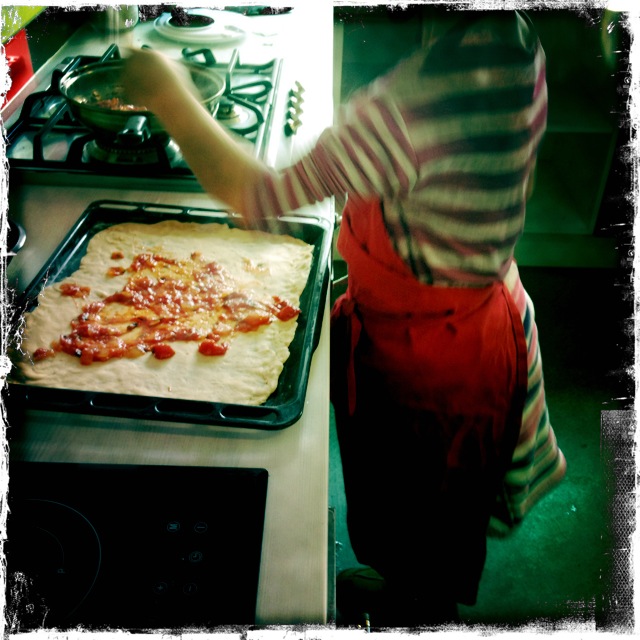
  • Using the metal spoon, swirl a couple of spoonfuls of tomato sauce onto the pizza base, spreading so that it becomes totally covered.
  • Layer on the onion slices and then dab the bocconcini on top. Drizzle a little olive oil on, season well and slide it into the oven.

Baking the pizza:

  • Bake the pizza for 15 minutes or until the edges are very crusty and the cheese is bubbling.
  • Once the pizza is done, transfer it to a clean wooden chopping board using the wide egg lifter.
  • Cut the pizza crossways into small squares, and lift onto serving plates.
  • Sprinkle the grated parmesan onto the pizza and then add the rocket. Serve!

Notes: Where does pizza come from? What other sort of vegetables could you use in a pizza? What sort of other pizza could we make? What is pizza bianca?


Categories: Kitchen Garden, Recipe, School Holiday Program | Tags: , , , , , | Leave a comment

Blog at WordPress.com.