Posts Tagged With: children

Apricot, cranberry and cardamom hot cross buns

‘… if you have no daughters, give them to your sons…’ At this time of year it is possible to buy hot cross buns anywhere – but I think there is nothing better than freshly made ones!

ourkitchengarden.net

Warm cross dough

Recipe source: adapted from a recipe by Jeremy Strode in Good Living 2011
Makes: 12 large or 24 small buns

Equipment:

  • Stand mixer & dough hook
  • Bowls – large, small
  • Measuring – ½ teaspoon, tablespoon
  • Small saucepan
  • Fork
  • Spatula
  • Plastic wrap & baking paper
  • Large baking tray
  • Chopping board & knife
  • Small snap lock bags
  • Scissors
  • Pastry brush
  • Serving plates
Ingredients:

  • 20g dried yeast
  • 100g caster sugar plus a pinch
  • 100g butter at room temperature
  • ½ teaspoon salt
  • ½ teaspoon ground cardamom
  • 500g plain flour
  • 2 eggs
  • 150g apricots
  • 50g dried cranberries

Crosses

  • 90g self-raising flour
  • 10g skim milk powder

Glaze

  • 1/3 cup water
  • 2 tablespoons caster sugar

What to do:

The dough mixture:

  • Mix yeast with 200ml warm water & pinch of sugar in a small bowl and leave in a warm place for 5 minutes to activate.
  • Chop the apricots.
  • Place butter, salt, cardamom, the rest of the sugar and the plain flour in the mixer and combine.
  • Add eggs and yeast mixture and beat until smooth.
  • Add apricots and when combined, leave in a warm place for 1 to 1½ hours to double in size.

Start of lesson:

  • Line a large baking tray with non-stick baking paper. Punch dough down to its original size. Knead on a lightly floured surface until smooth. Divide into 12 even portions. Shape each portion into a ball. Place balls onto baking paper-lined tray so that the balls just touch. Cover with plastic wrap. Set aside in a warm, draught-free place to prove for 30 minutes. Preheat oven to 190°C.
  • Whilst the buns are proving you can make the next dough mixture (above) for the next class.
  • After the 30 minutes is up, mix self-raising flour, milk powder and 100ml water together in a small bowl until smooth. Spoon into a small snap-lock bag. Snip off a tiny hole in 1 corner of bag. Pipe flour paste over tops of buns to form crosses. Bake for 20 minutes until buns are cooked through.
  • Meanwhile make the glaze: Place 1/3-cup water and sugar into a small saucepan over low heat. Stir until sugar dissolves. Bring to the boil. Boil for 5 minutes. Brush warm glaze over warm hot cross buns. Divide among serving plates – slicing if needed – & then eat!

Notes: If you have no skim milk powder for the crosses then the self-raising flour will work with milk or even water!

ourkitchengarden.net

Hot cross bunsters

Categories: Kitchen Garden, Recipe | Tags: , , , , , , , , , | 2 Comments

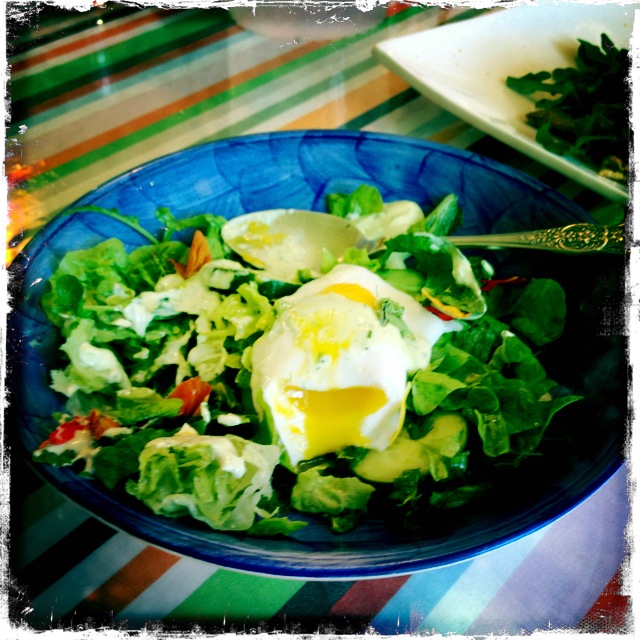
Autumn salad with poached eggs & tarragon and landcress mayo

The list of ingredients we can add to a salad is endless… here at Bondi we base our salads on lettuce leaves, fresh herbs and then seasonal additions. This one is a favourite with just-poached eggs and a wonderfully creamy dressing. You can substitute watercress for landcress if you like.

ourkitchengarden.net

The double-yolk autumn salad with tarragon & landcress mayo

Fresh from the garden: Salad leaves, eggs, tarragon, chives, oregano, thyme, marjoram, edible flowers, cucumber, spring onions, garlic, lemon – the list goes on…!
Recipe source: Melissa
Serves: 4 at home or 24 tastes

Equipment:

  • Bowls – 2 large, 1 medium, 2 small
  • 2 salad spinners
  • Tea towel, kitchen paper
  • Chopping boards & knives
  • Non-stick frying pan
  • Slotted spoon
  • Stick blender & cup
  • Measuring: jug, teaspoon, ½ teaspoon
  • Scales
  • Mezzaluna
  • Citrus juicer
  • Serving bowls


Ingredients:

  • 4 freshest eggs
  • A bunch of salad leaves
  • A large handful of herbs
  • A few garnishing flowers
  • Special extras: cucumber, spring onions – whatever you have

For the tarragon mayonnaise:

  • A small bunch of landcress
  • 1 large sprig tarragon
  • 1 extra egg
  • ½ teaspoon salt
  • 1 small clove garlic
  • 1 level teaspoon mustard powder
  • 120ml rice bran or veg oil
  • 25ml extra-virgin olive oil
  • 1 teaspoon white wine vinegar
  • ½ a lemon
  • Freshly milled black pepper

What to do:

For the salad:

  • Fill up the 2 big bowls with cold water & wash the salad leaves in several changes of water. Spin dry and wipe the bowls dry.
  • Lay out the tea towel and line it with kitchen paper. Spread the salad leaves over the paper and roll the whole lot up like a log. Keep the rolled parcel of leaves in the fridge until needed.
  • Fill up another bowl with water and wash the herbs and small garnishing leaves. Spin dry and  pick leaves, discarding stalks into compost.
  • Pick the petals from the flowers and reserve in a small bowl with the garnishing leaves.
  • Chop the herbs and keep separate in their own small bowl.
  • Cut the root end from the spring onion and strip off the first layer or two. Thoroughly wash the remaining part and then chop into fine discs. 

To poach the eggs:

  • Fill a medium-sized frying pan with water to a depth of about 5cm, then heat it to a bare simmer.
  • Then break the eggs into the simmering water, one at a time until they’re all in, and let them cook, uncovered, for 2 minutes. Fill a large bowl with cold water.
  • Then use a draining spoon to lift them from the water and transfer them to the bowl of cold water until you are ready to use them.

For the sauce:

  • Wash, spin dry and separate off the landcress leaves and discard any tough stalks into the compost.  Wash & spin dry the tarragon. Pick the tarragon to yield about 1 tablespoon leaves.
  • Squeeze the lemon half to yield ½ teaspoon lemon juice. Peel the garlic clove & finely chop. Wash & dry the chives and snip finely.
  • Now break the extra egg into the cup of the stock blender, add the salt, garlic, mustard powder and a few twists of freshly milled black pepper, then blitz to blend these together.
  • Now mix the oils in the jug and ask a helper to pour it in a thin trickle into the cup whilst it’s blending. When all the oil is in, add the vinegar, lemon juice, landcress and tarragon leaves, then blend again until the leaves are quite finely chopped.

 To serve:

  • Take the lettuce from the fridge and chop or tear into mouth-sized strips. Pop them into a big bowl, then add the spring onions and drizzle about a teaspoon of olive oil, a teaspoon of white wine vinegar  & a sprinkle of flaked salt over the whole lot.
  • Using your hands, turn the leaves to coat in the dressing and then divide the lot among your serving bowls.
  • Spoon an egg at a time out of the water and dry off with some paper towel or a tea towel, and then carefully arrange one egg on the top of each salad.
  • Drizzle the mayo over the top of each salad, followed by a sprinkle of herbs and the flowers and serve immediately!

Notes: What is mayo short for? What other salad dressings could you use? Why do we need to wash the leaves so well? Why do we roll the leaves up to put them in the fridge? Why don’t we need to use vinegar to poach the eggs? Why do we put the eggs into cold water?

Categories: Kitchen Garden, Recipe | Tags: , , , , , , , , , , , | Leave a comment

Kitchen Garden news – 1st April 2013

Well goodness me, I was so busy with class preparations, the school Easter Hat Parade, travelling to the south coast to visit Granny for her birthday and my lovely aunt Rose & Uncle Paul, and planning Olly’s birthday extravaganza (!) that I completely forgot to write my news for the newsletter last week…!

I also forgot the wine, cheese & dips at home in the fridge and the kids’ back-bubbles for swimming (as well as clean underwear, but that’s another story) so I’m going with the flow now and purposefully trying not to stress about it all… and hoping that it’s not just old age (or young riesling) kicking in…

ourkitchengarden.net

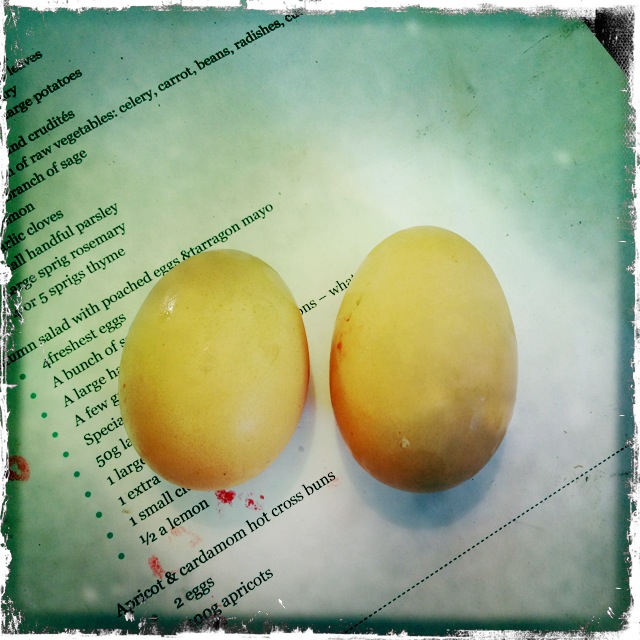
Spot the double-yolker!

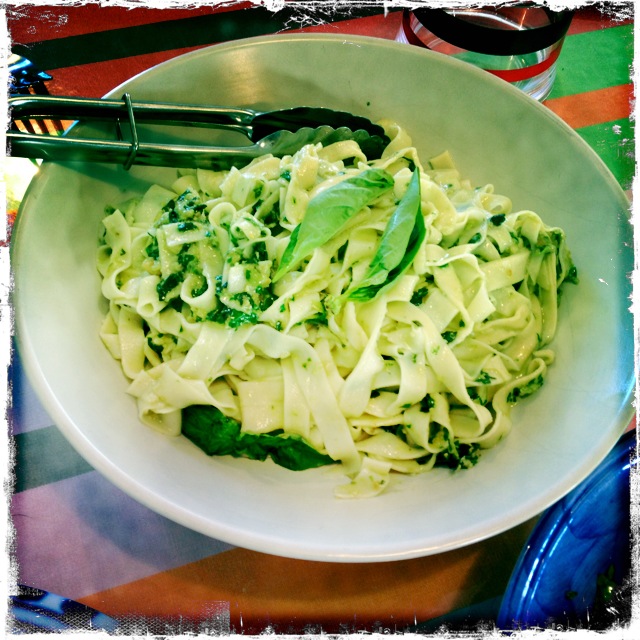
So anyway – on to what’s been happening! We thought we might have had a quieter fortnight this menu than the last Chinese Banquet one… but no! We pushed the boundaries yet again and had everyone cooking up a feast every lesson… on Wednesday morning’s class we found a double-yolker too! What better miracle of food life is there than an egg with too yolks? So we poached it and plopped it into an Autumn salad with poached eggs & creamy tarragon and landcress mayo… We kneaded dough & sliced spuds for Potato and rosemary pizza, and whizzed up one of our favourites: Ottolenghi’s hummus with our Rosemary and thyme grissini and Crudités, and rolled out superfine Handmade linguine with Rocket and basil pesto. And then to finish – of course we had to squeeze in some freshly baked Apricot, cranberry and cardamom hot cross buns just in time for Easter!

ourkitchengarden.net

Ottolenghi’s hummus

ourkitchengarden.net

Rosemary & thyme grissini, crudites

And the result? Clean plates – poor chooks – and happy kids! We had some very wonderful comments – and also some beautiful manners and sharing from, in particular, my lunch compadres in Year 3 one Wednesday arvo. Delicious, delicious!

ourkitchengarden.net

Handmade linguine, rocket & basil pesto

All the other recipes will be up here in the next few days – and even perhaps the one for Banoffee Pie that Olly requested for his 4th party! Mmmmmmmm… Watch this space!

Categories: Kitchen Garden | Tags: , , , , , , , , , | Leave a comment

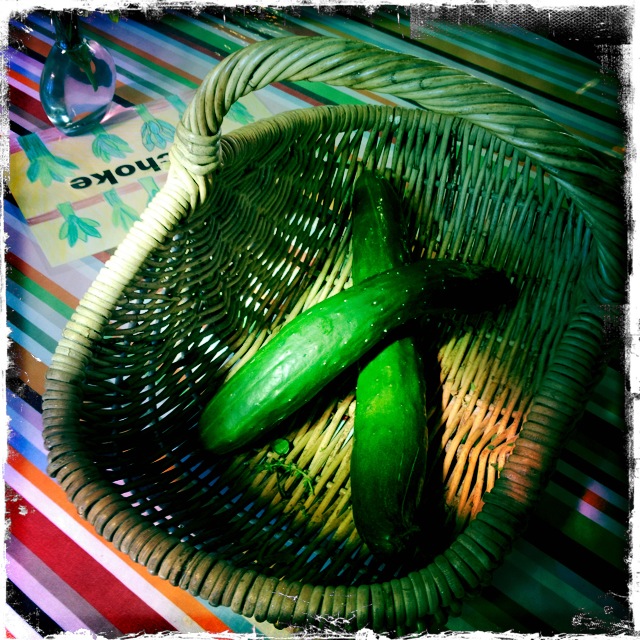
Kylie Kwong’s chilled cucumber salad

Kylie describes this dish as taking on whole different tones, being slippery, silky, yet still crunchy. It is very refreshing, and wonderfully easy to make.

ourkitchengarden.net
Fresh from the garden: cucumbers, ginger, garlic
Recipe source: adapted from a recipe by Kylie Kwong in Simple Chinese Cooking
Serves: 6 as a side dish or 24 tastes

Equipment:

  • Peelers
  • Chopping boards and knives
  • Teaspoons
  • Measures – tablespoon, teaspoon, ½ teaspoon
  • Bowls – large, small
  • Teaspoon
  • Serving bowls


Ingredients:For the salad

  • 5 small or 2 large cucumbers
  • 1 tablespoon white sugar
  • 1 teaspoon sea salt
  • 1 pinch of ground black pepper

For the dressing

  • 2 tablespoons light soy sauce
  • 2 cloves garlic
  • 1 small knob ginger
  • ½ teaspoon sesame oil

 What to do:

  • Wash the cucumber, then peel and cut in half lengthways. Scoop out the seeds using a teaspoon. Place cut-side down on a chopping board and cut on the diagonal into 1.5cm pieces.
  • Place cucumber in a bowl, sprinkle with sugar and salt and mix well. Cover and refrigerate for 30 minutes.
  • Meanwhile to make the dressing, peel and finely chop the garlic cloves. Peel and finely dice the ginger to yield 1 tablespoon. Place the garlic, ginger and the rest of the dressing ingredients in a small bowl and stir to combine.
  • When the time is up, drain the cucumbers, and using your hands, gently squeeze out excess liquid.
  • Place back into the bowl, combine the chilled cucumber with the dressing and toss to incorporate.
  • Divide among serving bowls and sprinkle with black pepper. Serve immediately.

Notes: What does the sugar and salt do to the cucumber? Why do we scrape the seeds out? How does it feel the squeeze the cucumber pieces with your hands?

Categories: Kitchen Garden, Recipe | Tags: , , , , , , , , , , | Leave a comment

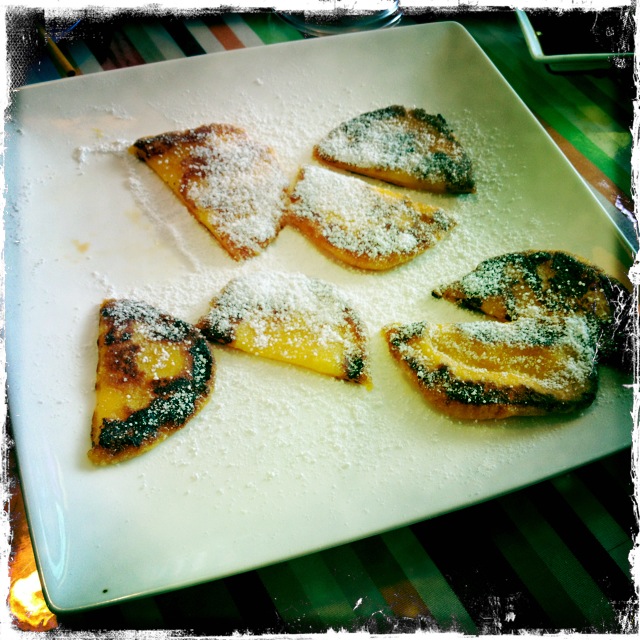
Nan Gua Bing (Chinese pumpkin pancakes)

Angela says, ‘Like a lot of Asian desserts the recipes aren’t really recipes but more like guidelines. The more often I make something the better I get at it. This truly applies to nan gua bing, the texture changes a little with the weather and humidity, I add the flour little by little so that I can feel the texture of the dough in my hands to know when it’s right. It’s like fresh pasta, it’s an ever changing friendship that weathers the seasons; my hands always know and keep the memory of when it’s just right.’

ourkitchengarden.net

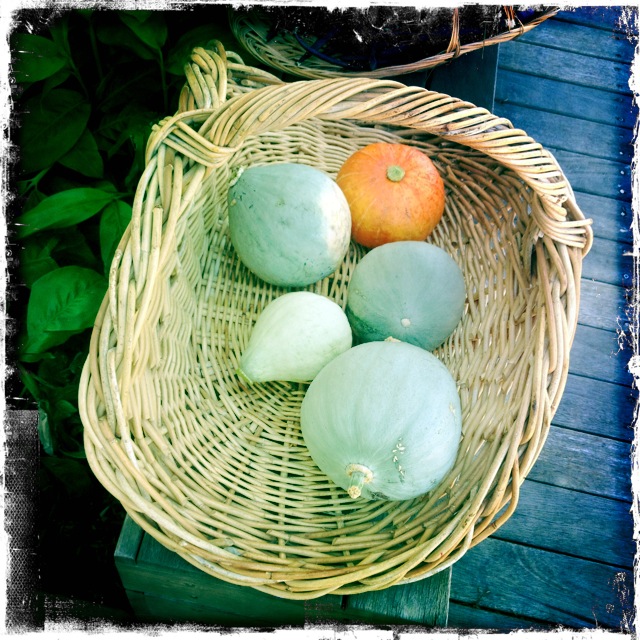
Fresh from the garden: pumpkin
Recipe source: adapted from a recipe on angelamay.net
Makes: 12 small pancakes that we halved to share

Equipment:

  • Chopping boards and knives
  • Bowls – large, small
  • Steamer basket & wok
  • Baking paper
  • Scales
  • Measures – jug, cup, ½ cup, tablespoons
  • Mouli & metal spoon
  • A non-stick frying pan
  • Rolling pins
  • Serving plates
Ingredients:

  • 1 small pumpkin (kabocha or jap is ideal)
  • ½ cup caster sugar
  • 1½ cups glutinous rice flour (not the rice flour for gluten-free baking)
  • Rice bran or vegetable oil
  • 2 tablespoons icing sugar for dusting

ourkitchengarden.net 

What to do:

  • Carefully chop the pumpkin into 2cm wedges and then carefully peel the slices with a very sharp knife or peeler. Weigh the peeled pumpkin to yield 225g, then cut each slice into 2cm cubes.
  • Put the steamer basket into the wok and then using a jug, fill the wok with cold water to just touch the bottom of the basket. Remove the basket and turn the wok on to boil the water.
  • Line the basket with baking paper, then pop the pumpkin cubes in and place the basket on to steam for 20 minutes or until fork-tender, making sure the water doesn’t touch any paper or pumpkin.
  • While the pumpkin is still very hot pass it through the mouli so the pumpkin is smooth with no lumps. Then, working quickly to make sure the pumpkin stays hot, stir in all the sugar and flour bit by bit, mixing and kneading until the dough is slightly sticky yet smooth.
  • Shape the dough into small balls and then either using a rolling pin or your hands, flatten each ball out into a small circular pancake about ½cm thick.
  • Heat the frying pan on medium heat and pour in a thin layer of oil. Add a layer of pancakes and fry until lightly colored golden brown, flipping and turning heat down to medium low to cook through.
  • Transfer to serving plates and spoon the icing sugar into a sieve, lightly dusting over the pancakes – serve immediately.

Notes: What other vegetables can be eaten as dessert? What is a mouli?

ourkitchengarden.net

Categories: Kitchen Garden, Recipe | Tags: , , , , , , , | Leave a comment

Perfect steamed rice!

So many fantastic home cooks I know are scared of rice! When it comes to steaming you really don’t need a rice cooker (unless you’re cooking for 100 people!) as a simple saucepan will do the job perfectly…

ourkitchengarden.net

Recipe source: Melissa
Serves: 8 or 24 tastes

Equipment:

  • Measures – cup
  • Large saucepan & lid
  • Sieve
  • Knife
  • Serving bowl or small bowl and plates
Ingredients:

  • 3 cups jasmine or basmati rice
  • 4 cups cold water

What to do:

  • Measure the rice grains into the saucepan. Wash the rice with cold running water and swish with your hands. Drain carefully into a sieve and repeat 3 more times until the water is no longer milky. This helps remove excess starch and cleans the grains.
  • Empty the washed rice back into the pot and add the 4 cups of cold water. Turn the heat to high – when the water in the pot starts to bubble, stir then cover the pot and reduce heat to the lowest flame. Simmer for 15 minutes without disturbing.
  • After the 15 minutes is up, just turn off the heat without disturbing the saucepan. Just let it sit with the lid on for 5 minutes to finish the steaming process.
  • Using a knife, transfer the rice into a large serving bowl, fluffing as you go. Serve in one bowl, or alternatively cram spoonfuls of rice into a small deep bowl  – just rinsed & wet – until full and level, then place bowl upside-down onto a plate, tap and pull off the bowl leaving a bowl-shaped rice mound!

Notes: Where does rice come from? How is it grown? What other dishes can you make with rice?

Categories: Kitchen Garden, Recipe | Tags: , , , , , , , , , , | Leave a comment

Stir-fried eggs with tomato and chilli soy

Jill says, ‘This is a simple dish of Chinese ‘scrambled’ eggs that tastes fresh, clean and light. Serve with rice and Asian greens to max it up into a bigger meal.’

ourkitchengarden.net

Fresh from the garden: tomatoes, coriander, eggs, chilli, spring onions
Recipe source: adapted from a recipe by Jill Dupleix
Serves: 6 as a snack or 24 tastes

Equipment:

  • Chopping boards and knives
  • Salad spinner
  • Measures – 1/3 cup, tablespoons, teaspoons
  • Bowls – 2 large, small
  • Fork or whisk
  • 2 woks
  • Serving plates & small sauce bowls
Ingredients:

  • 2 large vine-ripened tomatoes
  • A small bunch of coriander
  • 1 long red chilli (or green if you don’t want too much heat!)
  • 2/3 cup light soy sauce
  • 2 x 6 eggs
  • 2 teaspoons sesame oil
  • 4 spring onions
  • Flaked salt & black pepper
  • 2 tablespoons peanut oil (we use vegetable or Rice Bran oil)

What to do:

  • Cut the tomatoes in half, scoop out and discard the seeds and juice, then finely chop the flesh. Set aside.
  • Wash and spin dry the coriander and pick out some juicy sprigs.
  • Slice the chilli in half lengthways and remove the seeds out by scraping each half. Slice the flesh really thinly and then mix the sliced chilli and soy sauce into 4 small sauce bowls. Set aside.
  • Wash and strip the first layer of skin from the spring onions and then thinly slice them. Crack 6 eggs each into both bowls, and then lightly beat each bowl. Add a teaspoon of sesame oil into each bowl, most of the spring onion, and some salt and pepper and combine.
  • Heat the 2 woks over high heat until hot, then add the vegetable oil. Once the oil is hot, add each bowl of egg mixture into the woks and leave for 10 seconds, then use a wooden paddle or spatula to slowly draw the outside of the egg mixture into the centre, allowing the uncooked egg to cook. Cook for 2-3 minutes until the egg is almost set, then scatter with the tomato. Lightly toss once or twice to warm through. (It’s important not to allow the tomato to cook for too long, or it will make the eggs too watery.)
  • Separate each wok mixture into 2 and then divide out between 4 serving plates. Scatter with the remaining spring onion and the coriander sprigs, then spoon over some chilli soy sauce and serve immediately.

Caution:

  • Wash your hands thoroughly after coming in contact with chilli, as the capsaicin (the oil within the chilli) burns when it comes in contact with your eyes or sensitive skin.

Notes: Why do we discard the tomato seeds & juice in this recipe? Why do we scrape the seeds out of the chilli?

Categories: Kitchen Garden, Recipe | Tags: , , , , , , , , , | Leave a comment

Shanghai-style eggplant

Chris says, ‘This is a very simple and a traditional Shanghai home-cooked dish. Every family in Shanghai has their own way to cook it and uses the exact same ingredients. The woman in Shanghai who is the best cook for this dish is very special. She is my mum. So I believe the best seasoning in the world is memories.’

Melissa says this recipe is for Grace & Estella!

ourkitchengarden.com

Fresh from the garden: eggplant, chilli, garlic
Recipe source: adapted from a recipe by Chris Yan on sbs.com.au/food
Serves: 6 or 24 tastes

Equipment:

  • Paper towel
  • Bowls – large, small
  • Scales
  • Chopping boards and knives
  • A wok
  • Slotted & wooden spoons
  • Measures – jug, tablespoons
  • Serving plates
Ingredients:

  • 6 Japanese eggplant (also known as Lebanese) or 2 large eggplant
  • 5 tablespoons vegetable oil
  • 1 large red chilli (or green if you don’t want too much heat!)
  • 2 cloves garlic
  • 200ml water
  • 3 tablespoons dark soy sauce
  • 1 tablespoon sugar

What to do:

  • Wash and wipe dry the eggplant and cut off the stem & leaves. Weigh to make sure you have 500g. Then cut into 5cm thick pieces.
  • Wash and wipe dry the chilli and roughly cut into chunks.
  • Bruise the garlic cloves with your hand or the blade of a large knife and then peel.
  • Heat oil in wok until shimmering. Add chilli and garlic cloves and cook for 20 seconds. Remove the chilli with a slotted spoon and reserve.
  • Add the eggplant and gently stir-fry. When eggplants have soaked up all of the oil, add 1 tablespoon of the water. Keep adding water, a tablespoon at a time until eggplants are soft and you have used half of the water.
  • Stir in dark soy sauce and sugar. Stir well and add remaining water. Cover with a lid or foil and cook for 1 minute. Uncover, the liquid should have been absorbed.
  • Return chilli to wok, toss for 30 seconds and serve.
  • Eat immediately, but watch out the temperature very hot! Seriously!

Caution:

  • Wash your hands thoroughly after coming in contact with chilli, as the capsaicin (the oil within the chilli) burns when it comes in contact with your eyes or sensitive skin.

 Notes: What does bruising a clove of garlic mean? Where is Shanghai? What food memories do you have?

Categories: Kitchen Garden, Recipe | Tags: , , , , , , , , , , , , | Leave a comment

Pork and spinach pot-sticker dumplings with soy vinegar

Mastering the art of dumpling-making could well make you the most popular member of the family with a Saturday-morning home yum cha special!

ourkitchengarden.net

Fresh from the garden: Chinese leaves, spinach, spring onions, ginger
Recipe source: adapted from a recipe by Ken Hom on bbc.co.uk/food
Makes: about 35 dumplings

Equipment:

  • Bowls – large, small
  • Fork or chopsticks
  • Scales
  • Kettle
  • Measures – jug, tablespoons, teaspoons, ½ teaspoon
  • Tea towels
  • Salad spinner
  • Chopping boards and knives
  • Peeler & ruler
  • Rolling pins
  • Large baking trays
  • 2 non-stick frying pans with lids
  • Slotted spoons
  • Serving plates & small sauce bowls
Ingredients:

For the dough

  • 280g plain flour plus extra for dusting
  • 250ml very hot water

For the stuffing

  • A big bunch Chinese leaves or spinach
  • 1 large or 2 small spring onions
  • 1 small piece of ginger
  • 220g minced pork (not extra lean)
  • 1 tablespoon Shaoxing rice wine
  • 1 tablespoon dark soy sauce
  • 1 teaspoon light soy sauce
  • 1 teaspoon salt
  • ½ teaspoon ground black pepper
  • 2 teaspoons sesame oil
  • 1 teaspoon sugar
  • 2 tablespoons cold water

To cook

  • About 2 tablespoons vegetable oil
  • 75ml water

For the dipping sauce

  • 90ml light soy sauce
  • 2 tablespoons white rice vinegar
  • 1 tablespoon chilli oil

What to do:

For the dough

  • Fill the kettle and turn on to boil. Place the flour into a large bowl. Carefully measure the hot water and stir it gradually into the flour, mixing all the time with a fork or chopsticks, until the water is incorporated. Add more water if the mixture seems dry.
  • Tip the dough mixture onto a clean work surface and knead it with your hands, dusting the dough with a little flour if it’s sticky. Continue kneading until it is smooth – this should take about eight minutes.
  • Put the dough back in the bowl, cover it with a clean damp towel and let it rest for about 20 minutes.

For the stuffing

  • While the dough is resting, wash and spin-dry the spinach, removing and discarding any large stalks. Finely chop to yield 150g.
  • Wash and peel the first layer from each of the spring onions. Finely chop to yield 3 tablespoons.
  • Peel the skin from the ginger and finely chop to yield 2 packed teaspoons worth.
  • Combine all veggies and the rest of the stuffing ingredients in a large bowl and mix them together thoroughly. Set aside.

Preparing the dumplings

  • After the resting period, take the dough out of the bowl and knead it again for about five minutes, dusting with a little flour if it is sticky.
  • Once the dough is smooth, shape it into 2 rolls about 23cm long and about 2cm diameter, using your hands.
  • With a sharp knife, slice each roll into 16 equal-sized pieces (each piece is about 15g). Using your hands, roll each of the dough pieces into a small ball and then, with a rolling pin, roll each ball into a small, round, flat and thin ‘pancake’ about 9cm in diameter.
  • Arrange the round skins on a lightly floured baking tray and cover them with a damp kitchen towel to prevent them from drying out until you are ready to use them.
  • Place about two teaspoons of filling in the centre of each ‘pancake’ and moisten the edges with water. Fold the dough in half and pinch together with your fingers.
  • Pleat around the edge, pinching with your fingers to seal well. The dumpling should look like a small Cornish pasty with a flat base and rounded top.
  • Transfer each finished dumpling to the floured tray and keep it covered until you have stuffed all the dumplings in this way.

To cook

  • Heat a large lidded non-stick frying pan until it is very hot. Add the vegetable oil and place the dumplings flat-side down into the pan.
  • Reduce the heat and cook for about two minutes until they the dumplings are lightly browned. Add the water, cover the pan tightly and simmer gently for about 12 minutes or until most of the liquid is absorbed. Check the water half-way through and add more if necessary. Uncover the pan and continue to cook for a further two minutes.
  • For the dipping sauce, combine all the dipping sauce ingredients together in a small bowl.

To serve

  • Remove the dumplings from the pan with a large slotted spoon onto serving plates and serve with the dipping sauce.

Notes: Why do we let the dough rest? What does to yield mean? Why are there different soy sauces? Why are these called pot-stickers?

ourkitchengarden.net


Categories: Kitchen Garden, Recipe | Tags: , , , , , , , , , | Leave a comment

Steamed eggplant siu mai with ginger and chilli dipping sauce

We love making any sort of dough here but if you’re not up to it or are short of time you can always substitute gyoza, gow gee or wonton wrappers…

ourkitchengarden.net

Fresh from the garden: eggplant, coriander, ginger, garlic, chilli, lemon
Recipe source: adapted from vegetariantimes.com
Makes: about 30 dumplings

Equipment:

  • Bowls – large, small
  • Fork or chopsticks
  • Scales
  • Kettle
  • Measures – jug, tablespoons, teaspoons
  • Tea towels
  • Salad spinner
  • Chopping boards and knives
  • Peeler & ruler
  • Garlic press
  • Rolling pins
  • Large baking trays
  • 2 large woks
  • 2 large steamer baskets
  • Baking paper
  • Serving plates & small sauce bowls
Ingredients:For the dough

  • 280g plain flour plus extra for dusting
  • 250ml very hot water

Dumplings

  • 2 eggplants
  • 4 garlic cloves
  • A small knob ginger
  • A bunch of coriander
  • 2 teaspoons vegetable oil
  • 2 tablespoons soy sauce
  • 1 tablespoon black bean sauce
  • 1 teaspoon dark sesame oil
  • Cornflour for dusting pan

Chilli Sauce

  • 1 garlic clove
  • 1 small knob ginger
  • 1 lemon
  • 2 tablespoons soy sauce
  • 1 teaspoon brown sugar or honey
  • 1 teaspoon dark sesame oil
  • 1 red bird’s eye chilli

What to do:

For the dough

  • Fill the kettle and turn on to boil. Place the flour into a large bowl. Carefully measure the hot water and stir it gradually into the flour, mixing all the time with a fork or chopsticks, until the water is incorporated. Add more water if the mixture seems dry.
  • Tip the dough mixture onto a clean work surface and knead it with your hands, dusting the dough with a little flour if it’s sticky. Continue kneading until it is smooth – this should take about eight minutes.
  • Put the dough back in the bowl, cover it with a clean damp towel and let it rest for about 20 minutes.

For the stuffing

  • Meanwhile, wash then peel the eggplant. Finely chop until you have 4 full cups (about 500g).
  • Peel and squeeze the garlic through the press to yield 1 tablespoon. Peel and finely chop the ginger to yield 2 teaspoons.
  • Wash and spin-dry the coriander, then finely chop to yield about 4 tablespoons.
  • Heat oil over medium-high heat in the wok. Add the garlic and ginger and cook, stirring, for 1 minute.
  • Add the eggplant and stir-fry over high heat for 4 to 5 minutes until very soft, adding a little water if needed. Add soy sauce, bean sauce, sesame oil, and coriander and cook, stirring, until thick for about 1 minute. Let cool while you prepare the wrappers.

Preparing the dumplings

  • After the resting period, take the dough out of the bowl and knead it again for about five minutes, dusting with a little flour if it is sticky.
  • Once the dough is smooth, shape it into 2 rolls about 23cm long and about 2cm diameter, using your hands.
  • With a sharp knife, slice each roll into 16 equal-sized pieces (each piece is about 15g). Using your hands, roll each of the dough pieces into a small ball and then, with a rolling pin, roll each ball into a small, round, flat and thin ‘pancake’ about 9cm in diameter.
  • Arrange the round skins on a lightly floured baking tray and cover them with a damp kitchen towel to prevent them from drying out until you are ready to use them.
  • Dust another baking sheet with a little cornflour. Arrange several ‘pancakes’ on your work surface. Place 2 teaspoons of filling in the centre of each, then pull up sides into pleats, and plop onto the baking sheet, flattening the bottom and leaving the top open so you can see the filling.
  • Transfer each finished dumpling to the floured tray and keep it covered until you have stuffed all the dumplings in this way.

To cook

  • Put the steamer basket into the wok and then using a jug, fill the wok with cold water to just touch the bottom of the basket. Remove the basket and turn the wok on to boil the water.
  • Line base of the steamer baskets with baking paper. Place dumplings in a single layer into the baskets. Carefully place the steamer baskets over woks, ensuring the dumplings don’t touch any water. Steam dumplings for about 8 minutes until tender and cooked through.

Chilli sauce

  • Meanwhile make the chilli sauce: Peel the clove of garlic and squeeze through the garlic press into the medium bowl. Peel the piece of ginger and rub over the microplane grater to yield one teaspoon. Add the ginger to the garlic.
  • Cut the lemon in half and juice one half to yield 1 tablespoon of juice. Add to the bowl.
  • Carefully slit the chilli in half lengthways and scrape out the seeds of one half, discarding the seeds. Finely slice that half and add to the bowl.
  • Mix all the remaining ingredients in and transfer to little dipping bowls.

To serve

  • Carefully remove the baskets, drying off the bottoms first with a dry tea towel if needed, and serve direct to the tables with the dipping sauce.

Caution:

  • Wash your hands thoroughly after coming in contact with chilli, as the capsaicin (the oil within the chilli) burns when it comes in contact with your eyes or sensitive skin. 

Notes: What is a steamer basket? What other ingredients could you use as filling? How else can you spell siu mai?

ourkitchengarden.net

Categories: Kitchen Garden, Recipe | Tags: , , , , , , , , , | Leave a comment

Create a free website or blog at WordPress.com.