Posts Tagged With: children

School holiday program July 2012

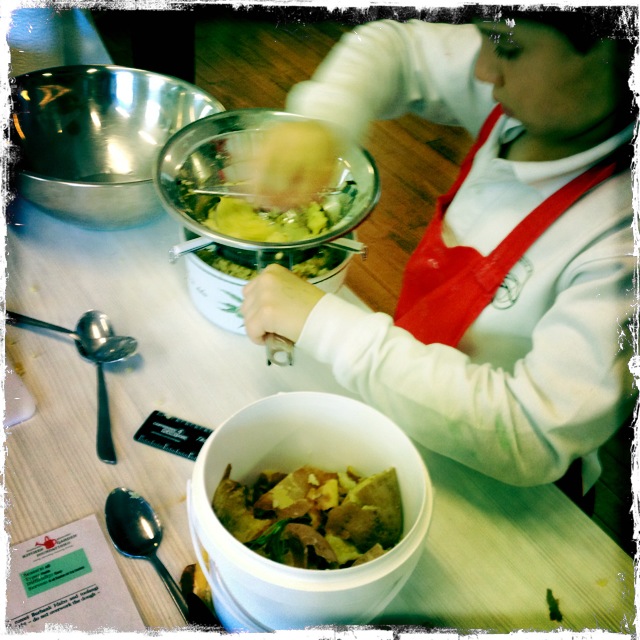
We  all had such a fab time in this first kitchen garden school holiday program! The children were so keen, so well-behaved, and SO helpful!

SCHOOL HOLIDAY PROGRAM MENU

Introduction – Knife Licences – Chook care

MORNING TEA

Pumpkin, spinach & feta frittate – Rhubarb & mint muffins – Lemongrass tisane

 Garden walk – Harvesting

 LUNCH

Linguine with cavolo nero and herb sauce – Pizza with rocket, bocconcini and garden herbs – Our winter salad

Seeds – Composting – Sustainability

Watch & Grow Project

And these are some of the things they did during the day-long program:

  • Earned their knife licences by displaying ‘bear paw’ & ‘spider crab’ hand positions and understanding how to behave around knives, and also how to carry, hold and clean them;
  • Followed recipes from beginning to end and understood all the procedures;
  • Made pizza and pasta dough from scratch;
  • Tended to the chooks;
  • Explored their five senses with the garden walk-around and herb identification;
  • Pounded the mortar & pestle, whizzed the stand mixer, sliced the mezzaluna, wheeled the pizza cutter;
  • Sautéed, boiled, fried, baked, stirred, tossed, spooned, grated, melted, brushed, rolled, proved, weighed, measured, chopped, sliced, diced, beat, whisked, juiced, folded, and more;
  • Cleared as they went, washed up, dried up, set the cutlery, the glasses, the water jugs… and ate! And then cleared the tables and swept up;
  • Reinforced the belief to live sustainable lives: that is to try and remember to re-use, recycle or renew when possible;
  • Learnt about compost ‘lasagne’;
  • Understood the importance of seasonal and local produce;
  • And worked fabulously as a team, displaying focus and willingness to help!

We hope to see all the children again,and to welcome heaps more in the next holidays… and look out for all the recipes in the next few posts!

Categories: Kitchen Garden, School Holiday Program | Tags: , , , , , , , , , , , | Leave a comment

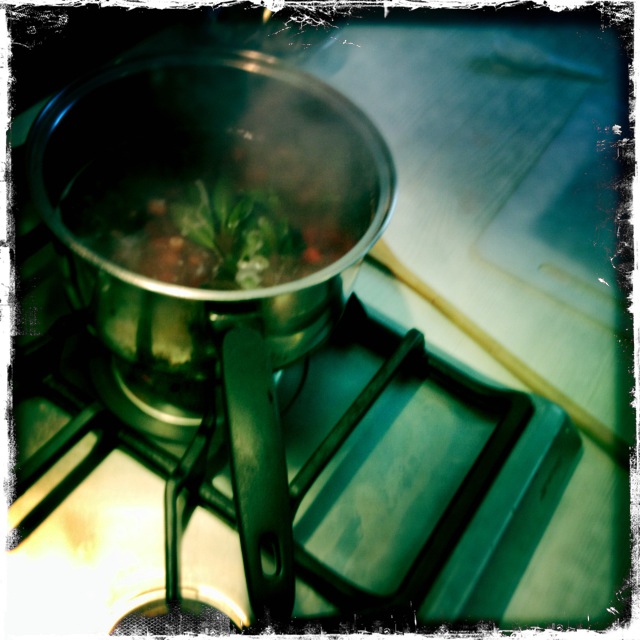
Ribollita

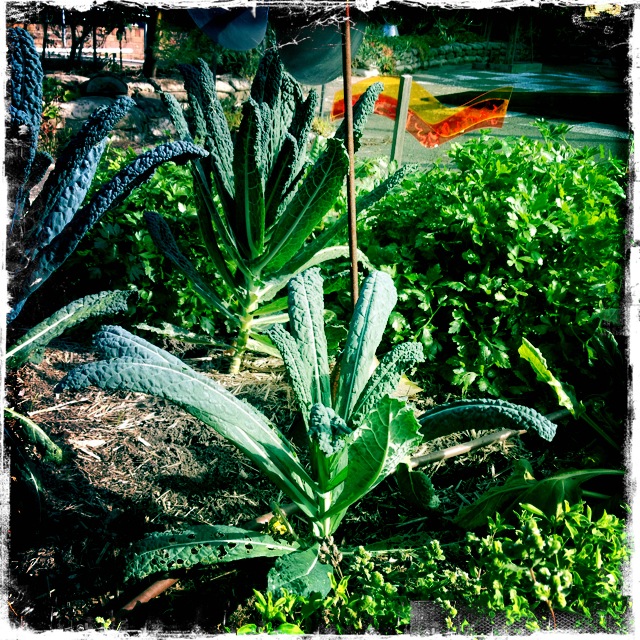
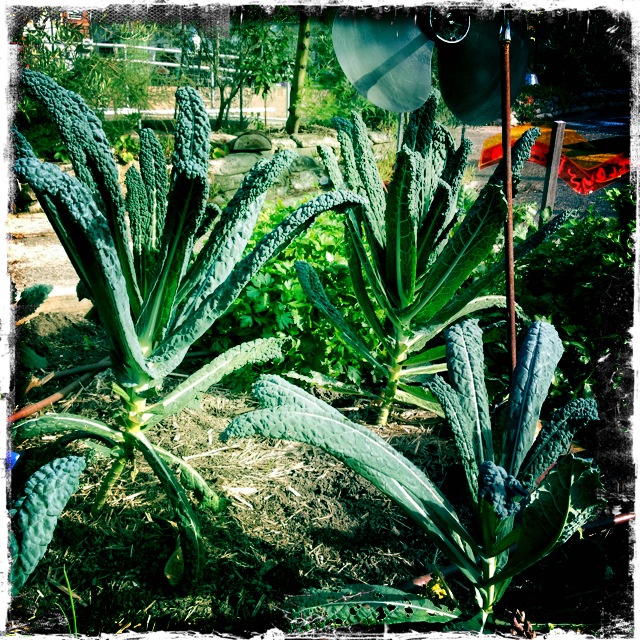
Our kitchen garden Tuscan kale

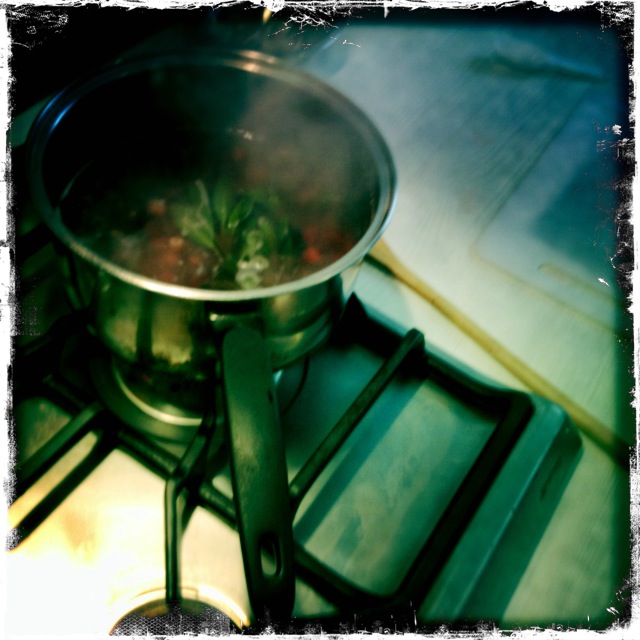
From the garden: parsley, celery, carrots, cavolo nero

Recipe source: adapted from a recipe by Ruth Rogers in The River Café Cookbook

…………………………………………………………………………………………………………………………………………………………………………………………………….

Ribollita is a famous Tuscan soup. Like a lot of European cooking, the soup has peasant origins. It was originally made by reheating (ie. reboiling = ribollita) the leftovers from the previous day. Some sources date it back to the Middle Ages, when the servants gathered up food-soaked bread trenchers from feudal lords’ banquets and boiled them for their own dinners.

Equipment:

  • Colander
  • Medium saucepan
  • Chopping board & small knife
  • Large heavy-based saucepan
  • Salad spinner, colander
  • Potato peeler
  • Garlic press, fork
  • Measures: tablespoon
  • Wooden spoon
  • Serving bowls
  • Ladle
Ingredients:

  • 125g dried cannellini or borlotti beans
  • 1 tablespoon bicarbonate of soda
  • 5 cloves garlic, 2 red onions
  • Small branch sage (about 10 leaves)
  • 4 tablespoon olive oil plus extra for drizzling
  • 1 bunch flat-leaf parsley
  • 1 head celery, 2 carrots
  • 1 tin chopped tomatoes
  • 1kg cavolo nero
  • ½ loaf stale ciabatta bread
  • Flaked salt & black pepper

What to do:

  • The night before, place your dried beans in a large bowl and fill the bowl with cold water and the bicarb.
  • The next day, rinse and drain the beans, then put them into the medium saucepan with about 3cm cold water to cover. Add 3 garlic cloves, a branch of sage, a teaspoon of salt & grind of pepper. Set on a medium heat and simmer until beans are soft – could be anything from 20 minutes to an hour.
  • Meanwhile, wash and spin dry the parsley and chop finely.
  • Wash and shake the celery dry then chop stalks and leaves into thin strips.
  • Wash and peel the carrots, chop into small pieces.
  • Peel and chop the onions into small dice.
  • Peel and squeeze the garlic cloves through the press.
  • Heat the oil in the large saucepan and fry the parsley, garlic, celery, carrot and onion together for about 10 minutes until the flavours combine.
  • Add the tomatoes and continue to cook on a gentle heat for a further 10 minutes.
  • Meanwhile wash the cavolo nero, remove the stalks and coarsely chop the leaves. Add them to the pan. Stir in half of the beans with enough of their liquid to cover. Simmer for 30 minutes.
  • Carefully cut the crusts from the loaf with a breadknife and tear the bread into pieces.
  • Mash the remaining beans with the back of the fork and return to the soup with just enough boiling water to make the soup liquid. Add the bread, a generous amount of olive oil, and season with salt and pepper. As exact amounts are not possible, you must balance the amount of liquid to bread so that soup is very thick. Ladle out into your bowls.

Notes: Why do we soak the beans overnight? What does cavolo nero mean? What are other names for cavolo nero? What other soup names do you know?

Categories: Kitchen Garden, Recipe | Tags: , , , , , , , | Leave a comment

Rosemary & thyme grissini

Fresh from the garden: rosemary, thyme 

Recipe source: adapted from The Cook and the Chef TV program

………………………………………………………………………………………………………………………………………………

A simple & fun breadstick-making exercise – I’ve found that the thinner you make the grissini, the crunchier and more delicious they are. It also pays to knead the dough well too. These are fab with the hummus…

Equipment:

  • Kitchen towel
  • Chopping board
  • Large knife
  • Large bowl
  • Large spoon
  • Measuring jug
  • 2 baking trays
  • Pastry brush


Ingredients:

  • 2 cups plain flour
  • ½ teaspoon cooking salt
  • Large sprig rosemary
  • 4 or 5 sprigs thyme
  • 1 teaspoon yeast
  • ½ teaspoon brown sugar
  • 1 tablespoon extra virgin olive oil
  • 100ml lukewarm water
  • A pinch or two of flaked salt

What to do:

  • Preheat oven to 180°C
  • Wash & dry herbs thoroughly.
  • Strip herbs from stalks and chop up finely to yield 2 tablespoons of herbs.
  • Mix all the dry ingredients (except for the flaked salt) and herbs together in a large bowl.
  • Add the water and olive oil and knead together until a smooth dough is formed – this might take between five and ten minutes. If the dough is too wet just add some more flour, bit by bit.
  • Brush baking trays with a little olive oil.
  • Flatten the dough out and roll into a round pizza shape. Divide into halves, then quarters, and then again and again until you get 16 pieces of ‘pie’.
  • Roll each ball into a thin cigar shape, break into 2 & place evenly onto the baking trays.
  • Sprinkle the whole tray with a large pinch of salt.
  • Carefully slip the trays into the oven & bake for about 15 minutes until golden brown.

Notes: Grissini are thought to have been invented in Italy in the 17th century – what other dishes have originated in Italy?


Categories: Kitchen Garden, Recipe | Tags: , , , , , , , , | Leave a comment

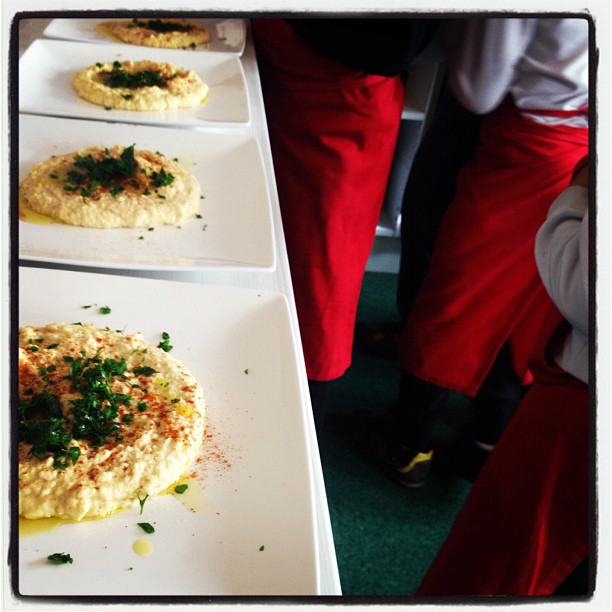
Yotam Ottolenghi’s Hummus

Fresh from the garden: lemon, sage, parsley

Recipe source: adapted from a recipe by Yotam Ottolenghi’s beautiful and inspirational book, Plenty

………………………………………………………………………………………………………………………………………………

This recipe is really worthy setting the reminder app on your phone to soak the beans… it is totally delicious and I defy you not to keep eating the whole lot… and why not? It’s really only chickpeas, tahini and water! Hooray!

Equipment:

  • Scales
  • Glass bowl
  • Colander, sieve
  • Medium saucepan
  • Chopping board & knife
  • Salad spinner
  • Lemon juicer
  • Garlic press
  • Food processor
  • Spatula
  • Measures – tablespoon, teaspoon
  • 4 small serving plates
Ingredients:

  • 250g dried chickpeas
  • 1 tablespoon bicarbonate of soda
  • 1 small branch of sage
  • 125g tahini paste
  • ½ a lemon
  • 6 garlic cloves
  • Extra-virgin olive oil
  • Small handful parsley
  • 1 teaspoon sweet paprika
  • Flaked salt and black pepper

What to do:

  • Before cooking the chickpeas you will need to soak them overnight. Place them in a large non-metallic bowl with double their volume of water and a tablespoon of bicarb.

Start of lesson:

  • Drain the chickpeas into the colander and rinse them well, then put them into the medium saucepan with about 3cm cold water to cover.
  • Rinse the sage, keeping the branch whole, and shake dry. Peel 3 of the garlic cloves and add them, whole, to the saucepan. Also add the branch of sage and a grind of pepper. Bring to the boil, then set on a low heat & simmer for about 30 minutes until totally soft and easy to mush.
  • Juice the lemon half. Crush the remaining 3 cloves of garlic.
  • Wash and spin dry the parsley carefully, pick off the leaves and chop finely.
  • Drain the chickpeas into the sieve over a clean bowl, reserving the cooking liquid. Transfer them & the cooked garlic cloves to the food processor, keeping a few to garnish at the end, and add the tahini, a tablespoon of lemon juice, the crushed garlic, and ½ teaspoon salt. Blitz for a minute or two until totally smooth.
  • Add some of the cooking liquid and blitz again. You want the mixture to be very soft, almost runny, but just holding its shape. Taste and add more salt if you like.
  • To serve, spread the warm hummus onto your serving plates, drizzle with a little stream of olive oil, a sprinkle of paprika, the reserved chickpeas and the chopped parsley.

Notes: What are pulses? Can you name any others? What is tahini? Where does hummus come from? What else you could eat hummus with?

Categories: Kitchen Garden, Recipe | Tags: , , , , , , , | Leave a comment

Hearty cabbage & chickpea soup

Winter = soup! This is lovely hearty way to get stuck into some cold weather… I used some Nolans Road organic kabuli chickpeas (from Wholefoods House, Woollahra) that were fantastic & only needed about 20 minutes cooking after soaking all night… and also ate it with some toasted day old Iggy’s country round sourdough (just seen) of course!

Our Kitchen Garden soup

Equipment:

  • Bowls – glass, large, med
  • Garlic press
  • Chopping board
  • Stockpot
  • Medium saucepan
  • Colander, sieve
  • Measures – tablespoon, jug
  • Wooden spoon, ladle
  • Serving bowls


Ingredients:

  • 150g dried chickpeas
  • 1 tablespoon bicarbonate of soda
  • A small branch of sage
  • 6 cloves garlic
  • 2 leeks
  • 1 onion
  • 1 head cabbage
  • A small handful parsley
  • 2 tablespoons olive oil
  • Flaked salt & black pepper
  • 2 litres vegetable stock
  • 1 tin chopped tomatoes

What to do:

  • The night before, place your dried chickpeas in the glass bowl and fill the bowl with cold water to double the height of the chickpeas, add the bicarb and stir. They will need to soak for at least 12 hours.
  • At the start of the lesson:
  • Drain the chickpeas into the colander and rinse them well, then put them into the medium saucepan with about 3cm cold water to cover.
  • Rinse the sage, keeping the branch whole, and shake dry. Peel 3 of the garlic cloves and add them, whole, to the saucepan. Also add the branch of sage, a teaspoon of salt & grind of pepper. Set on a medium heat and simmer for 2o minutes.
  • Meanwhile wash the leeks, scoring and peeling the outer layers off to look for hidden dirt, and then finely chop the leeks into thin slices.
  • Chop the cabbage in half and wash, checking for slugs or dirt to clean! Chop finely, cutting the core into small slivers.
  • Peel and chop the onion into small dice. Squeeze the remaining 3 cloves of garlic through the press. Wash the parsley and spin dry. Finely chop.
  • In the large stockpot, heat the olive oil over medium heat. Stir in the onion, leeks and garlic and cook GENTLY until onion is transparent, about 5 minutes.
  • Stir in stock or water, with a teaspoon of salt and grind of pepper. Bring to the boil, then stir in bouillon powder if using, and the cabbage. Simmer until cabbage wilts, about 10 minutes.
  • Chickpeas: After 20 minutes set the sieve over a heatproof bowl and carefully pour the chickpeas and their liquid in to drain, then scoop the chickpeas out into the cabbage soup with a cup of the cooking liquid.
  • Stir in the tomatoes and return to the boil, then simmer for about 20 minutes stirring often.
  • Check for seasoning and add in the chopped parsley. Ladle into serving bowls.
Categories: Kitchen Garden, Recipe | Tags: , , , , , , , , | Leave a comment

Kitchen News – June 7th 2012

Well that’s definitely it for summer then! With crazy winds and notice to tidy up gutters and garden toys we’ve well and truly launched into the coldest season…

And that’s fabulous news in the kitchen!

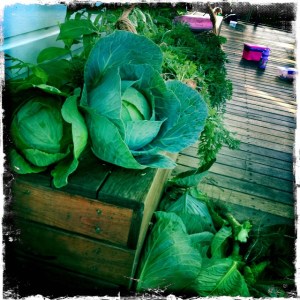
A hit this week is our Hearty Cabbage & Chickpea soup, with veggies left chunky and our knife skills put to the test… also using up our bumper crop of cabbage: the crunchy, slippery goodness of iceberg Sang choi bao with stir-fried cabbage & crispy kale. Fingerlicking good… passed the dripping-soy-sauce-down-the-arm test! We’ve also been experimenting with a gluten and lactose-free version of Schiacciata con l’uva e olio d’oliva, and I can confidently say that it was gobbled up by everybody! And last but not least, our ever-morphing Our winter salad with poached eggs & baby beets – simple and delicious!

Placing the grapes just so...

And click on these links for recipes from the last few weeks: Gnocchi with burnt butter & sage and Broccoli and garden herb pizza. If you need any other recipes and don’t see them on this site, drop me a line here & I’ll put them up for you!

What you lookin' at?

Happy souping everybody!

And don’t forget, spaces are filling fast for Our Kitchen Garden School Holiday Program… Head on over to the page & check it out!

Categories: Kitchen Garden, Recipe | Tags: , , , , , , , , , , , , | Leave a comment

Gnocchi with burnt butter and sage

Passing potatoes through the mouli for gnocchi

The volunteers occasionally freak out when I tell them they’re making gnocchi. But I say, have no fear! It’s child’s play… as long as the spuds cool down enough once they’re out of the oven & you help a bit with getting the gnocchi out of the pot, it’s a great dish to do with children as there’s a few different procedures & fun (and teamwork required) playing with the mouli to get the potatoes mashed… and who doesn’t love a bit of playdoh-style rolling out with the dough? I do anyway…

Gnocchi with burnt butter and sage

Fresh from the garden: potatoes, sage, eggs

Recipe source: Melissa, kitchen specialist at Bondi PS

………………………………………………………………………………………………………………………………………………

Floury potatoes work best here: nicola, desiree, pink eye, russet Burbank Idaho and toolangi delight are all great varieties. The trick is to keep your work light – do not overwork the dough – and your gnocchi will be light too.

Equipment:

  • Baking tray
  • Paper towel
  • Large saucepan with lid
  • Small saucepan
  • Large knife, spoon
  • Oven glove or tea towel
  • Ricer, mouli or sieve
  • Bowls – 1 large, 4 small bowls
  • Scales, grater
  • Baking sheet
  • Slotted spoon
  • Serving plates
Ingredients:

  • 1.5kg floury potatoes
  • 150g plain flour plus extra
  • 2 egg yolks
  • ½ teaspoon salt
  • 1 nutmeg
  • 150g parmesan
  • 125g salted butter
  • Small branch of sage


What to do:

For the gnocchi:

  • Preheat the oven to 180°C.
  • Scrub potatoes well & wipe dry with paper towel. Prick all over with a fork and bake in their jackets in the oven for an hour until tender to squeeze.
  • Put the large pot of water on high heat to boil.
  • Cut potatoes in half. Hold half in an oven glove or folded tea towel & scoop out the flesh into a large bowl then press into the ricer, mouli or sieve to cool.
  • Grate parmesan into a small bowl. Grate nutmeg into a small bowl to make about ¼ teaspoon and wash and carefully dry the sage, picking off the leaves.
  • Make a well in the centre of potato mound and add a handful of flour, the yolks, salt, nutmeg and 50g of the parmesan.
  • Fold continuously toward centre, gradually adding more flour until it comes together without being sticky. Allow to rest for 5 minutes.
  • Roll some mixture into a sausage shape about 3cm in diameter and cut off 3cm pieces.
  • Lightly flour the baking sheet. Roll each piece on the back of a fork using thumb and forefinger & place gnocchi there until ready to use
  • Poach gnocchi in a large pot of salted boiling water until they rise to the surface, then scoop onto your serving plates.

For the burnt butter:

  • Chop the butter into small pieces and then in the small saucepan heat the butter on medium until it develops a nut-brown colour.
  • Add sage and continue cooking for 30 seconds until the leaves are crisp.
  • Sprinkle remaining parmesan onto the gnocchi and then drizzle on the sizzling crispy sage & butter.


Categories: Kitchen Garden, Recipe | Tags: , , , , , , , , , | Leave a comment

Cannellini beans with sage, garlic and rocket

We’ve recently discovered the joys of cooking our own soaked beans – the only thing is to remember to start at least 12 hours before as the beans need that soaking time.  These accompaniments are very basic but so delicious & perfect for a one-bowl supper in front of Masterchef! You can also substitute borlotti beans for an earthier dish…

Cannellini beans with sage, garlic and rocket

From the garden: sage, parsley, rocket

Recipe source: Melissa, kitchen specialist Bondi PS

………………………………………………………………………………………………………………………………………………

Soaking dried beans and then cooking them the next day is such a rewarding experience – and these simple accompaniments make the beans a lovely autumn dish. Serve with crusty sourdough!

Equipment:

  • Bowls – large, heatproof
  • Colander
  • 2 saucepans – medium
  • Kitchen towel
  • Measures: tablespoon, jug
  • Chopping board & knife
  • Sieve
  • Microplane grater
  • Serving bowls


Ingredients:

  • 250g dried cannellini beans
  • 1 tablespoon bicarbonate of soda
  • A small branch of sage
  • A small bunch of flat-leaf parsley
  • A handful of rocket
  • Cooking salt
  • Flaked salt & black pepper
  • 3 garlic cloves
  • A splash of extra-virgin olive oil
  • 50g grana padano cheese

What to do:

  • The night before, place your dried beans in the large bowl and fill the bowl with cold water well over the beans, add the bicarb and stir. They will need to soak for at least 12 hours.
  • At the start of your lesson, drain the beans into the colander and rinse them well, then put them into the medium saucepan with about 3cm cold water to cover.
  • Rinse the sage, keeping the branch whole, and shake dry. Peel 3 of the garlic cloves and add them, whole, to the saucepan. Also add the branch of sage, a teaspoon of salt & grind of pepper. Set on a medium heat and simmer until beans are soft, probably about 2o minutes.
  • Meanwhile wash the parsley and spin dry. Discarding the stalks, finely chop the leaves.
  • Wash the rocket and spin that dry too. Chop the stalks in half or thirds depending on the size.
  • When the beans are soft, turn off the heat and let them cool slightly in the water for a minute or two.
  • Set the sieve over a heatproof bowl and carefully pour the beans and their liquid in to drain.
  • Scrape the beans into a large bowl and toss in the rocket to wilt. Add a cup of cooking liquid back in with a splash of olive oil and stir.
  • Check for seasoning, then sprinkle over the chopped parsley and divide among serving bowls. Grate over some parmesan cheese and serve.
Categories: Kitchen Garden, Recipe | Tags: , , , , , , , , , , , | Leave a comment

Rocket & coriander soup

Winter has hit with force… I juggle the washing line with obsessive compulsion, trying to dodge the showers and sprinkles and hoping for a ray or two of sun to dry the tea towels and aprons. And sit at this computer with a thick scarf double-draped around my neck, and dream of soup… this recipe has been slurped up greedily in the last two weeks and is a cinch to make. Soup on!

Fresh from the garden: rocket, potatoes, spring onions, coriander, bay leaves

Recipe source: Melissa, kitchen specialist at Bondi PS

………………………………………………………………………………………………………………………………………………

Soups have always been a popular dish for the students at Bondi Public – no matter how green they are (the soups, not the kids!) And it’s fun to prepare, with many different procedures and fun equipment.

Equipment:

  • Salad spinner
  • Bowls – large and medium
  • Potato peelers
  • Chopping board & knife
  • Garlic press
  • Large stockpot
  • Wooden spoon
  • Handheld mixer
  • Ladle
  • Serving bowls
Ingredients:

  • 4 spring onions
  • 1kg waxy potatoes
  • 1 big bunch rocket
  • 6 cloves garlic
  • 60g unsalted butter
  • 2 bay leaves
  • Small bunch of coriander
  • 1.5lt water
  • Cooking salt
  • Flaked salt and black pepper

What to do:

  • Wash and trim the spring onions, removing & discarding the tough outer layer. Slice into 1cm bits.
  • Peel potatoes and cut into 2cm cubes.
  • Peel and squeeze the garlic cloves through the garlic press.
  • Wash the rocket in several changes of water, spin dry and remove & chop into ribbons.
  • Melt butter in the large stockpot over medium heat and sauté spring onion and garlic for 2 minutes.
  • Add the potato cubes, a teaspoon of cooking salt and the bay leaves and stir a few times with the wooden spoon so that the potato sweats in the butter.
  • Add the water, bring to a simmer over medium heat then cover and cook gently over low heat for 10 minutes.
  • Meanwhile wash and spin dry the coriander and then chop the stalks & leaves really finely.
  • After 2 minutes check that the potato is tender, then stir in the chopped rocket, increase heat to medium and cook for 2 minutes. Remove the bay leaves and turn heat off, adding a good grind of pepper.
  • With dry hands, plug in the handheld mixer and carefully whizz the soup until it is silky smooth.
  • Taste for correct seasoning, sprinkle in the coriander and ladle into bowls to serve.

Notes: What other vegetables can be used for soup? How many different procedures are there in this recipe? Why do we want the potato to ‘sweat’? Why do we take out the bay leaves?


Categories: Kitchen Garden, Recipe | Tags: , , , , , , , | Leave a comment

Schiacciata con l’uva

This recipe was a great hit last week – at school and at home! We rarely cook sweet dishes but when we do, the children obviously love it…  I changed the original recipe calling for plain flour and butter to gluten-free flour and olive oil so that our coeliac and lactose-intolerant friends could also enjoy some baked goodies for a change. I hope you enjoy it too… happy baking!

Schiacciata con l’uva (sweet grape focaccia)

Fresh from the garden: grapes, eggs

Recipe source: adapted from a recipe by Jill Dupleix

………………………………………………………………………………………………………………………………………………

‘This is part shortbread & part cake, and is a very rustic, simple way to enjoy the last grapes of the season.’ And is also dairy and gluten-free!

Equipment:

  • Scales
  • Small saucepan
  • Sieve or sifter
  • Bowl – large, small
  • Table knife & fork
  • Plastic wrap & baking paper
  • Baking sheet
  • Measures – tablespoon
  • Rolling pin
  • Chopping board & small knife
  • Skewer
  • Serving plates
Ingredients:

  • 250g gluten-free plain flour
  • 1 teaspoon gluten-free baking powder
  • 125g caster sugar, plus 2 tablespoons for topping
  • Pinch of sea salt
  • 75ml extra-virgin olive oil
  • 2 medium eggs
  • 160g mixed green and red grapes

What to do:

  • Sift flour and baking powder into a large bowl and mix in 125g caster sugar and a pinch of salt.
  • Make a well in the centre and add the olive oil, stirring with the knife to gradually draw in the flour.
  • Lightly beat one egg at a time and add to dough, stirring until mixed. Shape into a ball (if too soft, add an extra tablespoon of sifted flour), wrap in plastic film and refrigerate for one hour to help firm it up.

At the start of the lesson:

  • Pre-heat the oven to 180C.
  • Use a floured rolling pin to lightly roll out the dough or just pat it out with floured hands into a rough oval shape on a sheet of baking paper, then transfer, on the paper, to a baking tray.
  • Wash and de-stem the grapes and cut in half lengthways. Scatter the grapes on top, half of them cut-side up, half cut-side down, pressing in lightly.
  • Scatter with remaining sugar and bake for 15 minutes until golden, and a thin skewer inserted into the middle should come out clean.
  • Turn out onto a wooden chopping board and cut into small squares or slices and place on serving plates.
  • While the schiacciata is cooking you can make the dough for the next class before cleaning up!

Notes: How many different procedures are there in this recipe? What other foreign language recipe names can you think of? Why do we use a knife to mix the dough?

Categories: Kitchen Garden, Recipe | Tags: , , , , , , , , | Leave a comment

Blog at WordPress.com.