Posts Tagged With: Herbs

Linguine with broad beans, lemon and garden herbs

Our Kitchen Garden students love making pasta – and this recipe sings of spring! It includes the dough mixture as well as instructions on how to use a pasta machine.

ourkitchengarden.net

Fresh from the garden: eggs, rocket, broad beans, lemon, marjoram, parsley, coriander, thyme
Recipe source: Melissa
Serves: 6 at home or 24 tastes

Equipment:

  • Salad spinner
  • Pasta machine
  • Scales, garlic press
  • Measures – teaspoon
  • Food processor
  • Plastic wrap
  • Chopping board & knife
  • Pastry brush, grater
  • Large stock pot & saucepan
  • Tongs, large & small bowls
  • Serving bowls
Ingredients:

  • 500g plain flour
  • 5 free-range eggs
  • Salt
  • 1kg broad beans in pod
  • A large handful of herbs
  • 1/2 cup extra-virgin olive oil
  • A lemon
  • 4 garlic cloves
  • Flaked salt & black pepper
  • 50g parmesan

What to do:

To make the pasta:

  • Weigh the flour, then combine it with a teaspoon of salt in the large bowl.
  • Crack the eggs carefully into the small bowl, discarding any shell, then add them to the flour. Mix thoroughly, then tip the dough onto a clean, dry workbench.
  • Knead the dough for a few minutes, then wrap it in plastic film and let it rest for 1 hour at room temperature.

_________________________________________________________________

  • Fill the large stockpot and the saucepan with water and set to boil on high with the lids on.
  • Fix the pasta machine to a suitable bench or table – if the surface is not thick enough you may need to place a thick book under the machine. Screw the clamp very tightly.
  • Clear a large space on the workbench alongside the pasta machine. All surfaces must be clean and dry. Press or roll the dough into a rectangle about 8 cm wide.
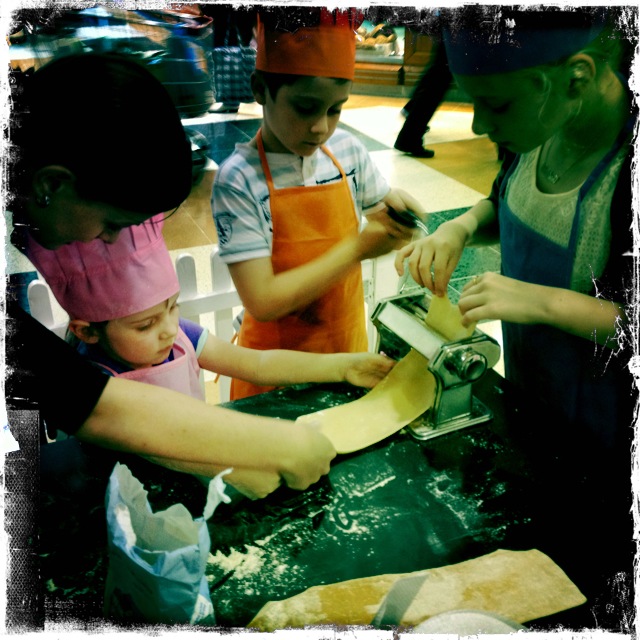
  • Set the rollers on the pasta machine to the widest setting and pass the dough through. The dough will probably look quite ragged at this stage. Fold it in 3, turn it 90 degrees and roll it through again. Go to the next-thickest setting and pass the dough through 3-4 times.
  • Continue in this manner (changing the settings and passing the dough through) until the dough has passed through the second thinnest setting. Don’t use the very thinnest setting, as the dough gets too fine and is hard to manage. If the dough gets too long to handle comfortably, cut it into 2-3 pieces using the large knife, and roll each piece separately.
  • Lay the pasta strips on a lightly floured surface & dust with a little more flour. Attach the pasta cutter to the machine and pass through the largest rollers, draping it in your hands to catch.
  • Carefully separate each strip and hang over a pole to dry.
  • Clean the pasta machine by brushing it with a dry, wide pastry brush & putting back in its box.  

To finish the dish:

  • Check that the stockpot & saucepan have been filled with water and are set on high to boil.
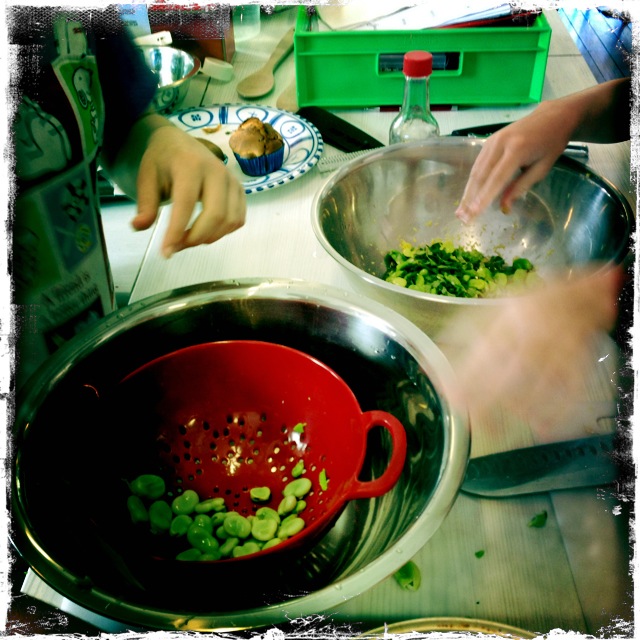
  • Pod the broad beans, discarding the outer shell into the compost and add beans to the boiling water. Fill a large bowl with cold water and have ready.
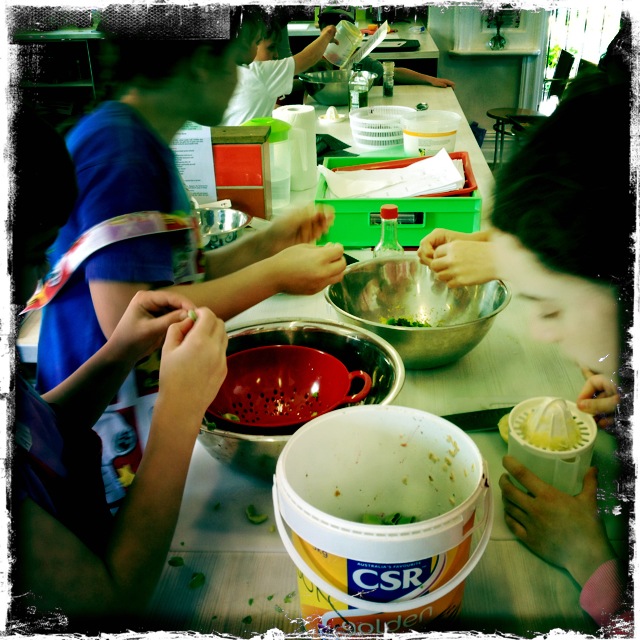
  • Boil the broad beans for 3 minutes, drain and then immediately refresh in the bowl of cold water. Drain again and double-pod by slipping the outer shell off into the compost. Put the beans into the big bowl.
  • Wash and dry the lemon and zest it. Cut the lemon in half and squeeze its juice into the big bowl too.
  • Peel the garlic cloves and squeeze them through the garlic press into the bowl too.
  • Measure the parmesan and grate what you need. Wash and spin dry the herbs and strip their leaves, chopping with the mezzaluna, then add them into the garlicky broad bean bowl.
  • Measure 1/3 cup of olive oil into the bowl and sprinkle on a few pinches of flaked salt and toss to incorporate.
  • When the stockpot has started a fast boil, gather your drying pasta on a large baking tray. Add  a tablespoon of cooking salt and then the pasta to the pot, stir once and quickly put the lid back on.
  • As soon as the pot begins to boil again, take the lid off. The pasta should only take 1 or 2 minutes to cook from boiling. Taste to check – it’s important that the pasta remains al dente and is not overcooked!
  • Using tongs, carefully pull the pasta (and some of its cooking liquid) out and into the big lemony bowl, sprinkle half the parmesan on and toss thoroughly to incorporate.
  • Divide into serving bowls, sprinkle the remaining parmesan on and eat immediately!

Notes: Never wash the pasta machine – it will rust! Just brush down with a strong brush to remove the leftover dough.
 

Categories: Kitchen Garden, Recipe | Tags: , , , , , , , , , , | Leave a comment

Asparagus, feta and sweet potato frittate

You can also use pumpkin in this recipe instead of sweet potato: either works well. You can also cook one big frittata in a frying pan over heat and then finish it under the grill, but we pour ours into muffin pans to oven-bake… and add some of our lovely Bondi herbs for an aromatic twist.

ourkitchengarden.net

Fresh from the garden: eggs, asparagus, sweet potato, marjoram, thyme
Recipe source: Melissa
Makes: 12 large or 24 mini fritatte

Equipment:

  • Pastry brush
  • 12-hole cupcake tin
  • Chopping board & knives
  • Potato peelers, scissors
  • Salad spinner
  • Large frying pan
  • Grater, scales
  • Wooden spoon
  • Bowls – large, med, small
  • Tongs, whisk
  • Serving plates
Ingredients:

  • Half a large sweet potato
  • Half a bunch of asparagus spears
  • Small handful marjoram and thyme sprigs
  • 2 tablespoons olive oil
  • Flaked salt and freshly ground black pepper
  • 100g feta cheese
  • 10g parmesan
  • 6 large eggs

What to do:

  • Preheat the oven to 180C.
  • With the pastry brush, paint a little olive oil into each hole of the cupcake tins to grease.
  • Peel the sweet potato and carefully chop into 1cm cubes.
  • Trim the woody ends from the asparagus and then chop or snip into 1cm pieces.
  • Wash the herbs and spin them dry. Strip the leaves from the stalks & reserve.
  • Heat the frying pan with the oil and toss in the sweet potato. Season well with salt and pepper. Cook, turning occasionally, for about 4 minutes over medium heat until the cubes are just tender and lightly golden at the sides.
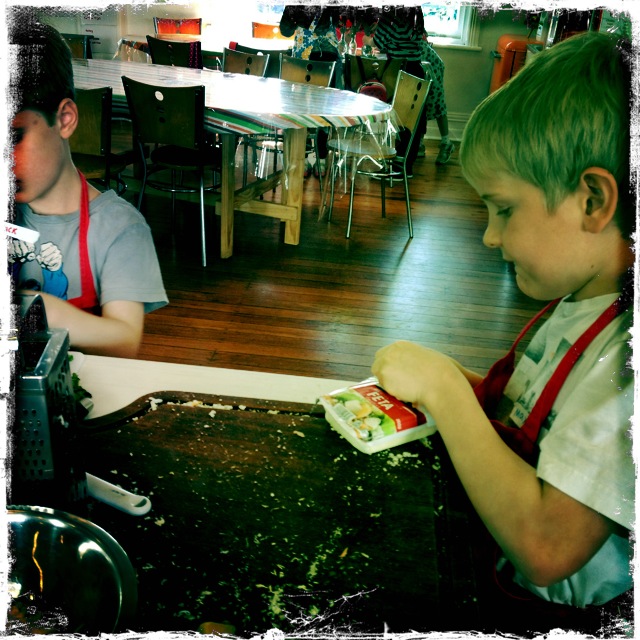
  • Meanwhile, cut the feta into small cubes and grate the parmesan.
  • Stir the asparagus into the sweet potato and cook for 2 minutes until just tender.
  • Then add the cubed feta and gently stir to mix in.
  • In the large bowl, lightly beat the eggs with the herbs, parmesan, a pinch of salt and a grind of pepper.
  • Divide the sweet potato mixture evenly into the cupcake holes, spoon the egg mixture over and bake in the oven for about 15 minutes until cooked.

Notes: Why is the name of this recipe frittate, ending in e? What other vegetables could you use in the recipe? What animals’ milk makes feta?

Categories: Kitchen Garden, Recipe | Tags: , , , , , , , , , | Leave a comment

Holiday program menu for 4 to 7 year olds

ourkitchengarden.netMENU
4 to 7 year olds

Introduction
Good morning chooks!

MORNING TEA
Asparagus, feta & sweet potato frittate
Orange & cardamom cakes with cream cheese icing
Herbal tea*

Garden walk
Harvesting

LUNCH
Linguine with broad beans, lemon and garden herbs
Our spring salad with strawberries and flowers*

Goodbye chooks!

ourkitchengarden.net

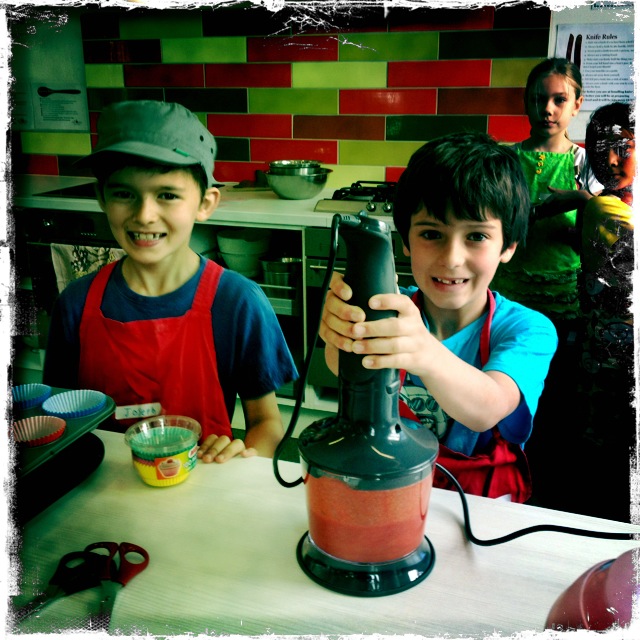
We had such a lovely day with the little ones – 17 in all with a few keen-beans as young as 3 and one tiny tot helping! Every single one got stuck in to the grating, the spinning, snipping with the scissors, podding the broad beans – and then podding them again!

ourkitchengarden.net

I perhaps over-estimated what we could all do in the time we had… luckily I had some FANTASTIC mums who jumped right in, at the ready, and helped all our wee ones have a ball of a time… next time ladies, I will simplify it a bit – and will definitely get into the garden early on to avoid the scorching heat! (who’d a thunk it feeling the chilly weather today?!) But we got it all done and some absolutely dee-licious food on the table.

ourkitchegarden.net

It just makes me so happy to see these wee sprites getting in to it, and concentrating to get their jobs done – so many of them know all the herb names and can use kitchen equipment well… we have to thank shows such as masterchef for continuing to spread the good message about cooking!

ourkitchengarden.net

So now what happens? Back to school for term 4! I’m greedily compiling the menu for the next few weeks… globe artichokes, asparagus, beetroot… watch this space for some spring motivation!!! Meanwhile the last word on this post goes to this little poppet… don’t you just want to stuff her in a  sandwich and gobble her up, shoes ‘n all?!!!

ourkitchengarden.net

Categories: Kitchen Garden, School Holiday Program | Tags: , , , , , , | Leave a comment

Our spring salad with strawberries and flowers

This is a lovely salad to pair with heavily flavoured dishes and is fun to prepare – try not to gobble all the strawberries first!

ourkitchengarden.net
Fresh from the garden: Beetroot, lettuces, rocket, strawberries, edible flowers, lemon, parsley, marjoram, thyme, coriander, oregano
Recipe source: Melissa

Equipment:

  • Medium saucepan
  • Bowls – 2 large
  • 2 salad spinners
  • Tea towel
  • Kitchen paper
  • Chopping board & knife
  • Mortar & pestle
  • Measure – 1/3 cup
  • Citrus juicer
  • Mezzaluna, teaspoon
  • Serving bowls, little tongs
Ingredients:

  • A bunch of baby beetroot
  • A large handful salad leaves
  • A few garnishing flowers
  • A handful of strawberries

Herby vinaigrette dressing

  • 1 small garlic clove
  • Flaked salt & black pepper
  • 1 lemon
  • 1/3 cup extra virgin olive oil
  • A small handful mixed herbs:
    parsley, marjoram, thyme, coriander, oregano, chives

What to do:

  • Chop off the beetroot leaves, keeping any small leaves. Scrub the beets and place them whole into the medium saucepan and fill with cold water. Set to boil for about 20 minutes.
  • Fill up the 2 big bowls with cold water & wash the salad leaves, gently dunking them a handful at a time into the water, then pulling out to see if any dirt is left behind. Repeat in fresh water until no dirt remains. Spin the leaves dry and then wipe the bowls dry.
  • Wash the flowers separately and drain on a piece of paper towel. Keep the flowers reserved, picking off the petals to use.
  • Wash and spin dry the herbs, and pick off the leaves. Wash and hull the strawberries and slice.
  • Lay out the tea towel and line it with kitchen paper. Spread the salad leaves over the paper and roll the whole lot up like a log. Keep the rolled parcel of leaves in the fridge until needed.
  • When the beetroot are tender, drain them and place under running cold water until cool. Slip the skins off with your fingers and slice up.

To make the dressing:

  • Peel the garlic clove and put it in the mortar with a large pinch of salt. Pound to a paste.
  • Juice the lemon and add the juice to the mortar (without the pips) then stir the lot with the teaspoon and scrape it into a large bowl.
  • Stir in the olive oil and grind a little pepper, then whisk the dressing lightly. Add the herbs, chopping any large leaves in the mezzaluna if needed. Add to the dressing in the large bowl.

To assemble:

  • Unwrap the parcel of salad leaves & tip them into the bowl with the flower petals, herbs, strawberries, beetroot and the dressing. Gently turn the leaves in the dressing using your hands or tongs.
  • Transfer the salad to the serving bowls and serve immediately with little tongs.
Categories: Kitchen Garden, Recipe | Tags: , , , , , , , , , , | Leave a comment

Rocket linguine with broad beans, lemon and marjoram

ourkitchengarden.net

Our Kitchen Garden students love making pasta – and this recipe sings of spring! It includes the dough mixture as well as instructions on how to use a pasta machine.

Fresh from the garden: eggs, rocket, broad beans, lemon, marjoram
Recipe source: Melissa

Equipment:

  • Salad spinner
  • Pasta machine
  • Scales, garlic press
  • Measures – teaspoon
  • Food processor
  • Plastic wrap
  • Chopping board & knife
  • Pastry brush, grater
  • Large stock pot & saucepan
  • Tongs, large bowls
  • Serving bowls
Ingredients:

  • 500g plain ‘00’ flour
  • 5 free-range eggs
  • Salt
  • 2 handfuls of rocket
  • 500g broad beans in pod
  • A handful of marjoram sprigs
  • 1/3 cup extra-virgin olive oil
  • A lemon
  • 3 garlic cloves
  • Flaked salt & black pepper
  • 50g parmesan

What to do:

To make the pasta:

  • Wash a handful of rocket thoroughly and spin dry. Discard any tough stalks and chop roughly.
  • Weigh the flour, then combine it with 1½ teaspoons of salt in the bowl of the food processor. With the motor running, add the eggs and the chopped rocket. Process for a few minutes until the dough clings together and feels quite springy.
  • Tip the dough onto a clean, dry workbench. Knead the dough for a few minutes, then wrap it in plastic film and let it rest for 1 hour at room temperature.

_________________________________________________________________

  • Fill the large stockpot and the saucepan with water and set to boil on high with the lids on.
  • Fix the pasta machine to a suitable bench or table – if the surface is not thick enough you may need to place a thick book under the machine. Screw the clamp very tightly.
  • Clear a large space on the workbench alongside the pasta machine. All surfaces must be clean and dry. Press or roll the dough into a rectangle about 8 cm wide.
  • Set the rollers on the pasta machine to the widest setting and pass the dough through. The dough will probably look quite ragged at this stage. Fold it in 3, turn it 90 degrees and roll it through again. Go to the next-thickest setting and pass the dough through 3-4 times.
  • Continue in this manner (changing the settings and passing the dough through) until the dough has passed through the second thinnest setting. Don’t use the very thinnest setting, as the dough gets too fine and is hard to manage. If the dough gets too long to handle comfortably, cut it into 2-3 pieces using the large knife, and roll each piece separately.
  • Lay the pasta strips on a lightly floured surface & dust with a little more flour. Attach the pasta cutter to the machine and pass through the largest rollers, draping it in your hands to catch.
  • Carefully separate each strip and hang over a pole to dry.
  • Clean the pasta machine by brushing it with a dry, wide pastry brush & putting back in its box.  

To finish the dish:

  • Check that the stockpot & saucepan have been filled with water and are set on high to boil.
  • Pod the broad beans, discarding the outer shell into the compost and add beans to the boiling water. Fill a large bowl with cold water and have ready.
  • Boil the broad beans for 3 minutes, drain and then immediately refresh in the bowl of cold water. Drain again and double-pod by slipping the outer shell off into the compost. Put the beans into the big bowl.
  • Wash and dry the lemon and zest it. Cut the lemon in half and squeeze its juice into the beans.
  • Peel the garlic cloves and squeeze them into the bowl too.
  • Measure the parmesan and grate what you need. Wash and spin dry the marjoram and strip leaves into the garlicky broad beans.
  • Wash and spin the remaining rocket dry and add that to the bowl.
  • Measure 1/3 cup of olive oil into the bowl and sprinkle on a few pinches of flaked salt and a good grind of pepper and toss to incorporate.
  • When the stockpot has started a fast boil, gather your drying pasta on a large baking tray. Add  a tablespoon of cooking salt and then the pasta to the pot, stir once and quickly put the lid back on.
  • As soon as the pot begins to boil again, take the lid off. The pasta should only take 2 minutes or so to cook from boiling. Taste to check – it’s important that the pasta remains al dente and is not overcooked!
  • Using tongs, carefully pull the pasta (and some of its cooking liquid) out and into the big lemony rocket bowl and toss to thoroughly incorporate.
  • Divide into serving bowls, sprinkle the parmesan on and eat immediately!

Notes: Never wash the pasta machine – it will rust! Just brush down with a strong brush to remove the leftover dough.

Categories: Kitchen Garden, Recipe | Tags: , , , , , , , , , , | Leave a comment

Herbal tisane

ourkitchengarden.net

Alice says, ‘A tisane is a fresh tea, an infusion of fragrant herbs, or flowers or spices, in boiling water. It is a soothing a refreshing finish to a meal, is complementary to most desserts, and offers a mild alternative to coffee. Tisane can be made from such flavourings as lemon verbena, mint, lemon thyme, lemon balm, hyssop, chamomile, citrus rind and ginger – alone and in combination. The one I make most is a combination of mint and lemon verbena. It is very beautiful made in a glass teapot so you can see the brilliant green leaves… I like to use small clear tea glasses, as they do in Morocco, so the lovely pale green colour is visible.’

Fresh from the garden: your choice of fresh herbs – English mint, spearmint, peppermint, lemon verbena, chamomile flowers, lemon thyme – orange, cumquat or lemon rind – ginger, cinnamon

Recipe source: adapted from a recipe by Alice Waters in The Art of Simple Food

Equipment:

  • Measuring jug
  • Saucepan with lid
  • Chopping board & knife
  • Ladle
  • Tea cups or glasses
Ingredients:

  • A large handful of herb stalks, leaves and/or flowers
  • A thumb-sized knob of ginger or a stick of two of cinnamon or cassia bark
  • 2 litres of water

What to do: 

  • Measure the water into the saucepan and heat on high to boil.
  • Wash the herbs in several changes of water and shake dry.
  • Rinse the ginger, if using, and chop into thin slices, skin on.
  • When the water in the saucepan is boiling, carefully drop in the herbs and pieces of ginger.
  • Turn the heat off and let the tisane steep for several minutes.
  • Ladle into cups or glasses to serve.

Notes: What is a tisane? What other herbal combinations can you think of?

Categories: Kitchen Garden, Recipe | Tags: , , , , , , , , , , , | Leave a comment

Strawberry & mint muffins

ourkitchengarden.net

There are a few different procedures here so lots for young chefs to do! You can use any berries but we love the juicy strawberries ripening in our garden right now… and we love the crazy herb combination!

Fresh from the garden: strawberries, mint, eggs
Recipe source: Melissa
Makes: 24

Equipment:

  • 2 x 12-hole large cupcake tins
  • Paper muffin cases
  • Bowls – large, medium
  • Colander
  • Stick blender & bowl
  • Chopping board and small knife
  • Measures – cup, ½ cup, 1/3 cup
  • Stand mixer & bowl
  • Whisk
  • Spatula
  • Skewer
  • Serving plates
Ingredients:

  • 500g strawberries
  • A small bunch mint
  • 2 teaspoons vanilla extract
  • 4 cups self-raising flour
  • 1 cup caster sugar plus 2 tablespoons
  • 4 eggs
  • 400g plain yoghurt
  • 100ml milk
  • 2/3 cup vegetable oil


 What to do:

  • Preheat the oven to 180C.
  • Line the muffin tin with the muffin cases.
  • Wash the strawberries and hull them, discarding the leaves into the compost. Divide strawberries into 2 lots.
  • Take one lot of strawberries and chop each into eight and add to a large bowl.
  • Wash the mint and strip off the leaves, discarding the stem. Tear or chop up the leaves into small pieces and add to the chopped strawberries with one tablespoon of caster sugar and 2 teaspoons of vanilla. Gently mix together and leave to soak.
  • Take the remaining berries and add them to the stick blender bowl. Sprinkle 1 tablespoon caster onto them and then blitz to puree.
  • Measure out the flour and sugar into the bowl of the stand mixer and turn on for a minute to mix.
  • Whisk the eggs in the medium bowl and then add with the yoghurt, oil and milk to the mixer. Add the strawberry puree and mix again until well combined.
  • Remove the bowl from the stand and using the spatula, gently fold through the chopped strawberries.
  • Spoon into the muffin cases evenly.
  • Carefully slide into the oven and bake for 20 minutes until a skewer inserted into the middle of the muffin comes out clean.
  • Divide among serving plates and eat!

Notes: What other herbs go well with strawberries? Why do we leave the strawberries to soak? Why should the skewer come out clean when the muffins are cooked?

Categories: Kitchen Garden, Recipe | Tags: , , , , , , , , , | Leave a comment

Our delicious holiday program!

ourkitchengarden.net

The holidays have been and gone and now it’s back to school for us all this week… I’m lucky to have had the pleasure of the company of some fabulous kids last week though, in our school holiday program in the Cottage at Bondi! We had full sessions on all the days and goodness me we made some great food!

All the children were great helpers, keen to accomplish all the tasks and procedures needed to get our dishes done – and even helped set the tables, stack the dishwashers, do the washing up and wipe the tables up as well as making morning tea AND lunch … an excellent job all ’round!

And we spent a little time in the garden, identifying and drawing the aromatic herbs that we harvested for our lunch… and potting some seedlings to take home for our watch and grow ‘Start A Veggie Patch’ project…

So here follows – over the next few days – the menus and recipes for the different sessions! Be inspired by these clever kids!

ourkitchengarden.net

Categories: Kitchen Garden, School Holiday Program | Tags: , , , , , , , , , | Leave a comment

A last minute school holiday idea – 2 places left!

We’ve got two places left for our school holiday program next week! One spot each day on Tuesday 2nd October and Wednesday 3rd October next week – jump to it if you haven’t arranged anything yet!

What could be better for your child than a day spent in the kitchen garden, learning all about spring vegetables, throwing dough, teamwork, cooking, eating, planting and chook care?!

Get in quick before somebody else does! Call me today on 0414 978 957

ourkitchengarden.net

Categories: Kitchen Garden, School Holiday Program | Tags: , , , , , , , , , | Leave a comment

Bocconcini, garden herb, rocket and red onion pizza

We love the whole gamut of pizza qualities! Making the dough is great fun (and very therapeutic…!) and we love using our big muscles to roll out the bases… We wash and spin and chop our herbs, and simmer up our own garlicky tomato sauce – with fresh tomatoes in summer and tinned toms out of season – and compile our toppings based on what’s growing…  this week it’s loads of sweet onion, marjoram, rocket and curly parsley… We grate and tear and zest, and we LOVE the smell as the pizza bakes… But most of all, we adore devouring the pizza. Mmmmm.

ourkitchengarden.net

Fresh from the garden: rocket, red & brown onions, thyme, marjoram, parsley
Recipe source: Melissa, kitchen specialist at Bondi PS

Equipment:For the pizza dough

  • Bowls – 1 small, 1 large
    • Fork
    • Scales
    • Measures: cup, tablespoon, teaspoon
    • Stand mixer with a dough hook
    • Pastry brush
    • 2 rolling pins
    • 2 baking or pizza trays
    • wide egg lifter

For the pizza topping:

  • Chopping board & knife
  • Medium frying pan
    • Measures: ¼ cup, tablespoon
  • Wooden spoon
    • Grater, tongs
  • Kitchen towel
  • Large bowl
  • Salad spinner
  • Large board for cutting pizza
  • Pizza cutters
  • Serving plates
Ingredients:For the pizza dough

  • 1 cup lukewarm water
  • 3 teaspoons instant dry yeast
  • 1 teaspoon sugar
  • 1 tablespoon extra-virgin olive oil, plus extra for greasing
  • 400g plain flour, plus extra for flouring
  • 2 teaspoons salt

For the pizza topping:

  • 1 tub bocconcini
  • 1 large red onion
  • 2 tablespoons extra-virgin olive oil
  • Small handful marjoram, parsley and thyme
  • A small handful rocket
  • 30g parmesan

Tomato sauce:

  • ¼ cup extra-virgin olive oil
  • 1 onion
  • 2 garlic cloves
  • 1 can chopped tomatoes
  • Flaked salt and black pepper

What to do:
To make the dough:

  • Place the water, yeast and sugar in the small bowl. Mix with the fork and leave for 5–10 minutes until the mixture looks frothy.
  • Add the 2 teaspoons of oil to the yeast mixture and mix well.
  • Place the flour and salt and yeast mixture in the bowl of the electric mixer and beat for at least 8 minutes, until the dough looks smooth.
  • Brush the inside of a large bowl with a little of the extra virgin olive oil, using the pastry brush.
  • Turn the pizza dough into the oiled bowl. Cover with a clean, dry tea towel and put in a draught-free place until the dough has doubled in size. This process, which is called ‘proving’, will take at least 1 hour.
  • After an hour, tip the risen dough onto the workbench and knead briefly, then shape it into a round ball and return it to the bowl. Cover the bowl with the tea towel and leave again, this time for at least 20 minutes.                                                                                 

What to do:

Start of lesson:

  • Preheat the oven to maximum. You can prepare the topping now while you wait for the oven to heat up.
  • Scatter some flour on the workbench, divide the pizza dough in two and roll to form two thin rectangles to fit the baking trays.
  • Assemble the pizzas directly onto the trays, flouring the trays a little first.

For the tomato sauce:

  • Peel and finely chop the onion and garlic.
  • Heat the olive oil in the frying pan & gently cook the onion and garlic until translucent but not brown.
  • Open the tin of tomato and add to the frying pan with a pinch of salt and a grind of pepper.
  • Simmer gently for 10 minutes, stirring occasionally, until quite reduced.

For the topping: 

  • Peel the red onion, cut in half and finely slice into rings
  • Wash and carefully dry the herb sprigs – pick the leaves, discarding the stalks. Finely chop all the herbs.
  • Wash the rocket and spin it dry. Leaving small leaves whole, chop large leaves into ribbons.
  • Peel the onion, cut in half and finely slice into rings.
  • Open the tub of bocconcini and cut or tear each ball into 3 or 4 pieces.
  • Grate the parmesan.

Assembling the pizza:

  • Using a metal spoon, swirl a couple of spoonfuls of tomato sauce onto the pizza bases, spreading so that they become totally covered.
  • Layer the onion slices on top and then lay on the bocconcini. Season well.
  • Drizzle the pizzas with the last of the oil, then slide them into the oven.

Baking the pizza:

  • Bake the pizzas for 12 minutes or until the edges are very crusty and the cheese is bubbling.
  • At this stage you can make the dough for the next class.
  • Once the pizzas are done, transfer them to a board using the wide egg lifter. Cut the pizzas crossways into small squares, and lift onto serving plates.
  • Sprinkle with the herbs and the grated parmesan and finish with the rocket.
  • Serve and eat!

Notes: What other sort of vegetables could you use in a pizza? What sort of other pizza could we make?

Categories: Kitchen Garden, Recipe | Tags: , , , , , , , , , | 1 Comment

Blog at WordPress.com.