Posts Tagged With: vegetarian

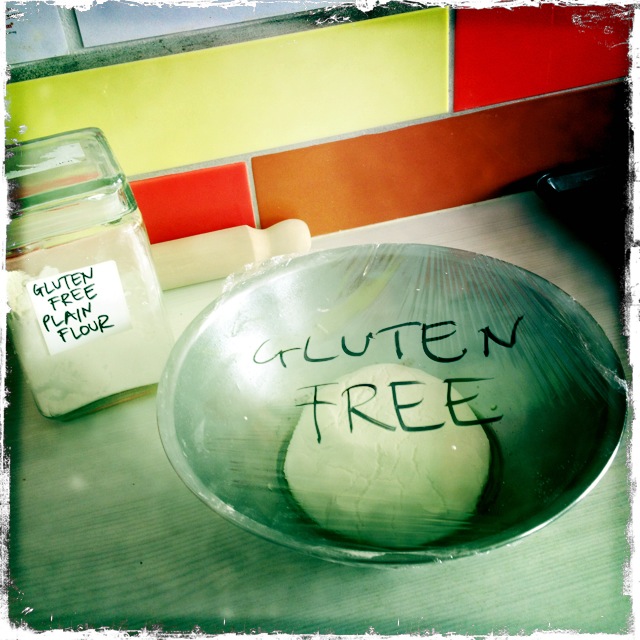
Gluten-free pizza dough

This dough is great for a coeliac’s pizza, calzone or flatbreads – just follow the instructions below and use with any of our recipes. They turn out a treat!

ourkitchengarden.net

Recipe source: Melissa
Makes: 2 large pizza or 2 calzone

Equipment:

  • Scales
  • Stand mixer, bowl & dough hook
  • Measures – cup, ½ cup, tablespoon
  • Bowls – large, medium
  • Cling film
Ingredients:

For the magic dough:

  • 2½ cups gluten-free plain flour
  • 7g dried instant yeast (GF)
  • A pinch of salt
  • 1 cup warm water
  • 1 tablespoon extra-virgin olive oil plus extra for greasing

What to do:

  • Sift flour into the bowl of the stand mixer. Add the yeast and salt and mix to combine.
  • Make a well in the centre and add measured water and oil. Mix to form a soft dough and knead for about 5-7 minutes or until smooth and elastic.
  • Place in a lightly greased bowl and cover with cling film. Stand in a warm place for 45 minutes to 1 hour or until the dough has doubled in size.
  • Using your fist, punch dough the down. Knead on a lightly floured surface until smooth and then use with your favourite pizza or flatbread recipe.

Notes: Why do we leave the dough to rise? What is this process called?

ourkitchengarden.net

Categories: Kitchen Garden, Recipe | Tags: , , , , , , , , | 2 Comments

Hugh’s Magic Dough

Bondi kids love making dough: bread, pizza and pasta regularly grace our table! This ‘magic’ dough recipe can form the base for pizza, flatbreads, breadsticks etc…

Recipe source: Hugh Fearnley-Whittingstall, Veg Every Day
Makes: 2 large pizza or 2 calzone

Equipment:

  • Scales
  • Stand mixer& dough hook
  • Measures – tablespoon, teaspoon, ½ teaspoon
  • Bowls – large, medium
  • Cling film
Ingredients:

For the magic dough:

  • 250g plain white flour
  • 250g strong white flour
  • 1½ level teaspoons fine sea salt
  • 1 teaspoon instant dried yeast
  • 1 tablespoon olive oil, plus a little extra for oiling

What to do:

For the magic dough:

  • Put the two flours into the bowl of the stand mixer with the salt and yeast. Mix well using the dough hook. Add the oil and 325ml warm water and mix to a rough dough. Knead for 5–10 minutes, until smooth. This is quite a loose and sticky dough, which is just as it should be – you get better-textured bread this way – so try not to add too much flour if you can help it, it will become less sticky as you knead.
  • Trickle a little oil into a clean bowl, add the kneaded dough and turn it in the oil so it is covered with a light film. Cover with a tea towel or cling film and leave in a warm place to rise until doubled in size – at least an hour, probably closer to two – or if using the next day, wrap bowl in cling film and put straight into the fridge to prove slowly.
  • When the dough is well risen and puffy, tip it out and ‘knock it back’ by poking it with your outstretched fingers until it collapses to its former size. It’s now ready to be shaped to your will.

Notes: Why do we leave the dough to rise? What is this process called?

Categories: Kitchen Garden, Recipe | Tags: , , , , , , , , , | 3 Comments

Mini Christmas cakes

I love this idea of mini Christmas cakes for everybody! Don’t forget to let everybody have a stir of the mixture so that they can make a wish for the coming year…

ourkitchengarden.net

Recipe source: adapted from a recipe by Kookaburra on food.com
Makes: 32

Equipment:

  • Large non-reactive bowl, spoon
  • 3 x 12 hole muffin tins
  • 36 cupcake cases
  • Peeler, grater
  • Scales, wooden spoon
  • Small saucepan, spatula
  • Bowls – large, med
  • Measures –cup, ½ cup, tablespoon
  • Sieve, skewer
Ingredients:

  • 1½ kg mixed dried fruit
  • 50ml vanilla extract or dark rum
  • 4 large eggs
  • 1 granny smith apple
  • 1 tablespoon treacle or 1 tablespoon molasses
  • 1 cup brown sugar, firmly packed
  • 250g butter
  • 1½ cups plain flour
  • ½ cup self-raising flour
  • 200g blanched almonds (if using)
  • 150g glace cherries

What to do:

The night before:

  • Place mixed fruit into a very large bowl. Add vanilla extract or rum and mix well. Cover with plastic wrap and allow to stand overnight.

Start of lesson:

  • Preheat oven to 150°C and arrange oven racks to accommodate muffin tins in the centre section of the oven.
  • Place a muffin case into each hole of the muffin tins. Peel and grate the apple. Place the butter in the small saucepan and gently heat until melted. Remove from the heat to cool. Break the eggs into a medium bowl and lightly beat.
  • One ingredient at a time, add the beaten eggs, grated apple, treacle and sugar to the fruit mixture, mixing well with a wooden spoon after each addition.
  • Sift the flours into a big bowl, then add the cooled, melted butter and flours to the mixture and mix thoroughly – make sure to let every member of the group have a stir of the mixture while they make a Christmas wish!
  • Spoon the mixture into the muffin cases, filling to almost full. Use the back of a spoon to smooth the top of each cake.
  • Press a glace cherry into the centre of each cake and, if you like, around each cherry press in 5 almonds to make ‘petals’- pointy end closest to the cherry.
  • Bake at 150°C for about 40-45 minutes or until a skewer inserted into the centre of a cake comes out clean. Cool then store in airtight tins or the refrigerator. Or eat!

Notes: They can be eaten immediately or wrapped tightly in cling film, still in their paper. They will keep for a month at least, long after the festivities (and ham) have finished!

ourkitchengarden.net

Categories: Kitchen Garden, Recipe | Tags: , , , , , , , , | Leave a comment

Festive shortbread

Jill writes, ‘Free shortbread from the restrictively narrow timeframe of Christmas, and make it throughout the year. Hallelujah.’ I think by turning these into a festive treat (however short-lasting they may be!) they can be a great present for someone too…

Recipe source: adapted from Jill Dupleix’s recipe for Anytime Shortbread in ‘Simple Food’

Makes: about 30

ourkitchengarden.net

Equipment:

  • Baking trays and paper
  • Scales
  • Bowls – 2 medium
  • Food processor
  • Flour sifter
  • Chopping board and knife
  • Cling film
  • Rolling pins
  • Festive biscuit cutters
  • Ribbon, chopstick, skewer, cellophane
Ingredients:

  • 300g unsalted butter, soft
  • 150g icing sugar
  • Pinch of sea salt
  • 300g plain flour
  • 150g rice flour or cornflour


What to do:

  • Heat the oven to 150C. Line the baking trays with baking paper.
  • Combine the butter, icing sugar and sea salt in a food processor and whiz until smooth.
  • Sift in the flour and rice flour, then pulse off and on, scraping down the sides from time to time, until the mixture gathers into a ball. Knead for a minute or two with your hands until smooth, then cut into two, wrap in cling film and refrigerate for 30 minutes. Tidy & wipe down your workspace.
  • Turn out onto a floured surface and pat or lightly roll out the dough until 1cm thick. Cut into shapes with the biscuit cutters. Reshape the scraps and cut more shapes. Place on a baking tray and prick with a fork. If you want to, you can carefully pierce a hole in each shape with a skewer or chopstick, & later thread ribbon through to hang as a decoration.
  • Bake on the middle shelf of the oven for 10 minutes, then turn the tray around and bake for another 5 to 10 minutes until touched with colour. Leave to cool on the tray.
  • Pack gently into an airtight container, thread with a length of ribbon and tie into a cellophane bag – or simply gobble them up! 

Notes: This shortbread can be stored in an airtight container for up to 2 weeks. Or spread with homemade strawberry jam and whipped cream for a take on the classic Strawberry Shortcake…

Categories: Kitchen Garden, Recipe | Tags: , , , , , , , , | Leave a comment

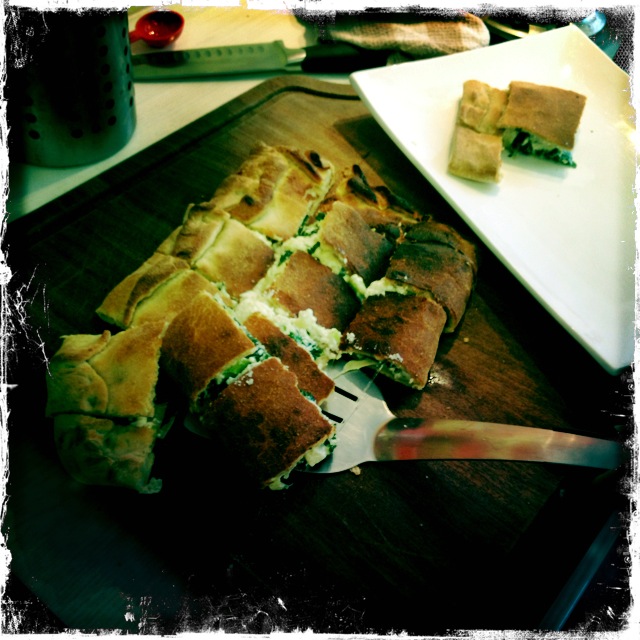
Silverbeet, spring onion and ricotta calzone

These folded pizzas are great with a homemade Napoli sauce served alongside (or even added to the filling before baking) – and you can even add prosciutto, ham or roast chicken at home. Mandatory is a leafy salad!

ourkitchengarden.net

Recipe sourceMelissa
Fresh from the garden: silverbeet or spinach, spring onion, lemon, garlic
Makes: 4 large calzone

Equipment:

  • Rolling pins
  • 2 large baking sheets
  • Chopping board & knife, scissors
  • Large frying pan
  • Garlic press, wooden spoon, tongs
  • Large bowl
  • Grater, microplane grater
  • Baking paper
  • Scales
  • Measuring cup
  • Pastry brush
  • Serving plates
Ingredients:

  • 2 recipes Hugh’s Magic Dough
  • Plain flour, for rolling out dough
  • 1kg spinach or silverbeet
  • 4 or 5 spring onions
  • 2 garlic cloves
  • 3 cups ricotta
  • 1 tub bocconcini
  • 50g parmesan
  • 1 lemon
  • Flaked salt & black pepper
  • Coarse polenta for dusting baking sheet
  • Extra-virgin olive oil

What to do:

  • Preheat oven to 230C.
  • Lightly dust the work surface and rolling pin with flour. Divide the dough into 4 and press and roll it out into 4 x large rectangles. Dust the baking sheets with a sprinkle of polenta and drape 2 dough rectangles over each tray, leaving half off adjacent edges to fold back over later.
  • Wash the spinach or silverbeet, shake dry and slice or cut the leaves from the stalks (leaving the stalks for the chooks), then slice the leaves into thin strips. Squeeze the garlic through the press. Wash the spring onions and strip the tough outer leaf away. Chop into 1cm pieces.
  • Heat the frying pan with 2 tablespoons of olive oil and add the garlic and spring onion, gently cooking for 30 seconds. Then add the strips of spinach & a pinch of salt to wilt. Cook, tossing for 3 or 4 minutes until cooked through. Squeeze any moisture out with the back of the wooden spoon and place spinach in the large bowl.
  • Drain the bocconcini & pull each ball apart into little pieces, add to the spinach with the ricotta and season with salt and pepper.Grate the parmesan and add to the spinach, and using the microplane grater, zest the lemon into the mixture.
  • Place the filling on the tray half of each oval leaving a 2cm border along the edge.
  • Fold the remaining dough over the filling until the edges line up and pinch the edges together to seal. Gently roll the pinched edges under to form a rim and brush the tops with olive oil.
  • Bake for 15/20 minutes until golden brown and the centre is hot and melted, rotating midway through cooking.

 ourkitchengarden.net

Categories: Kitchen Garden, Recipe | Tags: , , , , , , , , , | Leave a comment

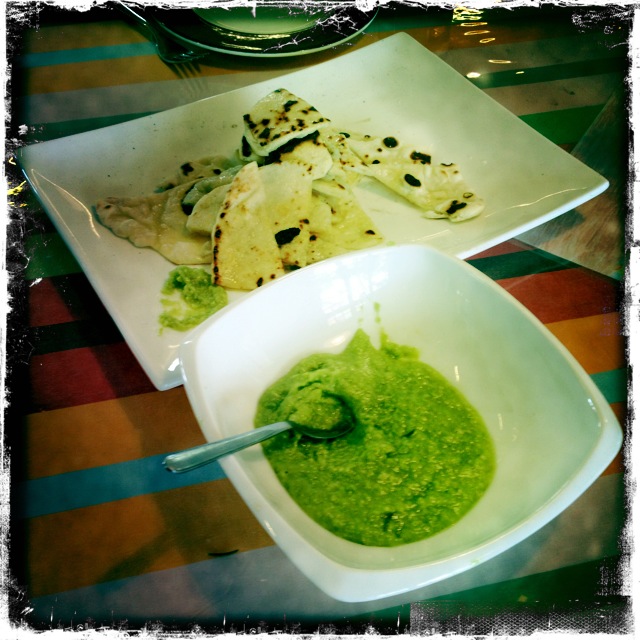
River Cottage garlicky flatbreads

Bondi kids love making dough: bread, pizza and pasta regularly grace our table! And we also love, love, love garlicky anything! This dish is great for mopping up any dip, sauce or soup, but especially good for the broad bean puree…

ourkitchengarden.net

Fresh from the garden: garlic
Recipe source: Hugh Fearnley-Whittingstall, Veg Every Day
Serves: 8 or 30 tastes

Equipment:

  • Measures – jug,tablespoon, teaspoon, ½ teaspoon
  • Stand mixer
  • Scales
  • Bowls – large, medium
  • Heavy non-stick frying pan
  • Rolling pins
  • Tongs
  • Tea towels
  • Plate & paper towel
  • Serving plates
Ingredients:For the magic dough:

  • 250g plain white flour
  • 250g strong white flour
  • 1½ level teaspoons fine sea salt
  • 1 teaspoon instant dried yeast
  • 1 tablespoon olive oil, plus a little extra for oiling

For the garlic oil:

  • About 120ml olive oil
  • 1 fat garlic clove

What to do:

For the magic dough:

  • Put the two flours into the bowl of the stand mixer with the salt and yeast. Mix well using the dough hook. Add the oil and 325ml warm water and mix to a rough dough. Knead for 5–10 minutes, until smooth. This is quite a loose and sticky dough, which is just as it should be – you get better-textured bread this way – so try not to add too much flour if you can help it, it will become less sticky as you knead.
  • Trickle a little oil into a clean bowl, add the kneaded dough and turn it in the oil so it is covered with a light film. Cover with a tea towel and leave in a warm place to rise until doubled in size – at least an hour, probably closer to two.
  • When the dough is well risen and puffy, tip it out and ‘knock it back’ by poking it with your outstretched fingers until it collapses to its former size. It’s now ready to be shaped to your will.

For the garlic oil:

  • Peel the garlic clove and very finely chop it. Combine the olive oil and garlic in a frying pan and place over a medium heat. You’re not going to fry it, just warm it through to take the edge off the garlic. So as soon as you see the first signs of a sizzle, pour the oil and garlic out of the pan into a small bowl to infuse. Wipe the frying pan clean.

For the flatbreads:

  • After ‘knocking back’ the risen dough, take lemon-sized balls and roll them into 8 flat circles, 2mm thick. Leave to rest for 5 minutes.
  • Meanwhile heat a heavy-based, non-stick frying pan over high heat until smoking hot.
  • Carefully lay one flatbread in the pan and cook for about 2 minutes, until bubbly on top and patched with brown spots on the base. Flip over and cook for 1-2 minutes more. Remove immediately to a plate and trickle with some of the garlicky oil. Scatter with a little flaked salt too. Repeat with all the dough. Cut the oiled flatbreads into wedges to serve.

Notes: Why do we leave the dough to rise? What is this process called?

ourkitchengarden.net

Categories: Kitchen Garden, Recipe | Tags: , , , , , , , , , , , , , | 1 Comment

Broad bean puree

Alice says, ‘As the season progresses, the beans continue to mature, and they become larger and starchier. At this point they can be popped out of their pods, skinned and cooked into a luscious, bright green puree that I adore slathering on crisp croutons or serving alongside roasted meats.’

ourkitchengarden.net

Fresh from the garden: broad beans, garlic, rosemary
Recipe source: Alice Waters, The Art of Simple Food
Serves: 8 or 28 tastes

Equipment:

  • Medium heavy-bottomed saucepan
  • Colander
  • Scales
  • Bowls – 3 big, medium
  • Chopping board & knife
  • Measures – jug
  • Paper towel
  • Food mill
  • Spoon
  • Serving bowls
Ingredients:

  • 1.8kg broad beans in shell
  • 100ml olive oil
  • 4 garlic cloves
  • 1 branch rosemary
  • Flaked salt
  • 100ml water
  • 50ml extra-virgin olive oil

 What to do:

  • Bring a pot of water to the boil as you shell the broad beans.
  • Blanch quickly in the boiling water and then drain & cool in a bowl of cold water for a minute. Drain and pop the beans out of their skins. Wipe the saucepan clean.
  • Peel and slice the garlic cloves. Wash and wipe dry the rosemary.
  • Heat 100ml olive oil in the dry saucepan, then add the broad beans, garlic, the branch of rosemary, a pinch of salt and 100ml water, and cook until the beans are very tender, stirring occasionally, and adding more water if necessary.
  • The beans are done when they can be crushed easily with the back of a spoon, about 15 minutes. Mash with a spoon or pass them through a food mill.
  • Stir in the 50ml extra-virgin olive oil. Taste and season with salt as needed.
  • Serve right away or at room temperature.

Notes: What is another name for broad beans? What would be good to serve with the puree?

Categories: Kitchen Garden, Recipe | Tags: , , , , , , , , , , , , | Leave a comment

Carrot and fennel soup

We love all the different combinations of vegetables that the seasons throw at us… and adding various spices can change everything! This is a lovely silky variation of soup…

ourkitchengarden.net

Fresh from the garden: carrot, fennel, onion, thyme, coriander
Recipe source: Melissa
Serves: 6 or 24 tastes

Equipment:

  • Kettle
  • Chopping board & knife
  • Scales
  • Potato peelers
  • Graters
  • Paper towel
  • Stockpot & lid
  • Measures: jug, tablespoon, teaspoon
  • Bowls – big, medium, small
  • Wooden spoon
  • Medium heavy-bottomed saucepan
  • Stick blender
  • Serving bowls
Ingredients:

  • 2 onions
  • 1 large thyme sprig
  • ½ teaspoon cumin seeds
  • 50g butter
  • 1kg carrots
  • A head of fennel
  • 1.25 litre stock (or 1 tablespoon bouillon & 1.25 litre boiling water)
  • Cooking salt
  • Flaked salt and black pepper
  • A little bunch of coriander

 What to do:

  • Fill the kettle if using and set to boil.
  • Peel and thinly slice the onions. Wash and pat dry the thyme sprig and strip off the leaves.
  • Melt the butter in the stockpot, then add the onions, the cumin and thyme, and cook over a low heat until tender for about 10 minutes.
  • Meanwhile, wash & peel the carrots, then grate them and reserve in a big bowl.
  • Wash, then top and tail the fennel, discarding the discoloured outer layer if desired. Slice the fennel as thin as you can.
  • After the 10 minutes, add the carrots & fennel to the onion and add a teaspoon of salt. Stir, then cook gently for 5 minutes with the lid on.
  • Add the stock or bouillon and water, bring to the boil then lower the heat and simmer until the carrots & fennel are tender, about 20 minutes.
  • Wash the coriander and spin dry. Pick the leaves from the stalks and very finely chop the stalks. Gently chop the leaves but leave them quite big.
  • When done, blitz with the stick blender, season to taste and serve into your bowls. Garnish with the chopped coriander.
  • Serve right away or chill overnight to serve cold the next day, perhaps with a little sour cream drizzled in…

Notes: What is bouillon? How do you make stock? Why do we leave the coriander leaves quite big?

Categories: Kitchen Garden, Recipe | Tags: , , , , , , , , , , | Leave a comment

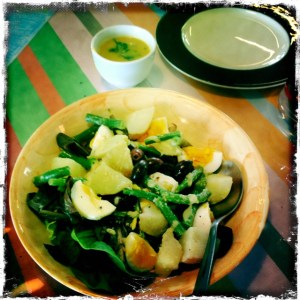
Fish-free salad Nicoise

Hugh says, ‘Without any tuna or anchovies, I guess you might upset the good people of Nice a bit with this one, but it is an exceptionally delicious and substantial salad – with plenty going on.’
ourkitchengarden.net

Fresh from the garden: new potatoes, green beans, eggs, small lettuce leaves, olives, basil, garlic
Recipe source: Hugh Fearnley-Whittingstall, Veg Every Day
Serves: 4 or 24 tastes

Equipment:

  • Scales
  • Chopping board & knife
  • Saucepans – med, small
  • Colander
  • Small jar & lid
  • Measures: tablespoon, teaspoon
  • Salad spinner
  • Serving plates
Ingredients:

  • 500g new (baby) potatoes
  • 200g green beans
  • 8 large eggs at room temperature
  • A small handful baby lettuce leaves
  • A handful small black olives
  • About 12 basil leaves
  • Flaked salt and black pepper

For the dressing:

  • ½ small garlic clove
  • 3 tablespoons olive oil
  • 1 tablespoon cider vinegar
  • 1 teaspoon Dijon mustard
  • A pinch of sugar

 What to do:

  • Wash the beans and potatoes – do not peel them! Tail the beans & chop into 3cm lengths.
  • You can cook small new potatoes whole, but cut any larger ones in half or smaller, so they’re all roughly the same size. Cover with cold water in the medium saucepan, add salt and bring to the boil. Reduce the heat and simmer for 8-12 minutes until tender, adding the beans for the last 4 minutes. Drain, tip into a bowl and leave to cool.
  • To cook the eggs, bring a small saucepan of water to the boil. Add the eggs, return to a simmer, then cook for 7 minutes. Lightly crack the shells and run the eggs under cold water for a minute or two to stop the cooking, then leave to cool. Peel and quarter the eggs.
  • To make the dressing, put all the ingredients into a screw-topped jar, seasoning with salt and pepper, and shake until emulsified.
  • Halve, quarter or thickly slice the cooked potatoes. Put them back with the beans, add some of the dressing and toss gently together.
  • Wash the lettuce & basil leaves in several changes of water. Spin-dry and then gently toss in a bowl with a little of the dressing.
  • Arrange the lettuce, potatoes, and beans on your serving plates and distribute the olives and eggs over the salad. Scatter with torn basil leaves, trickle over the remainingdressing and grind over some pepper. Serve straight away.

Notes: What does emulsified mean? What does the adjective Niçoise mean?

Categories: Kitchen Garden, Recipe | Tags: , , , , , , , , , , , , , | 1 Comment

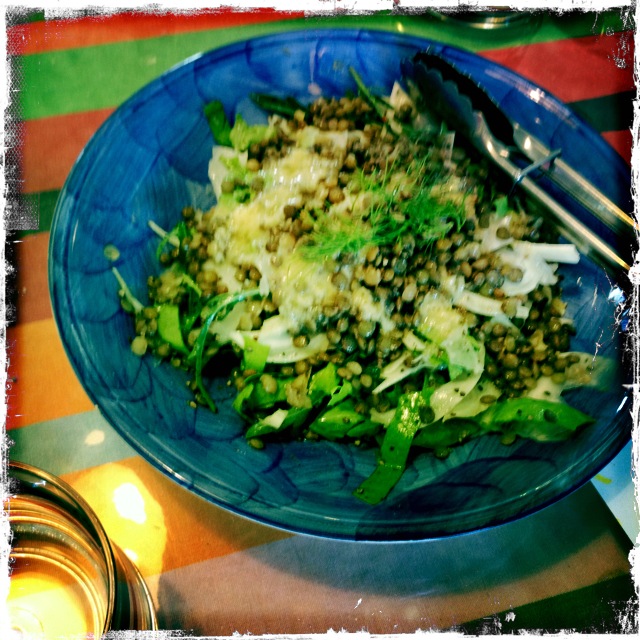
Rocket, fennel and lentil salad

I love every recipe from this book, there’s so much inspiration! I love it almost as much as our book!

ourkitchengarden.net

From the garden: rocket, fennel, parsley, onion, lemon
Recipe source: Hugh Fearnley-Whittingstall in Veg Every Day
Serves: 4 at home or 20 tastes

Equipment:

  • 1 small saucepan & lid
  • Colander or sieve
  • Chopping board & knife
  • Citrus juicer
  • Jar with lid
  • Bowls – large, med, small
  • Measures – jug, teaspoon
  • Salad spinner
  • Serving bowls
Ingredients:

  • 125g little green lentils
  • 1 bay leaf
  • ½ small onion
  • A few parsley stalks
  • A large fennel bulb
  • About 75g rocket

For the dressing

  • 2 teaspoons Dijon mustard
  • A lemon
  • 120ml olive oil
  • A pinch of sugar
  • Flaked salt & black pepper


 What to do:

  • Put the lentils in the saucepan and add plenty of water. Bring to the boil and simmer for a minute only, then drain. Return the lentils to the pan and pour on just enough water to cover them. Add the bay leaf, onion and parsley stalks. Bring back to a very gentle simmer, and cook slowly for about half an hour, until tender but not mushy.
  • Meanwhile, to make the dressing: zest the lemon and then cut in half and juice. Add these and the rest of the dressing ingredients to the jar, put the lid on and shake until emulsified.
  • When the lentils are done, drain them well and discard the herbs and onion. While still warm, combine with a good half of the dressing. Leave until cooled, then taste and adjust the seasoning; you could add a little more salt, sugar, pepper or lemon juice if needed.
  • Trim the fennel, removing the tough outer layer (unless they are young and very fresh). Halve the bulb vertically, then slice as thinly as you can, tip to base.
  • Wash and spin dry the rocket, then pile about two-thirds of the lentils into wide serving bowls. Scatter over the rocket and fennel and trickle over the rest of the dressing. Scatter over the remaining lentils and serve.

Notes:What does emulsified mean? What other sort of lentils are there? What does fennel smell like?

Categories: Kitchen Garden, Recipe | Tags: , , , , , , , , , , | Leave a comment

Blog at WordPress.com.