Kitchen Garden

Beetroot linguine with land cress, lemon and garden herbs

Our Kitchen Garden students love making pasta – and this recipe sings of spring! It includes the dough mixture as well as instructions on how to use a pasta machine.

ourkitchengarden.net

Fresh from the garden: eggs, beetroot, land cress, lemon, marjoram, parsley, coriander
Recipe source: Melissa
Serves: 8 or 24 tastes

Equipment:

  • Salad spinner
  • Pasta machine
  • Scales, garlic press
  • Scissors
  • Plastic wrap
  • Chopping board & knife
  • Pastry brush, grater
  • Large stock pot
  • Tongs, large & small bowls
  • Serving bowls
Ingredients:

  • 500g typo ‘00’ plain flour
  • 4 free-range eggs
  • 70g pureed beetroot
  • A large handful of land cress (or watercress)
  • A handful of freshly picked herbs
  • 1/3 cup extra-virgin olive oil
  • A lemon
  • 2 garlic cloves
  • Flaked salt & black pepper
  • 30g parmesan

What to do:

To make the pasta:

  • Place the large bowl on the scales, reset to zero then measure the flour in to it. Add the beetroot.
  • Crack the eggs carefully into the small bowl, discarding any shell, then add them to the flour. Mix thoroughly with the wooden spoon, then tip the dough onto a clean, dry workbench.
  • Knead the dough for a few minutes, then wrap it in plastic film and let it rest for 1 hour at room temperature.

_____________________________________________________________________________________________

  • Fill the large stockpot and the saucepan with water and set to boil on high with the lids on.
  • Fix the pasta machine to a suitable bench or table – if the surface is not thick enough you may need to place a thick book under the machine. Screw the clamp very tightly.
  • Clear a large space on the workbench alongside the pasta machine. All surfaces must be clean and dry. Press or roll the dough into a rectangle about 8 cm wide.
  • Set the rollers on the pasta machine to the widest setting and pass the dough through. The dough will probably look quite ragged at this stage. Fold it in 3, turn it 90 degrees and roll it through again. Go to the next-thickest setting and pass the dough through 3-4 times.
  • Continue in this manner (changing the settings and passing the dough through) until the dough has passed through the second thinnest setting. Don’t use the very thinnest setting, as the dough gets too fine and is hard to manage. If the dough gets too long to handle comfortably, cut it into 2-3 pieces using the large knife, and roll each piece separately.
  • Lay the pasta strips on a lightly floured surface & dust with a little more flour. Attach the pasta cutter to the machine and pass through the largest rollers, draping it in your hands to catch.
  • Carefully separate each strip and hang over a pole to dry.
  • Clean the pasta machine by brushing it with a dry, wide pastry brush& putting back in its box.  

To finish the dish:

  • Check that the stockpot has been filled with water and is set on high to boil.
  • Wash the land cress in several changes of water and spin dry. Using the scissors, snip the leaves into thin strips and reserve in a big bowl.
  • Wash and dry the lemon and zest it. Cut the lemon in half and squeeze its juice into the big bowl too.
  • Peel the garlic cloves and squeeze them through the garlic press into the bowl too.
  • Wash and spin dry the herbs and strip their leaves, then add them into the rocket bowl.
  • Measure 1/3 cup of olive oil into the bowl and sprinkle on a few pinches of flaked salt and toss to incorporate.
  • Measure the parmesan and grate what you need and keep separate.
  • When the stockpot has started a fast boil, gather your drying pasta on a large baking tray. Add a tablespoon of cooking salt and then the pasta to the pot, stir once and quickly put the lid back on.
  • As soon as the pot begins to boil again, take the lid off. The pasta should only take 1 or 2 minutes to cook from boiling. Taste to check – it’s important that the pasta remains al dente and is not overcooked!
  • Using tongs, carefully pull the pasta (and some of its cooking liquid) out and into the big lemony bowl, sprinkle the parmesan on and toss thoroughly to incorporate.
  • Divide into serving bowls, sprinkle the remaining parmesan on and eat immediately!

Notes: Never wash the pasta machine – it will rust! Just brush down with a strong brush to remove the leftover dough.

ourkitchengarden.net

Categories: Kitchen Garden, Recipe | Tags: , , , , , , , , | 2 Comments

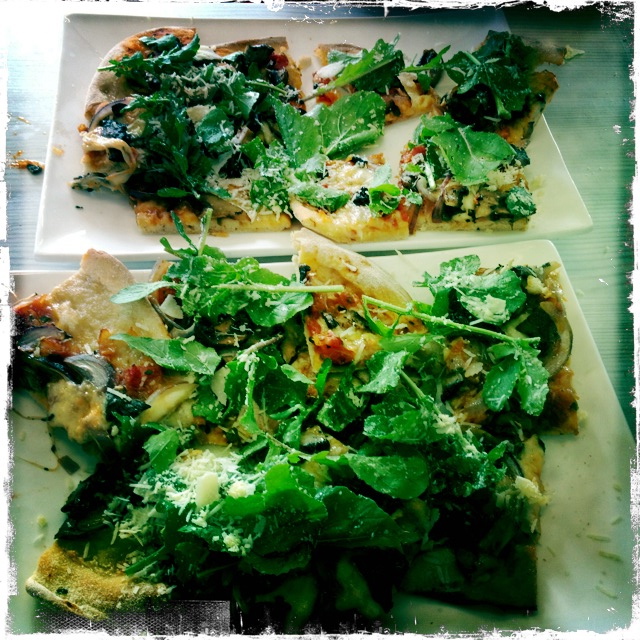
Pizza with rosemary, olives and rocket

We love every kind of pizza, even with more savoury toppings… and we absolutely adore making as much noise as possible throwing the dough!

ourkitchngarden.net

Fresh from the garden: rosemary, rocket, onion, garlic, marjoram, olives
Recipe source: Melissa
Serves: 8 or 24 tastes 

Equipment:

  • A wooden chopping board & knives
  • A frying pan
  • Bowls – large, med, small
  • Salad spinner
  • Measures – ¼ cup, tablespoons, teaspoons
  • Colander, grater
  • Scales
  • Paper towel
  • Wooden spoon
  • 2 pizza trays
  • Metal spoons
  • Wide egg lifter
  • Pizza cutting wheels
  • Serving plates


Ingredients:

Tomato sauce:

  • 1 onion
  • 2 cloves garlic
  • A small handful marjoram
  • A small handful thyme
  • ¼ cup extra-virgin olive oil
  • 1 tin diced tomatoes
  • Flaked salt and black pepper

For the pizza topping:

  • A stalk of rosemary
  • A clove of garlic
  • A small bowl or jar of plain olives
  • 1 tub bocconcini
  • Extra-virgin olive oil
  • 2 cloves garlic
  • 30g parmesan
  • A handful rocket

What to do:

  • Preheat the oven to 220C.

For the tomato sauce:

  • Peel and finely chop the onion and garlic, reserving half of the garlic for the topping.
  • Heat 2 tablespoons of olive oil in the frying pan & gently cook the onion and garlic until translucent but not brown.
  • Open the tin of tomato and add to the frying pan with a pinch of salt and a grind of pepper.
  • Wash, dry and pick the marjoram and thyme. Roughly chop then add to the tomatoes.
  • Simmer gently for 10 minutes, stirring occasionally, until quite reduced.

For the topping: 

  • Wash the rosemary stalk and wipe dry. Strip the leaves and chop quite small.
  • Pit the olives, press the garlic clove then combine with the rosemary and 2 tablespoons olive oil in a small bowl.
  • Open the tub of bocconcini and cut each ball into 3 or 4 slices.
  • Wash and spin the rocket dry and then reserve in another large bowl.
  • Grate the parmesan and reserve in a small bowl.

Assembling the pizza:

  • Scatter some flour on the workbench, divide the dough into four and roll to form four thin ovals– you will fit two pizzas side-by-side on one oven tray.
  • Flour the trays first and then assemble the ovals onto the trays.
  • Usingthe metal spoons, swirl a couple of spoonfuls of tomato sauce onto the pizza bases, spreading so that they become totally covered with a clean border.
  • Layer the bocconcini on top, spoon on the garlicky olives, then slide the pizza trays into the oven.
  • Wash and dry the wooden chopping boards and set them out ready.

 Baking the pizza:

  • Bake the pizzas for about 12 minutes or until the edges are very crusty and the cheese is bubbling.
  • Use this time to make the dough for the next class if needed.
  • You may want to slip the pizza off the tray onto the rack for the last few minutes, so that you get a really crusty base.
  • Once the pizzasare done, transfer them to the wooden boards using the wide egg lifter.
  • Cut the pizzas in half first, and then each half into squares for each plate.
  • Lift onto serving plates and sprinkle with the rocket and parmesan.
  • Eat!

Notes: Where does pizza come from? What other sort of vegetables could you use in a pizza? What sort of other pizza could we make? What other cheeses could we use?

Categories: Kitchen Garden, Recipe | Tags: , , , , , , | Leave a comment

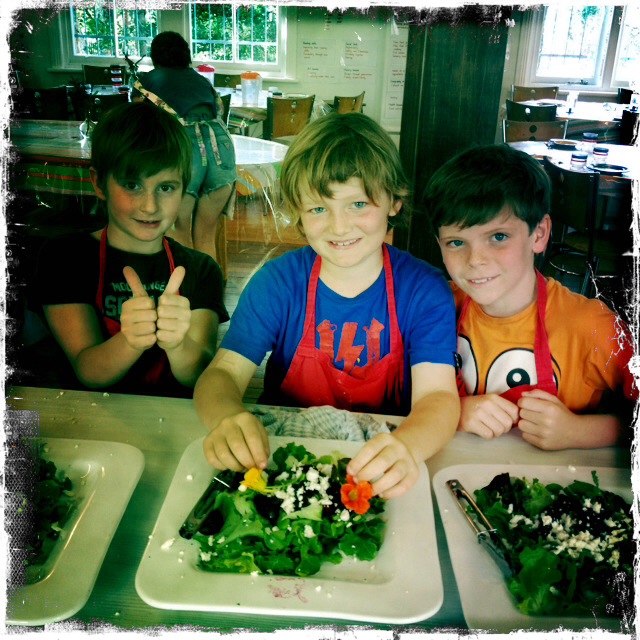
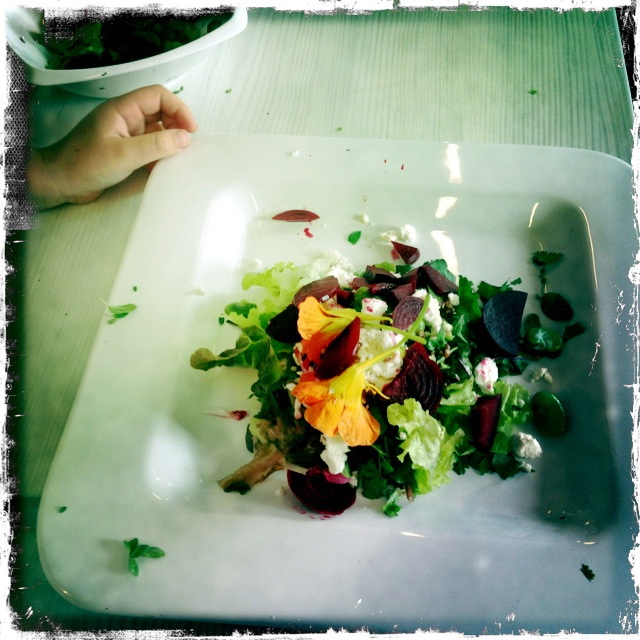
Salad of baby beets, broad beans and goats cheese

We love the arrival of broad beans to signify the warm weather! This salad is a firm favourite of ours, with its contrasting flavours and textures.

ourkitchengarden.net

Fresh from the garden: broad beans, beetroot, beetroot leaves, lettuce leaves, marjoram, garlic
Recipe source: Melissa
Serves: 6 at home or 24 tastes 

Equipment:

  • Chopping board & knife
  • 2 x saucepans with lids
  • Colander, scissors
  • Paper towel
  • Measuring: tablespoon, teaspoon
  • Bowls – large, small
  • Garlic press
  • Salad spinner
  • Fork, skewer
  • Plates to serve
Ingredients:

  • 4 baby beetroot
  • A large handful of broad beans
  • A handful of lettuce leaves
  • Small sprig of marjoram
  • 1 garlic clove
  • 2 teaspoons aged balsamic
  • Flaked salt and black pepper
  • 2 tablespoons extra-virgin olive oil
  • A small roll of goats’ cheese

ourkitchengarden.net

What to do:

  • Cut the leaves from the beetroot, leaving about 2cms of stalk. Reserve any small leaves.
  • Gently scrub the beets under water to remove any dirt and place them in the saucepan with cold water to cover by about 5cm. Heat on high with lid on and boil for 20 minutes until soft when pierced with a skewer.
  • Fill the other saucepan with water and set on high to boil.
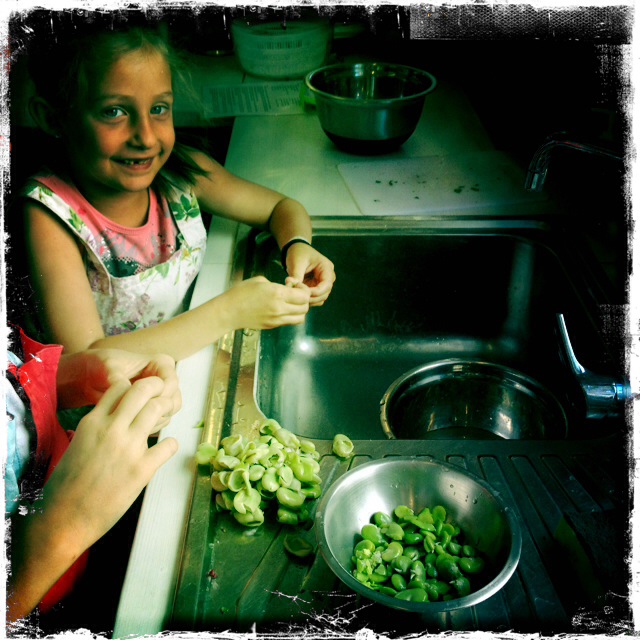
  • Pod the broad beans, discarding the outer shell into the compost and add beans to the boiling water. Fill a large bowl with cold water and have ready.
  • Boil the broad beans for 3 minutes, drain and then immediately refresh in the bowl of cold water. Drain again and double-pod by slipping the outer shell off into the compost. Put the beans into a medium bowl.
  • Carefully separate out, then wash the lettuce and beetroot leaves and spin dry. Break up into smaller pieces with your hands if needed, then roll up into a kitchen paper-lined tea towel & place in the fridge until needed.
  • Wash, dry and pick the marjoram leaves and reserve for the garnish.
  • Squeeze the garlic through the garlic press into a large bowl, then mix in the balsamic vinegar and olive oil, season with salt and pepper and stir together gently.
  • Meanwhile when the beetroot are soft, drain the saucepan and fill with cold water to cool the beets. When cool to handle, slide off the skins and root and thinly slice the beetroot. Add the slices to the dressing and toss to soak.
  • To finish, divide the salad leaves among your serving plates and scatter the beetroot slices on top. Scatter the broad beans over the top, then remove the wrapping from the goats’ cheese and dab chunks of cheese over each salad. Drizzle over the remaining dressing, sprinkle with the marjoram and serve.

ourkitchengarden.net

Categories: Kitchen Garden, Recipe | Tags: , , , , , , , , , , , | Leave a comment

BASC Vacation Care Program K-1 Tuesday 1st October

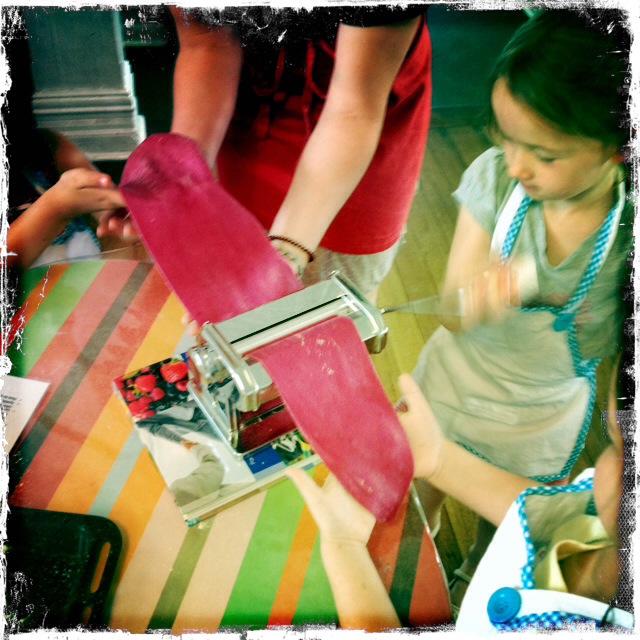
So the little ones worked at the low tables and each of the four groups rolled out linguine, podded broad beans, squeezed lemon juice, prepared herbs and grated parmesan – and then made the pasta for the next class, before clearing and setting the tables and the eating it all up! Deelicious! They also shared a little simple salad too: a perfect holiday lunch!

Beetroot linguine with broad beans, lemon and garden herbs

Our Kitchen Garden students love making pasta – and this recipe sings of spring! It includes the dough mixture as well as instructions on how to use a pasta machine.

oourkitchengarden.net

Fresh from the garden: eggs, beetroot, lemon, marjoram, parsley, thyme
Recipe source: Melissa
Serves: 4 at home or 12 tastes

Equipment:

  • Salad spinner
  • Pasta machine
  • Scales, garlic press
  • Measures – teaspoon
  • Food processor
  • Plastic wrap
  • Chopping board & knife
  • Pastry brush, grater
  • Large stock pot & saucepan
  • Tongs, large & small bowls
  • Serving bowls
Ingredients:

  • 250g typo ‘00’ flour
  • 2 free-range eggs
  • 50g pureed beetroot (see below)
  • A handful of broad beans
  • A handful of freshly picked herbs
  • Extra-virgin olive oil
  • Half a lemon
  • A garlic clove
  • Flaked salt & black pepper
  • 20g parmesan

What to do:

To make the beetroot puree:

  • Scrub a large beetroot under running water, then pop in a saucepan, fill with cold water and then heat to boil for about an hour.
  • Insert a skewer to check if the beet is cooked and soft, then drain, rinse under cold water, and then when cool to handle, slip off the skin with your fingers.
  • Place cooked beetroot in the food processor and blitz until blended to a puree consistency. Freeze the remaining beetroot puree.

To make the pasta:

  • Place the large bowl on the scales, reset to zero then measure the flour in to it. Add the beetroot.
  • Crack the eggs carefully into the small bowl, discarding any shell, then add them to the flour. Mix thoroughly with the wooden spoon, then tip the dough onto a clean, dry workbench.
  • Knead the dough for a few minutes, then wrap it in plastic film and let it rest for 1 hour at room temperature.

_____________________________________________________________________________________________

  • Fill the large stockpot and the saucepan with water and set to boil on high with the lids on.
  • Fix the pasta machine to a suitable bench or table – if the surface is not thick enough you may need to place a thick book under the machine. Screw the clamp very tightly.
  • Clear a large space on the workbench alongside the pasta machine. All surfaces must be clean and dry. Press or roll the dough into a rectangle about 8 cm wide.
  • Set the rollers on the pasta machine to the widest setting and pass the dough through. The dough will probably look quite ragged at this stage. Fold it in 3, turn it 90 degrees and roll it through again. Go to the next-thickest setting and pass the dough through 3-4 times.
  • Continue in this manner (changing the settings and passing the dough through) until the dough has passed through the second thinnest setting. Don’t use the very thinnest setting, as the dough gets too fine and is hard to manage. If the dough gets too long to handle comfortably, cut it into 2-3 pieces using the large knife, and roll each piece separately.
  • Lay the pasta strips on a lightly floured surface & dust with a little more flour. Attach the pasta cutter to the machine and pass through the largest rollers, draping it in your hands to catch.
  • Carefully separate each strip and hang over a pole to dry.
  • Clean the pasta machine by brushing it with a dry, wide pastry brush & putting back in its box.

ourkitchengarden.net

To finish the dish:

  • Check that the stockpot & saucepan have been filled with water and are set on high to boil.
  • Pod the broad beans, discarding the outer shell into the compost and add beans to the boiling water. Fill a large bowl with cold water and have ready.
  • Boil the broad beans for 3 minutes, drain and then immediately refresh in the bowl of cold water. Drain again and double-pod by slipping the outer shell off into the compost. Put the beans into the big bowl.
  • Wash and dry the lemon and zest it. Cut the lemon in half and squeeze its juice into the big bowl too.
  • Peel the garlic clove and squeeze it through the garlic press into the bowl too.
  • Wash and spin dry the herbs and strip their leaves, chopping with the mezzaluna, then add them into the garlicky broad bean bowl.
  • Measure 2 tablespoons of olive oil into the bowl and sprinkle on a few pinches of flaked salt and toss to incorporate.
  • Measure the parmesan and grate what you need.
  • When the stockpot has started a fast boil, carefully gather your drying pasta on a large baking tray. Add a tablespoon of cooking salt and then the pasta to the pot, stir once and quickly put the lid back on.
  • As soon as the pot begins to boil again, take the lid off. The pasta should only take 1 or 2 minutes to cook from boiling. Taste to check – it’s important that the pasta remains al dente and is not overcooked!
  • Using tongs, carefully pull the pasta (and some of its cooking liquid) out and into the big lemony bowl, sprinkle half the parmesan on and toss thoroughly to incorporate.
  • Divide into serving bowls, sprinkle the remaining parmesan on and eat immediately!

Notes: Never wash the pasta machine – it will rust! Just brush down with a strong brush to remove the leftover dough.
ourkitchengarden.net

Categories: Kitchen Garden, Recipe | Tags: , , , , , , , , , | Leave a comment

Kindergarten visit: Mushroom and garden herb pizza

So the kindergarten came to visit us – after months of peering in the back door of the cottage and asking me if it was my home! And the whole term they had been cultivating some of the 30 boxes of mushrooms given to us by the Australian Mushroom Growers Association just in preparation for their very own pizza… served with a simple salad and loads of smiles… See you in the playground gorgeous kidlets!

ourkitchengarden.net

Fresh from the garden: mushrooms, fresh herbs, onion, garlic
Recipe source: Melissa
Makes: One large pizza

Equipment:

  • Bowls – 1 medium, 2 small
  • Salad spinner
  • Grater
  • 1 large oven tray
  • Wide egg lifter
  • Large wooden board
  • Pizza cutter
  • Tablespoon measure, scales
  • Kitchen towel
  • Tongs
  • Metal spoons
  • Serving plates
Ingredients:

For the pizza topping:

  • A small handful mushrooms
  • ½ tub bocconcini
  • 1 tablespoon extra-virgin olive oil
  • Small handful mixed herb sprigs to yield 1 cup
  • 20g parmesan
  • A small bowl of prepared tomato pizza sauce
  • Flaked salt and black pepper

ourkitchengarden.net What to do:

  • Preheat the oven to 220C. You can prepare the topping now while you wait for the oven to heat up.
  • Wipe the mushrooms and break into small pieces into a big bowl. Drizzle with a tablespoon or two of olive oil and a pinch of salt.
  • Wash and carefully dry the herb sprigs – pick the leaves, discarding the stalks.
  • Tear each ball of bocconcini in half.
  • Grate the parmesan and reserve.

Assembling the pizza:

  • Scatter some flour on the table and roll the dough out to form an even rectangle to cover the baking tray.
  • Assemble the pizza directly onto the tray, flouring the tray well first.
  • Using the metal spoon, swirl a couple of spoonfuls of tomato sauce onto the pizza bases, spreading so that they become totally covered.
  • Layer the bocconcini on top and season well, then scatter the herbs over the pizza.
  • Drizzle the pizza with about a tablespoon of olive oil, then slide it into the oven.

Baking the pizza:

  • Bake the pizza for about 12 minutes or until the edges are very crusty and the cheese is bubbling.
  • You may want to slip the pizza off the tray onto the rack for the last few minutes, so that you get a really crusty base.
  • Once the pizza is done, transfer it to the large wooden board using the wide egg lifter.
  • Cut the pizzas crossways into small squares, and lift onto serving plates.
  • Sprinkle the reserved parmesan cheese over the slices and then get ready to eat!

Notes: What other sort of vegetables could you use in a pizza? What sort of other pizza could we make?

ourkitchengarden.net

Categories: Kitchen Garden, Recipe | Tags: , , , , , , , | Leave a comment

The Kindergarten visit, Term 3 2013

ourkitchengarden.net

Welcome!

The SAKGP Philosophy: Growing, Harvesting, Preparing and Sharing

Our chemical-free food philosophy aided by WHOLEFOODS HOUSE, Woollahra

Life lessons at Bondi

  • SUSTAINABILITY: Helping our planet to continue supporting human life: Composting – Chooks – Reusing – Recycling… Then rubbish!
  • Knife skills and Licences in Year 3

A snapshot of a lesson:

  • The whiteboard & the harvest table

Housekeeping:

  • Allergies & diet restrictions
  • Loos & washing hands!
  • Basic verbal tour
  • Where to go in an emergency
  • Hot water/ bandaids/ washing up liquid
  • Volunteers’ help: in classes, working bees, washing aprons, mopping!

What is expected:

  • Clean hands! Sleeves up!
  • Noise levels: inside voices
  • Walking around the kitchen!
  • Enthusiasm & helping to create our food
  • Sharing jobs & taking turns
  • Cleaning up, setting & clearing, stacking dishwashers

What we’re doing today!

  • Mushroom and garden herb pizza!
  • Each group split into 2: one for rolling out dough & making new dough, one for preparing herbs, toppings and cheeses
  • Scales v. jugs
  • Cleaning tables and washing up, re-setting, dishwasher, sweeping!

ourkitchengarden.net

Categories: Kitchen Garden, News | Tags: , , , | Leave a comment

Kitchen Garden News – 12th September 2013

I’m clearly a bit late in posting this so apologies chaps!  Attempting to get myself up-to-date tout-suite..!

KITCHEN GARDEN NEWS

Spring is springing with a force to be reckoned with: the garden is full of winter, spring and even almost summer crops due to this super-warm and dry bushfire weather… Cauliflower, cabbage, beetroot, spinach, lettuces, snap peas, radishes, broad beans and quite a few tomato plants sticking their tendrills out! And still mushrooms, mushrooms, mushrooms…

We’ve doubled up a few menu items this time due to few classes missing out recently – and we’re none the worse for it as all dishes these last weeks have been delicious. We whisked up another batch of Mushroom and spinach omelettes, but the Salad of broad beans, radishes and goats cheese, with beans so young they didn’t need a double-pod, was beautiful and delicious, and had the children almost licking the plates!

We blitzed and mouli’d cruciferous veggies with our Cauliflower and nutmeg soup & Speedy croutons, and also stirred and stirred Mushroom and Tuscan kale risotto (with beetroot leaves too in the last classes). The Pizza ai funghi e rucola we jazzed up with some lovely peppery rocket with parmesan and balsamic, and for the Upside-down blood orange and cardamom cake we whipped up a few bowls of Vanilla bean yoghurt too. And it was good…

Before I go I’d like to say thanks to Ligia for the two and a half years we have worked together – Bondi PS’s Garden Specialist and I have been through thick times and thin, drought and deluge, plague and plenty (of broad beans, last year…!) and I wish her well in her travels back to Brazil for Term 4, and whatever 2014 holds in store for her and her family… viagem segura chica!

And from Ligia: As I am finishing up this term, I would like to thank ‘the Bondi School community’ for all their hard work and support with the garden program. Cheers. Ligia

Cheers all!

ourkitchengarden.net

Categories: Kitchen Garden, News | Tags: , , | Leave a comment

Pizza ai funghi e rucola

Why did the mushroom go to the party? ‘Cos he was a fun-gi to be with… boom tish! And this one has some peppery rocket sprinkled over, yum yum…

ourkitchengarden.net

Fresh from the garden: mushrooms, rocket, onion, garlic, marjoram
Recipe source: Melissa
Serves: 8 at home or 24 tastes

Equipment:

  • Chopping boards & knives
  • A frying pan
  • Bowls – large, med
  • Salad spinner
  • Measures – ¼ cup, tablespoons, teaspoons
  • Colander, grater
  • Scales
  • Paper towel
  • Wooden spoon
  • 2 pizza trays
  • Metal tablespoons
  • Wide egg lifter
  • Pizza cutting wheels
  • Serving plates
Ingredients:

For the pizza topping:

  • 1 handful mushrooms
  • 1 tub bocconcini
  • 2 tablespoons extra-virgin olive oil
  • 2 cloves garlic
  • 30g parmesan
  • A handful rocket
  • Aged balsamic vinegar

Tomato sauce:

  • 1 onion
  • 2 cloves garlic
  • 3 sprigs marjoram
  • ¼ cup extra-virgin olive oil
  • 1 tin diced tomatoes
  • Flaked salt and black pepper

What to do:

  • Preheat the oven to 220C.

For the tomato sauce:

  • Peel and finely chop the onion and garlic, reserving half of the garlic for the topping.
  • Heat the olive oil in the frying pan & gently cook the onion and garlic until translucent but not brown.
  • Open the tin of tomato and add to the frying pan with a pinch of salt and a grind of pepper.
  • Wash, dry and pick the herbs. Roughly chop then add to the tomatoes.
  • Simmer gently for 10 minutes, stirring occasionally, until quite reduced.

For the topping: 

  • Wipe the mushrooms free of dirt using a piece of paper towel and finely slice. Drop them in to a big bowl, drizzle about a tablespoon of olive oil and a pinch of olive oil and toss to combine.
  • Open the tub of bocconcini and cut each ball into 3 or 4 slices.
  • Wash and spin the rocket dry and then reserve in another large bowl.
  • Grate the parmesan and add it to the rocket with a tablespoon or two of olive oil and a teaspoon of balsamic vinegar. Gently toss to combine.

Assembling the pizza:

  • Scatter some flour on the workbench, divide the dough in two and roll to form two thin shapes about 26 cm in diameter.
  • Assemble the pizzas directly onto the trays, flouring the trays first.
  • Usingthe metal spoon, swirl a couple of spoonfuls of tomato sauce onto the pizza bases, spreading so that they become totally covered with a clean border.
  • Layer the bocconcini on top, spoon on the garlicky mushrooms, then slide the pizzas into the oven.
  • Wash and dry the wooden chopping boards and set them out ready.

Baking the pizza:

  • Bake the pizzas for 12 minutes or until the edges are very crusty and the cheese is bubbling.
  • Use this time to make the dough for the next class if needed.
  • You may want to slip the pizza off the tray onto the rack for the last few minutes, so that you get a really crusty base.
  • Once the pizzas are done, transfer them to the wooden boards using the wide egg lifter.
  • Cut the pizzas in half first, and then each half into squares for each plate.
  • Lift onto serving plates and sprinkle with the rocket and parmesan.
  • Eat! 

Notes: Where does pizza come from? What other sort of vegetables could you use in a pizza? What sort of other pizza could we make? What other cheeses could we use?

Categories: Kitchen Garden, Recipe | Tags: , , , , , , , , , , , , | Leave a comment

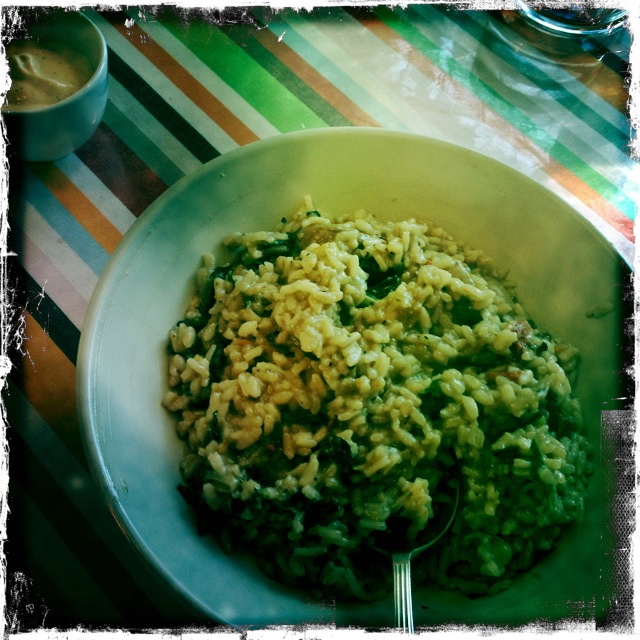
Mushroom and kale risotto

This lovely risotto is textural and beautifully herby, and very easy once you get past all the stirring! Feel free to experiment with different types of mushies too. And if you have any left over then go crazy making arancini!

ourkitchengarden.net

Fresh from the garden: mushrooms, Tuscan kale (cavolo nero), marjoram, garlic, onion
Recipe source: Melissa
Serves: 8 at home or 24 tastes

Equipment:

  • Saucepan
  • Salad spinner
  • Garlic press
  • Bowls – 1 large, small, med
  • Large knife& chopping board
  • Grater & microplane zester
  • Ladle
  • Wooden spoon with a flat end
  • Heavy based stockpot
  • Measures:scales, jug, cup, tablespoon
  • 4 bowls or soup plates to serve


Ingredients:

  • 2 litres water with 2 tablespoons bouillon (or 2 litres stock)
  • A large handful of mushrooms
  • A small handful marjoram
  • 4 or 5 kale leaves
  • 3 garlic cloves
  • 1 brown onion
  • Extra-virgin olive oil
  • 20g butter
  • 400g Arborio rice
  • 1 lemon
  • 50g parmesan
  • Flaked salt & black pepper

What to do:

  • Measure the water into the saucepan, add the bouillon and bring it to a simmer on medium heat.
  • Meanwhile wipe the dirt from the mushrooms with a piece of paper towel, trim any ugly bits and then thinly slice the mushrooms.
  • Wash and spin dry the marjoram, strip and discard the stems. Wash the kale leaves, trim from the stalks and finely slice into ribbons.
  • Squeeze the garlic cloves through the press into a small bowl. Peel and finely chop the onion.
  • Heat half the butter and 2 tablespoons of olive oil and butter over medium heat in the stockpot. Add half the chopped onion and cook gently until just tender, about three minutes. Do not brown. Add the mushrooms and garlic and a pinch of flaked salt and sauté for 3 or 4 minutes until the mushrooms are starting to colour. Remove from the pan and reserve in a medium bowl.
  • Heat the rest of the butter and another 2 tablespoons of olive oil in the same pan & then add the rest of the onions. Cook until translucent & then stir in the rice until the grains begin to crackle.
  • Begin adding the simmering stock, a ladle at a time, and stir in until fully absorbed. The stock should just cover the rice and bubble. Add the kale, and stir every minute or so for about 15 minutes, making sure you get into all the corners of the pan with the wooden spoon.
  • Meanwhile, zest the lemon and grate the parmesan to yield about ½ cup.
  • After about 15 minutes, add the mushrooms backto the rice and keep stirring for about another 5 minutes. When the rice is just tender all the way through but still slightly firm, usually in about 20 minutes, it is done.
  • When you are ready to serve, add in a last ladleful of stock. Stir in the marjoram, lemon zest and parmesan, and remove from the heat. Taste now and check the seasoning. The mixture should be creamy.
  • Serve onto the soup plates and eat right away!


Categories: Kitchen Garden, Recipe | Tags: , , , , , , , , , , , , | Leave a comment

Speedy croutons

These are an easy and delicious accompaniment to any soup or salad, adding a fantastic & garlicky crunch.

ourkitchengarden.net

Recipe source: Stephanie Alexander: Kitchen Garden Cooking with Kids
Makes: Lots!

Equipment:

  • Butter knife
  • Large non-stick frying pan
  • Egg lifter
  • Chopping board
  • Large serrated knife
  • Medium bowl
Ingredients:

  • 4 or 5 slices of thick bread
  • Unsalted butter at room temperature
  • 2 garlic cloves
  • Flaked salt

What to do:

  • Butter the slices of bread on both sides.
  • Place the frying pan over a medium to high heat and fry the bread slices until golden on the undersides (about 3 minutes). You may need to do this in several batches.
  • Flip the bread with an egg lifter and brown the other side.
  • Transfer the bread to the chopping board.
  • Slice the garlic cloves in half and rub each half on one side of the fried bread slices. Sprinkle with a little salt.
  • Stack the slices together, and using the serrated knife, carefully cut the bread into 1cm cubes & transfer to the bowl.
  • Sprinkle on your dish!

Notes: Where does the word ‘crouton’ come from? Would different sorts of bread be good to use?

Categories: Kitchen Garden, Recipe | Tags: , , , , , , | Leave a comment

Blog at WordPress.com.