Posts Tagged With: Baking

Festive shortbread

Jill writes, ‘Free shortbread from the restrictively narrow timeframe of Christmas, and make it throughout the year. Hallelujah.’ I think by turning these into a festive treat (however short-lasting they may be!) they can be a great present for someone too…

Recipe source: adapted from Jill Dupleix’s recipe for Anytime Shortbread in ‘Simple Food’

Makes: about 30

ourkitchengarden.net

Equipment:

  • Baking trays and paper
  • Scales
  • Bowls – 2 medium
  • Food processor
  • Flour sifter
  • Chopping board and knife
  • Cling film
  • Rolling pins
  • Festive biscuit cutters
  • Ribbon, chopstick, skewer, cellophane
Ingredients:

  • 300g unsalted butter, soft
  • 150g icing sugar
  • Pinch of sea salt
  • 300g plain flour
  • 150g rice flour or cornflour


What to do:

  • Heat the oven to 150C. Line the baking trays with baking paper.
  • Combine the butter, icing sugar and sea salt in a food processor and whiz until smooth.
  • Sift in the flour and rice flour, then pulse off and on, scraping down the sides from time to time, until the mixture gathers into a ball. Knead for a minute or two with your hands until smooth, then cut into two, wrap in cling film and refrigerate for 30 minutes. Tidy & wipe down your workspace.
  • Turn out onto a floured surface and pat or lightly roll out the dough until 1cm thick. Cut into shapes with the biscuit cutters. Reshape the scraps and cut more shapes. Place on a baking tray and prick with a fork. If you want to, you can carefully pierce a hole in each shape with a skewer or chopstick, & later thread ribbon through to hang as a decoration.
  • Bake on the middle shelf of the oven for 10 minutes, then turn the tray around and bake for another 5 to 10 minutes until touched with colour. Leave to cool on the tray.
  • Pack gently into an airtight container, thread with a length of ribbon and tie into a cellophane bag – or simply gobble them up! 

Notes: This shortbread can be stored in an airtight container for up to 2 weeks. Or spread with homemade strawberry jam and whipped cream for a take on the classic Strawberry Shortcake…

Categories: Kitchen Garden, Recipe | Tags: , , , , , , , , | Leave a comment

Silverbeet, spring onion and ricotta calzone

These folded pizzas are great with a homemade Napoli sauce served alongside (or even added to the filling before baking) – and you can even add prosciutto, ham or roast chicken at home. Mandatory is a leafy salad!

ourkitchengarden.net

Recipe sourceMelissa
Fresh from the garden: silverbeet or spinach, spring onion, lemon, garlic
Makes: 4 large calzone

Equipment:

  • Rolling pins
  • 2 large baking sheets
  • Chopping board & knife, scissors
  • Large frying pan
  • Garlic press, wooden spoon, tongs
  • Large bowl
  • Grater, microplane grater
  • Baking paper
  • Scales
  • Measuring cup
  • Pastry brush
  • Serving plates
Ingredients:

  • 2 recipes Hugh’s Magic Dough
  • Plain flour, for rolling out dough
  • 1kg spinach or silverbeet
  • 4 or 5 spring onions
  • 2 garlic cloves
  • 3 cups ricotta
  • 1 tub bocconcini
  • 50g parmesan
  • 1 lemon
  • Flaked salt & black pepper
  • Coarse polenta for dusting baking sheet
  • Extra-virgin olive oil

What to do:

  • Preheat oven to 230C.
  • Lightly dust the work surface and rolling pin with flour. Divide the dough into 4 and press and roll it out into 4 x large rectangles. Dust the baking sheets with a sprinkle of polenta and drape 2 dough rectangles over each tray, leaving half off adjacent edges to fold back over later.
  • Wash the spinach or silverbeet, shake dry and slice or cut the leaves from the stalks (leaving the stalks for the chooks), then slice the leaves into thin strips. Squeeze the garlic through the press. Wash the spring onions and strip the tough outer leaf away. Chop into 1cm pieces.
  • Heat the frying pan with 2 tablespoons of olive oil and add the garlic and spring onion, gently cooking for 30 seconds. Then add the strips of spinach & a pinch of salt to wilt. Cook, tossing for 3 or 4 minutes until cooked through. Squeeze any moisture out with the back of the wooden spoon and place spinach in the large bowl.
  • Drain the bocconcini & pull each ball apart into little pieces, add to the spinach with the ricotta and season with salt and pepper.Grate the parmesan and add to the spinach, and using the microplane grater, zest the lemon into the mixture.
  • Place the filling on the tray half of each oval leaving a 2cm border along the edge.
  • Fold the remaining dough over the filling until the edges line up and pinch the edges together to seal. Gently roll the pinched edges under to form a rim and brush the tops with olive oil.
  • Bake for 15/20 minutes until golden brown and the centre is hot and melted, rotating midway through cooking.

 ourkitchengarden.net

Categories: Kitchen Garden, Recipe | Tags: , , , , , , , , , | Leave a comment

River Cottage garlicky flatbreads

Bondi kids love making dough: bread, pizza and pasta regularly grace our table! And we also love, love, love garlicky anything! This dish is great for mopping up any dip, sauce or soup, but especially good for the broad bean puree…

ourkitchengarden.net

Fresh from the garden: garlic
Recipe source: Hugh Fearnley-Whittingstall, Veg Every Day
Serves: 8 or 30 tastes

Equipment:

  • Measures – jug,tablespoon, teaspoon, ½ teaspoon
  • Stand mixer
  • Scales
  • Bowls – large, medium
  • Heavy non-stick frying pan
  • Rolling pins
  • Tongs
  • Tea towels
  • Plate & paper towel
  • Serving plates
Ingredients:For the magic dough:

  • 250g plain white flour
  • 250g strong white flour
  • 1½ level teaspoons fine sea salt
  • 1 teaspoon instant dried yeast
  • 1 tablespoon olive oil, plus a little extra for oiling

For the garlic oil:

  • About 120ml olive oil
  • 1 fat garlic clove

What to do:

For the magic dough:

  • Put the two flours into the bowl of the stand mixer with the salt and yeast. Mix well using the dough hook. Add the oil and 325ml warm water and mix to a rough dough. Knead for 5–10 minutes, until smooth. This is quite a loose and sticky dough, which is just as it should be – you get better-textured bread this way – so try not to add too much flour if you can help it, it will become less sticky as you knead.
  • Trickle a little oil into a clean bowl, add the kneaded dough and turn it in the oil so it is covered with a light film. Cover with a tea towel and leave in a warm place to rise until doubled in size – at least an hour, probably closer to two.
  • When the dough is well risen and puffy, tip it out and ‘knock it back’ by poking it with your outstretched fingers until it collapses to its former size. It’s now ready to be shaped to your will.

For the garlic oil:

  • Peel the garlic clove and very finely chop it. Combine the olive oil and garlic in a frying pan and place over a medium heat. You’re not going to fry it, just warm it through to take the edge off the garlic. So as soon as you see the first signs of a sizzle, pour the oil and garlic out of the pan into a small bowl to infuse. Wipe the frying pan clean.

For the flatbreads:

  • After ‘knocking back’ the risen dough, take lemon-sized balls and roll them into 8 flat circles, 2mm thick. Leave to rest for 5 minutes.
  • Meanwhile heat a heavy-based, non-stick frying pan over high heat until smoking hot.
  • Carefully lay one flatbread in the pan and cook for about 2 minutes, until bubbly on top and patched with brown spots on the base. Flip over and cook for 1-2 minutes more. Remove immediately to a plate and trickle with some of the garlicky oil. Scatter with a little flaked salt too. Repeat with all the dough. Cut the oiled flatbreads into wedges to serve.

Notes: Why do we leave the dough to rise? What is this process called?

ourkitchengarden.net

Categories: Kitchen Garden, Recipe | Tags: , , , , , , , , , , , , , | 1 Comment

Orange and cardamom cakes with cream cheese icing

Orange and cardamom is such a fantastic combination and we use it a lot in cakes, but these two flavours can also be found in savoury dishes from places like Morocco and India.

ourkitchengarden.net

Fresh from the garden: oranges, eggs
Recipe source: adapted from Stephanie Alexander Kitchen Garden Cooking for Kids
Makes: 12 large or 24 small cupcakes

Equipment:

  • Cupcake cases
  • Scales
  • Measures:  ½ cup, ¼ cup, teaspoon
  • 12-hole cupcake tin
  • Chopping board & knife
  • Food processor
  • Citrus juicer
  • Bowls –  1 big, 2 medium
  • Grater, whisk, sifter
  • Wooden spoon, zester, spatula
  • 2 dessert spoons
  • Wire rack, skewer
  • Serving plates
Ingredients:

  • 125g butter at room temperature
  • 3/4 cups caster sugar
  • 2 large oranges
  • 2 eggs
  • 125g self-raising flour
  • 2 teaspoons ground cardamom


Cream cheese icing

  • 50g pure icing sugar
  • 50g cream cheese
  • 25g butter

 What to do:

  • Preheat the oven to 190°C.
  • Drop one of the paper cases into each hole of the cupcake tin.
  • Chop the butter into small cubes and drop into the food processor. Add the sugar and mix for 1 minute.
  • While this is being done grate the zest from the oranges and place in a medium bowl.
  • Juice the oranges and add to the zest.
  • Crack eggs into the orange mixture and lightly whisk to combine.
  • In a separate medium bowl sift the flour and ground cardamom together.
  • Add the egg and orange mixture and the sifted flour alternately to the butter mixture. Process until smooth and creamy.
  • Spoon the batter evenly into the cupcake tins until about 2/3 full and bake for about 15 minutes until cooked. Check by piercing one cake with a skewer & if clean, they’re ready! Carefully remove them from the oven and cool on the wire rack.
  • While the cake is cooking make the icing: Wash & dry the bowl & blade of the food processor.
  • Sift the icing sugar into the bowl and then mix all ingredients together until smooth and creamy.
  • Once cakes are cool use the spatula to spread a little icing on each cake, and then arrange on serving plates. Eat! 

Notes: What other spice and fruit combinations can you think of?

Categories: Kitchen Garden, Recipe | Tags: , , , , , , | Leave a comment

Asparagus, feta and sweet potato frittate

You can also use pumpkin in this recipe instead of sweet potato: either works well. You can also cook one big frittata in a frying pan over heat and then finish it under the grill, but we pour ours into muffin pans to oven-bake… and add some of our lovely Bondi herbs for an aromatic twist.

ourkitchengarden.net

Fresh from the garden: eggs, asparagus, sweet potato, marjoram, thyme
Recipe source: Melissa
Makes: 12 large or 24 mini fritatte

Equipment:

  • Pastry brush
  • 12-hole cupcake tin
  • Chopping board & knives
  • Potato peelers, scissors
  • Salad spinner
  • Large frying pan
  • Grater, scales
  • Wooden spoon
  • Bowls – large, med, small
  • Tongs, whisk
  • Serving plates
Ingredients:

  • Half a large sweet potato
  • Half a bunch of asparagus spears
  • Small handful marjoram and thyme sprigs
  • 2 tablespoons olive oil
  • Flaked salt and freshly ground black pepper
  • 100g feta cheese
  • 10g parmesan
  • 6 large eggs

What to do:

  • Preheat the oven to 180C.
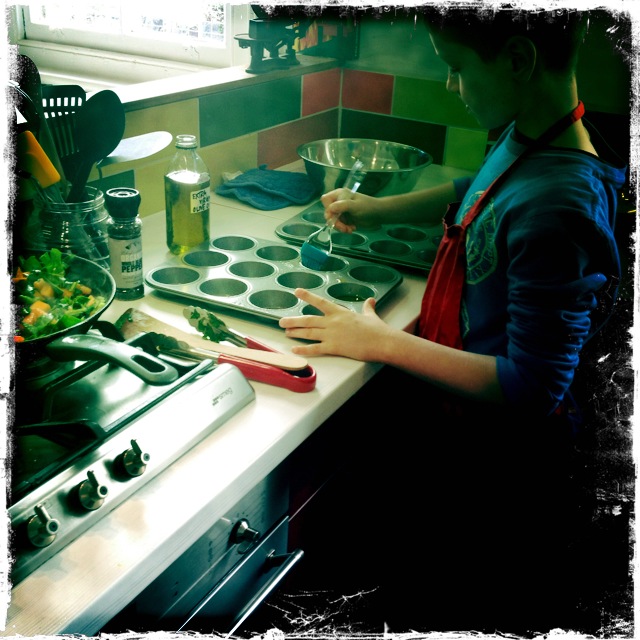
  • With the pastry brush, paint a little olive oil into each hole of the cupcake tins to grease.
  • Peel the sweet potato and carefully chop into 1cm cubes.
  • Trim the woody ends from the asparagus and then chop or snip into 1cm pieces.
  • Wash the herbs and spin them dry. Strip the leaves from the stalks & reserve.
  • Heat the frying pan with the oil and toss in the sweet potato. Season well with salt and pepper. Cook, turning occasionally, for about 4 minutes over medium heat until the cubes are just tender and lightly golden at the sides.
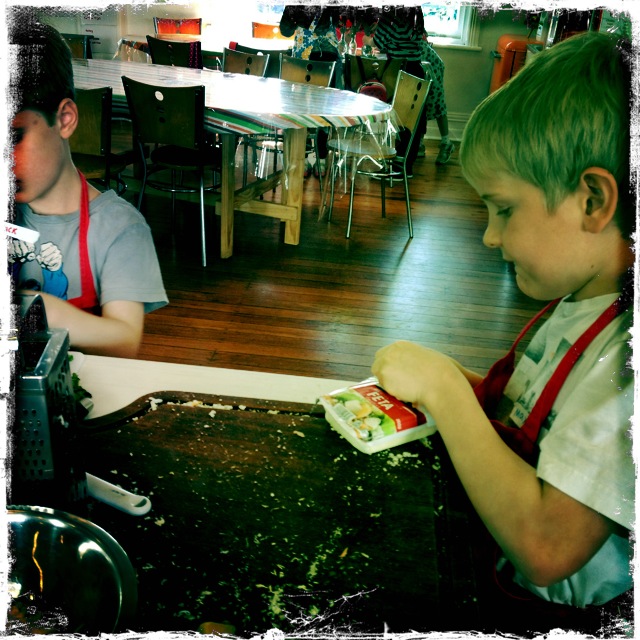
  • Meanwhile, cut the feta into small cubes and grate the parmesan.
  • Stir the asparagus into the sweet potato and cook for 2 minutes until just tender.
  • Then add the cubed feta and gently stir to mix in.
  • In the large bowl, lightly beat the eggs with the herbs, parmesan, a pinch of salt and a grind of pepper.
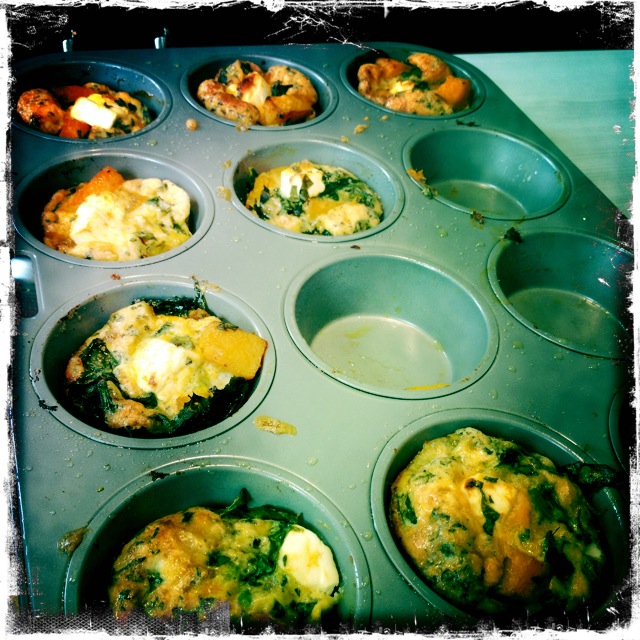
  • Divide the sweet potato mixture evenly into the cupcake holes, spoon the egg mixture over and bake in the oven for about 15 minutes until cooked.

Notes: Why is the name of this recipe frittate, ending in e? What other vegetables could you use in the recipe? What animals’ milk makes feta?

Categories: Kitchen Garden, Recipe | Tags: , , , , , , , , , | Leave a comment

Strawberry & mint muffins

ourkitchengarden.net

There are a few different procedures here so lots for young chefs to do! You can use any berries but we love the juicy strawberries ripening in our garden right now… and we love the crazy herb combination!

Fresh from the garden: strawberries, mint, eggs
Recipe source: Melissa
Makes: 24

Equipment:

  • 2 x 12-hole large cupcake tins
  • Paper muffin cases
  • Bowls – large, medium
  • Colander
  • Stick blender & bowl
  • Chopping board and small knife
  • Measures – cup, ½ cup, 1/3 cup
  • Stand mixer & bowl
  • Whisk
  • Spatula
  • Skewer
  • Serving plates
Ingredients:

  • 500g strawberries
  • A small bunch mint
  • 2 teaspoons vanilla extract
  • 4 cups self-raising flour
  • 1 cup caster sugar plus 2 tablespoons
  • 4 eggs
  • 400g plain yoghurt
  • 100ml milk
  • 2/3 cup vegetable oil


 What to do:

  • Preheat the oven to 180C.
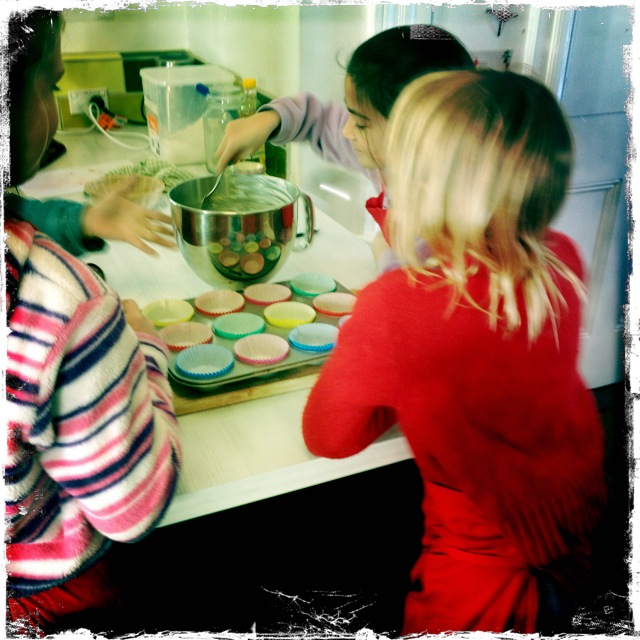
  • Line the muffin tin with the muffin cases.
  • Wash the strawberries and hull them, discarding the leaves into the compost. Divide strawberries into 2 lots.
  • Take one lot of strawberries and chop each into eight and add to a large bowl.
  • Wash the mint and strip off the leaves, discarding the stem. Tear or chop up the leaves into small pieces and add to the chopped strawberries with one tablespoon of caster sugar and 2 teaspoons of vanilla. Gently mix together and leave to soak.
  • Take the remaining berries and add them to the stick blender bowl. Sprinkle 1 tablespoon caster onto them and then blitz to puree.
  • Measure out the flour and sugar into the bowl of the stand mixer and turn on for a minute to mix.
  • Whisk the eggs in the medium bowl and then add with the yoghurt, oil and milk to the mixer. Add the strawberry puree and mix again until well combined.
  • Remove the bowl from the stand and using the spatula, gently fold through the chopped strawberries.
  • Spoon into the muffin cases evenly.
  • Carefully slide into the oven and bake for 20 minutes until a skewer inserted into the middle of the muffin comes out clean.
  • Divide among serving plates and eat!

Notes: What other herbs go well with strawberries? Why do we leave the strawberries to soak? Why should the skewer come out clean when the muffins are cooked?

Categories: Kitchen Garden, Recipe | Tags: , , , , , , , , , | Leave a comment

Bocconcini, garden herb, rocket and red onion pizza

We love the whole gamut of pizza qualities! Making the dough is great fun (and very therapeutic…!) and we love using our big muscles to roll out the bases… We wash and spin and chop our herbs, and simmer up our own garlicky tomato sauce – with fresh tomatoes in summer and tinned toms out of season – and compile our toppings based on what’s growing…  this week it’s loads of sweet onion, marjoram, rocket and curly parsley… We grate and tear and zest, and we LOVE the smell as the pizza bakes… But most of all, we adore devouring the pizza. Mmmmm.

ourkitchengarden.net

Fresh from the garden: rocket, red & brown onions, thyme, marjoram, parsley
Recipe source: Melissa, kitchen specialist at Bondi PS

Equipment:For the pizza dough

  • Bowls – 1 small, 1 large
    • Fork
    • Scales
    • Measures: cup, tablespoon, teaspoon
    • Stand mixer with a dough hook
    • Pastry brush
    • 2 rolling pins
    • 2 baking or pizza trays
    • wide egg lifter

For the pizza topping:

  • Chopping board & knife
  • Medium frying pan
    • Measures: ¼ cup, tablespoon
  • Wooden spoon
    • Grater, tongs
  • Kitchen towel
  • Large bowl
  • Salad spinner
  • Large board for cutting pizza
  • Pizza cutters
  • Serving plates
Ingredients:For the pizza dough

  • 1 cup lukewarm water
  • 3 teaspoons instant dry yeast
  • 1 teaspoon sugar
  • 1 tablespoon extra-virgin olive oil, plus extra for greasing
  • 400g plain flour, plus extra for flouring
  • 2 teaspoons salt

For the pizza topping:

  • 1 tub bocconcini
  • 1 large red onion
  • 2 tablespoons extra-virgin olive oil
  • Small handful marjoram, parsley and thyme
  • A small handful rocket
  • 30g parmesan

Tomato sauce:

  • ¼ cup extra-virgin olive oil
  • 1 onion
  • 2 garlic cloves
  • 1 can chopped tomatoes
  • Flaked salt and black pepper

What to do:
To make the dough:

  • Place the water, yeast and sugar in the small bowl. Mix with the fork and leave for 5–10 minutes until the mixture looks frothy.
  • Add the 2 teaspoons of oil to the yeast mixture and mix well.
  • Place the flour and salt and yeast mixture in the bowl of the electric mixer and beat for at least 8 minutes, until the dough looks smooth.
  • Brush the inside of a large bowl with a little of the extra virgin olive oil, using the pastry brush.
  • Turn the pizza dough into the oiled bowl. Cover with a clean, dry tea towel and put in a draught-free place until the dough has doubled in size. This process, which is called ‘proving’, will take at least 1 hour.
  • After an hour, tip the risen dough onto the workbench and knead briefly, then shape it into a round ball and return it to the bowl. Cover the bowl with the tea towel and leave again, this time for at least 20 minutes.                                                                                 

What to do:

Start of lesson:

  • Preheat the oven to maximum. You can prepare the topping now while you wait for the oven to heat up.
  • Scatter some flour on the workbench, divide the pizza dough in two and roll to form two thin rectangles to fit the baking trays.
  • Assemble the pizzas directly onto the trays, flouring the trays a little first.

For the tomato sauce:

  • Peel and finely chop the onion and garlic.
  • Heat the olive oil in the frying pan & gently cook the onion and garlic until translucent but not brown.
  • Open the tin of tomato and add to the frying pan with a pinch of salt and a grind of pepper.
  • Simmer gently for 10 minutes, stirring occasionally, until quite reduced.

For the topping: 

  • Peel the red onion, cut in half and finely slice into rings
  • Wash and carefully dry the herb sprigs – pick the leaves, discarding the stalks. Finely chop all the herbs.
  • Wash the rocket and spin it dry. Leaving small leaves whole, chop large leaves into ribbons.
  • Peel the onion, cut in half and finely slice into rings.
  • Open the tub of bocconcini and cut or tear each ball into 3 or 4 pieces.
  • Grate the parmesan.

Assembling the pizza:

  • Using a metal spoon, swirl a couple of spoonfuls of tomato sauce onto the pizza bases, spreading so that they become totally covered.
  • Layer the onion slices on top and then lay on the bocconcini. Season well.
  • Drizzle the pizzas with the last of the oil, then slide them into the oven.

Baking the pizza:

  • Bake the pizzas for 12 minutes or until the edges are very crusty and the cheese is bubbling.
  • At this stage you can make the dough for the next class.
  • Once the pizzas are done, transfer them to a board using the wide egg lifter. Cut the pizzas crossways into small squares, and lift onto serving plates.
  • Sprinkle with the herbs and the grated parmesan and finish with the rocket.
  • Serve and eat!

Notes: What other sort of vegetables could you use in a pizza? What sort of other pizza could we make?

Categories: Kitchen Garden, Recipe | Tags: , , , , , , , , , | 1 Comment

Blood orange honey cake with vanilla yoghurt

At this time of year we try and incorporate as many blood oranges into recipes as possible! Cakes always go down well as a treat, and this one is dairy-free too if you don’t serve the yoghurt.

ourkitchengarden.net

From the garden: eggs, blood oranges
Recipe source: adapted from a recipe by Melissa Klemke for Kidspot

Equipment:

  • A large cake tin
  • Pastry brush
  • Baking paper
  • Measuring: cup, ½ cup, teaspoon, ½ teaspoon
  • Microplane zester
  • Bowls – 2 big
  • Electric mixer
  • Citrus juicer
  • Skewer
  • Wire rack
  • Serving plates
Ingredients:

  • 2½ cups self raising flour
  • 1 teaspoon baking powder
  • ½ teaspoon bicarbonate of soda
  • 1 teaspoon ground cinnamon
  • 1 cup raw caster sugar
  • ½ cup honey
  • ½ cup vegetable oil
  • 4 eggs
  • 3 blood oranges
  • 1 vanilla bean
  • 200ml natural Greek yoghurt
  • 1 tablespoon white caster sugar


What to do:

  • Preheat oven to 170°C.
  • Brush the cake tin with a little vegetable oil and then line with baking paper.
  • Using the microplane, carefully zest the blood oranges.
  • Juice the oranges and mix the zest with the juice.
  • Mix the eggs, honey, raw caster sugar and vegetable oil in a large bowl.
  • Sift flour, baking powder, bicarb soda and cinnamon into another bowl.
  • Using the electric mixer, mix in the flour and orange juice/zest alternately until all combined.
  • Pour into the greased & lined tin.
  • Bake in oven for 40 minutes, checking after the 30 minute mark – use the skewer test to check that it is cooked.
  • Meanwhile, if making the vanilla yoghurt: halve the vanilla pod and scrape the seeds from inside each half. Mix these into the yoghurt with the tablespoon of white caster sugar. Chill until ready to serve.
  • When the cake is cooked, turn out on wire rack and cool before cutting.
  • Divide among serving plates and serve with the vanilla yoghurt if needed.

Notes: Why do we grease and line the tin? What do baking powder and bicarb soda do?


Categories: Kitchen Garden, Recipe | Tags: , , , , , , , , | Leave a comment

Spinach, feta and pumpkin frittate

Fresh from the garden: eggs, spinach, pumpkin, marjoram, thyme

Recipe source: adapted from a recipe by Gordon Ramsay ………………………………………………………………………………………………………………………………………

The original recipe calls for sweet potato instead of pumpkin: I think either works well. Gordon also suggests cooking in one big pan over heat and then finishing under the grill, but we pour ours into muffin pans to oven-bake… we also add some of our lovely Bondi herbs for an aromatic twist.

Equipment:

  • Metal spoon
  • Chopping board & knives
  • Paper towel
  • Large frying pan
  • Wooden spoon
  • Large bowl
  • Tongs, whisk
  • Cupcake tins: 1 x 12-hole large or 1 x 24-hole mini
Ingredients:

  • 300g pumpkin
  • A large handful of spinach
  • Small handful marjoram and thyme sprigs
  • 3-4 tablespoons olive oil
  • Flaked salt and freshly ground black pepper
  • 200g sheep’s feta
  • 20g parmesan
  • 10 large eggs

What to do:

  • Preheat the oven to 180C.
  • Wash the pumpkin & scrape out the seeds, reserving for the chooks.
  • Wash the spinach and shake dry. Cut off the stalks and chop the leaves into 1cm strips, to yield about 150g cut strips.
  • Wash the herbs and pat dry with paper towel. Strip the leaves from the stalks & reserve.
  • Carefully cut the peel from the pumpkin if needed, and then chop flesh evenly into 1cm cubes.
  • Heat the frying pan with the oil and toss in the pumpkin. Season well with salt and pepper. Cook, turning occasionally, for about 4 minutes over medium heat until the potatoes are just tender and lightly golden at the sides.
  • Meanwhile, cut the feta into small cubes and grate the parmesan.
  • Stir the spinach into the pumpkin and cook for 2 minutes until wilted.
  • Then add the cubed feta and gently stir to mix in.
  • In the large bowl, lightly beat the eggs with the herbs, parmesan, a pinch of salt and a grind of pepper.
  • Divide the pumpkin mixture evenly into the cupcake holes, spoon the egg mixture over and bake in the oven: 15 minutes for the mini frittate and 20 minutes for the large.

Notes: Why is the name of this recipe frittate, ending in e? What other vegetables could you use in the recipe? What other animal’s milk makes feta?

Categories: Kitchen Garden, Recipe, School Holiday Program | Tags: , , , , , , , , , , | Leave a comment

Rhubarb and mint muffins

Fresh from the garden: eggs, rhubarb, mint

Recipe source: Melissa

………………………………………………………………………………………………………………………………………………

These are super-easy to whip up and delicious warm from the oven! You can substitute any berries and we love the herby addition of English or chocolate mint.

Equipment:

  • 12-hole muffin tin
  • Paper muffin cases
  • Bowls – large, medium
  • Colander
  • Chopping board and small knife
  • Measures – cup, ½ cup, 1/3 cup
  • Stand mixer & bowl
  • Whisk
  • Spatula
  • Skewer
  • Serving plates
Ingredients:

  • 2 eggs
  • 1/3 cup vegetable oil
  • 2 cups self-raising flour
  • ½ cup caster sugar
  • 1 cup yoghurt
  • 1 large or several small stalks of rhubarb
  • A sprig of mint


What to do:

  • Preheat the oven to 180C.
  • Line the muffin tin with the muffin cases.
  • Wash the rhubarb stalk, then drain it into the colander. Chop all the leaves off and discard into the compost. Peel off any stringy fibres and then cut into very thin slices to yield one cup.
  • Wash the mint and strip off the leaves, discarding the stem. Chop the leaves finely.
  • Measure out the flour and sugar into the bowl of the stand mixer and turn on for a minute to mix.
  • Whisk the eggs in the medium bowl and then add with the yoghurt and oil to the mixer and mix again until well combined.
  • Remove the bowl from the stand and using the spatula, gently fold through the sliced rhubarb and chopped mint.
  • Spoon into the muffin cases evenly.
  • Carefully slide into the oven and bake for 20 minutes until a skewer inserted into the middle of the muffin comes out clean.
  • Divide among serving plates and eat!

Notes: Why is it so important to remove all the rhubarb leaves? Why do we strip off the fibres? Why should the skewer come out clean when the muffins are cooked?

Categories: Kitchen Garden, Recipe, School Holiday Program | Tags: , , , , , | Leave a comment

Blog at WordPress.com.