Posts Tagged With: vegan

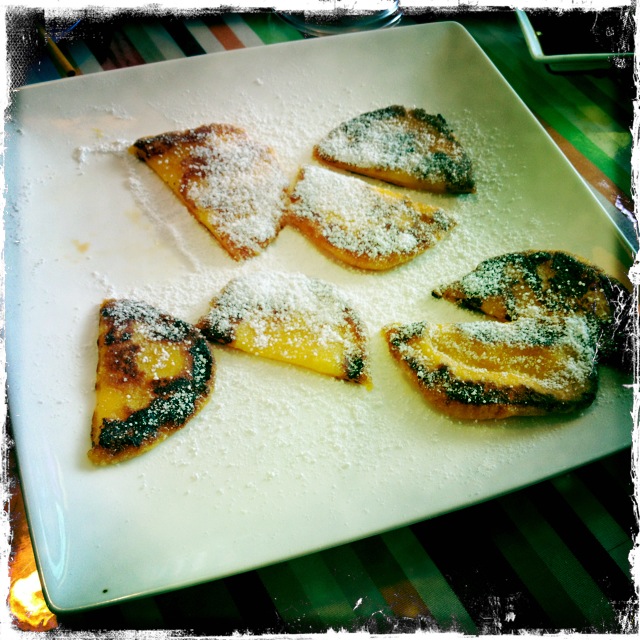
Nan Gua Bing (Chinese pumpkin pancakes)

Angela says, ‘Like a lot of Asian desserts the recipes aren’t really recipes but more like guidelines. The more often I make something the better I get at it. This truly applies to nan gua bing, the texture changes a little with the weather and humidity, I add the flour little by little so that I can feel the texture of the dough in my hands to know when it’s right. It’s like fresh pasta, it’s an ever changing friendship that weathers the seasons; my hands always know and keep the memory of when it’s just right.’

ourkitchengarden.net

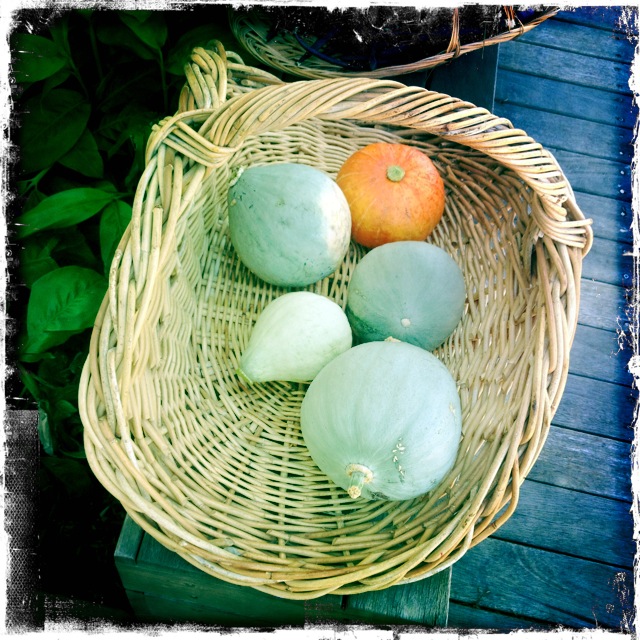
Fresh from the garden: pumpkin
Recipe source: adapted from a recipe on angelamay.net
Makes: 12 small pancakes that we halved to share

Equipment:

  • Chopping boards and knives
  • Bowls – large, small
  • Steamer basket & wok
  • Baking paper
  • Scales
  • Measures – jug, cup, ½ cup, tablespoons
  • Mouli & metal spoon
  • A non-stick frying pan
  • Rolling pins
  • Serving plates
Ingredients:

  • 1 small pumpkin (kabocha or jap is ideal)
  • ½ cup caster sugar
  • 1½ cups glutinous rice flour (not the rice flour for gluten-free baking)
  • Rice bran or vegetable oil
  • 2 tablespoons icing sugar for dusting

ourkitchengarden.net 

What to do:

  • Carefully chop the pumpkin into 2cm wedges and then carefully peel the slices with a very sharp knife or peeler. Weigh the peeled pumpkin to yield 225g, then cut each slice into 2cm cubes.
  • Put the steamer basket into the wok and then using a jug, fill the wok with cold water to just touch the bottom of the basket. Remove the basket and turn the wok on to boil the water.
  • Line the basket with baking paper, then pop the pumpkin cubes in and place the basket on to steam for 20 minutes or until fork-tender, making sure the water doesn’t touch any paper or pumpkin.
  • While the pumpkin is still very hot pass it through the mouli so the pumpkin is smooth with no lumps. Then, working quickly to make sure the pumpkin stays hot, stir in all the sugar and flour bit by bit, mixing and kneading until the dough is slightly sticky yet smooth.
  • Shape the dough into small balls and then either using a rolling pin or your hands, flatten each ball out into a small circular pancake about ½cm thick.
  • Heat the frying pan on medium heat and pour in a thin layer of oil. Add a layer of pancakes and fry until lightly colored golden brown, flipping and turning heat down to medium low to cook through.
  • Transfer to serving plates and spoon the icing sugar into a sieve, lightly dusting over the pancakes – serve immediately.

Notes: What other vegetables can be eaten as dessert? What is a mouli?

ourkitchengarden.net

Categories: Kitchen Garden, Recipe | Tags: , , , , , , , | Leave a comment

Perfect steamed rice!

So many fantastic home cooks I know are scared of rice! When it comes to steaming you really don’t need a rice cooker (unless you’re cooking for 100 people!) as a simple saucepan will do the job perfectly…

ourkitchengarden.net

Recipe source: Melissa
Serves: 8 or 24 tastes

Equipment:

  • Measures – cup
  • Large saucepan & lid
  • Sieve
  • Knife
  • Serving bowl or small bowl and plates
Ingredients:

  • 3 cups jasmine or basmati rice
  • 4 cups cold water

What to do:

  • Measure the rice grains into the saucepan. Wash the rice with cold running water and swish with your hands. Drain carefully into a sieve and repeat 3 more times until the water is no longer milky. This helps remove excess starch and cleans the grains.
  • Empty the washed rice back into the pot and add the 4 cups of cold water. Turn the heat to high – when the water in the pot starts to bubble, stir then cover the pot and reduce heat to the lowest flame. Simmer for 15 minutes without disturbing.
  • After the 15 minutes is up, just turn off the heat without disturbing the saucepan. Just let it sit with the lid on for 5 minutes to finish the steaming process.
  • Using a knife, transfer the rice into a large serving bowl, fluffing as you go. Serve in one bowl, or alternatively cram spoonfuls of rice into a small deep bowl  – just rinsed & wet – until full and level, then place bowl upside-down onto a plate, tap and pull off the bowl leaving a bowl-shaped rice mound!

Notes: Where does rice come from? How is it grown? What other dishes can you make with rice?

Categories: Kitchen Garden, Recipe | Tags: , , , , , , , , , , | Leave a comment

Shanghai-style eggplant

Chris says, ‘This is a very simple and a traditional Shanghai home-cooked dish. Every family in Shanghai has their own way to cook it and uses the exact same ingredients. The woman in Shanghai who is the best cook for this dish is very special. She is my mum. So I believe the best seasoning in the world is memories.’

Melissa says this recipe is for Grace & Estella!

ourkitchengarden.com

Fresh from the garden: eggplant, chilli, garlic
Recipe source: adapted from a recipe by Chris Yan on sbs.com.au/food
Serves: 6 or 24 tastes

Equipment:

  • Paper towel
  • Bowls – large, small
  • Scales
  • Chopping boards and knives
  • A wok
  • Slotted & wooden spoons
  • Measures – jug, tablespoons
  • Serving plates
Ingredients:

  • 6 Japanese eggplant (also known as Lebanese) or 2 large eggplant
  • 5 tablespoons vegetable oil
  • 1 large red chilli (or green if you don’t want too much heat!)
  • 2 cloves garlic
  • 200ml water
  • 3 tablespoons dark soy sauce
  • 1 tablespoon sugar

What to do:

  • Wash and wipe dry the eggplant and cut off the stem & leaves. Weigh to make sure you have 500g. Then cut into 5cm thick pieces.
  • Wash and wipe dry the chilli and roughly cut into chunks.
  • Bruise the garlic cloves with your hand or the blade of a large knife and then peel.
  • Heat oil in wok until shimmering. Add chilli and garlic cloves and cook for 20 seconds. Remove the chilli with a slotted spoon and reserve.
  • Add the eggplant and gently stir-fry. When eggplants have soaked up all of the oil, add 1 tablespoon of the water. Keep adding water, a tablespoon at a time until eggplants are soft and you have used half of the water.
  • Stir in dark soy sauce and sugar. Stir well and add remaining water. Cover with a lid or foil and cook for 1 minute. Uncover, the liquid should have been absorbed.
  • Return chilli to wok, toss for 30 seconds and serve.
  • Eat immediately, but watch out the temperature very hot! Seriously!

Caution:

  • Wash your hands thoroughly after coming in contact with chilli, as the capsaicin (the oil within the chilli) burns when it comes in contact with your eyes or sensitive skin.

 Notes: What does bruising a clove of garlic mean? Where is Shanghai? What food memories do you have?

Categories: Kitchen Garden, Recipe | Tags: , , , , , , , , , , , , | Leave a comment

Steamed eggplant siu mai with ginger and chilli dipping sauce

We love making any sort of dough here but if you’re not up to it or are short of time you can always substitute gyoza, gow gee or wonton wrappers…

ourkitchengarden.net

Fresh from the garden: eggplant, coriander, ginger, garlic, chilli, lemon
Recipe source: adapted from vegetariantimes.com
Makes: about 30 dumplings

Equipment:

  • Bowls – large, small
  • Fork or chopsticks
  • Scales
  • Kettle
  • Measures – jug, tablespoons, teaspoons
  • Tea towels
  • Salad spinner
  • Chopping boards and knives
  • Peeler & ruler
  • Garlic press
  • Rolling pins
  • Large baking trays
  • 2 large woks
  • 2 large steamer baskets
  • Baking paper
  • Serving plates & small sauce bowls
Ingredients:For the dough

  • 280g plain flour plus extra for dusting
  • 250ml very hot water

Dumplings

  • 2 eggplants
  • 4 garlic cloves
  • A small knob ginger
  • A bunch of coriander
  • 2 teaspoons vegetable oil
  • 2 tablespoons soy sauce
  • 1 tablespoon black bean sauce
  • 1 teaspoon dark sesame oil
  • Cornflour for dusting pan

Chilli Sauce

  • 1 garlic clove
  • 1 small knob ginger
  • 1 lemon
  • 2 tablespoons soy sauce
  • 1 teaspoon brown sugar or honey
  • 1 teaspoon dark sesame oil
  • 1 red bird’s eye chilli

What to do:

For the dough

  • Fill the kettle and turn on to boil. Place the flour into a large bowl. Carefully measure the hot water and stir it gradually into the flour, mixing all the time with a fork or chopsticks, until the water is incorporated. Add more water if the mixture seems dry.
  • Tip the dough mixture onto a clean work surface and knead it with your hands, dusting the dough with a little flour if it’s sticky. Continue kneading until it is smooth – this should take about eight minutes.
  • Put the dough back in the bowl, cover it with a clean damp towel and let it rest for about 20 minutes.

For the stuffing

  • Meanwhile, wash then peel the eggplant. Finely chop until you have 4 full cups (about 500g).
  • Peel and squeeze the garlic through the press to yield 1 tablespoon. Peel and finely chop the ginger to yield 2 teaspoons.
  • Wash and spin-dry the coriander, then finely chop to yield about 4 tablespoons.
  • Heat oil over medium-high heat in the wok. Add the garlic and ginger and cook, stirring, for 1 minute.
  • Add the eggplant and stir-fry over high heat for 4 to 5 minutes until very soft, adding a little water if needed. Add soy sauce, bean sauce, sesame oil, and coriander and cook, stirring, until thick for about 1 minute. Let cool while you prepare the wrappers.

Preparing the dumplings

  • After the resting period, take the dough out of the bowl and knead it again for about five minutes, dusting with a little flour if it is sticky.
  • Once the dough is smooth, shape it into 2 rolls about 23cm long and about 2cm diameter, using your hands.
  • With a sharp knife, slice each roll into 16 equal-sized pieces (each piece is about 15g). Using your hands, roll each of the dough pieces into a small ball and then, with a rolling pin, roll each ball into a small, round, flat and thin ‘pancake’ about 9cm in diameter.
  • Arrange the round skins on a lightly floured baking tray and cover them with a damp kitchen towel to prevent them from drying out until you are ready to use them.
  • Dust another baking sheet with a little cornflour. Arrange several ‘pancakes’ on your work surface. Place 2 teaspoons of filling in the centre of each, then pull up sides into pleats, and plop onto the baking sheet, flattening the bottom and leaving the top open so you can see the filling.
  • Transfer each finished dumpling to the floured tray and keep it covered until you have stuffed all the dumplings in this way.

To cook

  • Put the steamer basket into the wok and then using a jug, fill the wok with cold water to just touch the bottom of the basket. Remove the basket and turn the wok on to boil the water.
  • Line base of the steamer baskets with baking paper. Place dumplings in a single layer into the baskets. Carefully place the steamer baskets over woks, ensuring the dumplings don’t touch any water. Steam dumplings for about 8 minutes until tender and cooked through.

Chilli sauce

  • Meanwhile make the chilli sauce: Peel the clove of garlic and squeeze through the garlic press into the medium bowl. Peel the piece of ginger and rub over the microplane grater to yield one teaspoon. Add the ginger to the garlic.
  • Cut the lemon in half and juice one half to yield 1 tablespoon of juice. Add to the bowl.
  • Carefully slit the chilli in half lengthways and scrape out the seeds of one half, discarding the seeds. Finely slice that half and add to the bowl.
  • Mix all the remaining ingredients in and transfer to little dipping bowls.

To serve

  • Carefully remove the baskets, drying off the bottoms first with a dry tea towel if needed, and serve direct to the tables with the dipping sauce.

Caution:

  • Wash your hands thoroughly after coming in contact with chilli, as the capsaicin (the oil within the chilli) burns when it comes in contact with your eyes or sensitive skin. 

Notes: What is a steamer basket? What other ingredients could you use as filling? How else can you spell siu mai?

ourkitchengarden.net

Categories: Kitchen Garden, Recipe | Tags: , , , , , , , , , | Leave a comment

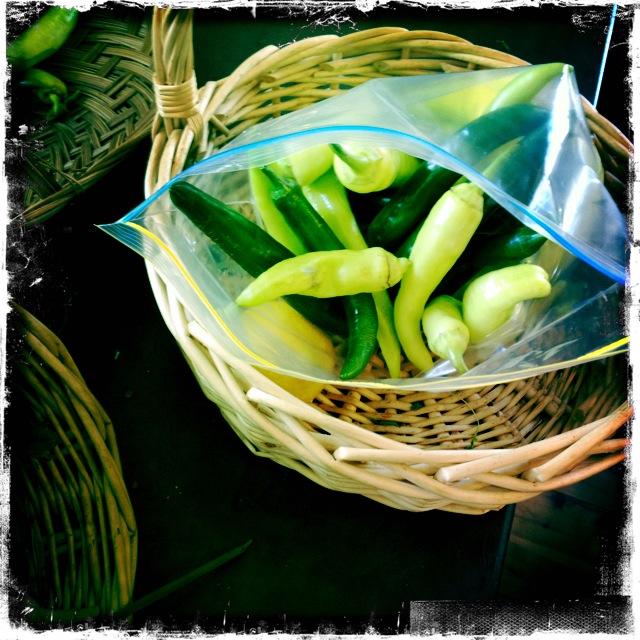
Roasted capsicum

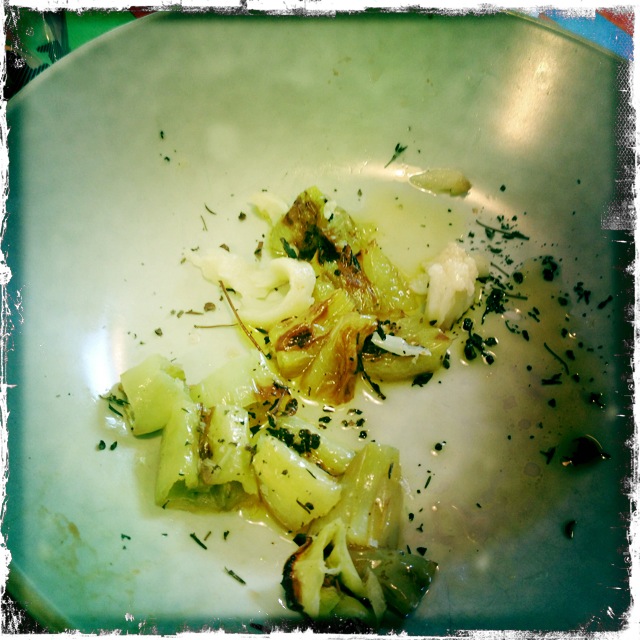
A wonderful thing happens when you roast capsicum: the crunchy and slightly sour tastes make way for luscious, slippery sweetness – & when married with garlic and herbs the effect is totes delish! My favourite thing to do is gobble these capsicum strips with the marinated feta, some pesto and slices of grilled bruschetta – a perfect little antipasto snack matched with a slice or 5 of super-thin prosciutto and/or some garlic prawns in terracotta, a la Dogs Bar circa 1993… happy days!

ourkitchengarden.net

Fresh from the garden: capsicum, garlic, thyme, marjoram, sage
Recipe source: Melissa

Equipment:

  • Bowls – big, medium
  • Baking tray
  • Oven mitts
  • Tongs
  • Freezer bag
  • Serving bowls
Ingredients:

  • 4 or 5 capsicums
  • Extra-virgin olive oil
  • A head of garlic
  • A small handful of thyme sprigs
  • A small handful of marjoram sprigs
  • Flaked salt

What to do:

  • Preheat oven to 21oC.
  • Wash and thoroughly dry the capsicum.
  • Liberally douse the capsicum with olive oil, massaging the oil into every crevice.
  • Place capsicum onto the baking tray, together with the head of garlic and the thyme & marjoram sprigs.
  • Sprinkle a sparing quantity of flaked salt onto the capsicum and bake for 15 minutes.
  • Carefully remove from oven with oven mitts and using the tongs, turn caps onto their sides.
  • Bake a further 10 minutes, then turn them over.
  • Repeat until all 4 sides have been in contact with the baking tray.
  • Once the capsicums are blackened and soft, remove from the oven, place into a freezer bag, seal tightly and allow to cool for 10 minutes.
  • Once cool enough to handle, put pressure on the stem end and it will pop out. Tear the capsicum in half, and remove all pith and seeds, the skins with slide off easily.
  • Repeat for remainder of the roasted capsicums.
  • Peel off each clove of garlic and squeeze from tip to base. The roasted garlic cloves are much more fragrant and milder than pan fried garlic.
  • Tear the capsicum into thin strips and mix with the herby oil and garlic.
  • Divide into serving bowls and eat with crusty bread!

Notes: What goes well with capsicum? What other vegetables can you roast? Why do we put the capsicum in a plastic bag?

ourkitchengarden.net

Categories: Kitchen Garden, Recipe | Tags: , , , , , , , , , | Leave a comment

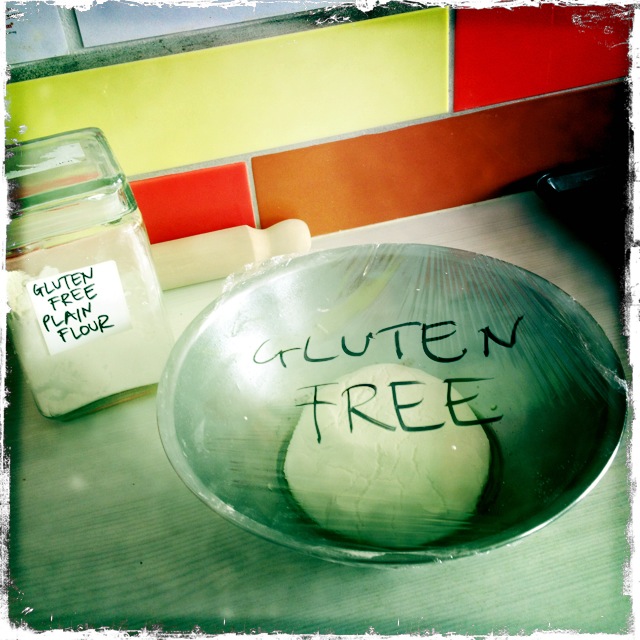
Gluten-free pizza dough

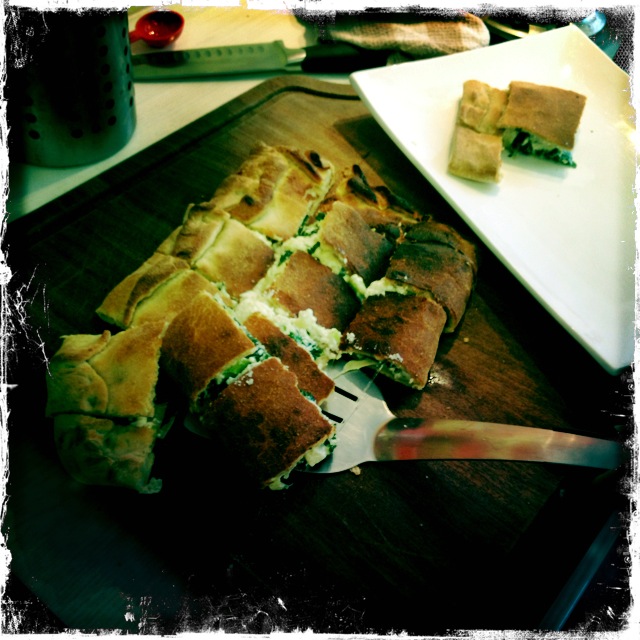
This dough is great for a coeliac’s pizza, calzone or flatbreads – just follow the instructions below and use with any of our recipes. They turn out a treat!

ourkitchengarden.net

Recipe source: Melissa
Makes: 2 large pizza or 2 calzone

Equipment:

  • Scales
  • Stand mixer, bowl & dough hook
  • Measures – cup, ½ cup, tablespoon
  • Bowls – large, medium
  • Cling film
Ingredients:

For the magic dough:

  • 2½ cups gluten-free plain flour
  • 7g dried instant yeast (GF)
  • A pinch of salt
  • 1 cup warm water
  • 1 tablespoon extra-virgin olive oil plus extra for greasing

What to do:

  • Sift flour into the bowl of the stand mixer. Add the yeast and salt and mix to combine.
  • Make a well in the centre and add measured water and oil. Mix to form a soft dough and knead for about 5-7 minutes or until smooth and elastic.
  • Place in a lightly greased bowl and cover with cling film. Stand in a warm place for 45 minutes to 1 hour or until the dough has doubled in size.
  • Using your fist, punch dough the down. Knead on a lightly floured surface until smooth and then use with your favourite pizza or flatbread recipe.

Notes: Why do we leave the dough to rise? What is this process called?

ourkitchengarden.net

Categories: Kitchen Garden, Recipe | Tags: , , , , , , , , | 2 Comments

River Cottage garlicky flatbreads

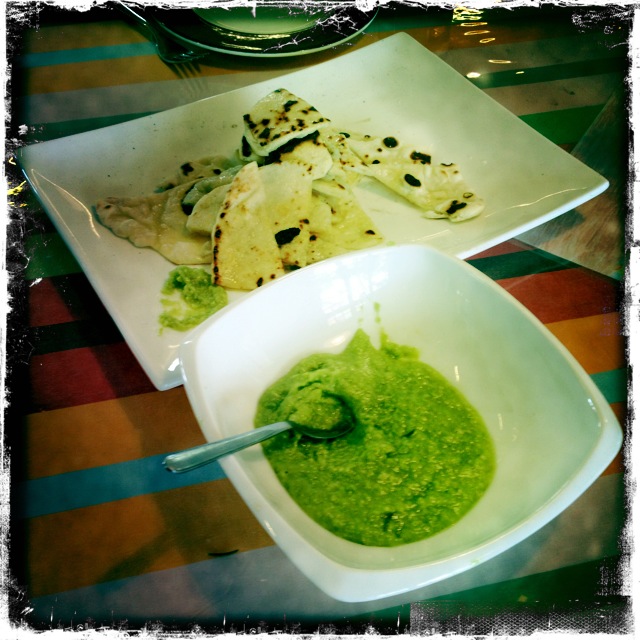
Bondi kids love making dough: bread, pizza and pasta regularly grace our table! And we also love, love, love garlicky anything! This dish is great for mopping up any dip, sauce or soup, but especially good for the broad bean puree…

ourkitchengarden.net

Fresh from the garden: garlic
Recipe source: Hugh Fearnley-Whittingstall, Veg Every Day
Serves: 8 or 30 tastes

Equipment:

  • Measures – jug,tablespoon, teaspoon, ½ teaspoon
  • Stand mixer
  • Scales
  • Bowls – large, medium
  • Heavy non-stick frying pan
  • Rolling pins
  • Tongs
  • Tea towels
  • Plate & paper towel
  • Serving plates
Ingredients:For the magic dough:

  • 250g plain white flour
  • 250g strong white flour
  • 1½ level teaspoons fine sea salt
  • 1 teaspoon instant dried yeast
  • 1 tablespoon olive oil, plus a little extra for oiling

For the garlic oil:

  • About 120ml olive oil
  • 1 fat garlic clove

What to do:

For the magic dough:

  • Put the two flours into the bowl of the stand mixer with the salt and yeast. Mix well using the dough hook. Add the oil and 325ml warm water and mix to a rough dough. Knead for 5–10 minutes, until smooth. This is quite a loose and sticky dough, which is just as it should be – you get better-textured bread this way – so try not to add too much flour if you can help it, it will become less sticky as you knead.
  • Trickle a little oil into a clean bowl, add the kneaded dough and turn it in the oil so it is covered with a light film. Cover with a tea towel and leave in a warm place to rise until doubled in size – at least an hour, probably closer to two.
  • When the dough is well risen and puffy, tip it out and ‘knock it back’ by poking it with your outstretched fingers until it collapses to its former size. It’s now ready to be shaped to your will.

For the garlic oil:

  • Peel the garlic clove and very finely chop it. Combine the olive oil and garlic in a frying pan and place over a medium heat. You’re not going to fry it, just warm it through to take the edge off the garlic. So as soon as you see the first signs of a sizzle, pour the oil and garlic out of the pan into a small bowl to infuse. Wipe the frying pan clean.

For the flatbreads:

  • After ‘knocking back’ the risen dough, take lemon-sized balls and roll them into 8 flat circles, 2mm thick. Leave to rest for 5 minutes.
  • Meanwhile heat a heavy-based, non-stick frying pan over high heat until smoking hot.
  • Carefully lay one flatbread in the pan and cook for about 2 minutes, until bubbly on top and patched with brown spots on the base. Flip over and cook for 1-2 minutes more. Remove immediately to a plate and trickle with some of the garlicky oil. Scatter with a little flaked salt too. Repeat with all the dough. Cut the oiled flatbreads into wedges to serve.

Notes: Why do we leave the dough to rise? What is this process called?

ourkitchengarden.net

Categories: Kitchen Garden, Recipe | Tags: , , , , , , , , , , , , , | 1 Comment

Broad bean puree

Alice says, ‘As the season progresses, the beans continue to mature, and they become larger and starchier. At this point they can be popped out of their pods, skinned and cooked into a luscious, bright green puree that I adore slathering on crisp croutons or serving alongside roasted meats.’

ourkitchengarden.net

Fresh from the garden: broad beans, garlic, rosemary
Recipe source: Alice Waters, The Art of Simple Food
Serves: 8 or 28 tastes

Equipment:

  • Medium heavy-bottomed saucepan
  • Colander
  • Scales
  • Bowls – 3 big, medium
  • Chopping board & knife
  • Measures – jug
  • Paper towel
  • Food mill
  • Spoon
  • Serving bowls
Ingredients:

  • 1.8kg broad beans in shell
  • 100ml olive oil
  • 4 garlic cloves
  • 1 branch rosemary
  • Flaked salt
  • 100ml water
  • 50ml extra-virgin olive oil

 What to do:

  • Bring a pot of water to the boil as you shell the broad beans.
  • Blanch quickly in the boiling water and then drain & cool in a bowl of cold water for a minute. Drain and pop the beans out of their skins. Wipe the saucepan clean.
  • Peel and slice the garlic cloves. Wash and wipe dry the rosemary.
  • Heat 100ml olive oil in the dry saucepan, then add the broad beans, garlic, the branch of rosemary, a pinch of salt and 100ml water, and cook until the beans are very tender, stirring occasionally, and adding more water if necessary.
  • The beans are done when they can be crushed easily with the back of a spoon, about 15 minutes. Mash with a spoon or pass them through a food mill.
  • Stir in the 50ml extra-virgin olive oil. Taste and season with salt as needed.
  • Serve right away or at room temperature.

Notes: What is another name for broad beans? What would be good to serve with the puree?

Categories: Kitchen Garden, Recipe | Tags: , , , , , , , , , , , , | Leave a comment

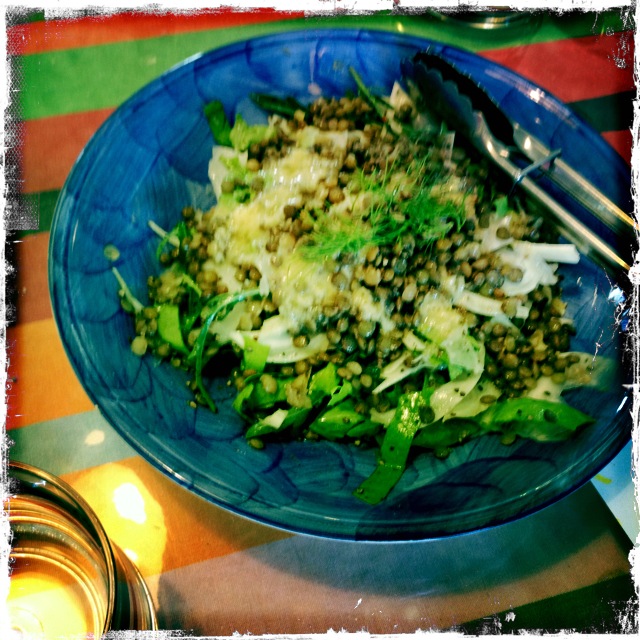
Rocket, fennel and lentil salad

I love every recipe from this book, there’s so much inspiration! I love it almost as much as our book!

ourkitchengarden.net

From the garden: rocket, fennel, parsley, onion, lemon
Recipe source: Hugh Fearnley-Whittingstall in Veg Every Day
Serves: 4 at home or 20 tastes

Equipment:

  • 1 small saucepan & lid
  • Colander or sieve
  • Chopping board & knife
  • Citrus juicer
  • Jar with lid
  • Bowls – large, med, small
  • Measures – jug, teaspoon
  • Salad spinner
  • Serving bowls
Ingredients:

  • 125g little green lentils
  • 1 bay leaf
  • ½ small onion
  • A few parsley stalks
  • A large fennel bulb
  • About 75g rocket

For the dressing

  • 2 teaspoons Dijon mustard
  • A lemon
  • 120ml olive oil
  • A pinch of sugar
  • Flaked salt & black pepper


 What to do:

  • Put the lentils in the saucepan and add plenty of water. Bring to the boil and simmer for a minute only, then drain. Return the lentils to the pan and pour on just enough water to cover them. Add the bay leaf, onion and parsley stalks. Bring back to a very gentle simmer, and cook slowly for about half an hour, until tender but not mushy.
  • Meanwhile, to make the dressing: zest the lemon and then cut in half and juice. Add these and the rest of the dressing ingredients to the jar, put the lid on and shake until emulsified.
  • When the lentils are done, drain them well and discard the herbs and onion. While still warm, combine with a good half of the dressing. Leave until cooled, then taste and adjust the seasoning; you could add a little more salt, sugar, pepper or lemon juice if needed.
  • Trim the fennel, removing the tough outer layer (unless they are young and very fresh). Halve the bulb vertically, then slice as thinly as you can, tip to base.
  • Wash and spin dry the rocket, then pile about two-thirds of the lentils into wide serving bowls. Scatter over the rocket and fennel and trickle over the rest of the dressing. Scatter over the remaining lentils and serve.

Notes:What does emulsified mean? What other sort of lentils are there? What does fennel smell like?

Categories: Kitchen Garden, Recipe | Tags: , , , , , , , , , , | Leave a comment

Soft polenta with broad beans and spring onions

This dish makes for a great little lunch! Feel free to shave a little parmesan over too if you want…

ourkitchengarden.net

From the garden: broad beans, onions, spring onions, parsley, lemon, garlic, sweetcorn
Recipe source: Melissa
Serves: 6 at home or 24 tastes

Equipment:

  • Chopping board & knife
  • Small paring knife
  • Garlic press
  • Scales
  • Bowls – large, med, small
  • 1 heavy-based saucepan& lid
  • 1 small saucepan & lid
  • Colander
  • Measuring jug
  • Wooden spoon
  • Non-stick frying pan & lid
  • Serving bowls
Ingredients:

  • 1 corn cob
  • 6 garlic cloves
  • 100g coarse polenta
  • 1kg broad beans in shell
  • 1 onion
  • 6 spring onions
  • Extra-virgin olive oil
  • 1 small bunch parsley
  • ½ tablespoon vegetable bouillon
  • 100ml boiling water
  • A lemon
  • Flaked salt and black pepper

What to do:

  • Peel the husks from the corn, then slice the corn from the cob. Peel and crush 2 cloves of the garlic with the garlic press. Add the corn and garlic to the heavy based saucepan with 500ml water and bring to the boil over a moderate flame.
  • Measure the polenta & then rain it in to the corn water, stirring. Cover & reduce to a mere simmer 15 mins, stirring every few minutes.
  • Meanwhile fill the small saucepan with water & set to boil on high heat.
  • Pod the broad beans, discarding the outer shell into the compost, and add beans to the boiling water. Fill a large bowl with cold water and have ready.
  • Boil the broad beans for 3 minutes, drain and then immediately refresh in the bowl of cold water for 30 seconds. Drain again and double-pod by slipping the outer shell off into the compost. Reserve beans.
  • Place the bouillon in to the measuring jug and carefully add 300ml boiling water, stir.
  • Peel the brown onion and finely chop. Wash the spring onions and chop into 1cm lengths. Peel the remaining 4 cloves of garlic and finely slice. Wash and spin the parsley dry, pick and chop. Zest the lemon and then cut in half and squeeze one half.
  • Heat 2 tablespoons of olive oil in the frying pan and begin to cook the chopped brown onion for 3-4 minutes over a medium to high heat until lightly golden, then add the garlic and cook gently for a further minute.
  • Now add the podded broad beans, the chopped spring onion and the hot stock and place a lid on the pan. Turn the heat down and simmer gently for 2 minutes.
  • Take the lid off and increase the heat to medium. Continue to simmer till the liquid has reduced and become slightly syrupy – about 5 minutes. Sprinkle over the parsley and lemon zest, add lemon juice to taste, and stir to incorporate.
  • When the polenta is ready, remove the lid and season well. Spoon onto serving bowls, and then add the broad beans with the juices poured over.
  • ourkitchengarden.net
Categories: Kitchen Garden, Recipe | Tags: , , , , , , , , , , , , | Leave a comment

Blog at WordPress.com.